Geneva
52 articles · 6+ stories
Stories about Geneva

TRON Surpasses $30T in Total Transaction Volume as it Secures its Place as Leading Chain for Stablecoins
 Sep 24, 2026· BeInCrypto
Privy expands wallet and payment support for the TRON blockchain
TRON DAO and Privy are partnering to enhance wallet and payment infrastructure for developers building on the TRON blockchain. The expanded support is intended to improve tools for financial applications and decentralized applications.
Sep 23, 2026· BeInCrypto
Justin Sun Establishes the Justin Sun Prize: “My Wealth Came from Mathematics and Will Return to Mathematics”
Sep 16, 2026· BeInCrypto
Ethena Brings USDe and sUSDe to TRON, Expanding Digital Dollar Access Across Its Stablecoin Ecosystem
Sep 11, 2026· BeInCrypto
TRON Expands MetaMask Connectivity Across B.AI, SUN.io, JustLend DAO and BitTorrent
Sep 10, 2026· BeInCrypto
TRON Surpasses 400 Million Accounts as Total Transfer Volume Nears $30 Trillion
Aug 25, 2026· BeInCryptoLatest Geneva articles

TRON Surpasses $30T in Total Transaction Volume as it Secures its Place as Leading Chain for Stablecoins
Geneva, Switzerland, September 24, 2026 — TRON DAO, the community-governed DAO dedicated to accelerating the decentralization of the internet through blockchain technology and decentralized applications (dApps), today announced that total transaction volume settled on the TRON blockchain has surpassed $30 trillion. A milestone driven by the network’s high throughput, low costs, and deep liquidity, making TRON the settlement layer of choice for stablecoin transfers, payments, and digital asset activity worldwide. TRON has now recorded more than 405 million total user accounts, over 15 billion total transactions, more than $28 billion in total value locked (TVL) and currently carries more than $94 billion in circulating USDT, the largest supply of any blockchain. According to Token Terminal, TRON leads all networks in USDT transfer volume year to date, with approximately $6 trillion, averaging $25 billion in daily transfer volume. That momentum is also extending into consumer payments. According to CoinDesk Research, crypto payment card volumes grew from $2 billion in the first quarter of 2026 to $2.4 billion in the second, with TRON’s share rising from 33% to 34% over the same period, the highest of any chain tracked. The data reflects TRON’s position as the dominant blockchain for merchant acceptance and consumer-to-business payments via Visa-linked stablecoin cards. “TRON has moved $30 trillion since launch, a scale comparable to the annual output of the U.S. economy in 2025. Crossing $30 trillion in total transaction volume is proof that TRON has become an essential infrastructure for the digital dollar economy,” said Justin Sun, founder of TRON. “Every trillion dollars that moves across TRON represents real people relying on stablecoins for payments, savings, and everyday transactions. TRON was built to support accessible, scalable digital financial infrastructure, and this milestone reflects the continued growth of that mission.” Institutional access to TRON has broadened alongside the network’s growth. In September 2026, Canary Capital launched the Canary Staked TRX ETF, trading under the ticker TRXS. TRX spot and futures products are also available on Bitnomial, a US-regulated derivatives exchange, further broadening regulated market access. Anchorage Digital also expanded support for the TRON Network with native TRX staking and custody for TRC-20 assets through its regulated platform, while the Tokenized Hamilton Lane SCOPE Fund became the first Securitize-issued asset on the TRON network. Additionally, the TRON blockchain was among the top 5 protocols represented in the newly launched S&P Pantera Digital Asset Index. The index was developed by S&P Dow Jones Indices and Pantera Capital, and applies a methodology centered on protocol utility, onchain liquidity, and network activity. The launch marks one of the clearest signs to date that established financial market frameworks are being extended to digital assets, applying benchmark methodologies traditionally used across equities and other asset classes to blockchain networks. TRON’s $30 trillion transfer volume milestone underscores the network’s scale as blockchain-based payments and stablecoin settlement continue to grow. With rising activity across payments, digital assets, and institutional markets, TRON continues to serve as core infrastructure for the movement of value on-chain. About TRON DAO TRON DAO is a community-governed DAO dedicated to accelerating the decentralization of the internet via blockchain technology and dApps. Founded in September 2017, the TRON blockchain has experienced significant growth since its MainNet launch in May 2018. Today, TRON hosts the largest circulating supply of USD Tether (USDT) stablecoin, which currently exceeds $94 billion. As of September 2026, the TRON blockchain has recorded over 405 million in total user accounts, more than 15 billion in total transactions, and over $28 billion in total value locked (TVL), based on TRONSCAN. Recognized as the global settlement layer for stablecoin transactions and everyday purchases with proven success, TRON is “Moving Trillions, Empowering Billions.” TRONNetwork | TRONDAO | X | YouTube | Telegram | Discord | Reddit | GitHub | Medium | Forum Media Contact Yeweon Park press@tron.network
 Sep 24, 2026 · byNewsBTC
Privy Expands Support for TRON with Enhanced Wallet and Payment Infrastructure for Developers
Geneva, Switzerland, September 24, 2026 – TRON DAO, the community-governed DAO dedicated to accelerating the decentralization of the internet through blockchain technology and decentralized applications (dApps), announced today that Privy is expanding its support for the TRON blockchain, giving developers and businesses more tools to build and operate financial applications at scale on the network. With the expanded integration, developers can use Privy to build and manage wallets and financial applications on TRON with enhanced transaction, policy, transfer, and monitoring capabilities. Developers can programmatically construct, sign, and broadcast supported TRON transactions, monitor wallet activity and on-chain events through balance and transaction webhooks, and use policy controls to set spending limits, recipient allowlists, and transaction approval or restriction rules. Transfers APIs also enable supported assets on TRON to be moved programmatically. Together, these capabilities give businesses the infrastructure to build and operate stablecoin payment solutions, treasury workflows, wallets, and other on-chain financial products on TRON. “TRON has become an important network for stablecoin activity globally, and we want to make it as easy as possible for developers to build on that foundation,” said Justin Sun, Founder of TRON. “By deepening our integration with Privy, we’re giving teams more of the infrastructure they need to bring payments, treasury, and other financial products on-chain.” TRON has become a major global rail for stablecoin transfers, with the total transfer volume on the network approaching $30 trillion. Its infrastructure is increasingly being used for payments and treasury operations, as companies including Onafriq and Paystack are already building wallet and treasury use cases with Privy and TRON. “We’re seeing more companies use TRON to move stablecoins across borders and build new financial products, particularly in markets where USDT is already an important part of how money moves,” said Henri Stern, CEO and co-founder of Privy. “Deepening our support for TRON gives these teams more of the infrastructure they need to build and operate at scale.” The expanded integration builds on growing demand for stablecoin infrastructure that can support real-world financial operations. By combining Privy’s wallet and developer infrastructure with TRON’s stablecoin ecosystem, businesses can build applications designed for payments, treasury management, and other on-chain financial workflows. About TRON DAO TRON DAO is a community-governed DAO dedicated to accelerating the decentralization of the internet via blockchain technology and dApps. Founded in September 2017, the TRON blockchain has experienced significant growth since its MainNet launch in May 2018. Today, TRON hosts the largest circulating supply of USD Tether (USDT) stablecoin, which currently exceeds $94 billion. As of September 2026, the TRON blockchain has recorded over 405 million in total user accounts, more than 15 billion in total transactions, and over $29 billion in total value locked (TVL), based on TRONSCAN. Recognized as the global settlement layer for stablecoin transactions and everyday purchases with proven success, TRON is “Moving Trillions, Empowering Billions.” TRONNetwork | TRONDAO | X | YouTube | Telegram | Discord | Reddit | GitHub | Medium | Forum Media Contact press@tron.network About Privy, a Stripe company Privy provides secure, scalable wallet infrastructure for modern financial products built on crypto and stablecoin rails. More than 2,000 developers and businesses, including Ramp, Deel, and Hyperliquid, use Privy to power over 160 million accounts and process billions of dollars in monthly volume. Privy became a Stripe company in 2025. Media Contact media@stripe.com
Sep 24, 2026 · byNewsBTC
easyJet launching Sarajevo and new Tivat flights
easyJet will enter the Bosnia and Herzegovina market next year, as well as introduce several new routes to Tivat in Montenegro. The low cost airline will commence operations from both Geneva and Basel to Sarajevo during the 2027 summer season, marking its debut in the country. Neither route is currently served from the Bosnian capital. Services will commence in April and May respectively. The airline will also significantly expand its operations to Tivat next summer by introducing flights from Amsterdam, Basel, Birmingham and Edinburgh. The four new routes will complement easyJet’s existing seasonal services to the Montenegrin coastal city from Berlin, Bristol, Geneva, London Gatwick, London Luton and Manchester, bringing its Tivat network to nine destinations. The expansion will further strengthen the carrier’s presence on Montenegro’s coast and broaden access from several important Western European markets. Tickets for the new Tivat operations are now available to book through the airline's website. Route Launch date Edinburgh - Tivat 29.03.2027 Geneva - Sarajevo 22.04.2027 Birmingham - Tivat 03.05.2027 Basel - Sarajevo 10.05.2027 Amsterdam - Tivat 29.06.2027 Basel - Tivat 30.06.2027 Click link for details Commenting on its Tivat expansion, the CEO of operator Airports of Montenegro, Roko Tolić, said, “The new route to Scotland, which follows two years of negotiations, is particularly important to us. easyJet will operate between Edinburgh and Tivat twice per week from late March until the end of October, covering the entire shoulder season as well as the peak summer period". He added, " In addition, the airline will introduce services to Tivat from Amsterdam, Birmingham and Basel. These are not new routes for us, but they are new to easyJet and will be integrated into the carrier’s existing network. Across these ten routes, the number of available seats will increase from 236.000 this year to more than 350.000, representing growth of almost 50%. This positions easyJet as one of Airports of Montenegro’s strategic partners". EX-YU Aviation News
World: Recommendations for the 53rd Session of the Universal Periodic Review
Country: World Source: Global Centre for the Responsibility to Protect Your Excellency, On behalf of the Global Centre for the Responsibility to Protect, I am writing to you regarding the 53rd session of the Universal Periodic Review (UPR) of the UN Human Rights Council (HRC) in Geneva. In 2005 heads of state and government unanimously affirmed the responsibility of states to protect populations from genocide, war crimes, crimes against humanity and ethnic cleansing. Under the Responsibility to Protect (R2P), each state has the primary responsibility to protect its population, while the international community has a responsibility to assist. As we mark the HRC’s 20th anniversary in 2026, the UN human rights system remains a critical foundation of the international protection architecture. Strengthening engagement with this system, including through the UPR, is vital to sustaining early warning, accountability and prevention capacities across the UN. The UPR is a key mechanism for assessing each country’s preparedness to protect human rights and prevent mass atrocities. During the 53rd session of the UPR working group, I therefore encourage you to provide states under review with the following recommendations, where applicable: Expeditiously appoint an R2P Focal Point – a senior government official responsible for advancing atrocity prevention at the national, regional and international level; - Sign, ratify and implement core instruments of International Human Rights Law and International Humanitarian Law (IHL); - In line with R2P’s Pillar II, request support from other states and regional and international organizations when atrocity risks cannot be addressed nationally; - Ensure national security forces respect human rights and IHL and fulfill their responsibility to protect all populations within their territory, regardless of race, gender, nationality, ethnicity, religion, sexual orientation or any other status; - Support accountability for atrocity crimes and all relevant institutions of international justice; - Issue open invitations to HRC-mandated Special Procedures and fully cooperate with all other HRC mechanisms and procedures; - Protect human rights defenders and the media, and ensure civil society can operate freely, safely and independently; - Use the Framework for Action for the Responsibility to Protect to assess gaps and identify opportunities to address national atrocity risks. Source Global Centre for the Responsibility to Protect
 Sep 23, 2026 · byReliefWeb
Dubai-it: How growing up in Dubai opened the world to this Belgian expat
Dubai: Chips Oman, Star juice, Dh3 shawarmas from neighbourhood shops. When 38-year-old Dubai resident Alex de Smet thinks back to the years growing up in the UAE, the items she lists off are ones every child who grew up in the 1980s, in UAE, can relate to. “I remember the men selling cotton candy around the street and the little ice cream trucks. It’s going to sound clichéd, but those were actually the moments of our childhood,” she said. Last month, she marked 30 years of being a UAE resident, but when the Belgian national looks back at the day she arrived as an eight-year-old, she remembers just how new the experience felt. At the time, de Smet was living in Geneva, Switzerland, when her father got a job offer in Dubai. As she walked out of the plane, she remembers the heat, before getting on to an AC bus. “Tired little me wasn’t impressed,” she remembers, laughing. Growing up as Dubai grew Thirty years on, it has been the little moments that she remembers the most fondly. Her memories are closely connected with some of the ‘firsts’ children in Dubai experienced – the first Dubai Shopping Festival by the Creek, the excitement when Wonderland Aquapark opened, or simply driving along Jumeirah Beach Road when the city looked very different from what it is today. “Over the weekend, we used to go all the way to Jebel Ali Resort to go to the beach. It used to be a little early morning trip. I used to play golf as a young girl at Dubai Creek Club, which looks so different now,” she said. But as she grew up in the city, she watched the city’s expansion in realtime, and was able to build a life that mirrored the Dubai-it philosophy – to think boldly, act decisively and deliver exceptionally. As the city welcomed people from every corner of the world, her cultural understanding grew. As someone who was always inclined towards the arts, she also found the perfect space to explore her interests, becoming a salsa dancer as a teenager. “Dubai was the perfect place to be, because of so many reasons. You’ve got a melting pot of cultures and nationalities and backgrounds. I think that gave me an opening to the world that I wouldn’t have had elsewhere,” she said. From Dubai to the world stage After three years of training, de Smet became a professional salsa dancer at the age of 17 and with Dubai located strategically between Asia, Europe and Africa, the world became her stage. “Dubai gave me a centralised hub to travel. I’ve performed all over the world, from Canada to Nepal, Malaysia, Japan and Hong Kong, all because of being able to go to all these places,” she said. Soon after, she opened her own dance studio in Dubai Media City, another city development that had grown over the years. “I had already been teaching since 2009, but I opened my own dance academy in 2012, teaching and exploring and developing everything here in Dubai,” she said. While a few years later, her business partner and she went their separate ways, her love for art only grew. “Around the time of the COVID-19 pandemic, I felt like it was a good time to take a break and pivot,” she said. Leaning in to her love for the arts She also met her husband - Adham Salloum, a professional photographer. Accompanying him on his shoots around the UAE gave de Smet a chance to delve deeper and more professionally into the world of photography, something that had so far been limited to a hobby. “Growing up, I was always interested in photography. My parents always pushed me to express myself in one way or the other. So, I followed that lead. My mum was an artist, and I always saw my father and my grandfather with cameras in their hands. I still remember how on one Christmas morning I got my first camera. It was a film camera, so you just had 11 or 12 shots per film,” she said. But that experience taught her the importance of taking her time with a shot and focusing on the details. Today, de Smet works as the Vice President of client teams at an advertising agency in Dubai, while also running a photography studio with her husband. And as the decades have ticked along, her love for the city as well as the arts has only grown deeper. “Whenever I see something that can show beauty or express a feeling or a memory, I'm attracted to it. It's the same thing with the dancing and it's the same thing with everything I do,” she said. Where old Dubai meets the new That seems to have been the case with Dubai as well. “Dubai is one of those cities that has a lot of stability, so there are a lot of things you can expect like clockwork. But then it also has a heartbeat that makes it go faster and faster and evolve on a day-to-day basis,” she said. “For me, that means I’ve my day-to-day sorted, but then there's always something there to surprise you and keep you going for bigger and better things. Whether it's in your career, your personal life or your hobbies, there's always something new that's going to surprise you and delight you in a way that you're going to not want to leave,” she added. And after spending three decades of her life in the city, the photographer in her is most attracted to the one shot that connects her past and present – Dubai Creek. “The boardwalk at Dubai Creek at sunset, when the city gives you those really nice orange-pink dramatic skies around November … from there, you've got the creek in front of you, but then in the distance, you've got the entire Dubai skyline. I think, for me, that's a really nice place to be because it links me back to old Dubai and a place I used to be at all the time as a child,” she said.
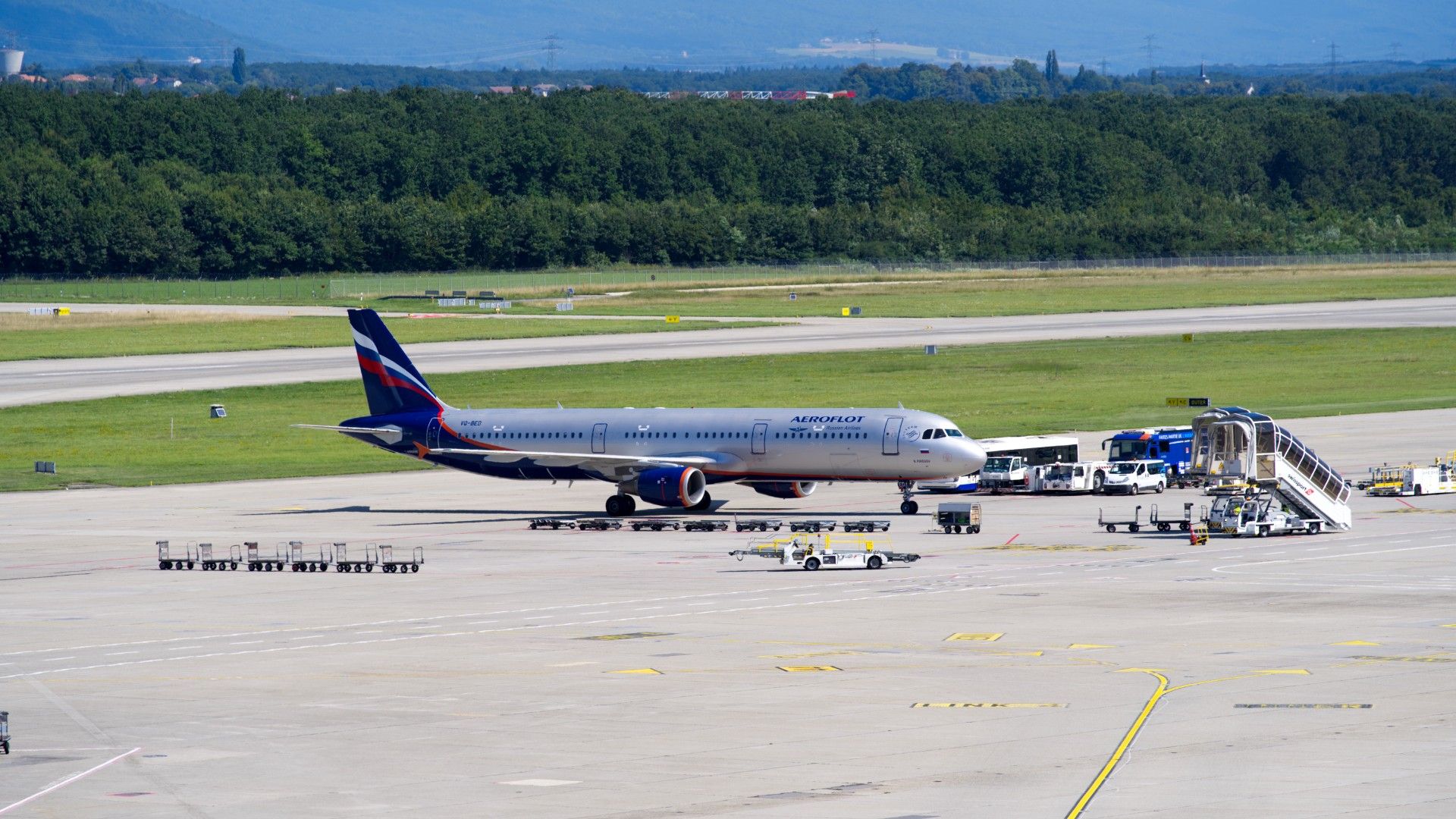
This Airbus A321 Has Been Sitting Abandoned In Switzerland For Over 4 Years: Here’s Why
An Aeroflot Airbus A321 has been stranded at Geneva for over four years. Here’s how sanctions, ownership and inactivity left the jet stuck in Europe
![ICRC delivers 22 tonnes of medical supplies to support Yemen’s front-line hospitals [EN/AR/DE/PT/RU/ZH]](https://reliefweb.int/sites/default/files/styles/thumbnail/public/previews/b2/18/b218e936-c223-4599-89fb-0f6c1dadba20.png)
ICRC delivers 22 tonnes of medical supplies to support Yemen’s front-line hospitals [EN/AR/DE/PT/RU/ZH]
Country: Yemen Source: International Committee of the Red Cross Please refer to the attached files. Geneva (ICRC) – The International Committee of the Red Cross (ICRC) today delivered 22 tonnes of life-saving medical supplies to Sana’a to replenish dwindling stocks and support hospitals responding to a growing number of war-wounded patients in Yemen. The delivery is part of a wider emergency response to intensifying fighting that has placed health-care facilities across Yemen under immense strain, including in Marib governorate, where an ICRC mobile surgical team has been deployed since late August. “The recent escalation in hostilities has overwhelmed hospitals, which are grappling with critical shortages of medical supplies and an influx of war-wounded patients,” said Christine Cipolla, ICRC’s head of delegation in Yemen. “This urgent support will help front-line hospitals continue life-saving care to those in desperate need.” The ICRC is working swiftly to distribute the supplies to priority hospitals and health facilities across the country. In Marib, where health-care facilities are under immense strain, the ICRC’s mobile surgical team has been deployed to Marib General Hospital since 23 August to strengthen emergency response capacity. The team has been working with Yemeni medical staff to perform emergency triage and surgical operations. In addition to medical supplies delivered to key hospitals and health facilities since late July, the ICRC is working to bring in additional stocks to strengthen emergency response capacity and help ease the pressure on health-care facilities across front lines. The ICRC has also scaled up its support of the Yemeni Red Crescent Society (YRCS). More than 50 YRCS ambulances are now operational on both sides of the front lines. While the ICRC remains committed to responding to urgent humanitarian needs across Yemen, the scale of the current crisis could quickly exceed the existing response capacity. In some parts of the country, the ICRC is the only international humanitarian organisation present and active on the ground. “Our mission is purely humanitarian. We do not take sides in the conflict,” said Cipolla. “Our priority is to alleviate human suffering, protect those affected by the conflict, and ensure that essential services and supplies reach those in need. We continue to engage with all parties to the conflict, calling on them to protect civilians and civilian infrastructure.” About the ICRC: Since 1863, the International Committee of the Red Cross (ICRC) has worked to relieve suffering and preserve human dignity during war and armed violence. Alongside our Red Cross and Red Crescent partners, we deliver life-saving aid across front lines and strive to reconnect families and locate missing people. Engaging with authorities and armed forces on all sides, often confidentially, we advocate for humane treatment of detainees and urge compliance with international humanitarian law to protect civilians from harm, including online. For further information or interview requests, please contact: Iscander Saeed, ICRC Sana’a: +967 730500719, ialmamari@icrc.org ICRC Geneva, +41 22 730 34 43, press@icrc.org Hachem Osseiran, ICRC Dubai, +971 50 425 4091, hosseiran@icrc.org
Sep 21, 2026 · byReliefWeb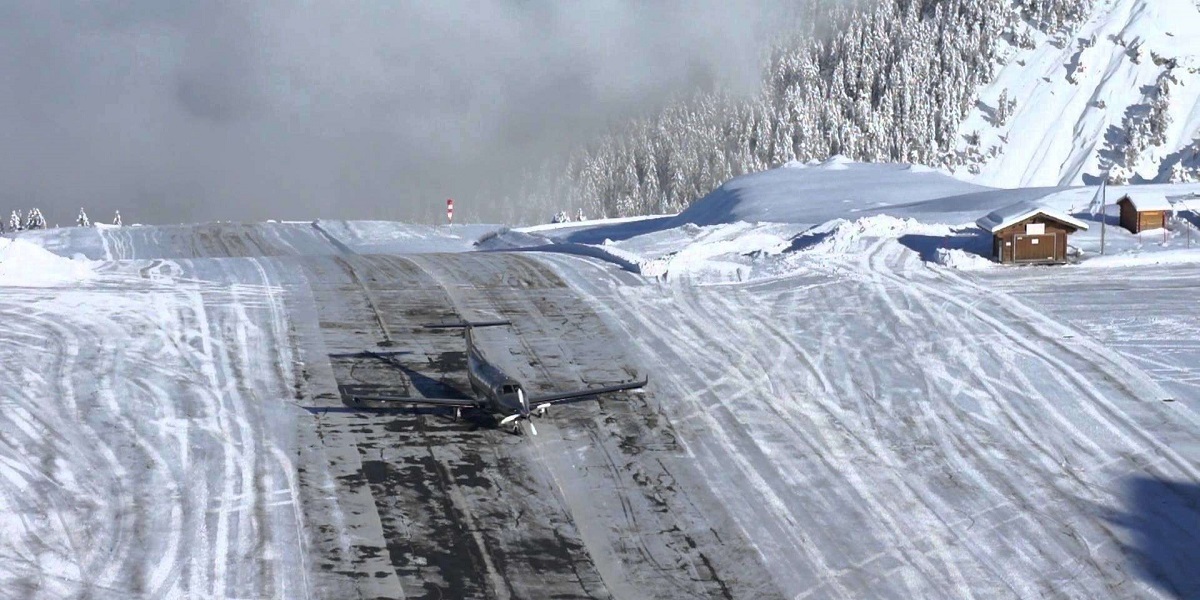
Geneva in Winter: How One Airport Absorbs the Alpine Ski Season
Most airports have a seasonal curve. Geneva has something closer to a weekly spike, repeated through the winter, driven almost entirely by skiing. For roughly four months the airport takes on a rhythm that has more in common with a ferry terminal than a typical European hub, and Saturday is the day everything happens at […] The post Geneva in Winter: How One Airport Absorbs the Alpine Ski Season appeared first on Travel Radar - Aviation News .
 Sep 20, 2026 · byTravel Radar
UNHCR: more help urgently needed as thousands arrive in Djibouti fleeing Yemen
Countries: Djibouti, Somalia, Yemen Source: UN High Commissioner for Refugees This is a summary of what was said by Sandrine Desamours, UNHCR Representative in Djibouti – to whom quoted text may be attributed – at today's press briefing at the Palais des Nations in Geneva. DJIBOUTI – Nearly 3,000 people have arrived in Djibouti in less than a week, making the dangerous sea crossing across the Bab el-Mandeb Strait, as escalating violence forces more families to flee Yemen. Refugees continue to arrive by boat through Obock, Khor Angar, Moulhoule and Godoria after difficult journeys in small vessels. Some describe having to leave family members behind, and reports indicate that thousands more trying to leave Yemen have been unable to flee due to insecurity and shortages of fuel for boats, leaving them stranded. At reception centres in Djibouti, new arrivals recount fearing for their lives in Yemen having fled sudden bombardment, shelling and gunfire. Mothers quickly gathered their children and whatever they could carry before heading to the coast and boarding small boats. More than half of the Yemeni refugees crossing to Djibouti are women and children. Many are now facing displacement for a second time, having fled Yemen during the 2015 crisis and returning when they felt safe, only to find themselves refugees once again. In Obock, new arrivals are being transferred from coastal entry points to Markazi refugee village, where they can be registered, receive support and access national services. UNHCR and partners have been working to integrate the new refugee children into the village’s schools. Djiboutian families and the Yemeni refugee community itself have continued to welcome new arrivals, sharing what little they have. Around 270 people are currently living with host families. However, capacity is rapidly diminishing. Markazi refugee village was designed to host 5,000 refugees; there were already over 2,700 Yemeni refugees and 1,500 Eritrean refugees living there. While the Government, UNHCR and partners are preparing for at least 10,000 new arrivals, pressure is already growing on shelter, water, sanitation, health care and education. Existing school facilities cannot accommodate all newly arrived children, while overcrowding could increase the risk of communicable diseases, including scabies and diarrheal disease, UNHCR and partners are on the ground providing temporary shelter, transportation, relief items, food, water and health care, while supporting the Government of Djibouti and the national refugee authority with reception, registration and protection activities. Djibouti already hosts some 36,000 refugees, mainly from Somalia and Ethiopia, and the latest arrivals from Yemen are placing further pressure on an already stretched response. Authorities in Somaliland and Puntland have also reported increased arrivals from Yemen, including Yemeni refugees and Somali refugee returnees. Numbers remain in the hundreds for now, with movements currently constrained by El Niño-related sea conditions. However, maritime movements are expected to ease from mid-October, raising the possibility of further arrivals if insecurity in Yemen persists. UNHCR and partners are therefore closely monitoring the situation and preparing for a potential increase in movements across the Gulf of Aden. Meanwhile, the crisis inside Yemen is becoming more acute; more than 100,000 people have already been uprooted as fighting intensifies, particularly along the western coast. Families have been displaced across Al Hodeidah, Ta’iz, Lahj, Aden, Abyan, Marib, Al Dhaleh and Shabwah, while insecurity and access constraints are making it increasingly difficult for humanitarian partners to reach people in need. Without improved access and additional support, further displacement within Yemen and across borders is increasingly likely. To date, UNHCR’s Djibouti operation is only 15 per cent funded, and UNHCR urgently requires an estimated $5.1 million to ensure that refugees arriving from Yemen can access registration, reception, protection and essential services. Our operations inside Yemen are just 18 per cent funded, and an additional $14 million is urgently needed to provide shelter, relief items and site management support to newly displaced families. UNHCR is calling for urgent international support to respond to the rapidly growing needs of people forced to flee inside Yemen and to Djibouti. Without additional resources now, already stretched protection and assistance risk being overwhelmed as displacement continues to rise. For more information, please contact: In Nairobi (regional), Dana Hughes, hughes@unhcr.org, +254 717 540 160 In Amman, Rula Amin, aminr@unhcr.org, +962 790 045 84 In Geneva, Eujin Byun, byun@unhcr.org, +41 79 747 8719
Sep 18, 2026 · byReliefWeb
DR Congo: Women’s care work fuels an unaccounted death toll in the fastest-growing Ebola outbreak on record
Country: Democratic Republic of the Congo Source: UN Women Remarks by Setcheme Mongbo, UN Women Representative in the Democratic Republic of the Congo – to whom quoted text may be attributed – at the press briefing at the Palais des Nations in Geneva Kinshasa, Geneva, 18 September 2026 – “I have just returned from Bunia, the epicentre of the Democratic Republic of the Congo’s 17th Ebola outbreak – and what is now the fastest-growing outbreak on record. What I saw there was a bleak picture of what this outbreak does to women and girls. Women are on the front line – in health centres, in homes and in their communities. And they are paying the price, sometimes with their lives. Women and girls caring for the sick – young and old – as health workers in health centres, and as carers at home. Women and girls washing and burying the dead. Women and girls collecting water and food. When it comes to Ebola, care is a chain of transmission. Because Ebola transmission mirrors the distribution of these care responsibilities, women and girls account for most cases. Latest available official data indicate that more than 54 per cent of confirmed Ebola cases in the DRC are among women. Among adolescents aged between 10 and17 years, girls account for 61 per cent of cases. But there are also likely to be deaths occurring in communities that do not appear in official Ebola figures. In Bunia, I heard accounts of women becoming sick – and dying – at home. Community members told me that four women had died at home in a single day. We were unable to verify whether they had subsequently been captured in official surveillance data, but the reports are nevertheless concerning. When people become sick and die outside the formal health system, there is a risk that their deaths and the circumstances surrounding them will not be adequately captured in the official response. Women told me why. Because they put the health of their children and family members before their own. They care for sick relatives at home without protective equipment, and they delay seeking care when they themselves become ill. One woman told me that entering an Ebola treatment centre felt like a one-way journey – separated from her children, and unsure when or whether she will return home. According to recent data, two-thirds of deaths recorded in a single 24-hour period occurred in communities, rather than in treatment centres. For women, the fear of going to a facility is made worse by concerns about stigma, harassment, separation from their children, and, in some cases, their safety. For some, getting to a facility is almost impossible. Decades of conflict, insecurity, and road conditions mean that regular transport in many communities is unavailable. The health systems are overwhelmed, and women are losing access to maternity care, reproductive health services, and other essential care, putting them at additional risk. Poverty is also playing its part. Women make up around three-quarters of traders in the affected areas. Restrictions on movement and border closures have stripped many women of their income. Women traders told us that their daily income has reduced by $20-$30, leaving them unable to feed their families. Eight in ten women’s organizations that UN Women surveyed told us that the border closures are increasing poverty among women. Women-led organizations are critical in the Ebola response. They have spent years building trust. Their communities know them, and they can reach women in places where others cannot. This trust matters. When women are afraid of treatment centres, or distrust the response, they are more likely to turn first to people that they already know and trust. Women-led organizations are those people. They are also reaching women who may never appear in the official response system – including women caring for sick relatives at home. They are already helping to identify risks, share information, distribute water and sanitation supplies, and connect communities with services. But they are doing this with minimal resources. Despite doing incredible work in extremely challenging conditions and being on the front lines of the response and the most trusted sources of support and information, women’s organizations are desperately underfunded. UN Women data found that the vast majority – 86 per cent – have not received funding specifically for the Ebola response. UN Women is supporting the Ebola response in the DRC by working to ensure that women and girls’ specific needs and risks are addressed. This includes working with women-led organizations and communities to improve Ebola awareness and prevention, increase women’s participation in the response, and prevent gender-based violence.”
Sep 18, 2026 · byReliefWeb
World: State of Global Water Resources 2025
Countries: World, Argentina, Armenia, Australia, Chile, Cuba, Democratic Republic of the Congo, Djibouti, Dominican Republic, Eritrea, Ethiopia, France, Haiti, Indonesia, Iran (Islamic Republic of), Jamaica, Jordan, Malaysia, Nigeria, Pakistan, Philippines, Somalia, South Africa, Sri Lanka, Syrian Arab Republic, Thailand, Türkiye, United States of America, Viet Nam Source: World Meteorological Organization Please refer to the attached file. WMO: Recent water trends have serious future implications The WMO State of Global Water Resources report is a comprehensive science-based annual assessment of the hydrological cycle and extreme events in 2025 and over the past five years. 2025 was one of driest years for river discharge in 35 years Past 7 years have seen abnormal river flows Water storage on Earth’s land surface has decreased in past 10 years Widespread glacier loss across all regions for 4th consecutive year Asia and Africa are the regions most affected by water-related disasters Water data availability has improved, but gaps remain in hard hit areas Geneva, Switzerland, 17 September 2026 (WMO) – Rivers across the globe in 2025 had one of the driest years in more than three decades, according to a new report from the World Meteorological Organization (WMO). It shows a continuation of the long-term decline in Earth’s freshwater storage and in glacier retreat - trends with serious implications for people and economies in the future. The WMO State of Global Water Resources Report shows that the water cycle has become more erratic and unpredictable, swinging between too little or too much. The past seven years have seen the fewest rivers with “normal” flows since 1991. Asia and Africa together accounted for at least half of all recorded water-related extreme events and more than 80% of reported associated deaths over the past five years, it says. The report provides a comprehensive, science-based assessment of the entire water cycle loop, including river discharge, groundwater, evapotranspiration, land water storage, and snow and ice, as well as high-impact events. It covers the year 2025 and summarizes findings of the past five years since it was first published. Some parts of this cycle are fast – such as precipitation, river flow, soil moisture – they respond to weather within days or weeks. Others, like groundwater, glaciers and seasonal snowpack, are slow, they accumulate or deplete over seasons to decades or longer. Traditionally these slow reserves have acted as the planet's savings account: a buffer that absorbs bad years so that a single drought or a single dry season does not translate directly into a water crisis,” said WMO Secretary-General Celeste Saulo. “We are depleting that savings account. Global terrestrial water storage has shown a declining trend since 2014–2016 - a persistent, decade-long signal. For the fourth consecutive year, every major glaciated region on Earth lost ice mass. Groundwater tells a similar story: nearly two-thirds of monitored wells worldwide showed conditions outside the historical norm in 2025, and the balance shifted further toward deficit compared with 2024, not toward recovery,” said Celeste Saulo. “At the same time, we are seeing more water-related disasters. The strengthening El Niño will increase the risk of drought in some areas, and flooding in others,” she said. The report highlights some major areas of concern: 2025 was one of driest years for river discharge globally in 35 years, with below-normal flows over 36% of global basin area. This is based on data from simulations from 13 global hydrological models, driven by observed weather data. For the seventh year in a row, the number of river basins with “normal” conditions was in a clear minority: ranging between 34-38%, compared to the average of 46% between 1991-2020, according to the report. Terrestrial water storage – the total amount of water stored in groundwater, lakes and rivers, soil moisture, vegetation and ice and snow – has been in decline since mid-2010s. 2025 marked the fourth consecutive year with widespread glacier loss across all regions – leading to short term hazards like floods and long-term water insecurity. Between 2023-2025 glaciers lost mass in each reporting year with cumulative global glacier mass loss at 1400 Gigatonnes of water. This is roughly equal to the water required to fill about 560 million Olympic-sized swimming pools, or about one third of annual freshwater withdrawals. In each of the past five years, National Meteorological and Hydrological Services around the globe reported record-breaking floods and droughts. Some places have had no recovery time between one event and the next. “Water respects no borders. A river basin's water balance depends on what happens in another country. A glacier's retreat in one country reshapes water availability for populations hundreds of kilometers downstream. This is precisely why we need shared data, shared standards, and shared early warning — the exact function WMO exists to perform,” said Celeste Saulo. Dozens of experts from National Meteorological and Hydrological Services, data centres, researchers and partner institutions shared in situ observations, model outputs and space-based data and contributed to the report, which has expanded from three to 15 hydrological variables since the first edition in 2021. Country coverage has greatly expanded. However, Africa and Asia are still among the least represented regions in terms of hydrological observations in the report, even though they are most affected by extremes. 2025 was one of the warmest years on record. A weak La Niña emerged towards the end of the year after neutral conditions, and there was a predominantly negative Indian Ocean Dipole, which influenced precipitation. River basins Across the five reporting years (2021-2025), recurring below-normal river discharge was observed in major parts of the Amazon and La Plata basins, North America, Central and East Africa, Central Asia and the Middle East. Annual river discharge in 2025 was above-normal to much-above-normal across South and South-East Asia and parts of northern South America. In Africa, there were above-normal flows in the Senegal, Niger, Lake Chad, Orange and Limpopo basins, but much-below-normal discharge in the Nile, Congo and Zambezi basins. Below-normal to much-below-normal river discharge affected several major regions, including much of North America, the La Plata and São Francisco basins of South America, Eastern European basins, the Middle East and Central Asia. Reservoir and lake levels followed similar geographical trends as for river basins. African lakes were largely much above normal, with Kariba a notable exception. Terrestrial water storage Terrestrial water storage shows a persistent negative trend since 2014-2016 with increasing area under below-normal conditions. Between 2021-2025 below-normal terrestrial water storage repeatedly affected the south-western United States, Patagonia and the subtropical Andes, the Ganges–Indus headwaters, North Africa, the Middle East, Central Asia and eastern China, while persistent positive anomalies occurred in parts of sub-Saharan Africa, the Sahel and the Tibetan Plateau. In 2025, it was below-normal in northern and southwestern North America, Patagonia, Eastern Europe, the Middle East, Central Asia, eastern Brazil, northern India, parts of Northern Europe, the Russian Federation, China and Northern Africa. La Plata in South America showed signs of partial recovery from the long-term drought. Much-above-normal storage continued from 2024 into 2025 in Central and Southern Africa. Groundwater levels Persistent groundwater deficits were observed during 2022–2025 in parts of the Americas, Europe, the Middle East, India, southern Africa and Australia. Persistent and widespread below-normal to much-below-normal groundwater levels were observed across Central and Eastern Europe, central United States, parts of Mexico, northern and central Chile, northeastern and central-western Brazil, northern South Africa, northwestern India and parts of southern Australia, pointing to a cumulative depletion with multi-year drying trend. There were above-normal to much-above-normal conditions include parts of France, much of Northern Europe, the southeastern United States, large parts of South Africa, South-East Asia, and eastern Australia. Snow cover and glaciers Snow conditions were below normal across Europe in 2025, whilst the Russian Federation and North America showed strong regional contrasts. In the hydrological year 2025, glaciers lost 408 (±132) Gigatonnes of mass, equivalent to 1.1 (±0.4) mm of sea-level rise. It marked the fourth consecutive year in which every major glaciated region recorded a net loss. Central Asia, South Asia West, Russian Arctic, Iceland, Western Canada and USA all recorded annual mass balances that ranked among the three most negative years on record for that region. Some regions dominated by smaller glaciers, such as the Caucasus, Western Canada and the USA, and Central Europe may already have reached “peak water conditions,” the threshold where the glacier reaches its maximum runoff due to melting. Extreme events From 2021-2025, South America’s La Plata and Amazon basins, the Middle East and the Greater Horn of Africa experienced persistent multi-year drought conditions, while severe floods repeatedly affected West and Central Africa and South-East Asia. Asia and Africa were the regions most affected by extreme hydrometeorological events in 2025, with several African countries experiencing major flooding for two (Nigeria) or three consecutive years (Democratic Republic of the Congo). South and South-East Asia was hit by compound tropical cyclones and intense monsoon, leading to up to 3 600 deaths across affected countries - Sri Lanka, Pakistan, Viet Nam, Indonesia, Thailand, Malaysia, the Philippines. Assessing the economic losses associated with water-related disasters remains challenging in many countries. Jamaica reported that hurricane Melissa resulted in losses equivalent to 41% of GDP. Cyclone Ditwah cost Sri Lanka around 4% of GDP. Severe drought gripped East Europe, the Mediterranean, and Middle East and also returned to the Greater Horn of Africa after one of the driest October–December seasons on record linked to La Niña and a negative Indian Ocean Dipole. Notes to Editors The WMO State of Global Water Resources 2025 report includes scientific contributions from dozens of WMO Members, partners and scientists. Full details of the datasets, references and institutions involved are available in the report. The WMO Secretariat wishes to thank everyone who dedicated their time and expertise to this report. The World Meteorological Organization is the United Nations System’s authoritative voice on Weather, Climate and Water. For further information, please contact: Clare Nullis, WMO media officer, cnullis@wmo.int, +41 79 709 13 97 Global Communication and Engagement Media Contact media@wmo.int
Sep 17, 2026 · byReliefWeb
Mobile trap transports 92 antiprotons by road and stores them for over a month in world first
In March 2026, scientists succeeded in transporting antiprotons by road for the first time in a purpose-built trap loaded on a truck. The BASE collaboration, which realized this experiment at the European Organization for Nuclear Research (CERN) in Geneva under the lead of Professor Dr Stefan Ulmer and Dr Christian Smorra from Heinrich Heine University Düsseldorf (HHU), now presents its findings and experiences from this pioneering experiment in the journal Nature. Among other things, they report that it was possible to store antiprotons in a mobile transport vessel for more than a month for the first time ever.
Justin Sun Establishes the Justin Sun Prize: “My Wealth Came from Mathematics and Will Return to Mathematics”
Geneva, Switzerland — September 16, 2026 — The Office of Justin Sun today announced the establishment of the Justin Sun Prize, a zero-trust, decentralized academic bounty mechanism based on a “problem list,” with breakthroughs in fundamental disciplines and machine formal verification as the criteria for awarding prizes, and a top prize of up to US$1 The post Justin Sun Establishes the Justin Sun Prize: “My Wealth Came from Mathematics and Will Return to Mathematics” appeared first on BeInCrypto .
Sep 16, 2026 · byBeInCrypto
Justin Sun Establishes the Justin Sun Prize: “My Wealth Came from Mathematics and Will Return to Mathematics”
Geneva, Switzerland — September 16, 2026 — The Office of Justin Sun today announced the establishment of the Justin Sun Prize, a zero-trust, decentralized academic bounty mechanism based on a “problem list,” with breakthroughs in fundamental disciplines and machine formal verification as the criteria for awarding prizes, and a top prize of up to US$1 million for a single problem. The prize seeks to redefine scientific rewards in the AI era and accelerate fundamental scientific research through collaboration between humans and AI. The first list of Justin Sun Prize winners was also announced, recognizing solutions and formalized proofs involving 66 mathematical problems. The top prize, worth US$1 million, was awarded to the OpenAI research team in recognition of its solution and formalized proof for the Existence and Smoothness of the Three-Dimensional Navier–Stokes Equations problem. According to information published by OpenAI, the relevant proof was produced by its internal model, and the Lean formalization and verification were completed by GPT‑6 Astra. This problem concerns the Navier–Stokes equations, which describe the motion of fluids and are commonly abbreviated as the N–S equations. The equations were developed in the 19th century by French physicist Claude-Louis Navier, Irish-born British mathematician George Gabriel Stokes, and others, and have a history of approximately two hundred years. In 2000, the Clay Mathematics Institute listed the Navier–Stokes Existence and Smoothness problem as one of the seven Millennium Prize Problems and offered a US$1 million reward for its solution. The Justin Sun Prize does not use traditional nominations or credential thresholds as barriers to entry, nor does it operate on a four-year cycle or the rhythm of lifetime achievement. Instead, it ties the prize directly to mathematical problems and machine-verifiable formalized proofs. Anyone can receive the prize as long as they are the first to achieve a qualifying breakthrough. The vision of the Justin Sun Prize is to become the “Nobel Prize of the AI Era,” responding to the profound transformation of scientific research and incentives in the new era in a more decentralized, formalized, and machine-driven way. The repository of mathematical problems and formalized code will be maintained and publicly updated on an ongoing basis. Once a problem is listed, it is locked in: problems can be added only, never removed; awarded prize funds do not need to be returned under any circumstances. The current problem list already includes formal verification of the Poincaré Conjecture, the Riemann Hypothesis, Goldbach’s Conjecture, and a large number of unsolved problems proposed during the lifetime of the late mathematician and Wolf Prize laureate Paul Erdős. In addition to the prize, winners will also receive a certificate and a medal. The edge of the medal is inscribed with the Latin phrase “Quod probatur, solvitur,” meaning “Proved, then paid.” The Justin Sun Prize adheres to three core principles: openness, public benefit, and open source. It is open to all eligible contributors, with no restrictions based on nationality, institution, or identity, and makes no distinction between humans and AI; funds are used exclusively for prize awards and open initiatives and are not intended for profit; the problem list, confirmation standards, proofs, and verification materials are all made available to the public through GitHub, while prize disbursement records are recorded on-chain for permanent traceability and immutability. “An award named after a person is the least political thing in the world,” said Sun. “More importantly, it gives me an answer to myself—my wealth is rooted in mathematics. It came from mathematics, and it will return to mathematics.” According to public records, Sun has donated more than US$45 million across technology, environmental protection, disaster relief, and other fields. The Justin Sun Prize will become a central focus of Sun’s philanthropic efforts, continuing to support breakthroughs in fundamental science through an open and verifiable model. The prize will be paid out in either USDT on TRON (TRC-20) or USDC on Ethereum (ERC-20) based on the recipient’s choice. For more information, please visit www.hejustinsun.com/prize. About the Office of Justin Sun The Office of Justin Sun supports Justin Sun’s global business, philanthropic and public initiatives across technology, blockchain, artificial intelligence, scientific research, investment, art and space exploration. Justin Sun is the Ambassador and former Permanent Representative of Grenada to the World Trade Organization and the Founder of TRON. TRON is the leading blockchain for the stablecoin revolution, processing over $13 trillion in volume since its inception. In the world’s emerging markets, people rely on USDT on TRON to access the global financial system. A protégé of Alibaba founder Jack Ma, Sun has been recognized internationally for his work in the digital asset industry, including a Forbes cover profile in April 2025 and multiple appearances on the Forbes 30 Under 30 list. In August 2025, he flew aboard Blue Origin’s NS-34 mission, becoming the 712th person in history to travel to space. His broader interests span technology, investment, philanthropy, art, gaming, and space exploration. Office of Justin Sun Contact: info@hejustinsun.com About Justin Sun Prize The Justin Sun Prize is an academic initiative established by Justin Sun to support advances in mathematics, formal verification, and AI-assisted scientific discovery. The prize is decentralized and built around the principle that mathematical work should be judged by the strength, rigor, and verifiability of the proof itself, not the prestige or reputation of those submitting it. Justin Sun established the prize in his own name as a long-term commitment to return wealth created through mathematics and technology back to mathematics itself. Its legacy is intended to be defined by the body of work it recognizes and the laureates whose discoveries stand the test of time. The prize links clearly defined mathematical challenges to machine-verifiable proof. Its guiding principles are openness, public benefit and open-source access. Visit https://www.hejustinsun.com/prize for more information. Contact: thejustinsunprize@hejustinsun.com
Sep 16, 2026 · byNewsBTC
DRC-Rwanda: Can Geneva talks break the cycle of war in eastern Congo?
M23 controls large parts of eastern DRC as Kinshasa and Kigali remain divided over security and sovereignty.
 Sep 16, 2026 · byAl Jazeera
As needs surge and funding collapses, South Sudan faces its most dangerous humanitarian moment in years
Country: South Sudan Source: World Food Programme This is a transcription of what was said by Matthew Hollingworth, WFP’s Assistant Executive Director for Programme Operations – to whom quoted text may be attributed – at today's Geneva briefing. Palais Briefing Note GENEVA – Good morning to you all. So I am here today to give a briefing on what we are seeing as a fairly catastrophic situation unfolding across South Sudan. Simply put, South Sudan today is facing a sort of a collision of crises, plural, just as the humanitarian resources are starting to run out. I was the country director for the World Food Programme in South Sudan for three years. I left in 2022. And since my departure until the one-week mission I took part in last week, the situation has deteriorated enormously. Across the whole country, conflict, displacement, economic hardship, climate shocks, and the situation in neighbouring Sudan are all converging to push millions of people deeper into vulnerability. At the same time, as I say, we're seeing not just the World Food Programme's humanitarian assistance, but all actors, humanitarian assistance in the country, rapidly declining in scale. 7.8 million people today , more than half the country's population, struggle to find food each day. 2.2 million children and 1.2 million pregnant and breastfeeding mothers require urgent nutrition support. Unless additional resources are secured, more than one million vulnerable people could lose access to life saving food and nutrition assistance by October. So this is looming. South Sudan is also bearing the consequences of the conflict in neighbouring Sudan. Every week, around 3,000 refugees and returnees cross the border seeking safety, food, water and shelter. During my visit last week in Renk, I met women and children and older people who travelled for days on foot, sometimes weeks, escaping violence and uncertainty in order to get to South Sudan, you know, genuinely out of the frying pan into the fire. Many have lost their homes. Most, if not all, have lost their livelihoods and belongings. Sadly, many had lost loved ones. And yet they are arriving, as I say, into communities that are already struggling significantly to feed themselves and look after themselves. One of the women I met, a lady by the name of Hapsa Hassan, a mother of four, who had recently arrived in Renk in the transit camp, fled Blue Nile State, Damazin. And having walked almost 200 kilometres, she reached the transit camp absolutely exhausted, extremely hungry as were her children, and genuinely uncertain as to what lay ahead of her. She did receive food assistance from WFP, she received nutrition support from UNICEF for her children, but frankly it just wasn't and isn't enough to meet her needs. And now, sadly, she's going to rely on the generosity of neighbours and friends and host communities to support her, families and other communities that don't have enough themselves, facing similar kinds of hardships and increasing pressure because of the new arrivals into those transit centres and indeed, ultimately, refugee camps. She spoke of impossible choices that women and girls are being forced to take each day to look for food and basic necessities. Her biggest concern that she raised with me was the safety of her teenage daughter, who she knows is going to need to leave the transit camp on a daily basis to look for work, to look for food, and to take risks that no young girl should be taking and should ever have to face. perhaps a story for me at least was a really stark reminder of the protection risks and the vulnerabilities confronting displaced families as they struggle to survive. Over the last three years the World Food Programme and partners have indeed provided food and cash and nutrition assistance to refugees and an increasing number of South Sudanese returnees going into already vulnerable communities. The assistance has been a lifeline. Today it is at risk. I was in Malakal as well during my visit, visiting one of what was the largest logistics hubs that we had in the northern part of South Sudan, where we would feed half a million people across the greater Upper Nile region with life-saving support. Last year in Malakal at this time, we had 10,000 metric tons of food positioned , ready to go the moment the rainy season withdrew so that we could get food out to areas as they became accessible as we identified vulnerability. Today, there's less than 300 metric tons of food in that same complex, not because the numbers have fallen, not because there's less need, not because things have improved, but because simply put, humanitarian agencies just don't have the resources anymore, anymore that they once had. Access and safety, or lack thereof, is compounding this crisis. Humanitarian food that gets transported along the Nile, commercial food and other materials that get transported along the River Nile, face illegal checkpoints and illegal taxation by soldiers across the entirety of the journeys that they take. This increases operational costs, it slows down the delivery of assistance. And for many traders, it's become so much that it's prohibiting their ability and desire to continue trading. This is at a time where every single pound, every single euro, every single dollar really matters. And these illegal checkpoints reduce our ability to stretch scarce humanitarian resources. It reduces our ability to move assistance efficiently. And when we're relying on cash as one of the modalities of support, it means that the availability of commercial goods is diminishing daily. Honestly speaking, today in Malakal, if a family is eating something other than tomatoes, okra, chilies and onions that are grown locally, anything else they are eating has been flown into Malakal, because it no longer arrives by road or by barge, because it's too expensive, because the transporters have to pay so many illegal taxes on the way. They're just not taking the risk anymore. This is starting not just to raise costs, it's starting to be a cost in terms of people's lives. Even where humanitarian assistance does reach communities, the pressure that's facing those communities is mounting. I went to Canal Pigi in Jonglei State, and I met families whose farmland, seven years after the original floods, is still submerged. Communities that could, in the old days, produce their own food, can no longer produce any food, and they can't rely on the small harvests in the land that is not submerged because of — rather contradictory — a drought which is growing in the area. So surrounded by floodwater, at the same time facing droughts in terms of a lack of rain. Floodwater by the way, that after seven years of submerging is no longer clean, is no longer drinkable, is no longer safe. These extreme weather shocks and the impact of what is a super El Nino is having a greater impact in South Sudan, but also in neighbouring Sudan, Eritrea, Ethiopia, Uganda, Kenya. It's going to have a bigger effect on food security in the entire area. The reduced funding now is exacerbating all these other risks, all these other challenges, leaving fewer families with food assistance, fewer children with access to nutrition support and fewer opportunities for communities to recover from repeated shocks. We are committed to keep doing all that we can, but we do need resources urgently to save lives. The World Food Programme and other partners, other UN organisations as well. If you just look at WFP, we have an USD86 million gap right now, and a USD 416 million gap over the next six months . Without that, we can't serve the refugees. We can't serve the displaced. We can't serve the vulnerable host communities during these six months. And we can't serve those people that are living in fear of famine in at least four locations of Jonglei State. We do, however, also have a significant call to action for the Government of South Sudan. The burden cannot only sit with humanitarian and development workers. The Government of South Sudan has to start mobilizing their own funds to support their own people. The humanitarian community cannot replace the obligations that the government has for their own citizens. They need to take action as well to put their own finances, their own resources — that may mean money, but it could mean food that is grown in other areas of the country that still has the ability. They also need to take action to make sure if those goods move commercially or as aid around the country, that they are not diminished in their impact because of the illegal taxation and daylight robbery, which is frankly growing and has grown so much over the last five years. I'm happy to take more questions. I have to emphasize that while South Sudan is a country that has faced many challenges in its short life as an independent nation, we are seeing something different now. We are about to drop off the financial cliff at a time when the needs are at the greatest level that they've been at for the past 13 or 14 years. Notes to editors: Package of high-resolution photos is available here Broadcast quality footage is available here South Sudan Follow us on X, formerly Twitter, via @wfp For more information please contact (email address: firstname.lastname@wfp.org): Tomson Phiri, WFP/ South Sudan, Mob. +211 928 008 037Azfar Deen, WFP/ Nairobi, Mob. +39 345 846 6425Martin Rentsch, WFP/ Berlin, Mob +49 160 99 26 17 30Julian Miglierini, WFP/ Rome, Mob. +39 348 2316793Martin Rentsch, WFP/Berlin, Mob +49 160 99 26 17 30Nicola Kelly, WFP/London, Mob +44 (0)796 8008 474 Rene McGuffin, WFP/ Washington Mob. +1 771 245 4268
Sep 15, 2026 · byReliefWebGeneva talks put Rwanda-DRC peace deal to the test
The talks come amid continued fighting and disputes over the implementation of key security commitments.
Sep 15, 2026 · byAl JazeeraEthena Brings USDe and sUSDe to TRON, Expanding Digital Dollar Access Across Its Stablecoin Ecosystem
Geneva and Lisbon, Sept. 12, 2026 – TRON DAO (“TRON”) and Ethena Labs (“Ethena”) today announced that USDe and sUSDe are live on the TRON network, expanding access to Ethena’s digital dollar products across one of the world’s largest stablecoin settlement networks. Users can now bridge USDe and sUSDe to TRON through Stargate Finance and hold or transfer both assets across the network. Support across TRON’s core DeFi applications, including JustLend DAO and SUN.io, is expected to roll out over the coming weeks, with broader adoption across wallets, exchanges, and payment applications to follow. USDe on TRON will also remain connected to liquidity across Ethena’s other supported networks, supporting interoperability across Ethena’s broader multichain ecosystem. USDe brings an additional dollar-denominated asset to TRON, while sUSDe gives TRON’s global user base exposure to Ethena’s rewards-bearing digital dollar product. In turn, Ethena connects with TRON’s global base of over 403 million accounts, where dollar-denominated assets already move at significant scale. “Millions of people rely on the TRON network every day to make payments, save, and move value globally,” said Justin Sun, Founder of TRON. “Bringing USDe and sUSDe to TRON broadens the options available to users and further strengthens the network as decentralized infrastructure for everyday use.” “TRON has a massive user base that already holds and moves digital dollars in significant size,” said Guy Young, Founder of Ethena Labs. “Bringing USDe and sUSDe to that ecosystem means those users can hold a dollar that accrues rewards on the network they already use. This integration is the latest step in our effort to bring our digital dollar products to as many people as possible, and we look forward to continuing to work with the TRON DAO team to find new ways to bring value to TRON’s users.” The integration marks the latest step in USDe’s multichain expansion, with the asset now supported across more than a dozen networks and integrated with leading centralized exchanges and DeFi applications. About Ethena Labs Ethena Labs is the development team behind USDe and USDtb and a contributor to the Ethena protocol. Ethena’s USDe is the fastest growing USD-denominated crypto asset in history, encompassing integrations across some of the largest centralized exchanges and major DeFi applications. Ethena is backed by Fidelity, Franklin Templeton, Dragonfly, Binance Labs, Bybit, and OKX among others. Media Contact Nate Johnson Ethena-August@AugustCo.com About TRON DAO TRON DAO is a community-governed DAO dedicated to accelerating the decentralization of the internet via blockchain technology and dApps. Founded in September 2017, the TRON blockchain has experienced significant growth since its MainNet launch in May 2018. Today, TRON hosts the largest circulating supply of USD Tether (USDT) stablecoin, which currently exceeds $94 billion. As of September 2026, the TRON blockchain has recorded over 403 million in total user accounts, more than 15 billion in total transactions, and over $28 billion in total value locked (TVL), based on TRONSCAN. Recognized as the global settlement layer for stablecoin transactions and everyday purchases with proven success, TRON is “Moving Trillions, Empowering Billions.” TRONNetwork | TRONDAO | X | YouTube | Telegram | Discord | Reddit | GitHub | Medium | Forum Media Contact Yeweon Park press@tron.network
Sep 12, 2026 · byNewsBTC
Wall Street’s Tokenized Stock Rush Is Getting Messy
At Geneva’s Onchain Leaders Gathering, BeInCrypto moderated a discussion on the infrastructure needed to bring capital markets onchain. Experts from Zama, G-20 Group, Blobb.io, and Rex Change argued that tokenization now faces a harder test of making onchain markets liquid, private, compliant, and genuinely useful for institutions. Nasdaq and LSEG are pushing stocks onto blockchain The post Wall Street’s Tokenized Stock Rush Is Getting Messy appeared first on BeInCrypto .
Sep 12, 2026 · byBeInCrypto
TRON Expands MetaMask Connectivity Across B.AI, SUN.io, JustLend DAO and BitTorrent
Geneva, Switzerland, September 11, 2026 — TRON DAO, the community-governed DAO dedicated to accelerating the decentralization of the internet through blockchain technology and decentralized applications (dApps), today announced expanded support for MetaMask across the TRON ecosystem, with B.AI, SUN.io, JustLend DAO and BitTorrent now supporting MetaMask connectivity through their respective dApps. MetaMask, one of the world’s largest consumer platforms for onchain finance, gives users direct control over their money and access to the onchain economy. Earlier this year, MetaMask launched native support for the TRON network across both its mobile and browser extension platforms. Building on that launch, users now have more ways to interact with applications across the TRON ecosystem using MetaMask. B.AI is a financial infrastructure platform designed to give AI agents their own identities and the ability to transact independently, powering autonomous payments and on-chain execution for the emerging agent economy. SUN.io, TRON’s leading decentralized platform with over $650 million in total value locked (TVL), enables users to connect with MetaMask to access its high-performance SunSwap V4 decentralized exchange and automated market maker. JustLend DAO, TRON’s lending protocol, holds more than $7 billion in TVL and supports borrowing, lending, and staking. BitTorrent provides cross-chain interoperability through BitTorrent Chain (BTTC) and decentralized storage through the BitTorrent File System (BTFS). “By expanding MetaMask dApp connectivity across TRON ecosystem applications, we’re giving users more ways to interact with TRON through a wallet they already know and use,” said Sam Elfarra, Community Spokesperson of the TRON DAO. “By expanding MetaMask connectivity across TRON’s dApp ecosystem, we are enabling millions of users worldwide to experience TRON’s speed, affordability, and ecosystem depth without changing the tools they already rely on.” “Native TRON support in MetaMask gives users greater flexibility to interact with the TRON ecosystem using the wallet they already know,” said Dan Rosario, Ecosystem Engagement Manager at MetaMask. “As more applications across the TRON ecosystem implement MetaMask connectivity, users have more ways to engage with the network while maintaining the control that comes with self-custody.” TRON is a leading global settlement layer for stablecoins, processing more than $23 billion in average daily transfer volume and hosting more than $94 billion of circulating USDT on-chain. Native TRON support in MetaMask enables users to manage TRON-based assets and connect their wallet to supported applications across the TRON ecosystem. As more TRON applications implement MetaMask connectivity, users have additional ways to interact with the network through a familiar self-custodial wallet. About TRON DAO TRON DAO is a community-governed DAO dedicated to accelerating the decentralization of the internet via blockchain technology and dApps. Founded in September 2017, the TRON blockchain has experienced significant growth since its MainNet launch in May 2018. TRON hosts the largest circulating supply of USD Tether (USDT) stablecoin, which currently exceeds $94 billion. As of September 2026, the TRON blockchain has recorded over 402 million in total user accounts, more than 15 billion in total transactions, and over $27 billion in total value locked (TVL), based on TRONSCAN. Recognized as the global settlement layer for stablecoin transactions and everyday purchases with proven success, TRON is “Moving Trillions, Empowering Billions.” TRONNetwork | TRONDAO | X | YouTube | Telegram | Discord | Reddit | GitHub | Medium | Forum Media Contact press@tron.network About Consensys Consensys is the leading Ethereum software company, building the infrastructure, tools, and protocols that power the world’s largest decentralized ecosystem. Founded in 2014 by Ethereum co-founder Joseph Lubin, Consensys has played a foundational role in Ethereum’s growth, from pioneering products like MetaMask, Linea and Infura to shaping protocol development and staking infrastructure. Today, Consensys continues to lead Ethereum’s evolution through strategic R&D, and direct contributions to network upgrades like the Merge and Pectra. With a global product suite, and deep roots across the ecosystem, Consensys is uniquely positioned to accelerate Ethereum’s role as the trust layer for a new global economy, one that is decentralized, programmable, and open to all. To learn more, visit consensys.io. Website | Twitter | LinkedIn Media Contact pr@consensys.io
Sep 11, 2026 · byNewsBTC
TRON Expands MetaMask Connectivity Across B.AI, SUN.io, JustLend DAO and BitTorrent
Geneva, Switzerland, September 10, 2026 — TRON DAO, the community-governed DAO dedicated to accelerating the decentralization of the internet through blockchain technology and decentralized applications (dApps), today announced expanded support for MetaMask across the TRON ecosystem, with B.AI, SUN.io, JustLend DAO and BitTorrent now supporting MetaMask connectivity through their respective dApps. MetaMask, one of the The post TRON Expands MetaMask Connectivity Across B.AI, SUN.io, JustLend DAO and BitTorrent appeared first on BeInCrypto .
Sep 10, 2026 · byBeInCrypto
A Growing Global Push for Free Education for Every Child
Click to expand Image Students in a pre-primary school classroom in Tashkent, Uzbekistan, 2021. © 2021 Bede Sheppard / Human Rights Watch The global push to make free education accessible for every child gained momentum, as 81 states met at the United Nations in Geneva on August 31 to September 2 to discuss a proposed treaty that could strengthen children’s right to education and remove financial barriers that keep many out of school. The new optional protocol to the Convention on the Rights of the Child would recognize early childhood care and education as part of the right to education, guarantee at least one year of free public pre-primary education, and strengthen the promise of free public secondary education. The initiative has been led by Sierra Leone, the Dominican Republic, and Bulgaria, which already provide free education for their children from pre-primary through secondary. During the three-day meeting, Guatemala became the 62nd country to publicly support the initiative. However, there were differences about next steps: Some states including Armenia, Azerbaijan, Bulgaria, Chile, Cuba, the Dominican Republic, Ecuador, Georgia, Peru, South Africa, and Uruguay supported moving forward to draft the treaty while others, including Austria, Bangladesh, Belgium, Egypt, and Slovenia, called for more time to consider different options. Children played a central role at the meeting. Child delegates from all five regions shared recommendations based on consultations with more than 80 children worldwide. Tuition-free education is not genuinely free if families still need to pay for transport, uniforms, school materials, and other essential costs, the delegates said. Free pre-primary education gives children a stronger start and children from disadvantaged families a fairer chance to succeed. Free secondary education can change the course of a child’s life by reducing the likelihood of child marriage and opening doors to further education and decent work. For children with disabilities, removing financial and practical barriers can enable them to participate fully and learn alongside their peers. Further consultations will take place before the next formal meeting in October 2027. The Sierra Leone chair called for continued review of the proposals for the treaty and expert advice, while stressing that children should continue to have a meaningful, safe, and inclusive role in the next stages. The momentum now needs to become action. Governments should move this process forward so that millions of children are not left waiting for the education to which they are entitled.

The UN Just Named 2 Behaviors That Make AI ‘Too Powerful.' Both Have Already Happened
United Nations High Commissioner for Human Rights Volker Türk said advanced artificial intelligence (AI) could pose an existential risk to humanity, aligning his stance with warnings from within the industry. Türk delivered the assessment on Monday in Geneva. He also defined the point at which he believes a system becomes too powerful. Türk Draws His The post The UN Just Named 2 Behaviors That Make AI ‘Too Powerful.' Both Have Already Happened appeared first on BeInCrypto .
Sep 8, 2026 · byBeInCrypto