Countries: Ukraine, Lithuania, Moldova, Poland, Romania Source: UN Department of Political and Peacebuilding Affairs New York, UN Rosemary A. DiCarlo, Under-Secretary-General for Political and Peacebuilding Affairs Mr. President, We are entering a dangerous new phase in the war in Ukraine. Every day the attacks are intensifying. Civilian casualties are mounting. The destruction is spreading. The risk of regional spillover is growing. And the consequences are being felt far beyond the battlefield. Make no mistake. This is not simply an escalation in fighting. It is an escalation in human suffering, in regional risk, and in the damage being done to the principles of the UN Charter and the international order. Nowhere is this more painfully evident than in the mounting toll the conflict is taking on civilians in Ukraine. This year has been particularly devastating. In the first eight months alone, more civilians were killed or injured in Ukraine than during the entirety of 2025. The high number of civilian casualties reported so far in September indicates that this deeply troubling trend is continuing. Long-range missile and drone attacks are striking populated areas with increasing frequency, including cities far from the frontlines. For weeks, Kyiv and other major cities have endured almost daily attacks, killing and injuring civilians and damaging homes and essential infrastructure. Closer to the frontlines, short-range drones and guided aerial bombs continue to exact a devastating toll. At the same time, repeated attacks on critical civilian infrastructure are making daily life increasingly precarious for millions of Ukrainians. In recent weeks, railway infrastructure, shopping centers, gas stations, warehouses, as well as food and logistics companies have repeatedly been hit. Since February 2022, the Office of the High Commissioner for Human Rights has verified that at least 17,257 civilians, including 835 children, have been killed in Ukraine. A further 53,693 civilians, including 3,247 children, have been injured. The actual figures are likely considerably higher. Mr. President, The civilian impact of the war inside the Russian Federation has also grown significantly over the past year. Russian authorities have reported increasing numbers of civilian casualties from Ukrainian attacks on infrastructure, including commercial warehouses, logistics centers, oil and industrial facilities. Over the weekend, Moscow and other parts of the Russian Federation came under the largest wave of drone attacks to date. From January through August, Russian authorities have reported that 443 civilians were killed and 2,932 injured in the Russian Federation, a sharp increase compared to the same period last year. International humanitarian law is clear. Attacks directed against civilians and civilian infrastructure are prohibited. These attacks – in Ukraine and in the Russian Federation – are unacceptable and must stop immediately. Mr. President, Concerns continue to grow regarding the fallout of the war in countries neighbouring Ukraine and the danger of further expansion. Cross-border drone incursions affecting or approaching the airspace of neighboring States have become increasingly frequent, heightening concerns about the danger of further regional spillover. Attacks on border crossings and transport and logistics infrastructure close to international borders compound these risks. In the past few weeks, alarming incidents involving drones have been reported at Ukraine’s border areas with Moldova and Poland, as well as in Lithuania and Romania. Reported military activity in and around Ukraine’s nuclear sites, as well as nuclear facilities in the Russian Federation, also remains a grave concern. Any incident that jeopardizes the safety and security of any nuclear facility could have catastrophic consequences. Mr. President, As another war-time winter approaches, the intensifying attacks affecting Ukraine’s already strained energy infrastructure are particularly concerning. The cumulative impact of these strikes could plunge millions of people into darkness and cold in the coming months. Everything possible must be done to prevent a further deterioration of the humanitarian situation. We call for urgent steps to end attacks on energy infrastructure and an immediate moratorium on all attacks on population centers. Mr. President, These concerns are compounded by the increasingly dangerous conditions facing humanitarian operations. Between January and July, ten humanitarian workers were killed, and almost 40 injured in Ukraine. At least 19 warehouses have been severely damaged or destroyed, erasing millions of dollars in aid. UN humanitarian convoys have been struck, including during efforts to evacuate civilians. These attacks not only harm individuals – they deprive the most vulnerable of the help they depend on. Furthermore, civilians in the areas of Ukraine under the temporary occupation of the Russian Federation remain largely beyond our reach due to persistent lack of access and increasingly dangerous conditions. I urge the sides to ensure safe, rapid and unimpeded humanitarian access to all people in need, wherever they are. Mr. President, The cascading consequences of this war extend far beyond Ukraine, including through growing risks to global food security. Attacks on grain infrastructure, civilian vessels and ports, together with severe disruption to commercial navigation in the Black Sea and the Sea of Azov, have impeded agricultural exports from both Ukraine and the Russian Federation. The Food and Agriculture Organization’s Food Price Index rose again in August, reaching its highest level since late 2022. The consequences of prolonged disruption will be felt most acutely in import-dependent developing countries already facing high levels of food insecurity. I therefore reiterate the Secretary-General’s call on all concerned to ensure freedom of navigation, in accordance with international law, and to protect civilian ports and maritime infrastructure. The United Nations supports all efforts that can enable food and fertilizer exports to reach world markets safely and predictably. Mr. President, The position of the United Nations regarding Ukraine’s sovereignty and territorial integrity is clear and unchanged. The Russian Federation’s attempted illegal annexation of the Autonomous Republic of Crimea and the City of Sevastopol in 2014, and the attempted illegal annexation of the Donetsk, Luhansk, Kherson and Zaporizhzhia regions of Ukraine in 2022, are invalid and unrecognized by the international community. Under international humanitarian law, the Russian Federation, as an occupying Power, is obliged to uphold the laws of Ukraine in force in the territories it occupies. The holding by the Russian Federation of elections to the State Duma this past weekend in the temporarily occupied territories of Ukraine has no legal grounds. Such actions cannot alter the status of these territories under international law. Mr. President, I reaffirm the United Nations’ unwavering commitment to, and respect for, the sovereignty, independence and territorial integrity of Ukraine within its internationally recognized borders,in line with international law, including the Charter of the United Nations, and relevant United Nations resolutions. Nearly five years in, the Russian Federation and Ukraine are facing a stark choice between an even larger conflict and a conscious decision to pursue peace. The choice will impact us all. Ahead of this High-Level Week, the Secretary-General called on the world leaders to “live up to the UN Charter.” The full-scale invasion of Ukraine was launched in blatant violation of the Charter and international law. As world leaders gather here in New York, we must reaffirm the principles upon which this Organization was founded. We must reaffirm our commitment to the primacy of the peaceful settlement of disputes. And we must reject the use of force against the territorial integrity or political independence of any State. We have welcomed various diplomatic efforts to bring this war to an end, including recent renewed engagement by the United States. We hope it will provide an opportunity to re-energize diplomacy and pave the way for the resumption of direct talks. Diplomatic engagement must be matched by meaningful de-escalation. Without it, the dangers to civilians, to the wider region and to international peace and security will only grow. We therefore reiterate our call to redouble diplomatic efforts towards an immediate, full and unconditional ceasefire, as a first step towards a just, comprehensive and lasting peace in Ukraine. The United Nations stands ready to support all meaningful efforts to that end. Thank you.
 Sep 23, 2026 · byReliefWeb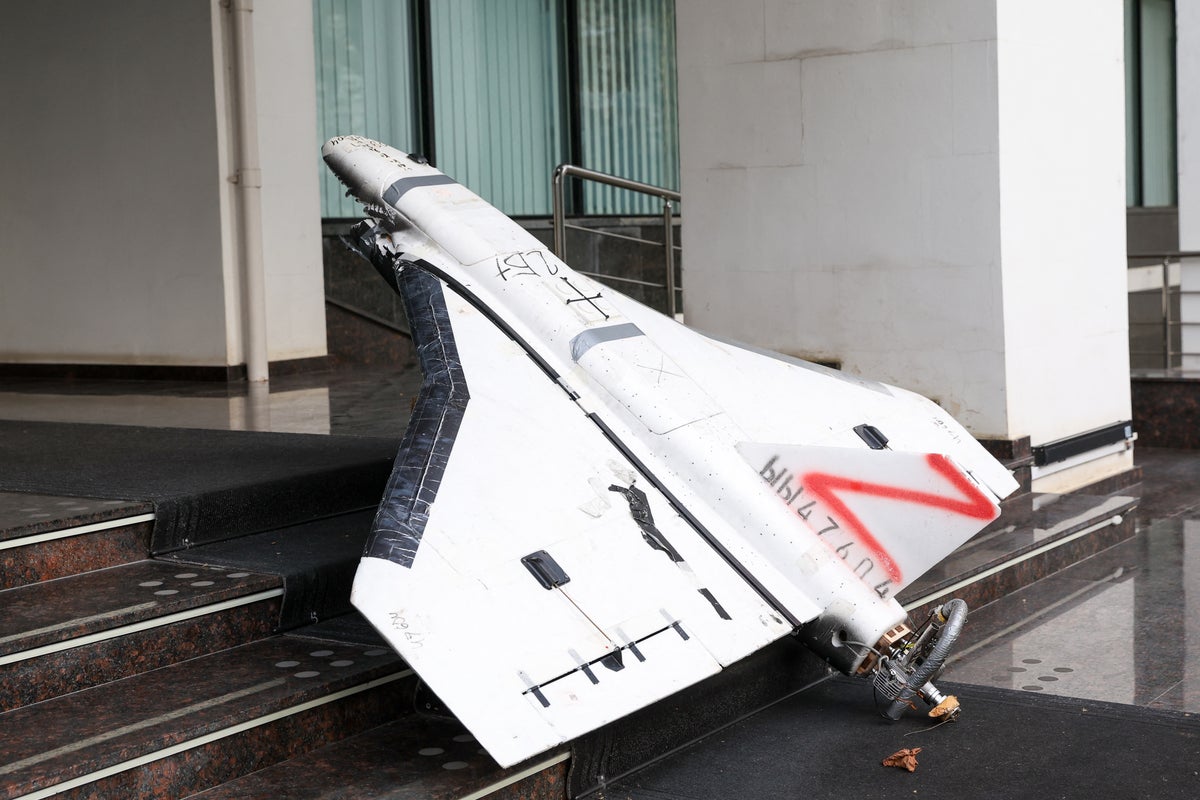
 Sep 24, 2026 · byEuronews
 Sep 22, 2026 · byCryptoBriefing
 Sep 22, 2026 · byBBC
 Sep 16, 2026 · byNaval Technology
 Sep 15, 2026 · byForeign Policy
![USG DiCarlo's remarks to the Security Council on Ukraine [as delivered] (23 September 2026)](https://reliefweb.int/modules/custom/reliefweb_meta/images/icons/Ukraine_UKR.png)