Afghanistan
101 articles · 1+ stories
Latest Afghanistan articles

Afghanistan: Humanitarian Access Severity Overview (June 2026)
Country: Afghanistan Source: UN Office for the Coordination of Humanitarian Affairs Please refer to the attached Infographic. Key Findings The consolidated Access Severity Mapping (ASM) across all humanitarian partner groups – UN Agencies, International NGOs and National NGOs – revealed the following: High access severity in four districts (representing one per cent of all districts). Moderate access severity in 233 districts (representing 58 per cent of all districts). Low access severity in 164 districts (representing 41 per cent of all districts). Compared with Round 8, the consolidated distribution shifted from 159 Low / 242 Moderate / 0 High to 164 Low / 233 Moderate / 4 High. This indicates a small shift from Moderate to Low overall, but with the re-emergence of High-severity districts: Maymana (Faryab), Muhmand Dara (Nangarhar), Barg-e-Matal (Nuristan) and Kamdesh (Nuristan). The highest concentration of Moderate ratings is in the Northeastern Region, where all 67 districts are Moderate. The Western Region has 27 Moderate and 17 Low districts, while the Central Highlands are entirely marked as Low in the severity ranking. In this round, access constraints were primarily driven by administrative and programmatic interference, restrictions affecting female humanitarian personnel and beneficiaries, MoU and project-approval delays, physical and border-related constraints, movement controls, and funding reductions. Overall, the Round 9 results should not be interpreted as indicating broad-based improvement in humanitarian access. The increase in Low-rated districts occurred alongside the re-emergence of High-severity districts and a reduction in humanitarian presence and activities in some locations. A lower number of reported constraints can therefore reflect reduced humanitarian exposure rather than improved access.
 Sep 23, 2026 · byReliefWeb
Afghanistan: Humanitarian Access Snapshot (August 2026)
Country: Afghanistan Source: UN Office for the Coordination of Humanitarian Affairs Please refer to the attached Infographic.
Sep 23, 2026 · byReliefWeb
Italy’s support helps WHO to bring essential health care closer to families in eastern Afghanistan
Countries: Afghanistan, Italy Source: World Health Organization 22 September 2026, Jalal Abad, Afghanistan – With funding from the Government of Italy, WHO is helping to keep essential primary health care within reach of families in Nangarhar and Laghman, particularly in communities where distance, transport costs and difficult roads can delay access to care. As of September 2026, 68 263 people, including returnees, have accessed WHO-supported health services through this funding, such as maternal and child health care, immunization, nutrition screening, mental health and outpatient treatment. For Gul Babo, from a remote village in Bati Kot district, that support became very real when her 2-year-old son developed diarrhoea, fever and a rash. Instead of travelling to Jalalabad, the provincial capital – a journey her family could hardly afford – she walked about 35 minutes to Barikab Basic Health Centre, where her child was examined, treated and sent home with the medicines and care advice he needed. “If this health centre was not here, taking my son to Jalalabad would have been very difficult for us,” Gul Babo said. Barikab Basic Health Centre serves more than 18 000 people from surrounding communities. Alongside routine outpatient services, it provides immunization, maternal and child health care, mental health and nutrition services. In August alone, its health workers supported 19 safe deliveries. “Before, many patients had to travel to Jalalabad for treatment. Now they can receive essential care closer to home,” said Dr Obaidurrahman Laiq, who is in charge of the health centre. Through the Italian contribution, WHO provides technical and operational support to help 7 primary health care facilities to continue delivering quality essential services to returnees and to communities in areas where access to health care remains challenging. “For families living far from major cities, timely access to care often depends on whether essential services are available close to home,” said Dr Edwin Ceniza Salvador, WHO Representative to Afghanistan. “With the support of the Government of Italy, WHO is helping health facilities continue serving communities, including returnees, that might otherwise face long, costly journeys to receive basic health care.” WHO thanks the Government of Italy for its valuable support in sustaining essential health care for families and communities in Afghanistan.
Sep 23, 2026 · byReliefWeb
UNHCR - Pakistan Overview of Refugee and Afghans of other status in Pakistan (as of 31 August 2026)
Countries: Pakistan, Afghanistan Source: UN High Commissioner for Refugees Please refer to the attached Infographic.
Sep 23, 2026 · byReliefWeb
UNHCR - Pakistan Voluntary Repatriation of Afghan Refugees (1 January to 31 August 2026)
Countries: Pakistan, Afghanistan Source: UN High Commissioner for Refugees Please refer to the attached Infographic.
Sep 23, 2026 · byReliefWeb
Berlinale Title ‘Lali’ to Open Tasveer Film Festival’s 21st Edition (EXCLUSIVE)
Seattle’s Tasveer Film Festival & Market has unveiled its 21st edition lineup: 136 films from 16 countries screening Oct. 13-18, opening with Sarmad Sultan Khoosat’s “Lali,” a Berlinale Panorama title, in its West Coast premiere. The films, spanning more than 25 languages, tell stories from Afghanistan, Bangladesh, Bhutan, India, the Maldives, Nepal, Pakistan, Sri Lanka, […]
 Sep 23, 2026 · byVariety
Afghan cyclist who escaped Taliban wins Asian Games silver medal
Fariba Hashimi, who used to disguise herself as a man to train in Afghanistan, finishes second in women's road race.
 Sep 22, 2026 · byAl Jazeera
IFRC Afghanistan Factsheet January to June 2026 Review
Country: Afghanistan Source: International Federation of Red Cross and Red Crescent Societies Please refer to the attached file. This Six-Month Review highlights key achievements of the operations and programmes in Afghanistan resourced through IFRC during the period of January to June 2026. It also outlines opportunities for further engagement to ensure sustained and effective humanitarian and resilience-strengthening interventions.
Sep 22, 2026 · byReliefWeb
Afghanistan: EMR Polio Bulletin - Issue No. 1459, Week 37 (ending on 20/09/2026)
Countries: Afghanistan, Djibouti, Pakistan, Somalia, Sudan, Yemen Source: World Health Organization Please refer to the attached Infographic.
Sep 22, 2026 · byReliefWeb
Afghanistan: Emergency Border Response report (30 August - 12 September 2026)
Countries: Afghanistan, Iran (Islamic Republic of), Pakistan Source: International Organization for Migration Please refer to the attached Infographic.
Sep 22, 2026 · byReliefWeb
Afghanistan Humanitarian Response: WASH Cluster Updates - Cluster Achievements - August 2026
Countries: Afghanistan, Iran (Islamic Republic of), Pakistan Sources: Danish Committee for Aid to Afghan Refugees, UN Children's Fund, WASH Cluster Please refer to the attached Infographic.
Sep 22, 2026 · byReliefWeb
Briefing to the United Nations Security Council by the Secretary-General’s Special Deputy Representative for Afghanistan, Georgette Gagnon, Kabul, 16 September 2026
Country: Afghanistan Source: UN Assistance Mission in Afghanistan Please refer to the attached file. [As delivered] Mr. President, Last month, the de facto authorities marked the fifth year of their return to power. They projected confidence, highlighting nationwide control, improved security, infrastructure development, and economic stabilization efforts as evidence of their success. They also launched an initiative to improve institutional openness and accountability. These developments are encouraging. They are occurring, however, in a context of no progress on issues that are of profound concern to the Afghan people and the international community: the severe restrictions on women and girls, exclusionary governance, a human rights crisis, and the continued presence of terrorist groups that threaten Afghanistan, the region, and international peace and security. In line with my last briefing to this Council, we assess that the de facto authorities face no significant armed or political threat. However, key risks to the country's stability are accumulating and mainly stem from the de facto authorities' own policies. Recent events in Badakhshan province illustrate these risks. While the armed clashes, as detailed in the Secretary-General's report, did not threaten de facto authority control, they show what can happen when local communities are excluded from decision-making, resource- sharing, and economic opportunity. During my recent visit to Badakhshan, people told me they seek opportunities, basic services, education, and a future for their children, not exclusion. Over the past three months, events in Herat province remained similarly concerning. UNAMA documented arrests of women and girls related to strict enforcement of the de facto authorities' dress code. Subsequent protests were met with the excessive use of force. The de facto authorities continue to carry out arrests of women, including over the past week, for alleged violation of the dress code. Across the country, UNAMA also documented mounting pressure on minority communities, media outlet closures, and arrests and intimidation of journalists. These incidents are part of the broader trend of coercive social regulation that is alienating many communities. UNAMA is engaging with the de facto authorities on these critical concerns in Kabul and through our field offices. Mr. President, This month UNAMA released a report on the experiences of victims of Afghanistan's decades- long conflict. Ninety-five per cent of people we interviewed in Afghanistan reported continued psychological and emotional harm, including depression, anxiety, trauma, and flashbacks. Many are still living with disability, chronic pain and loss of livelihoods. The findings remind us that peace is not only the absence of armed conflict. Sustainable peace requires dignity, inclusion, opportunity, and hope. Many Afghans tell us that the last five years of relative stability have provided a welcome breathing space. Yet they also tell us they are suffering under the rigid social policies of the de facto authorities and from Afghanistan's fragile economic and humanitarian situation. While Afghanistan has maintained a degree of macroeconomic stability, this does not equate to recovery. Economic growth has not kept pace with a rising population or made up for declining aid. Per capita income has dropped by 5.6 per cent, and exports are down. Afghanistan remains heavily dependent on imports, with border disruptions and wider regional instability contributing to weakened household purchasing power. Food insecurity and malnutrition present a serious concern. UNICEF reports that some 3.7 million children are suffering from deficient malnutrition, including some one million children experiencing severe acute malnutrition. The 2026 Humanitarian Needs and Response Plan is only 30 per cent funded. Humanitarian organizations are being forced to make hard choices on where they operate, whom they can reach and which services they can maintain. Health facilities, nutrition centers, women's protection services and other essential programmes have closed or scaled back due to funding cuts. At the same time, Afghanistan continues to experience an extreme demographic and socioeconomic shock. This year alone, nearly 1.2 million Afghans have returned from Pakistan and Iran, with total returns reaching 6.5 million since 2023. Without sustained support for returnees and host communities, competition over scarce resources risks fueling grievances, increasing displacement, and promoting instability. The de facto authorities' ban on opium poppy cultivation has been a positive measure with huge decreases in cultivation but risks bouncing back because of the economic pressures. Greater support for alternative livelihoods is crucial as is sustained and principled humanitarian and development assistance for the Afghan people. Mr. President, No discussion of Afghanistan can ignore the continued exclusion of women and girls. The words of an Afghan woman we met in Kandahar represents their experience, and I quote: "If we follow one rule, another one comes next; women wearing hijab are instructed to wear a mask; those wearing masks are told to wear a burqa; those wearing a burqa are questioned about the absence of a mahram; and those accompanied by a mahram are questioned about their relationship with him." By denying women access to education, professions, and public life, the de facto authorities are not safeguarding Afghanistan's future; they are constraining the talent and productivity needed for post-conflict recovery. This is at odds with their stated vision of a prosperous, self-reliant, and sovereign Afghanistan that can attract international investment. This month marks one year since restrictions preventing Afghan women from accessing UN premises, including national female UN personnel, were enforced. This is a violation of UN principles and a serious operational constraint. Humanitarian actors report difficulty reaching women and girls. Male-only delivery models cannot replace the participation of Afghan women staff, and organizations cannot consult women, assess risks, or verify that assistance reaches those who need it most. Funding cuts are compounding the problem. Nearly three-quarters of Afghan women-led organizations have seen reduced funding over the past year, while more than eighty per cent report increasing needs among women and girls. At a moment when Afghan women face unprecedented restrictions, international support mechanisms for them are decreasing. Across Afghanistan, Afghan women tell us that engagement, assistance and support from the international community represent what they call "points of hope". We urge international partners to prioritize support for Afghan women and girls. Above all, we again call on the de facto authorities to end all restrictions on women and girls. Mr. President, Relations between Afghanistan and Pakistan remain another matter of serious concern. The effects of sporadic hostilities and the almost year-long border closure are taking an increasing toll on civilians, communities and businesses. UNAMA continues to encourage de-escalation and dialogue to resolve differences, including on the presence of terrorist groups in Afghanistan, as reported by the Sanctions Monitoring Team. We welcome ongoing regional mediation efforts. Mr. President, As the High Commissioner for Refugees and the UNDP Administrator cautioned during their joint visit to Afghanistan in July, developments in Afghanistan do not necessarily stay in Afghanistan. Instability, increased displacement and out-migration, radicalization, and growing insecurity have regional and international consequences. Sustained international engagement, including through the Doha Process, remains essential. Currently, the Doha Process is the multilateral framework through which such engagement is occurring aimed at Afghanistan's reintegration into the international community based on compliance with international obligations and commitments. This structured engagement among the de facto authorities, the international community and a wide range of Afghan stakeholders has identified key issues and positions, expanded dialogue and, in some areas, built confidence. The main obstacle to progress is the de facto authorities' preference for bilateral approaches over multilateral engagement, which they view as undermining their claims of sovereignty. They continue, however, to participate in Working Groups on counternarcotics and the private sector and engage on some key political issues. What is now needed is a clear indication from the de facto authorities' of their willingness to address the wider concerns of the international community. To this end, the de facto authorities can take steps toward inclusive governance and lifting of restrictions on women and girls, and show they are meeting their counterterrorism commitments. Member States can reinforce that Afghanistan's reintegration into the international system is possible through concrete, balanced, cooperative steps that begin to address the key issues preventing reintegration. Mr. President, We remain confident in the value of principled and pragmatic engagement. It sustains dialogue on the key issues and concerns, maintains influence, reduces risks, creates opportunities for progress, and, critically, supports the needs and aspirations of the Afghan people. Thank you. Press contact: spokesperson-UNAMA@un.org
Sep 22, 2026 · byReliefWeb
Psychosocial Impacts of Prolonged Uncertainty on the Mental Well-being, Resilience, and Community Engagement of Afghan Refugee Youth in Indonesia
Countries: Indonesia, Afghanistan Source: Asia Pacific Refugee Rights Network Please refer to the attached file. EXECUTIVE SUMMARY Protracted displacement remains one of the most pressing humanitarian challenges facing refugees in Indonesia. As a non-signatory to the 1951 Refugee Convention, Indonesia provides temporary protection but no pathway to permanent legal status, leaving refugees in prolonged uncertainty with restricted access to rights and limited prospects for durable solutions. For many Afghan refugee youth, this uncertainty has persisted for over a decade, profoundly shaping their mental well-being, resilience, and ability to participate meaningfully in society. This qualitative study, conducted by Emplace Initiative with support from the Mixed Migration Centre (MMC) and the Danish Refugee Council (DRC), draws on in-depth interviews and focus group discussions with 25 participants, including Afghan refugee youth, refugee leaders, Indonesian stakeholders, and psychosocial practitioners, to examine the psychosocial impacts of prolonged displacement in Indonesia. THE FINDINGS demonstrate that prolonged uncertainty itself has become a major source of psychological harm. Participants consistently described living in a state of indefinite limbo, characterised by the inability to work legally, limited access to higher education, prolonged family separation, financial dependency, and the absence of a foreseeable future. Limbo is a daily struggle against stagnation. Rather than recovering from a single traumatic event, refugee youth experience continuous and cumulative stress resulting from years of legal insecurity and social exclusion. These directly erode well-being, manifesting in persistent anxiety, chronic sleep issues, and a pervasive emotional numbness. Feelings of hopelessness, emotional exhaustion, anxiety, and depression were recurrent throughout the research. Youth experience a tense duality in which independent milestones (higher education, careers) are suspended, yet adult responsibilities within families and communities accelerate. The structural absence of formal academic recognition, a transparent resettlement process, or clear futures heavily fractures the motivation to learn. Planning and engaging often feel pointless, leading to severe demotivation and heightened household or community tensions. The responsibilities at home also prevented some youth from participating in community activities. The study further reveals that refugee mental well-being deteriorates significantly during major humanitarian and geopolitical crises related to them. Events such as the Taliban's return to power in Afghanistan, the COVID-19 pandemic, the Iran vs Israel and the US conflict, reductions in humanitarian assistance, and growing uncertainty surrounding resettlement pathways repeatedly intensified psychological distress by reopening unresolved trauma and increasing concerns for family members remaining in Afghanistan, Pakistan, Iran, and other diaspora locations. Participants reported that these crises compounded existing vulnerabilities and, in some cases, contributed to severe mental health conditions, self-harm, and suicide within the refugee community. Beyond legal and economic insecurity, the research highlights the psychosocial impact of social and religious marginalization. While existing literature notes that Shia Hazaras often navigate public ignorance and sectarian stereotypes regarding their faith in Sunni-majority Indonesia, which frequently compels them to avoid public worship, informants in this study primarily highlighted marginalization driven by their status as refugees and foreigners. Their accounts note experiences of being degraded or patronized as “vulnerable” or “lesser” by non-refugees who were aware of their status. Additionally, because of their physical appearance, participants are often mistaken for foreign tourists among those unaware of their refugee status and condition, leading local vendors to charge them inflated prices, severely compound their existing financial limitations and reinforce their sense of alterity. Despite these significant challenges, the research also documents remarkable resilience among Afghan refugee youth. Participants identified education, volunteering, peer support, sports, faith, and engagement with refugee-led organizations (RLOs) or other civil society organizations as critical sources of hope, purpose, and psychological strength. Crucially, youth relied on high-volume daily activities such as teaching, managing RLOs, athletic training, creative outlets, workshops, and reading to construct a rigorous “secondary routine” . This self-imposed structure serves as a vital psychological anchor: it provides predictability in times of uncertainty, deliberately keeping their minds preoccupied to distract from looming anxieties about their future. Beyond distraction, well-being was sustained by a shared growth mindset and strong, aligned support systems. Informants actively engaged in continuous skill-building, such as mastering English and taking on community leadership, using these pursuits as a process of active meaning-making. By framing daily efforts as investments in their personal development, they restored a sense of agency, individual value, and purpose. Surrounding themselves with peers who shared this growth-oriented outlook created a protective community buffer. Operating within these networks, RLOs have emerged as trusted actors offering tailored psychosocial support, informal education, and leadership development, compensating for gaps in formal humanitarian assistance despite severe resource constraints. However, while grassroots programs and personal motivation successfully convert forced inactivity into periods of strategic skill-building, they exist within a fragile ecosystem. Community programming alone cannot resolve the root trauma of prolonged displacement, nor can individual resilience compensate for structural exclusion. While refugee-led initiatives strengthen coping capacities and social cohesion, they cannot substitute for formal legal recognition, basic rights, or long-term mobility. Sustainable well-being requires systemic policy reforms that restore dignity and enable refugees to rebuild their lives through expanded access to education, livelihoods, healthcare, legal protections, and long-term solutions, including resettlement and complementary pathways. Achieving this demands concrete commitment and coordination across all key stakeholders, including UNHCR, IOM, international donors, humanitarian organizations, the Indonesian government, local civil society, RLOs, community leaders, and refugee youth themselves. Ultimately, addressing psychosocial health requires dismantling the structural conditions of limbo that perpetuate harm. Ultimately, improving psychosocial well-being requires addressing not only individual mental health needs but also the structural conditions of prolonged displacement that continue to shape refugees' lives.
Sep 22, 2026 · byReliefWeb
Pakistan launches deadly strikes on eastern Afghanistan
The strikes follow an attack on a police headquarters in northern Pakistan Friday that killed at least 31 people, including 16 officers.

Bombing at mosque near police offices in Pakistan kills at least 21
PESHAWAR, Pakistan (AP) — The coordinated assault was the latest in a surge of militant violence near the border with Afghanistan where Pakistani Taliban militants have increasingly targeted police and other security forces as the government intensifies operations against them.
 Sep 21, 2026 · byReligion News Service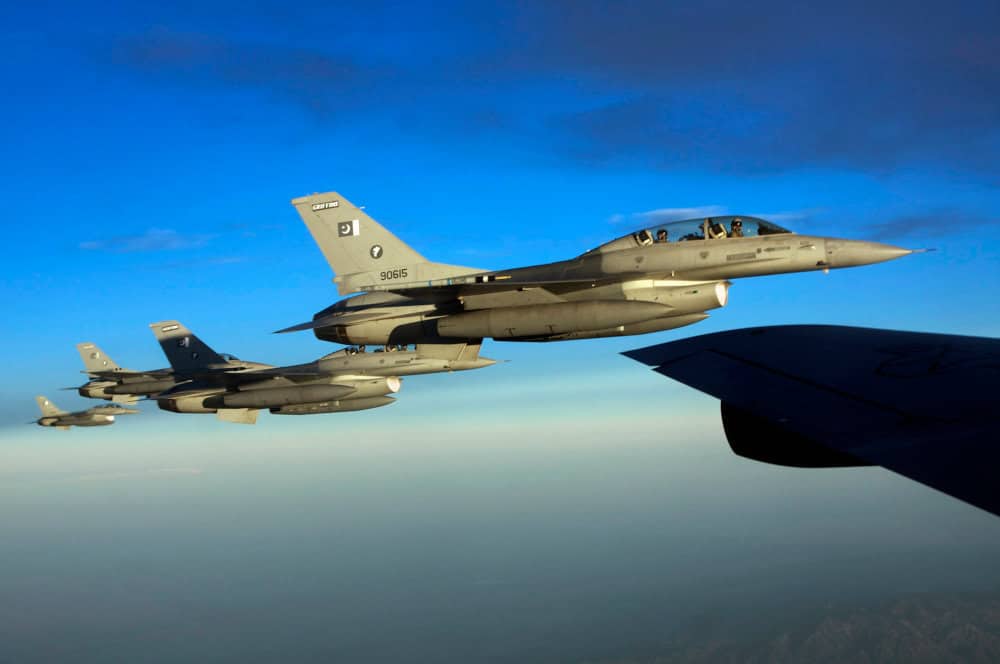
Pakistan conducts airstrikes in eastern Afghanistan in retaliation for terrorist attacks
The Pakistani Air Force conducted airstrikes in eastern Afghanistan reportedly targeting terrorist training centers in response to a recent complex suicide attack in western Pakistan. The Taliban denied involvement in the attack and promised an “appropriate response” to Pakistan’s airstrikes. The post Pakistan conducts airstrikes in eastern Afghanistan in retaliation for terrorist attacks appeared first on FDD's Long War Journal .

Disability-Inclusive Livelihoods: Lessons learned from Concern Worldwide’s experience in Afghanistan
Country: Afghanistan Source: Concern Worldwide Please refer to the attached file. This learning paper presents lessons from Concern Worldwide’s experience of integrating disability inclusion into livelihoods programming through the three-year FARAGIR programme in Afghanistan. Implemented in Badakhshan and Takhar provinces, Concern’s work explored how identifying barriers, assessing individual needs and adapting mainstream activities could strengthen the participation of persons with disabilities. Participants engaged in livelihood activities, Self-Help Groups, cash-for-work initiatives and local decision-making structures. Specialist support from Humanity & Inclusion helped address accessibility requirements and enabled appropriate assistive device provision. The paper shares practical lessons on designing disability inclusion into programmes from the outset, tailoring support to participants’ capacities and preferences, and combining accessible delivery with specialist expertise. It also highlights the importance of addressing stigma, promoting meaningful participation and strengthening disability-disaggregated data. These lessons can support the development of more accessible, participatory and responsive livelihoods and recovery programmes in Afghanistan and similar humanitarian contexts affected by prolonged crisis and displacement.
Sep 21, 2026 · byReliefWeb
Taliban says three killed in new Pakistan airstrikes on Afghanistan
The Afghan border provinces of Kunar and Paktika were reportedly struck. Pakistan last carried out deadly strikes on Afghanistan in June.
 Sep 21, 2026 · byDeutsche Welle
Afghanistan says three killed in Pakistani air attacks
Three members of one family killed in air raid on house in Kunar province, Afghan Taliban deputy spokesperson says.
Sep 21, 2026 · byAl JazeeraAfghanistan: From displacement to return: the humanitarian realities facing Afghan returnees
Countries: Afghanistan, Pakistan Source: ODI - Humanitarian Practice Network Mehrullah Rahmani In the outskirts of Afghanistan, hundreds of thousands of Afghan refugees have been forcibly returned from Pakistan . At the same time, growing numbers of Afghans have also been returned from Iran, adding to the scale and complexity of the humanitarian crisis. Many have been deported, while others have returned with few or no resources, leaving them to settle in remote mountainous areas far from major roads and essential services. They live in makeshift shelters, often just tents under the scorching sun or on bare stones, with no access to clean water, food, or even basic shelter. Healthcare is out of reach, and many lack even the simplest identification documents, leaving them vulnerable and invisible in the margins of society. Before fleeing to Pakistan, I was a high school student in Kabul, dreaming of becoming a doctor. My family led a relatively stable life: we had clean water to drink, food to eat, a roof over our heads, and the freedom to seek opportunities. But after August 2021, when the Taliban seized power, my father lost his job, and that fragile economic stability we once knew evaporated. We were forced to leave, seeking refuge in Pakistan, not knowing if we would ever return to a secure life. This experience is just one of many. Across Pakistan, families are being uprooted and returned to this limbo. Following renewed border clashes between Pakistan and Afghanistan, Pakistani authorities have intensified the forced return and deportation of Afghan refugees . Many returnees face significant humanitarian needs including lack of shelter, food, clean water and legal recognition, leaving them vulnerable during the reintegration process. These returnees need urgent support from shelter to food, from healthcare to legal recognition so that they are no longer invisible, but given the basic dignity they deserve. Read the full article on ODI-HPN
Sep 21, 2026 · byReliefWeb
Afghanistan: Weekly Market Report: Issue 311: Week 2 - September 2026
Country: Afghanistan Source: World Food Programme Please refer to the attached file. Key Highlights Market Overview Market conditions remained broadly stable during the second week of September, with modest weekly movements across most food commodities. Despite limited week-on-week price movements, several staple food commodities remained considerably above last year's levels, particularly rice, wheat, cooking oil and potato. Meanwhile, elevated fertilizer and fuel prices continued to contribute to higher agricultural production and supply-chain costs, while declining labour availability and purchasing power continued to affect vulnerable households. Food Categories: National food prices remained relatively stable during the second week of September, with most staple commodities recording only modest weekly changes. However, several commodities remained substantially above last year's levels, particularly rice, wheat, cooking oil and potato. • Wheat and Wheat Flour: Wheat grain and flour prices recorded negligible weekly changes, however compared to last year, wheat grain, wheat flour (low-price and high-price) remained 14%, 12% and 8% higher, respectively. • Rice: Palawi and Sholae rice prices declined by 0.9% and 0.4% week-on-week, respectively. Despite these minor declines, prices remained substantially above last year's levels, at 21% and 35% higher, respectively. Similarly, both Palawi and Sholae rice were significantly above their three-year average level by 21%. • Other Staples: Cooking oil, sugar, pulses, salt and bread prices experienced negligible week-on-week. However, year-on-year trends show a mixed picture, with cooking oil and sugar prices 14% and 9% higher, respectively, while pulses and bread were 12% and 3% lower than last year. • Vegetables: Vegetable prices declined during the week, with potato, onion and tomato prices falling by 3.7%, 1.7% and 0.2%, respectively. However, potato prices remained 38% higher than last year and 30% above the three-year average. Meanwhile, tomato and onion prices remained 30% and 8% lower year-on-year, respectively. Non-Food Categories: Terms of Trade (ToT): The ToT, which reflects purchasing power, remained under pressure for both labour-dependent households and pastoralists, as declining income and higher prices constrain access to food. • Casual Labour ToT: Nominal casual labour ToT declined by 0.7% week-on-week to 10.2 kg of low-price wheat flour, remaining 14% below last year and 11% below the three-year average. The sustained decline in purchasing power reflects continued pressure on labour income relative to food prices. • Labour Availability and Wages: Unskilled labour availability declined by 2.2% week-on-week to 2.0 days per week, remaining 15% below last year and 19% below the three-year average. Meanwhile, unskilled wages were 4% below last year, while skilled wages remained unchanged year-on-year. • Pastoralist ToT: A pastoralist could exchange a one-year-old female sheep for 264 kg of low-price wheat flour, which is 14% below last year and 7% below the three-year average, indicating a significant pressure on livestock-dependent households. • Fertilizers and Agricultural Inputs: Fertilizer prices recorded minor weekly declines, with DAP and urea falling by 0.4% and 0.8%, respectively. However, prices remained considerably above last year's levels, with DAP and urea 13% and 27% higher, respectively. Meanwhile, improved seed and animal feed prices remained 7% and 5% below last year, respectively.
Sep 21, 2026 · byReliefWeb
Afghanistan: Overview of Intended Districts of Return for Assisted Returnees, 01 January to 31 August 2026
Country: Afghanistan Source: UN High Commissioner for Refugees Please refer to the attached Infographic.
Sep 20, 2026 · byReliefWeb
Transparent Tribe Deploys New Rust Backdoor Using Private GitHub Repositories for C2
The Pakistan-aligned threat group tracked as Transparent Tribe (aka APT36 and Earth Karkaddan) has been attributed to a fresh set of cyber attacks targeting government and defense entities in India and Afghanistan. The attacks, per Zscaler ThreatLabz, involve the use of previously undocumented tools called RUSTYSHADE, RUSTYMOVE, PSNATCH, and BASHNATCH. The activity has been codenamed Operation