Topic · Place
Amman
23 articles
See also
📰
Latest Amman articles

📰
Royal Jordanian Removes Karachi Preliminary Schedule Filing in 2027
Published at 1400PDT / 2100GMT 05OCT26 Royal Jordanian in recent weeks removed schedule filing for Pakistan. Previously reported on AeroRoutes on 24AUG26, the Oneworld member tentatively filed 4 weekly Amman – Karachi flights, which would mark the airline’s return since July 2005. Previously filed 4 weekly flights from 01MAR27 as follows. RJ194 AMM0215 – 0830KHI 290 3 RJ194 AMM0235 – 0850KHI 290 7 RJ194 AMM2235 – 0450+1KHI 32N 14 RJ195 KHI0550 – 0925AMM 32N 25 RJ195 KHI0930 – 1305AMM 290 3 RJ195 KHI0930 – 1325AMM 290 7
Oct 5, 2026 · byAeroRoutes
📰
Qatar Airways Removes One-Time A380 Amman Flight in Jan 2027
Published at 1300PDT / 2000GMT 05OCT26 Qatar Airways in recent weeks removed planned Airbus A380 one-time operation to Jordan. Reported on 10AUG26 on AeroRoutes , the carrier originally filed one-time A380 Doha – Amman flight on 28JAN27, operating as QR402/403. As of 05OCT26, QR402/403 on 28JAN27 is now showing A350-900 operating. QR402 DOH0810 – 1115AMM 359 QR400 DOH1600 – 1905AMM 789 QR404 DOH2030 – 2335AMM 77W QR405 AMM0230 – 0500DOH 789 QR403 AMM1410 – 1640DOH 359 QR401 AMM2035 – 2305DOH 789
Oct 5, 2026 · byAeroRoutes
📰
oPt: MSF Gaza: Three years on, Israel is asphyxiating Gaza and dismantling the means of survival
Country: occupied Palestinian territory Source: Médecins Sans Frontières Amman/Jerusalem, 5 October 2026 – Médecins Sans Frontières (MSF) warns that Israel is progressively asphyxiating Gaza and continuing its genocide: the space in which people can live is vanishing, while the conditions people need to survive are being systematically destroyed through continued violence, the deliberate blockade of essential supplies, and the destruction of healthcare and vital infrastructure. In the past year, the physical trapping of people in Gaza has been made increasingly definitive by the establishment of Israel’s Yellow Line. Originally presented as a temporary, first-phase military withdrawal position and a key part of maintaining the so-called ceasefire – it is now reinforced by military positions, berms and ongoing demolitions and has continued to move west, squeezing people into a smaller and smaller area. Israeli forces now occupy approximately 65 per cent of Gaza, using the line to draw a clear border around this area. As the Yellow Line moves, the threat to people living nearby becomes increasingly immediate, compounded by the uncertainty of approaching a line that is not clearly or consistently demarcated. People risk being shot by Israeli forces when they approach it, and MSF teams continue to treat people with gunshot wounds sustained nearby. Its encroachment is also disrupting the delivery of essential assistance: MSF water trucking has had to stop when shooting occurs near communities living close to the Yellow Line. “The Yellow Line cannot be treated simply as a line on a map.” says Amande Bazerolle, MSF head of emergency response in Gaza, Palestine. "It has become a mechanism of encirclement and ethnic cleansing, while cutting communities off from the infrastructure, healthcare, water and other essentials they need to survive.” Nor is violence confined to the areas around the Yellow Line. In June and July alone, despite a so-called ceasefire, MSF teams treated more than 1,200* cases of violent trauma across Gaza, including blast injuries, burns, gunshot wounds and injuries resulting from physical assault. Over the past three years, our teams have treated more than 200,000 trauma cases*, including injuries resulting from intentional physical violence, while Israel’s military offensive has killed more than 74,000 people, including more than 20,000 children. As Israel confines Palestinians into increasingly limited areas, families are being pushed into overcrowded and unlivable conditions, without sufficient access to clean water, sanitation, shelter or healthcare. These conditions are contributing to the spread of disease. MSF teams have treated more than 11,000 cases of skin diseases such as scabies this year alone, while seeing more than 1,500 cases of chickenpox in June and July. MSF distributed around 2.1 million litres of drinking water per day in August, yet the scale of need remains far beyond what can be met under these restrictions. “Most people have less than six litres of domestic-use water per day and limited access to basic hygiene items such as soap and detergent,” says Dr Murad Asaliyya, medical activities manager in Gaza. “We are treating gastroenteritis, acute respiratory infections, a lot of skin conditions, hepatitis, bacterial skin infections, scabies and lice. At the same time, we are facing severe shortages in terms of medical supplies. Even the cream we need to treat scabies has been restricted by the Israeli authorities.” Over the past three years, access to healthcare has deteriorated dramatically, with hospitals increasingly running out of basic supplies and patients unable to access essential medicines and treatment. Restrictions on essential supplies such as engine oil and spare parts are also crippling the infrastructure needed to keep hospitals, ambulances and water systems running, with generators already breaking down and water-trucking operations reduced. The destruction of Gaza’s healthcare system, damage to more than 80 per cent of all structures in Gaza1, alongside the lifelong physical and mental health impacts of repeated violence and displacement, will extend far beyond the present and prevent any meaningful recovery for years to come. Nor is this crisis limited to Gaza. Since 2023, violent settler attacks, military operations and raids on homes, displacement camps and agricultural land, illegal settlement expansion, displacement, home demolitions and movement restrictions have rapidly escalated across the West Bank and East Jerusalem, particularly this year. Patients at MSF clinics tell teams about homes being demolished by Israeli forces, attacks by settlers and livestock being stolen. The policies of violence, harassment and forced displacement affecting Palestinians extend beyond Gaza, causing further fragmentation of the occupied Palestinian territory. “It will take generations to recover from the harm that has already been done over the past three years, and in the preceding decades, while the excruciating consequences of Israel's ongoing genocide are still being felt every day,” says Bazerolle. “Destruction, displacement and deprivation have become normalised - practices Israel is carrying out with impunity. Governments must act now to ensure Israel stops the destruction and killing, prevents ethnic cleansing, and stops denying Palestinians the means of survival**.”** *This refers to cases not patients, including new or follow up consultations. Gaza: Three years of destroying the conditions for life Following Hamas’ attacks on 7 October 2023, Israel launched a massive military offensive across the Gaza Strip, causing widespread and systematic destruction of essential civilian infrastructure. Three years later, more than 73,000 Palestinians have been killed and over 173,000 wounded, according to the Gaza Ministry of Health. The cumulative physical toll and mental trauma caused by extreme violence, the loss of family members, homes and memories, repeated forced displacement, and inhumane living conditions will scar generations. Over three years, Israel’s military campaign has devastated Gaza’s health system, while Palestinians have faced mass displacement, starvation, repeated attacks, growing restrictions and the destruction of essential infrastructure and access to healthcare. These images document the widespread suffering of Palestinians in Gaza, and how the conditions for providing and receiving healthcare have progressively deteriorated. Over the past three years, MSF teams have provided Palestinians with surgical care, wound and burn care, malnutrition screening and treatment, maternal and paediatric care, and other vital services at a time of urgent need. MSF currently runs or supports four hospitals, while supporting four general healthcare centres and working in five clinics and four medical points, both in the northern and southern part of the Strip. Three years later, attacks on healthcare facilities and restrictions on the entry of vital supplies have severely constrained the provision of medical care. Hospital generators, ambulances, water pumps and water trucks depend on engine oil and spare parts to keep running. Yet Israeli authorities continue to block their entry into Gaza, disrupting services that people rely on to survive. Nearly 2,300 health and humanitarian workers have been killed since the 7 October, including 15 of our MSF colleagues. Nasser had become one of the few remaining hospitals able to provide emergency surgical care in southern Gaza. Hospitals and health facilities came under extreme pressure, as wounded patients arrived in unprecedented numbers while thousands found shelter inside and around them. Three years on, WHO reported that 94% of hospitals in Gaza had been damaged or destroyed, with only 19 of the Strip’s 36 hospitals still operational, many providing only limited services. During the first months of the Israeli military offensive many families were displaced repeatedly, particularly from the northern and middle areas of the Strip. In early 2024 Rafah was already hosting about 1.5 million people who had sought refuge there. Subsequently the Israeli forces heavily destroyed also Rafah. Medical evacuations from Gaza remain extremely limited . WHO estimates that 18,500 patients need specialised medical care that is unavailable there but are not allowed to leave. More than 900 patients have already died while waiting to be evacuated for treatment. Since 7 October, 82 per cent of structures in Gaza have been damaged, with two thirds of them destroyed according to UNRWA. Thousands are forced to live in dangerous conditions with limited access to clean water and toilets. Nearly 90 per cent of Gaza’s water and sanitation infrastructure has been damaged or destroyed, including desalination plants, boreholes, pipelines and sewage systems. After months of the Israeli government’s siege and restrictions on food and aid, the Integrated Food Security Phase Classification (IPC) formally confirmed famine in Gaza on 22 August 2025. MSF teams identified the first cases of child malnutrition in January 2024. Between then and March 2026, MSF admitted 4,950 children under 15 for acute malnutrition, 98 per-cent of whom were under five, while 3,482 pregnant and breastfeeding women were enrolled in outpatient nutrition programmes. Three years on, malnutrition has relatively stabilised amid the so-called ceasefire, but the situation remains extremely fragile, with people facing restricted access to food and essential supplies. Israeli authorities dismantled the UN-led humanitarian aid distribution system and replaced it by GHF in areas under Israeli military control and “secured” by private American armed contractors. Between 7 June and 24 July 2025, MSF health centres near GHF sites received 1,380 injured people, including 28 dead bodies, and treated 174 people with gunshot wounds. One year on, MSF still treats people that received life-changing injuries and trauma at GFH sites. OCHA estimates that 90 per cent of Gaza’s population has been displaced multiple times. Since October 2025, Gaza became increasingly fragmented by an unclearly marked and constantly shifting military-controlled “yellow line”, which divided areas under different levels of Israeli military control. The Israeli military is estimated to fully control 58.9 per cent of the Strip, severely restricting movement and access for civilians and humanitarian actors. When the unmarked buffer zone, known as the “orange line”, is also taken into account, the area affected rises to an estimated 64.9 per cent of Gaza. Since 1 January 2026, MSF’s registration in Israel has been withdrawn, preventing international MSF staff from entering Gaza and blocking MSF supplies from entering the territory. All international staff were required to leave by the end of February. The Israeli authorities had ordered 37 aid organisations, including MSF, to cease operations in Gaza and the West Bank by 31 March. MSF has continued its work through 1,500 Palestinian staff registered with the Palestinian Authority, with international staff supporting the response remotely from Amman. Between late 2024 and early 2026, during a period of severe restrictions on food and humanitarian aid , an analysis of MSF medical data found higher rates of prematurity and mortality among babies born to mothers affected by malnutrition during pregnancy, as well as high rates of miscarriage. Despite the so-called ceasefire, Palestinians continue to face daily violence and injuries. Israel’s genocidal campaign in Gaza has left an estimated 43,000 people with life-changing injuries, with more than 50,000 requiring long-term rehabilitation. The Ministry of Health has documented approximately 6,000 amputations, including 1,500 children. Rehabilitation services are severely overstretched, while specialised equipment remanins extremely difficult to obtain.
 Oct 5, 2026 · byReliefWeb
📰
UN Special Envoy for Yemen concludes visit to Cairo | United Nations Peace Operations
Country: Yemen Source: UN Office of the Special Envoy of the Secretary-General for Yemen Amman, 30 September 2026 – The United Nations Special Envoy for Yemen, Hans Grundberg, concluded a visit to Cairo, where he met Egypt's Minister of Foreign Affairs, Badr Abdelatty, and the Secretary-General of the League of Arab States, Nabil Fahmy. They discussed the recent escalation in Yemen and its regional repercussions, including in the Red Sea, and the UN’s efforts to sustainably end the conflict. The Special Envoy expressed his gratitude for the continued support of Egypt and the League of Arab States for the UN's mediation efforts.
Sep 30, 2026 · byReliefWeb![Syria: Reconstruction Deals Lack Critical Rights Framework [EN/AR]](https://reliefweb.int/sites/default/files/styles/thumbnail/public/previews/29/02/2902c62f-8774-4c7b-9a06-aa31cf098046.png)
Syria: Reconstruction Deals Lack Critical Rights Framework [EN/AR]
Country: Syrian Arab Republic Source: Human Rights Watch Please refer to the attached file. Government, Donors, Investors Should Ensure Rebuilding Serves Communities (Amman) – The Syrian transitional government is signing billions of dollars in reconstruction deals without a human rights framework that would ensure that rebuilding respects, protects, and fulfills the rights of affected people, Human Rights Watch said today. In March 2026, the transitional government unveiled a national recovery blueprint, and billions of dollars in international pledges for aid, and financing and investment commitments have followed. But the legal frameworks governing reconstruction do not require the government or developers to consult affected communities, including those still displaced, before projects are approved. The process should also require negotiating—instead of imposing—compensation terms and providing an independent mechanism for residents to challenge decisions about their homes and land. “Syria's reconstruction is progressing slowly, but without a rights framework, it could leave many Syrians with a raw deal,” said Hiba Zayadin , senior Middle East advisor at Human Rights Watch. “The legal framework being finalized now will determine whose homes are rebuilt, whose claims are recognized, and whose voices are heard.” Human Rights Watch conducted field research in Syria in May 2026, including interviews with residents of Ghadfa village in the Idlib countryside who had returned from displacement camps. Human Rights Watch also interviewed an activist, whose identity is being withheld for their protection, calling for the repeal of Decree 66 and the restoration of property rights in Marota City. Human Rights Watch reviewed Syrian government statements and documents including President al-Sharaa's March 2026 remarks on reconstruction published by the Syrian Arab News Agency, and the Constitutional Declaration of March 2025. Human Rights Watch also reviewed reports and data from the World Bank, the International Rescue Committee, the International Organization for Migration, UNHCR, OCHA, the Arab Reform Initiative, and The Syria Report. People returning to their communities are finding homes destroyed, and villages without water, electricity, or health care services. Housing, land, and property claims from the Assad era remain unresolved. Reconstruction projects are being initiated without meaningful participation by affected residents. In Jobar, a neighborhood east of central Damascus, approximately 95 percent of buildings were destroyed, according to The Syria Report . In Ghadfa, in the Idlib countryside, residents who returned from displacement told Human Rights Watch in May 2026 that they had no running water, functioning electricity grid, adequate sanitation, operating schools, or nearby medical services. Syria is emerging from more than a decade of conflict, which caused mass devastation to cities, homes, and infrastructure across many parts of the country. In October 2025, the World Bank estimated physical damage at US$108 billion and average reconstruction costs at $216 billion, with the full range between $140 billion and $345 billion. The transitional government has moved quickly to attract reconstruction investment, successfully restoring diplomatic ties and welcoming foreign capital, as the US and European countries lifted crippling sanctions that had frozen investment for years and impoverished Syrians . Gulf states have led investment. Saudi Arabia has pledged $6.4 billion across real estate, infrastructure, telecoms, and energy; and together with Qatar, jointly cleared Syria's $15.5 million in World Bank arrears in April 2025, unlocking engagement after 14 years of suspension.Qatar has committed $4 billion , and the UAE's DP World secured a 30-year concession over Tartus port. The World Bank has since approved over $1 billion in grant-funded projects, and the International Monetary Fund has established a technical cooperation program with Damascus. Among European governments, France , Germany , and to some extent Italy, have emerged as the most active bilateral partners. The EU, which pledged €620 million (about $713 million) for humanitarian aid and socio-economic recovery in 2026-2027, announced an investment conference in Syria in 2027 and is strengthening its political ties with Syria. EU member states are in a strong position to lead by example and mobilize other donors to ensure that human rights frameworks are strongly anchored in Syria’s reconstruction and recovery. But as the Global Governance Institute noted in August 2026 , pledges and announcements have far outpaced actual investment on the ground, and meaningful disbursements from international creditors will only follow once governance and legal frameworks are in place. According to a July 2026 report by the International Rescue Committee, over 3.5 million refugees and internally displaced Syrians have returned to their communities since December 2024, but not all returns have been fully voluntary. Many were driven by the deteriorating conditions for displaced people, the end of aid, precarious legal status, and unaffordable rent in places where they were living. Syria is bound by the International Covenant on Economic, Social and Cultural Rights, which under General Comment 4 , defines the right to adequate housing as including guarantees security of tenure, access to services, habitability, and suitable location. It is also bound by the International Covenant on Civil and Political Rights, which guarantees the right to an effective remedy. Both treaties require rights to be respected without discrimination on grounds including ethnicity and religion. The UN Basic Principles and Guidelines on Development-Based Evictions establish what consultation, compensation, and due process must look like before any displacement for development purposes. The UN Guiding Principles on Internal Displacement and the Pinheiro Principles on housing, land, and property restitution establish clear standards for how states should manage return and reconstruction in post-conflict settings. International donors should ensure that their funding supports rights-aligned recovery and does not cause or contribute to violations. Businesses and investors should conduct human rights due diligence before entering reconstruction agreements and throughout their implementation. “The legal frameworks governing Syria's reconstruction are still being written,” Zayadin said. “That is an opportunity, but only if the international community and the transitional government use it to build protections for affected communities. A durable recovery depends on getting things right.” Background In October 2025, the International Organization for Migration found that conditions for Syrians returning to their communities remained fragile, with widespread housing, land, and property disputes, limited access to public services, and pervasive explosive ordnance contamination hampering safe movement and livelihoods. Halfway through 2026, the UN humanitarian appeal for Syria was just under one-third funded . Since May, the World Food Programme has halved emergency food assistance in Syria, from 1.3 million people to 650,000. About 5.5 million people remain internally displaced, according to the March operational update by UNHCR, the UN refugee agency. The gap between pledges and delivery has real consequences for rights. While affected residents can in principle pursue individual cases through Syrian courts, the judiciary remains under-resourced and inaccessible for most property disputes, with documentation requirements prohibitive for many returnees . There is no practical avenue to contest reconstruction decisions more broadly, and no specialized grievance mechanism for reconstruction disputes has yet been established. Some reconstruction is underway. The Al-Rastan Bridge in Homs, a key economic artery linking several Syrian provinces, reopened in June 2026 after rehabilitation financed by the Syria Humanitarian Fund in partnership with the UN Development Program (UNDP). Rashid Bridge over the Euphrates in Raqqa reopened in July 2026 after a four-month reconstruction project. And the World Bank approved a $146 million grant in 2025 to rehabilitate the national electricity transmission infrastructure. While these infrastructure projects are meaningful, efforts remain modest relative to the scale of need, and there is no framework in place to ensure that projects uphold the rights of Syrians as reconstruction proceeds. Economic, Social, and Cultural Rights in Reconstruction Under the International Covenant on Economic, Social and Cultural Rights , to which Syria acceded in 1969, and under Article 12 of Syria’s Constitutional Declaration of March 2025 , the Syrian government has an obligation to respect, protect, and fulfill economic, social and cultural rights throughout the reconstruction process. These include the rights to adequate housing, water and sanitation, electricity, health, education, food, and social security. Electricity is also essential to the realization of many other rights, including powering water and sanitation systems, healthcare facilities, schools, and homes. The government should ensure that all these rights are secured without discrimination of any kind including on the grounds of ethnicity or race, or religion. The conditions Human Rights Watch documented in areas of return place these rights at serious risk. In Ghadfa, for example, residents described living without running water, a functioning electricity grid, adequate housing, operating schools, or nearby medical services. Residents must purchase water privately and pool money to pay teachers’ salaries, shifting the cost of public services onto households already facing severe economic hardship. The government should make a commitment to provide as much of its available resources as possible toward the full realization of economic, social and cultural rights, Human Rights Watch said. It should ensure minimum essential levels of these rights. Reconstruction plans and budgets should use transparent, rights-aligned criteria to address the most serious rights deprivations. Syria is also under an obligation to respect the right to property, including property held in association with others, without discrimination. This right is protected under Article 17 of the Universal Declaration of Human Rights , Article 5(d)(v) of the International Convention on the Elimination of All Forms of Racial Discrimination, to which Syria acceded in 1969, and Article 31 of the Arab Charter on Human Rights , which Syria ratified in 2007. The Right to Participate International human rights law requires that communities affected by reconstruction have meaningful input into decisions that affect their homes, land, and neighborhoods before those decisions are made. The relevant instruments include Article 11 of the International Covenant on Economic, Social and Cultural Rights, which guarantees the right to adequate housing and has been interpreted to require genuine participation in housing-related decisions; the UN Basic Principles and Guidelines on Development-Based Evictions and Displacement , which establish that consultation must be meaningful, timely, and capable of influencing outcomes; and the UN Guiding Principles on Internal Displacement , which require that displaced persons participate in the planning and management of their return and reintegration. In Syria, these standards are not being met. President Ahmed al-Sharaa outlined in March 2026 that for cities where destruction has reached 90 to 100 percent, the government cannot finance construction alone and is considering an investment-based reconstruction model, with legal frameworks still being finalized. But the Arab Reform Initiative, drawing on 45 interviews with residents, civil society actors, officials, investors, and others between July 2024 and May 2026, found that reconstruction decisions are already being made without community participation, clear compensation standards, or accessible grievance mechanisms. It documents how this gap is already generating conflicts. In Homs, Aleppo, and Damascus, projects announced without prior community consultation have triggered protests, partial reversals, and deepening distrust of public authorities. In Damascus, Decree 66, an Assad-era law issued in 2012 was used to displace thousands without due process or adequate compensation and has not been repealed by the transitional government. The Damascus governor suspended its implementation in October 2025 pending legal review, but no presidential decree has resolved its legal status, and the projects it enabled continue to be marketed to investors. Law No. 10 of 2018 extended the Decree 66 model nationwide, requiring residents to prove ownership within a short time or forfeit their rights, which has disproportionately affected those displaced by conflict. Wartime redevelopment frameworks, including the Marota City and Basilia City development projects in Damascus, are being repackaged as investment opportunities for the private sector or other governments, according to the Arab Reform Initiative, risking legitimizing past dispossessions rather than providing redress. Both projects are managed by Damascus Cham Holding, a company established under Assad and now operating under the transitional government. A presidential committee was formed in December 2025 to review Decree 66 procedures, and some compensation decisions were issued in May 2026, but the legal framework governing both projects remains unresolved and affected residents continue to await a durable solution. In Jobar, the neighborhood east of central Damascus where approximately 95 percent of buildings were destroyed, authorities told residents they could not rebuild even on their own initiative and that a proposed foreign-backed project would provide them with new housing with floor area equivalent to only 50 percent of the area of their former homes, according to the Syria Report and Al Jazeera . Former homeowners would receive new units equivalent to only 50 percent of their former homes as compensation; residents of informal settlements would receive 30 percent of their land area, with no recognition of structures built on it; and tenants would receive nothing. The Right to Return in Safety and Dignity The UN Guiding Principles on Internal Displacement and the 1951 Refugee Convention stipulate that returns of displaced persons and refugees must be voluntary, safe, and dignified. To be voluntary, a decision to return must be free and informed, not driven by deteriorating conditions in displacement. Safety requires that adequate housing and public services are available upon return. Dignity requires that property rights are respected and that residents' claims are received and fairly adjudicated. Though UNHCR has said economic conditions in Syria remain dire, political momentum around returns is accelerating. During President al-Sharaa's state visit to Berlin in March 2026 , Chancellor Friedrich Merz and al-Sharaa expressed a shared hope that 80 percent of Syrians in Germany would return within three years; a figure Merz subsequently clarified was aspirational rather than a formal target. A September 2025 UNHCR survey found that while 18 percent of Syrian refugees expressed a desire to return within 12 months, the most cited concerns among those considering it included housing availability, limited employment opportunities, lack of financial resources, and inadequate access to basic services. Many returns, whether of refugees or internally displaced people, are not voluntary in any meaningful sense. Funding cuts to displacement camps in northwest Syria, including the near-total collapse of US humanitarian funding in 2025, have left camp residents with little choice but to return to communities that cannot yet support them. The transitional government's “Syria Without Camps” initiative aims to phase out displacement camps entirely by 2027. And yet, the communities to which displaced people are expected to return often lack the required infrastructure and public services to guarantee an adequate standard of living. During the visit to Ghadfa, Human Rights Watch interviewed three residents who had returned from displacement camps to find no running water, no electricity, and no functioning schools. They said they truck in water privately and pool money to pay teachers' salaries. Individual solar panels on buildings have replaced an electricity grid that does not function. Noureddine Othman, head of Ghadfa's municipal council, said that before the war the village had 8,500 residents, at least five schools, and a hospital serving the surrounding area. It now has an estimated 13,000 people, he said, with only 7 houses out of about 1,500 with concrete roofs. Many residents have pitched tents where their homes once stood or on top of damaged structures that lack roofs. “I returned after the fall [of Assad] and found nothing, not even a room to rest in, so I went back to displacement for another five or six months,” he said. “My wife and I eventually came back and we're living in a room with no kitchen and no bathroom. We came back hoping God would send us some organization, someone, to help us [get back on our feet].” Sohaib al-Othman, a Ghadfa resident who had recently returned with 13 family members including 3 children with disabilities, said: “After years of displacement, I returned home to find the house in complete ruins. We are deprived of everything needed for a dignified life; water, sewage, electricity, medical services. The thing I struggle with the most is that the nearest operating medical point to me is 50 kilometers away and I don't have a vehicle.” The transitional government should treat the need to restore public services as an immediate rights obligation, not a future phase of reconstruction, Human Rights Watch said. The Right to an Effective Remedy The right to an effective remedy, guaranteed under the ICCPR, requires accessible, independent, and enforceable mechanisms for people whose rights are violated during reconstruction to seek redress. Syria's reconstruction framework does not yet provide such mechanisms. Communities confronting decisions about their land, homes, and neighborhoods have no independent formal channel through which to challenge those decisions. They resort instead to street protest, social media pressure, and political mediation, as residents of Jobar , Marota, and Basilia City are all reported to have done. An activist who called for the repeal of Decree 66 and the restoration of residents' property rights in Marota City in Damascus told Human Rights Watch on June 20 that appeals through official channels have gone unanswered. The authorities had repeatedly cited political instability and the absence of a People's Assembly as reasons for the delay. The People’s Assembly began functioning in July. “Then we were shocked to learn that Damascus Cham Holding Company was promoting investment opportunities for Gulf investors that included the sale of our land,” he said. “We met with the minister of justice, who promised to refer our case to the presidency. This remained only a promise, and no action was taken.” Recommendations To Syria’s Transitional Government Ensure that the rights and freedoms guaranteed under Article 12 of the Constitutional Declaration of March 2025, including all rights under international human rights treaties ratified by Syria, are applied fully to reconstruction and recovery processes; adopt interim guidance requiring all state authorities involved in reconstruction to comply with those obligations, without discrimination on grounds of ethnicity, religion, or political opinion. Incorporate binding community participation requirements in legal frameworks and planning processes before any reconstruction project is approved, contracted, or presented to investors; Treat displacement as a last resort in reconstruction, prioritize restitution and return for all those displaced; and where restitution is not possible, establish clear, fair compensation standards that reflect actual use and occupancy for all those displaced by reconstruction, including those with informal tenure and tenants; Institute a moratorium on demolition where ownership and compensation arrangements have not been publicly established and accepted by residents; Repeal or independently review Decree 66 and Law No. 10 of 2018, which extends its provisions across Syria, to assess what restitution is owed to affected residents; Create accessible, independent grievance mechanisms for all reconstruction projects; Ensure reconstruction processes are linked to transitional justice on housing, land, and property; Prioritize immediate restoration of public services—water, sanitation, electricity, schools, healthcare—in areas of active return, not as a future phase of reconstruction. To International Donors and Investors Make rights compliance a binding condition of reconstruction financing, including consulting communities, protecting property, and providing grievance mechanisms; Require human rights impact assessments before funding projects in areas with unresolved displacement or contested property; Use the upcoming EU-Syria investment conference to make rights standards a prerequisite, not an afterthought, and encourage participating companies, to adopt human rights due diligence frameworks; Coordinate with other international donors to ensure reconstruction financing is consistently conditioned on rights compliance across all bilateral and multilateral channels; Require fulfilling conditions for voluntary, safe, and dignified return in any political return timelines; Fund public service delivery alongside capital investment and maintain humanitarian funding as reconstruction scales up. To International Financial Institutions Require prior assessment of the human rights impacts of fiscal consolidation, privatization, or user fees to ensure that they do not discriminate, result in unjustified retrogressive measures, or deny anyone minimum essential levels of water, healthcare, housing, or other rights; Ensure that financing and technical assistance programs incorporate human rights impact assessments and housing, land, and property protections as core conditions, not peripheral considerations; Support the establishment of an independent property dispute resolution mechanism as part of governance reform programming. To Corporations and Financial Actors Conduct human rights due diligence before entering reconstruction agreements, including the need to resolve contested ownership and community opposition; Require evidence of community consultation and grievance mechanisms before investing; Enter agreements involving land or property only if mechanisms are in place to resolve claims over land or property from affected communities, including through compensation and replacement land where appropriate.
Sep 28, 2026 · byReliefWeb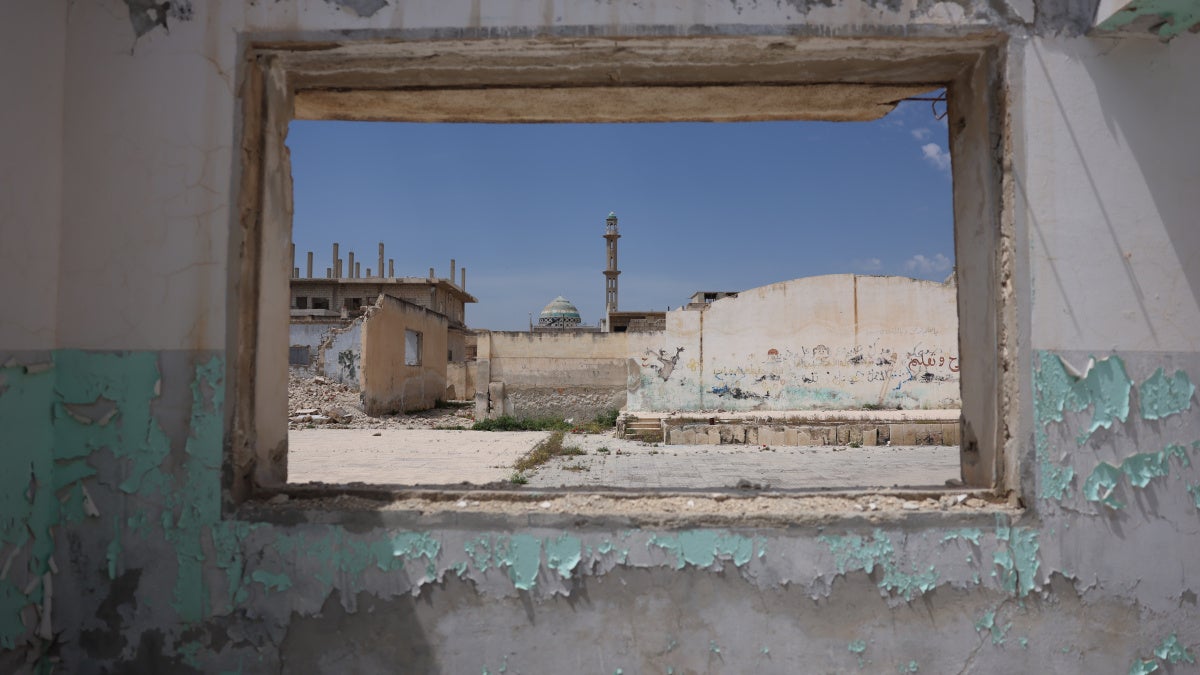
Syria: Reconstruction Deals Lack Critical Rights Framework
Click to expand Image A destroyed school in Ghadfa village, Idlib countryside, Syria. © 2026 Ali Haj Suleiman/Human Rights Watch (Amman) – The Syrian transitional government is signing billions of dollars in reconstruction deals without a human rights framework that would ensure that rebuilding respects, protects, and fulfills the rights of affected people, Human Rights Watch said today. In March 2026, the transitional government unveiled a national recovery blueprint, and billions of dollars in international pledges for aid, and financing and investment commitments have followed. But the legal frameworks governing reconstruction do not require the government or developers to consult affected communities, including those still displaced, before projects are approved. The process should also require negotiating—instead of imposing—compensation terms and providing an independent mechanism for residents to challenge decisions about their homes and land. “Syria's reconstruction is progressing slowly, but without a rights framework, it could leave many Syrians with a raw deal,” said Hiba Zayadin, senior Middle East advisor at Human Rights Watch. “The legal framework being finalized now will determine whose homes are rebuilt, whose claims are recognized, and whose voices are heard.” Human Rights Watch conducted field research in Syria in May 2026, including interviews with residents of Ghadfa village in the Idlib countryside who had returned from displacement camps. Human Rights Watch also interviewed an activist, whose identity is being withheld for their protection, calling for the repeal of Decree 66 and the restoration of property rights in Marota City. Human Rights Watch reviewed Syrian government statements and documents including President al-Sharaa's March 2026 remarks on reconstruction published by the Syrian Arab News Agency, and the Constitutional Declaration of March 2025. Human Rights Watch also reviewed reports and data from the World Bank, the International Rescue Committee, the International Organization for Migration, UNHCR, OCHA, the Arab Reform Initiative, and The Syria Report. People returning to their communities are finding homes destroyed, and villages without water, electricity, or health care services. Housing, land, and property claims from the Assad era remain unresolved. Reconstruction projects are being initiated without meaningful participation by affected residents. In Jobar, a neighborhood east of central Damascus, approximately 95 percent of buildings were destroyed, according to The Syria Report. In Ghadfa, in the Idlib countryside, residents who returned from displacement told Human Rights Watch in May 2026 that they had no running water, functioning electricity grid, adequate sanitation, operating schools, or nearby medical services. Syria is emerging from more than a decade of conflict, which caused mass devastation to cities, homes, and infrastructure across many parts of the country. In October 2025, the World Bank estimated physical damage at US$108 billion and average reconstruction costs at $216 billion, with the full range between $140 billion and $345 billion. The transitional government has moved quickly to attract reconstruction investment, successfully restoring diplomatic ties and welcoming foreign capital, as the US and European countries lifted crippling sanctions that had frozen investment for years and impoverished Syrians. Gulf states have led investment. Saudi Arabia has pledged $6.4 billion across real estate, infrastructure, telecoms, and energy; and together with Qatar, jointly cleared Syria's $15.5 million in World Bank arrears in April 2025, unlocking engagement after 14 years of suspension.Qatar has committed $4 billion, and the UAE's DP World secured a 30-year concession over Tartus port. The World Bank has since approved over $1 billion in grant-funded projects, and the International Monetary Fund has established a technical cooperation program with Damascus. Among European governments, France, Germany, and to some extent Italy, have emerged as the most active bilateral partners. The EU, which pledged €620 million (about $713 million) for humanitarian aid and socio-economic recovery in 2026-2027, announced an investment conference in Syria in 2027 and is strengthening its political ties with Syria. EU member states are in a strong position to lead by example and mobilize other donors to ensure that human rights frameworks are strongly anchored in Syria’s reconstruction and recovery. But as the Global Governance Institute noted in August 2026, pledges and announcements have far outpaced actual investment on the ground, and meaningful disbursements from international creditors will only follow once governance and legal frameworks are in place. According to a July 2026 report by the International Rescue Committee, over 3.5 million refugees and internally displaced Syrians have returned to their communities since December 2024, but not all returns have been fully voluntary. Many were driven by the deteriorating conditions for displaced people, the end of aid, precarious legal status, and unaffordable rent in places where they were living. Syria is bound by the International Covenant on Economic, Social and Cultural Rights, which under General Comment 4, defines the right to adequate housing as including guarantees security of tenure, access to services, habitability, and suitable location. It is also bound by the International Covenant on Civil and Political Rights, which guarantees the right to an effective remedy. Both treaties require rights to be respected without discrimination on grounds including ethnicity and religion. The UN Basic Principles and Guidelines on Development-Based Evictions establish what consultation, compensation, and due process must look like before any displacement for development purposes. The UN Guiding Principles on Internal Displacement and the Pinheiro Principles on housing, land, and property restitution establish clear standards for how states should manage return and reconstruction in post-conflict settings. International donors should ensure that their funding supports rights-aligned recovery and does not cause or contribute to violations. Businesses and investors should conduct human rights due diligence before entering reconstruction agreements and throughout their implementation. “The legal frameworks governing Syria's reconstruction are still being written,” Zayadin said. “That is an opportunity, but only if the international community and the transitional government use it to build protections for affected communities. A durable recovery depends on getting things right.” Click to expand Image Rubble and damaged buildings in Ghadfa village, Idlib countryside, Syria, May 2026. © 2026 Ali Haj Suleiman/Human Rights Watch Background In October 2025, the International Organization for Migration found that conditions for Syrians returning to their communities remained fragile, with widespread housing, land, and property disputes, limited access to public services, and pervasive explosive ordnance contamination hampering safe movement and livelihoods. Halfway through 2026, the UN humanitarian appeal for Syria was just under one-third funded. Since May, the World Food Programme has halved emergency food assistance in Syria, from 1.3 million people to 650,000. About 5.5 million people remain internally displaced, according to the March operational update by UNHCR, the UN refugee agency. The gap between pledges and delivery has real consequences for rights. While affected residents can in principle pursue individual cases through Syrian courts, the judiciary remains under-resourced and inaccessible for most property disputes, with documentation requirements prohibitive for many returnees. There is no practical avenue to contest reconstruction decisions more broadly, and no specialized grievance mechanism for reconstruction disputes has yet been established. Some reconstruction is underway. The Al-Rastan Bridge in Homs, a key economic artery linking several Syrian provinces, reopened in June 2026 after rehabilitation financed by the Syria Humanitarian Fund in partnership with the UN Development Program (UNDP). Rashid Bridge over the Euphrates in Raqqa reopened in July 2026 after a four-month reconstruction project. And the World Bank approved a $146 million grant in 2025 to rehabilitate the national electricity transmission infrastructure. While these infrastructure projects are meaningful, efforts remain modest relative to the scale of need, and there is no framework in place to ensure that projects uphold the rights of Syrians as reconstruction proceeds. Economic, Social, and Cultural Rights in Reconstruction Under the International Covenant on Economic, Social and Cultural Rights, to which Syria acceded in 1969, and under Article 12 of Syria’s Constitutional Declaration of March 2025, the Syrian government has an obligation to respect, protect, and fulfill economic, social and cultural rights throughout the reconstruction process. These include the rights to adequate housing, water and sanitation, electricity, health, education, food, and social security. Electricity is also essential to the realization of many other rights, including powering water and sanitation systems, healthcare facilities, schools, and homes. The government should ensure that all these rights are secured without discrimination of any kind including on the grounds of ethnicity or race, or religion. The conditions Human Rights Watch documented in areas of return place these rights at serious risk. In Ghadfa, for example, residents described living without running water, a functioning electricity grid, adequate housing, operating schools, or nearby medical services. Residents must purchase water privately and pool money to pay teachers’ salaries, shifting the cost of public services onto households already facing severe economic hardship. The government should make a commitment to provide as much of its available resources as possible toward the full realization of economic, social and cultural rights, Human Rights Watch said. It should ensure minimum essential levels of these rights. Reconstruction plans and budgets should use transparent, rights-aligned criteria to address the most serious rights deprivations. Syria is also under an obligation to respect the right to property, including property held in association with others, without discrimination. This right is protected under Article 17 of the Universal Declaration of Human Rights, Article 5(d)(v) of the International Convention on the Elimination of All Forms of Racial Discrimination, to which Syria acceded in 1969, and Article 31 of the Arab Charter on Human Rights, which Syria ratified in 2007. The Right to Participate International human rights law requires that communities affected by reconstruction have meaningful input into decisions that affect their homes, land, and neighborhoods before those decisions are made. The relevant instruments include Article 11 of the International Covenant on Economic, Social and Cultural Rights, which guarantees the right to adequate housing and has been interpreted to require genuine participation in housing-related decisions; the UN Basic Principles and Guidelines on Development-Based Evictions and Displacement, which establish that consultation must be meaningful, timely, and capable of influencing outcomes; and the UN Guiding Principles on Internal Displacement, which require that displaced persons participate in the planning and management of their return and reintegration. In Syria, these standards are not being met. President Ahmed al-Sharaa outlined in March 2026 that for cities where destruction has reached 90 to 100 percent, the government cannot finance construction alone and is considering an investment-based reconstruction model, with legal frameworks still being finalized. But the Arab Reform Initiative, drawing on 45 interviews with residents, civil society actors, officials, investors, and others between July 2024 and May 2026, found that reconstruction decisions are already being made without community participation, clear compensation standards, or accessible grievance mechanisms. It documents how this gap is already generating conflicts. In Homs, Aleppo, and Damascus, projects announced without prior community consultation have triggered protests, partial reversals, and deepening distrust of public authorities. In Damascus, Decree 66, an Assad-era law issued in 2012 was used to displace thousands without due process or adequate compensation and has not been repealed by the transitional government. The Damascus governor suspended its implementation in October 2025 pending legal review, but no presidential decree has resolved its legal status, and the projects it enabled continue to be marketed to investors. Law No. 10 of 2018 extended the Decree 66 model nationwide, requiring residents to prove ownership within a short time or forfeit their rights, which has disproportionately affected those displaced by conflict. Wartime redevelopment frameworks, including the Marota City and Basilia City development projects in Damascus, are being repackaged as investment opportunities for the private sector or other governments, according to the Arab Reform Initiative, risking legitimizing past dispossessions rather than providing redress. Both projects are managed by Damascus Cham Holding, a company established under Assad and now operating under the transitional government. A presidential committee was formed in December 2025 to review Decree 66 procedures, and some compensation decisions were issued in May 2026, but the legal framework governing both projects remains unresolved and affected residents continue to await a durable solution. In Jobar, the neighborhood east of central Damascus where approximately 95 percent of buildings were destroyed, authorities told residents they could not rebuild even on their own initiative and that a proposed foreign-backed project would provide them with new housing with floor area equivalent to only 50 percent of the area of their former homes, according to the Syria Report and Al Jazeera. Former homeowners would receive new units equivalent to only 50 percent of their former homes as compensation; residents of informal settlements would receive 30 percent of their land area, with no recognition of structures built on it; and tenants would receive nothing. The Right to Return in Safety and Dignity The UN Guiding Principles on Internal Displacement and the 1951 Refugee Convention stipulate that returns of displaced persons and refugees must be voluntary, safe, and dignified. To be voluntary, a decision to return must be free and informed, not driven by deteriorating conditions in displacement. Safety requires that adequate housing and public services are available upon return. Dignity requires that property rights are respected and that residents' claims are received and fairly adjudicated. Though UNHCR has said economic conditions in Syria remain dire, political momentum around returns is accelerating. During President al-Sharaa's state visit to Berlin in March 2026, Chancellor Friedrich Merz and al-Sharaa expressed a shared hope that 80 percent of Syrians in Germany would return within three years; a figure Merz subsequently clarified was aspirational rather than a formal target. A September 2025 UNHCR survey found that while 18 percent of Syrian refugees expressed a desire to return within 12 months, the most cited concerns among those considering it included housing availability, limited employment opportunities, lack of financial resources, and inadequate access to basic services. Many returns, whether of refugees or internally displaced people, are not voluntary in any meaningful sense. Funding cuts to displacement camps in northwest Syria, including the near-total collapse of US humanitarian funding in 2025, have left camp residents with little choice but to return to communities that cannot yet support them. The transitional government's “Syria Without Camps” initiative aims to phase out displacement camps entirely by 2027. And yet, the communities to which displaced people are expected to return often lack the required infrastructure and public services to guarantee an adequate standard of living. During the visit to Ghadfa, Human Rights Watch interviewed three residents who had returned from displacement camps to find no running water, no electricity, and no functioning schools. They said they truck in water privately and pool money to pay teachers' salaries. Individual solar panels on buildings have replaced an electricity grid that does not function. Noureddine Othman, head of Ghadfa's municipal council, said that before the war the village had 8,500 residents, at least five schools, and a hospital serving the surrounding area. It now has an estimated 13,000 people, he said, with only 7 houses out of about 1,500 with concrete roofs. Many residents have pitched tents where their homes once stood or on top of damaged structures that lack roofs. Click to expand Image A roofless home covered with tarp beside a tent in Ghadfa village, Idlib countryside, Syria, May 2026. © 2026 Ali Haj Suleiman /Human Rights Watch “I returned after the fall [of Assad] and found nothing, not even a room to rest in, so I went back to displacement for another five or six months,” he said. “My wife and I eventually came back and we're living in a room with no kitchen and no bathroom. We came back hoping God would send us some organization, someone, to help us [get back on our feet].” Sohaib al-Othman, a Ghadfa resident who had recently returned with 13 family members including 3 children with disabilities, said: “After years of displacement, I returned home to find the house in complete ruins. We are deprived of everything needed for a dignified life; water, sewage, electricity, medical services. The thing I struggle with the most is that the nearest operating medical point to me is 50 kilometers away and I don't have a vehicle.” The transitional government should treat the need to restore public services as an immediate rights obligation, not a future phase of reconstruction, Human Rights Watch said. The Right to an Effective Remedy The right to an effective remedy, guaranteed under the ICCPR, requires accessible, independent, and enforceable mechanisms for people whose rights are violated during reconstruction to seek redress. Syria's reconstruction framework does not yet provide such mechanisms. Communities confronting decisions about their land, homes, and neighborhoods have no independent formal channel through which to challenge those decisions. They resort instead to street protest, social media pressure, and political mediation, as residents of Jobar, Marota, and Basilia City are all reported to have done. An activist who called for the repeal of Decree 66 and the restoration of residents' property rights in Marota City in Damascus told Human Rights Watch on June 20 that appeals through official channels have gone unanswered. The authorities had repeatedly cited political instability and the absence of a People's Assembly as reasons for the delay. The People’s Assembly began functioning in July. “Then we were shocked to learn that Damascus Cham Holding Company was promoting investment opportunities for Gulf investors that included the sale of our land,” he said. “We met with the minister of justice, who promised to refer our case to the presidency. This remained only a promise, and no action was taken.” RecommendationsTo Syria’s Transitional GovernmentEnsure that the rights and freedoms guaranteed under Article 12 of the Constitutional Declaration of March 2025, including all rights under international human rights treaties ratified by Syria, are applied fully to reconstruction and recovery processes; adopt interim guidance requiring all state authorities involved in reconstruction to comply with those obligations, without discrimination on grounds of ethnicity, religion, or political opinion. Incorporate binding community participation requirements in legal frameworks and planning processes before any reconstruction project is approved, contracted, or presented to investors;Treat displacement as a last resort in reconstruction, prioritize restitution and return for all those displaced; and where restitution is not possible, establish clear, fair compensation standards that reflect actual use and occupancy for all those displaced by reconstruction, including those with informal tenure and tenants; Institute a moratorium on demolition where ownership and compensation arrangements have not been publicly established and accepted by residents;Repeal or independently review Decree 66 and Law No. 10 of 2018, which extends its provisions across Syria, to assess what restitution is owed to affected residents;Create accessible, independent grievance mechanisms for all reconstruction projects;Ensure reconstruction processes are linked to transitional justice on housing, land, and property;Prioritize immediate restoration of public services—water, sanitation, electricity, schools, healthcare—in areas of active return, not as a future phase of reconstruction.To International Donors and InvestorsMake rights compliance a binding condition of reconstruction financing, including consulting communities, protecting property, and providing grievance mechanisms; Require human rights impact assessments before funding projects in areas with unresolved displacement or contested property;Use the upcoming EU-Syria investment conference to make rights standards a prerequisite, not an afterthought, and encourage participating companies, to adopt human rights due diligence frameworks;Coordinate with other international donors to ensure reconstruction financing is consistently conditioned on rights compliance across all bilateral and multilateral channels;Require fulfilling conditions for voluntary, safe, and dignified return in any political return timelines;Fund public service delivery alongside capital investment and maintain humanitarian funding as reconstruction scales up. To International Financial InstitutionsRequire prior assessment of the human rights impacts of fiscal consolidation, privatization, or user fees to ensure that they do not discriminate, result in unjustified retrogressive measures, or deny anyone minimum essential levels of water, healthcare, housing, or other rights;Ensure that financing and technical assistance programs incorporate human rights impact assessments and housing, land, and property protections as core conditions, not peripheral considerations;Support the establishment of an independent property dispute resolution mechanism as part of governance reform programming.To Corporations and Financial ActorsConduct human rights due diligence before entering reconstruction agreements, including the need to resolve contested ownership and community opposition;Require evidence of community consultation and grievance mechanisms before investing;Enter agreements involving land or property only if mechanisms are in place to resolve claims over land or property from affected communities, including through compensation and replacement land where appropriate.

Jordan Tourism Board and Wizz Air Announce Strategic Partnership
The Jordan Tourism Board (JTB) and Wizz Air, one of Europe’s leading low-cost airlines, today announced a renewed strategic cooperation agreement alongside the resumption of Wizz Air services to Jordan, commencing on 22 September 2026 with the return of direct flights between Budapest and Amman. The agreement marks an important new chapter in the longstanding relationship between Jordan and Wizz Air and reflects a shared commitment to strengthening air connectivity between the Kingdom and key European markets, supporting the recovery and sustainable growth of Jordan’s tourism sector, and making Jordan more accessible to international travellers.
Wizz Airfavorable
📰
Royal Jordanian Moves Belgrade Launch to late-March 2027
Published at 2300PDT 23SEP26 / 0600GMT 24SEP26 Royal Jordanian in recent schedule update further revised planned operations on Amman – Belgrade route, with earliest launch date scheduled on 31MAR27, instead of 03MAR27. During Northern summer 2027 season, Embraer E190-E2 aircraft to serve this route twice weekly. Schedule below focuses on the period of 30JUN27 – 28AUG27. RJ145 AMM1100 – 1310BEG 290 36 RJ146 BEG1410 – 1810AMM 290 36 The airline originally planned to launch this route in April 2026. RJ last served Belgrade regularly until 1992, followed by brief operation in 1995.
Royal Jordanianneutral
Sep 24, 2026 · byAeroRoutes

Royal Jordanian reverts to March Belgrade launch
NEWS FLASH Royal Jordanian Airlines has once again revised the launch date for its new service between Amman and Belgrade. The route, initially scheduled to commence this year, was postponed until March 2027 due to the ongoing situation in the Middle East. Last month, the carrier brought the launch forward to early February and placed tickets on sale but has now reverted to a March 31 start date with a slightly revised schedule and operating days. The Embraer E195-E2 aircraft will be deployed on the route. Further details can be found here . EX-YU Aviation News
Royal Jordanianneutral
Sep 23, 2026 · byEX-YU Aviation News
Joramco opens new customer centre to deepen airline ties
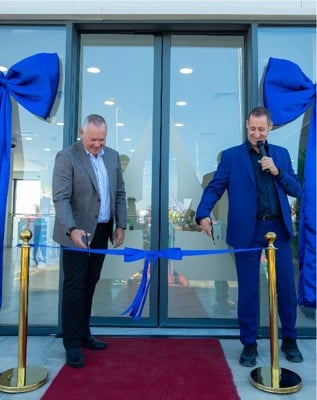
Joramco, the Amman-based aircraft MRO facility and engineering arm of Dubai Aerospace Enterprise (DAE), has opened a new Customer Center aimed at strengthening collaboration with airline customers and improving support. The 1,850 m² facility spans two floors and brings customer-facing teams and engagement areas together in one location, allowing closer communication and faster coordination between […] The post Joramco opens new customer centre to deepen airline ties appeared first on AviTrader Aviation News .
 Sep 22, 2026 · byAviTrader
IHG Signs Coffee-Inspired Noted Collection Hotel in Amman
IHG signs a 50-room coffee-inspired hotel in Amman with Al Ameed Coffee, bringing its new premium Noted Collection brand to Jordan. No opening date is set.
Sep 22, 2026 · byTravelWires

Renewed hostilities in Yemen push over 12 million children deeper into crisis
Country: Yemen Source: UN Children's Fund More than 57,000 children displaced in past two weeks as children are killed, injured and reported missing AMMAN, 16 September 2026 – Renewed hostilities across Yemen are forcing families from their homes, killing and injuring children and disrupting access to health care and education, deepening an already severe humanitarian crisis, UNICEF warned today. More than 104,000 people, including over 57,000 children, have been displaced in just two weeks. Since 3 September, at least nine children have been reported killed and 12 injured, while three other children are reported missing following an attack on the road from Yemen’s western coast to Aden. The fighting across western Taiz, southern Hudaydah, Marib and other affected areas is cutting children off from essential services. Twenty-six UNICEF-supported health facilities have had services disrupted, while 243 schools have closed or had suspended learning, affecting more than 137,000 students. UNICEF is expanding its emergency response to reach up to 231,000 people affected by the escalation. Assistance is already underway, with support to health facilities, hygiene kits and water tanks distributed in Taiz, additional water and hygiene supplies provided in Marib, and nine health and nutrition mobile teams redeployed to displacement sites and affected communities in Aden, Marib and Taiz. Emergency water and sanitation support aims to reach more than 200,000 people with safe water, hygiene supplies and urgent repairs to damaged systems. Child protection teams are providing psychosocial care and case management, including for unaccompanied and separated children, and helping communities reduce the risks posed by explosive ordnance. “Children in Yemen were already living through one of the world’s most grave humanitarian crises, and many have known little but conflict and displacement,” said Edouard Beigbeder, UNICEF Regional Director for the Middle East and North Africa. “Now, tens of thousands of families have been forced from their homes in just two weeks, many fleeing only with what they can carry. For children who have already endured years of hunger, displacement and disrupted schooling, this latest violence is eroding what little stability they had left.” The impact of the escalation is also being felt across the Bab el-Mandeb Strait. More than 2,000 people, including many children, have arrived in Djibouti after a dangerous crossing marked by extreme heat, dehydration and protection risks. UNICEF is working with authorities to support newly arrived families with safe water, hygiene and sanitation services, child protection support and referrals for the most vulnerable children. Even before the latest escalation, an estimated 12.2 million children in Yemen needed humanitarian assistance. More than 2.2 million children under five are acutely malnourished, including over 515,000 children with severe acute malnutrition, while 3.2 million school-aged children are out of school. Around 17.8 million people lack adequate access to healthcare, water and sanitation services, with only 60 per cent of health facilities fully functional. UNICEF reiterates the call of the Secretary-General for all parties to the conflict to protect civilians, including children, comply with international humanitarian law, and facilitate safe and unimpeded humanitarian access so that urgently needed assistance can reach communities in need. Media contacts Louise Wateridge UNICEF Amman Email: lwateridge@unicef.org Salim Oweis UNICEF MENA Tel: +962- 70-936- 5212 Email: soweis@unicef.org Joe English UNICEF New York Tel: +1 917 893 0692 Email: jenglish@unicef.org #####
Sep 16, 2026 · byReliefWeb📰
First Public Report on the political dialogue series held in Amman from 2 to 23 October 2024 to advance Yemen’s peace process
Country: Yemen Source: UN Office of the Special Envoy of the Secretary-General for Yemen Amman, 23 October 2024 - On 2 October, the Office of the Special Envoy of the Secretary General for Yemen (OSESGY) initiated a series of political dialogues with Yemeni actors as part of its ongoing efforts to build momentum towards a peaceful and inclusive resolution to the conflict in Yemen. These meetings, held in Amman, Jordan, have so far included discussions with representatives of the Rashad Party, the Nasserite Party, and the Yemeni Socialist Party as well as civil society groups. During these meetings, there emerged a broad consensus on the need for transparency and inclusive discussions towards a roadmap. The political and civil society actors amplified the urgency of economic recovery and immediate humanitarian relief, highlighting that these critical issues—such as the payment of salaries and the reopening of vital roads—cannot be delayed until a political settlement is reached. They stressed that addressing these pressing concerns is essential to gaining public support and alleviating the suffering of ordinary Yemenis. During the dialogues, each actor presented unique perspectives on the ongoing peace efforts. Among the issues were the importance of political inclusivity, with a strong emphasis on the notion that "Yemen’s political future must be owned by Yemenis, without exclusion," and the need for clearer communication regarding the roadmap process. Regarding the political process, there was a strong call to address the root causes of Yemen’s conflict through a phased approach to the transition process, focusing on restoring state institutions and ensuring the withdrawal of armed groups. The participants also emphasized the need for a clear framework for the roadmap, highlighting the importance of building on the past progress like the talks in Kuwait in 2016. During the discussions, OSESGY briefed the participants on the commitments reached between the Parties in December 2023, with the support of Saudi Arabia and Oman, including among others; a nationwide ceasefire, salary payments, resumption of oil exports, opening of roads, the withdrawal of non-Yemeni forces and the initiation of a Yemeni- led political process under UN auspices, aimed at achieving a lasting solution. The Office briefed on efforts to operationalize these commitments in the Roadmap and noted how developments—particularly the attacks in the Red Sea and growing regional tensions—have narrowed its mediation space, delaying progress. While recognizing the regional challenges, OSESGY stressed the importance of continued dialogue on moving forward and critical confidence building steps. Yemeni people’s vision and contributions remain key to shaping the next steps. In addition, economic recovery and humanitarian relief were stressed as immediate priorities for Yemenis, suggesting that the peace process must address economic needs as a priority to gain public support. It was argued that the economic file should not be secondary to political and security discussions. OSESGY briefed the parties on the progress made in addressing key economic issues raised during recent discussions with interlocutors. Building on the July 23 understanding, these efforts have focused on de-politicizing the economy and fostering collaboration over competition. OSESGY emphasized the importance of shifting away from a zero-sum mind-set notion to protect the economy from further escalation. While acknowledging each side’s constructive engagement, OSESGY stressed that positive signals must translate into concrete actions that benefit the Yemeni people. On the security front, the political parties raised concerns about the growing involvement of regional and external actors, stressing the need for strong international and regional guarantees to ensure that agreements are respected. Without such guarantees, they warned of the potential for further destabilization, particularly given regional escalations in the Red Sea and beyond. In turn, OSESGY briefed on its engagement with the Military Coordination Committee and local actors on the basis of the OSESGY-led Ceasefire Concept that focuses on de-escalation and planning. The exchange also covered a range of security-related topics that need to be discussed in the security track. In addition to the messages voiced by the political parties, civil society actors raised the issue of detainees, including those from the UN, international NGOs, local civil society organizations, and diplomatic missions, as a matter of significant concern. Civil society representatives underscored the deep human impact of the detainee issue beyond politics. Families continue to suffer as their loved ones remain in captivity, and there is an urgent need for immediate action, accompanied by sustained international pressure, to secure their release. Addressing this issue is seen as essential for building trust and advancing efforts toward a meaningful peace process. More discussions will follow in the coming weeks and into 2025 with Yemeni political parties and entities, and Yemeni civil society groups, including youth, women, and marginalized people. OSESGY will continue to focus on incorporating the insights gained into its discussions with the Parties and advocating for solutions shaped by Yemeni perspectives and needs. OSESGY extends its appreciation to the Hashemite Kingdom of Jordan for hosting and facilitating these important meetings, contributing significantly to advancing the dialogue for peace in Yemen.
Sep 16, 2026 · byReliefWeb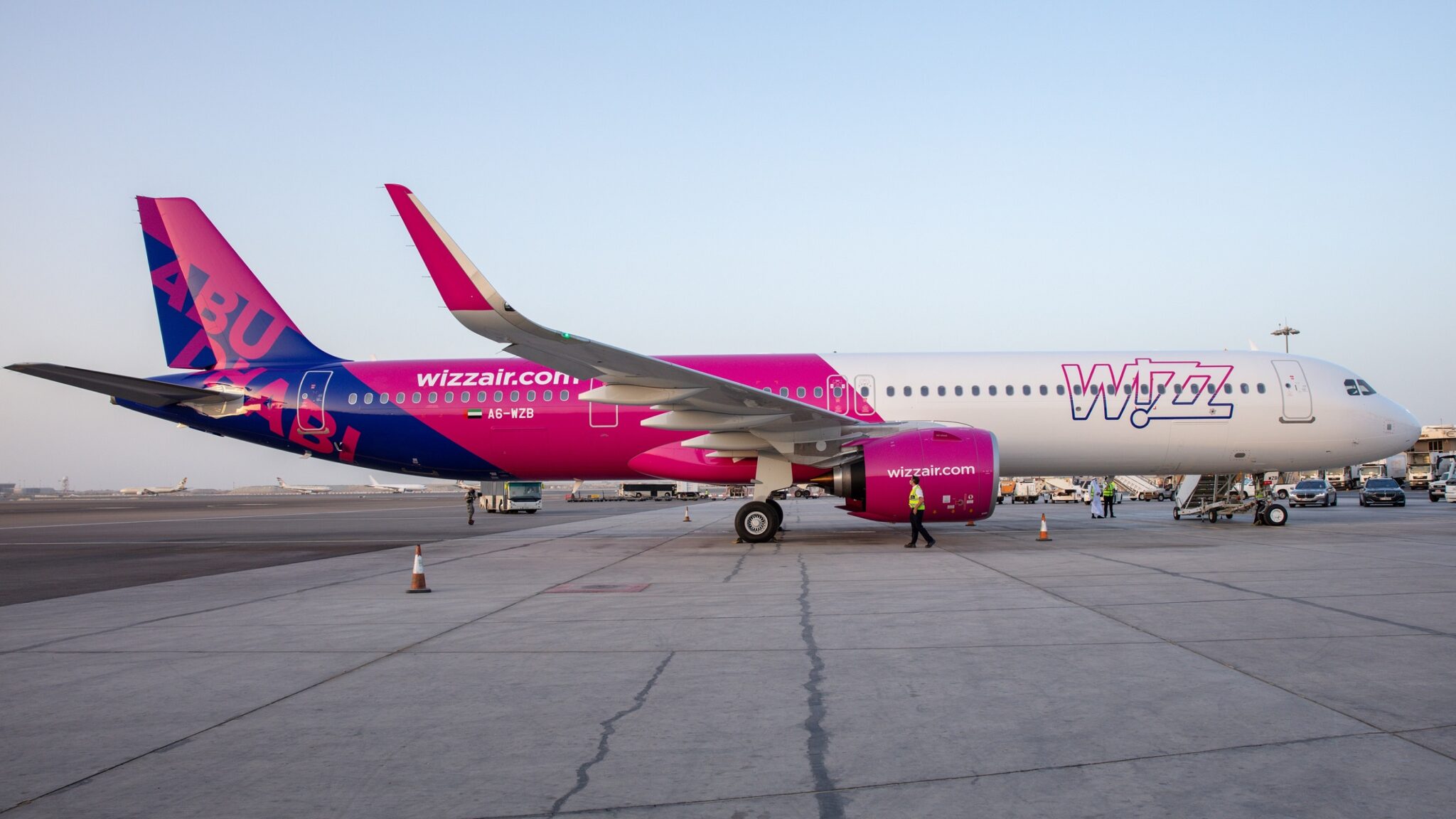
Wizz Air restores 12 Middle East routes for winter 2026/27
Wizz Air is progressively restoring services to Dubai, Abu Dhabi, Jeddah and Amman for the 2026/27 winter season, offering 12 routes and 49 weekly flights from nine European cities. Flights to Jeddah from Milan and Rome resumed in early September, while the Budapest–Amman route restarts on 22 September. Services to Dubai and Abu Dhabi will […]
Wizz Airneutral
 Sep 11, 2026 · byAviation24.be
Wizz Air Restores 12 Middle East Routes for Winter 2026
Wizz Air is restoring a significant part of its Middle East network for the 2026/27 winter season, bringing back 12 routes connecting European cities with Dubai, Abu Dhabi, Jeddah and Amman. The airline has already resumed services to Jeddah and Amman, while flights to Dubai and Abu Dhabi will return from October 25, followed by […]
Wizz Airneutral
Sep 11, 2026 · byTravelWires

Wizz Air Announces Operation of Flights to the Middle East
Wizz Air has announced on social media the return of weekly flights to destinations in the Middle East. This comes after Wizz Air Abu Dhabi’s operations ended on Sept. 1, 2025. Wizz Air’s network expansion In an Instagram post, Wizz Air said: “Dubai, Abu Dhabi, Jeddah and Amman are coming back with 12 routes and […] The post Wizz Air Announces Operation of Flights to the Middle East appeared first on Travel Radar - Aviation News .
 Sep 11, 2026 · byTravel Radar
Iranian missiles fly over Amman, target US base in Saudi Arabia
Iranian missiles flew over Amman, targeting a US base in Saudi Arabia. Military action against a Gulf state by July 9 at 99.9% YES. The post Iranian missiles fly over Amman, target US base in Saudi Arabia appeared first on Crypto Briefing .
 Jul 17, 2026 · byCryptoBriefing
📰
Joramco backs Jordan youth initiative to develop aviation talent
Amman-based aircraft MRO facility and engineering arm of Dubai Aerospace Enterprise (DAE), Joramco, has signed a cooperation agreement with Jordan’s Ministry of Youth to encourage more… The post Joramco backs Jordan youth initiative to develop aviation talent appeared first on Aviation Business News .
 Jul 17, 2026 · byAviation Business News
📰
Royal Jordanian Crew Member Killed in New York Bus Crash
The chartered bus was carrying crew from a flight that had arrived at JFK from Amman.
 Jun 30, 2026 · byAirlineGeeks
Royal Jordanian launches new Vienna route to expand European network
Royal Jordanian has launched a new direct route between Amman and Vienna as part of its strategy to strengthen its presence in Europe The post Royal Jordanian launches new Vienna route to expand European network appeared first on Airline Routes & Ground Services .
 Jun 24, 2026 · byAirline Routes & Ground Services
Review: Royal Jordanian Business Class Embraer E190-E2 (AMM-FRA)
For the next segment of my two-part birthday trip to the Golden Triangle, I flew Royal Jordanians Embraer E190-E2 business class (branded as Crown Class) on the 4hr30min flight from Amman (AMM) to Frankfurt (FRA).
 Jun 18, 2026 · byOne Mile at a Time
Review: Royal Jordanian Business Class Boeing 787 (BKK-AMM)
For the next segment of my two-part birthday trip to the Golden Triangle, I flew Royal Jordanian’s Boeing 787-8 business class (branded as Crown Class) on the 9hr5min flight from Bangkok (BKK) to Amman (AMM).
Jun 12, 2026 · byOne Mile at a Time