In El Salvador’s mass trials, lawyers struggle to defend hundreds
 Oct 7, 2026 · byAl Jazeera
52 articles

Human Rights Watch says defendants face proceedings where lawyers have struggled to access case files.
Oct 7, 2026 · byAl Jazeera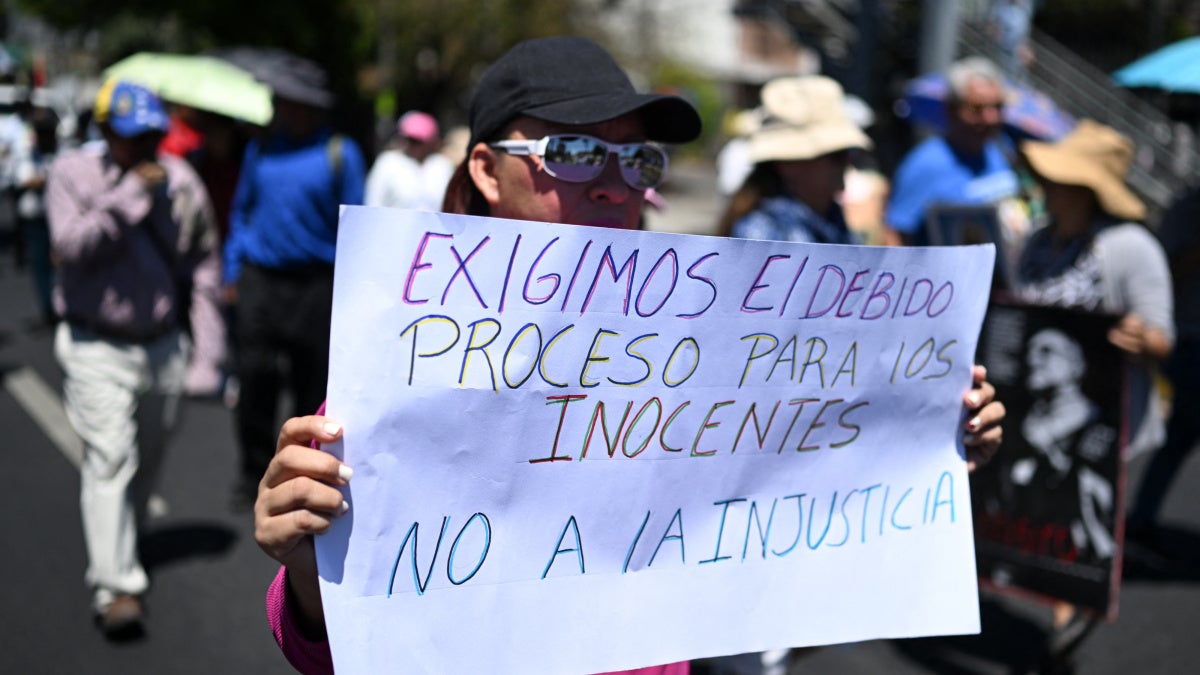
Click to expand Image A woman holds a sign reading "We demand due process for the innocent. No to injustice" during a protest against the state of emergency imposed by the government since March 2022, in San Salvador, El Salvador, on March 24, 2026. © 2026 AFP via Getty Images (Washington, DC) – Since early 2026, Salvadoran courts have begun convicting people in mass trials of hundreds of defendants at a time, relying on weak evidence and giving them no real chance to defend themselves, Human Rights Watch said today. For months, courts in El Salvador have held mass trials of people detained under the state of emergency, which has been in place for over four years. Many people have been sentenced for “unlawful association,” a vaguely defined crime, on the basis of weak evidence in closed proceedings that are kept under judicial seal. Lawyers representing the accused say they have had no meaningful chance to contest evidence or prepare an adequate defense. The prosecutors and judges involved have little, if any, independence from the executive branch. “El Salvador’s mass trials are a mockery of justice,” said Juanita Goebertus, Americas director at Human Rights Watch. “These hearings are designed to produce guilty verdicts, not to weigh evidence under due process. The result is not accountability for the victims of gang violence, it is simply rubber stamping the mass incarceration under four years of the state of emergency.” Human Rights Watch interviewed 15 private defense lawyers representing people detained during the state of emergency and reviewed four indictments covering over 600 defendants and one judicial decision sentencing over 120 people. Researchers also interviewed members of civil society organizations with direct knowledge of the proceedings and, for a prior publication, several police officers whose descriptions of investigations were generally consistent with those of defense lawyers. Human Rights Watch also reviewed publications by the Salvadoran government and by Salvadoran and international news outlets describing the mass trials. Human Rights Watch also requested information from the Salvadoran Supreme Court and the Attorney General’s Office about the criminal proceedings of people detained under the state of emergency, including the total number of convictions and the number of people held in pretrial detention. The Attorney General’s Office responded that the requested records “were not found.” The Supreme Court had not responded at time of writing. Since March 2022, El Salvador has been under a state of emergency that suspends some due process rights, a measure cast as a necessary tool to fight gang violence. Security forces have detained over 93,000 people, including more than 3,000 children. Human Rights Watch has documented widespread abuses, including arbitrary detention, enforced disappearances, torture and other forms of ill-treatment in detention, and severe due process violations. Many people with no connection to gang activities have been detained. Lawyers said they were routinely blocked from mounting an adequate defense. They said judges denied them access to case files, saying that the cases were under “seal.” They also said they could not speak with their clients privately. Some lawyers also said that prosecutors had threatened proposed defense witnesses with criminal prosecution. Defense lawyers said that judicial proceedings are conducted at such a fast pace that respecting due process is virtually impossible. “It is macabre,” one said. “They need the machine to run like clockwork.” They described being given only minutes at hearings to present a defense: about 10 minutes at the initial hearing and just 15 minutes at the sentencing hearing. Public defenders, they said, were given a few minutes to represent dozens and, in some instances, hundreds of defendants at a time. The lawyers interviewed said that prosecutors routinely relied on police reports to seek convictions. Police officers have previously told Human Rights Watch that many police reports are based on fabricated or uncorroborated evidence, such as anonymous calls, and that police were pressed to produce them to comply with an arrest quota. Prosecutors have also relied on anonymous testimony by witnesses who entered plea agreements. These witnesses testify behind screens or wooden partitions, with their voices distorted. “You don’t see them,” one lawyer said. “They are covered in a little box; you see a wooden board. The voice is distorted. Only the judge, the court clerk, and the prosecutor have access.” “We presented witnesses, family members, neighbors, who would testify he was not a gang member,” a lawyer said about her defense of a young man who has been in detention for more than four years accused of being a “gang collaborator.” “They are intimidated by the prosecutor’s office, which threatened to detain them.” The trials have been conducted before the Tribunals Against Organized Crime, which have been staffed by the Supreme Court through an ad hoc, opaque process. The identity of these judges has not been disclosed, even to the lawyers involved in the proceedings. One lawyer said that a judge opened a mass hearing by saying: “We are here to convict all MS-13 members.” An estimated 120,000 people are incarcerated in El Salvador today. That amounts to roughly 2 percent of the population, one of the highest incarceration rates in the world. Salvadoran prisoners have long suffered from overcrowding, violence, and inadequate access to food, water, and medical care. The state of emergency has sharply worsened these dire detention conditions by tripling the prison population, pushing it to more than double the system’s capacity. At least 513 people have died under state custody during the state of emergency, according to Cristosal, a human rights organization. Over 90 percent of people behind bars have been imprisoned for years awaiting trial, in part because of recent legal reforms that extended pretrial detention terms. The International Covenant on Civil and Political Rights and the American Convention on Human Rights, to which El Salvador is a party, guarantee everyone charged with a crime the right to be informed promptly and in detail of the charges against them, to have adequate time and facilities to prepare a defense, and to examine prosecution witnesses and present their own on equal terms. Salvadoran authorities should ensure proceedings comply with fair trial standards, carefully assess the evidence and charges against each individual, end the excessive use of pretrial detention and judicial seals, and disclose how the specialized tribunals were appointed. The Salvadoran government should also establish an independent, transparent mechanism to review the cases of people detained during the state of emergency and identify people who have been detained without adequate credible evidence, whom authorities should promptly release. The mechanism should prioritize reviewing cases of children, people with disabilities, pregnant women, and people with serious health conditions. “The government has built a system designed to convict hundreds at once, with no mechanism to separate the innocent from the guilty,” Goebertus said. Vague Accusations, Weak Evidence Many of the people sentenced in El Salvador’s mass trials have been accused of the vaguely defined crime of “unlawful association,” based on weak and uncorroborated evidence. The offense criminalizes not only those who create, lead, or finance gangs, but also anyone who “promotes, helps, facilitates or favors” such groups, or receives a direct or indirect benefit from a relationship “of any nature” with them, even without being a member. Human Rights Watch found that prosecutors have classified defendants by their alleged rank or role in gangs, in most cases as “collaborators” or “lookouts,” but have not further specified what activities specific defendants allegedly engaged in as part of the gang, or during what time periods. The indictments reviewed relied heavily on a set of recurring documents produced by the police: the arrest report, a police report about the defendant, and photographs taken when the detainee enters prison. In many cases, prosecutors also relied on testimony from one or two anonymous witnesses who entered plea deals. Lawyers said that the crime has at times been applied to sentence people who were gang victims. “In El Salvador, many people were coerced into ‘collaborating’ with gangs,” one lawyer said. “For example, prosecutors accused one woman of being the girlfriend of a gang leader, when in fact she had been forced into the relationship out of fear for her own life and the lives of her family members.” Human Rights Watch reviewed a judgment of a single mass trial in which over 120 people were convicted for “unlawful association.” Nobody was acquitted. Defendants were sentenced to either 30 or 45 years in prison. Almost all of those sentenced to 30 years were accused only of being “collaborators,” the lowest level of gang association under Salvadoran law. For the vast majority, the only evidence connecting them to a gang was a statement by one of two anonymous witnesses, who had received immunity from prosecution, together with police paperwork recording the arrest and a police-generated “criminal profile” of the defendant. Even when witnesses said that some of the defendants were fishermen, housewives, farmers, or students, and had no connection with gangs, the judge concluded, without explaining why, that the anonymous witnesses were more credible and convicted the defendants. Lawyers said that prosecutors frequently rely on the police report as the key piece of evidence, even though the defense is often unable to verify how it was created or the underlying sources used to create it. “Prosecutors say a person is a gang member because a police officer says so,” a lawyer said. “The prosecutor relies on the police report, and the police report relies on unspecified official intelligence or public rumors,” he added. Lawyers said police logs of the anonymous calls that allegedly trigger many arrests are not disclosed to the defense, making it impossible to even verify what was said. Several lawyers said prosecutors have also relied on witnesses who reached plea bargain agreements and then put forward broad, unverifiable allegations of gang membership. Lawyers said that in many cases the witnesses are unable to provide any meaningful details that might give credibility to their allegations. One lawyer said a protected witness described his client as a “lookout who moved drugs,” but was unable to specify when, where, with whom, or what kind of drugs. Severe Restrictions on the Right to Defense Lawyers consistently described a series of severe limitations on their ability to defend their clients. Many said that defense lawyers, especially public defenders, are given just minutes to present a defense at multiple stages of the proceedings—from initial hearings on pretrial detention to opening and closing arguments during trials—in some cases for hundreds of defendants at a time. One lawyer described an initial pretrial detention hearing in which a single public defender was given 10 minutes to defend 102 defendants. Another described a pretrial detention hearing, which he attended, where a public defender had between 20 and 30 minutes to present his defense for 200 defendants. A private defense lawyer said that in one hearing he was given between 30 and 40 seconds to defend his client. Defense arguments are “a mere formality,” one said. Defense lawyers said they are not given an opportunity to contest much of the evidence presented by prosecutors. They said courts have routinely denied requests for independent judicial assessments of whether a particular defendant had a stable job prior to their arrest and was therefore unlikely to be a gang member. Many requests to present witnesses for further information about police reports have gone unanswered, lawyers said. In some cases, prosecutors also are allowed to introduce written records of police interviews as evidence, giving defense lawyers no opportunity to cross-examine the officers. Prosecution witnesses who offer testimony as part of plea deals, defense lawyers said, testify behind screens or wooden partitions, with their voices distorted. “As defense lawyers, we don’t know who they are,” one said. “There is no control [by the defense] over protected witnesses. We don’t know what their motivations are besides getting a reduction of their sentence.” Several lawyers said that court clerks routinely deny them copies of case files, contending that they are subject to seal on “public security grounds.” “If you ask for a copy of the case file, they don’t give a copy,” one said. “The secrecy is generalized.” Defense lawyers also said that they are unable to meet in a confidential setting with their client to prepare their defense. One lawyer said that on the few occasions she was allowed, through virtual means, to speak with her client, the conversation was recorded and prison guards were nearby. “You are careful with what you can ask and what you can say,” she said. Another lawyer said she had never been able speak with her client, a young woman who has been detained since 2024. Climate of Fear Lawyers said that the widespread arrests under the state of emergency have created a climate of fear that dissuades many lawyers and witnesses from getting involved in these cases. As one lawyer put it: “Neighbors, friends, family members, co-workers, bosses are afraid to serve as witnesses because of the state of emergency, that there could be reprisals, police harassment.” Defense lawyers also said that in some cases, prosecutors threaten the best positioned people to contest accusations of gang membership—family members, neighbors, and employers—with criminal prosecution. This contrasts with the voice distortion, physical screens, and sealed identities for anonymous prosecution witnesses. Because the crime of “unlawful association” criminalizes “relationships of any nature” with a gang, anyone who vouches for a defendant risks being portrayed as a collaborator themself. One lawyer said: “In the hearing [prosecutors] question them, but before questioning them, they say ‘if you’re lying to me you can go to prison too’… ‘stop going around defending gang members.’ … This is a tool to intimidate, to instill fear, and it’s generalized.” Lack of Judicial Independence, No Meaningful Judicial Recourse Since President Nayib Bukele’s Nuevas Ideas (New Ideas) party won a supermajority in the Legislative Assembly in 2021, the legislature has approved a series of changes that have weakened judicial independence. The assembly replaced the attorney general and justices on the Constitutional Chamber of the Supreme Court with loyalists and then gave them broad powers to remove or relocate judges and prosecutors. The Constitutional Chamber of the Supreme Court has since stopped ruling in a timely manner when lawyers file habeas corpus petitions to protect the rights of their clients. According to the University Observatory of Human Rights at the Central American University (Observatorio Universitario de Derechos Humanos, Universidad Centroamericana, OUDH), the number of habeas corpus petitions the chamber admitted, which ranged between 24 and 46 percent in the years before the state of emergency, collapsed to 3 percent in 2022 and fell below 1 percent in 2023. A law passed in 2022 allows courts to hide the name of the judge handling the case to the defendants and the general public. The provision was employed in the ruling Human Rights Watch reviewed. While protecting a judge’s life and physical integrity is fundamental to ensuring the proper administration of justice, the Inter-American Court of Human Rights has ruled that “faceless judges” make it impossible for defendants to assess whether judicial authorities have a conflict of interest and are independent and impartial, violating due process protections. One lawyer said she has filed seven habeas corpus petitions in the cases she has handled since April 2022 and has received no meaningful response. “We are using the available remedies,” she said, “but we are not getting answers.” Severe staffing capacity shortfalls have also undermined access to a meaningful defense. The OUDH reported that, as of 2024, there were 165 public defenders for over 93,000 people detained during the state of emergency, an average of 550 cases per defender. The Public Defender’s Office’s budget fell from US$38 million in 2024 to $34 million in 2025, a cut of nearly 10 percent, before an increase to $35 million in 2026. In the 2026 budget, the Criminal Public Defense Unit (Unidad de Defensa Pública Penal), responsible for the defense of everyone charged with a crime including people detained under the state of emergency, was allocated approximately $9 million, a small increase from the $8.7 million it received in the 2025 budget.
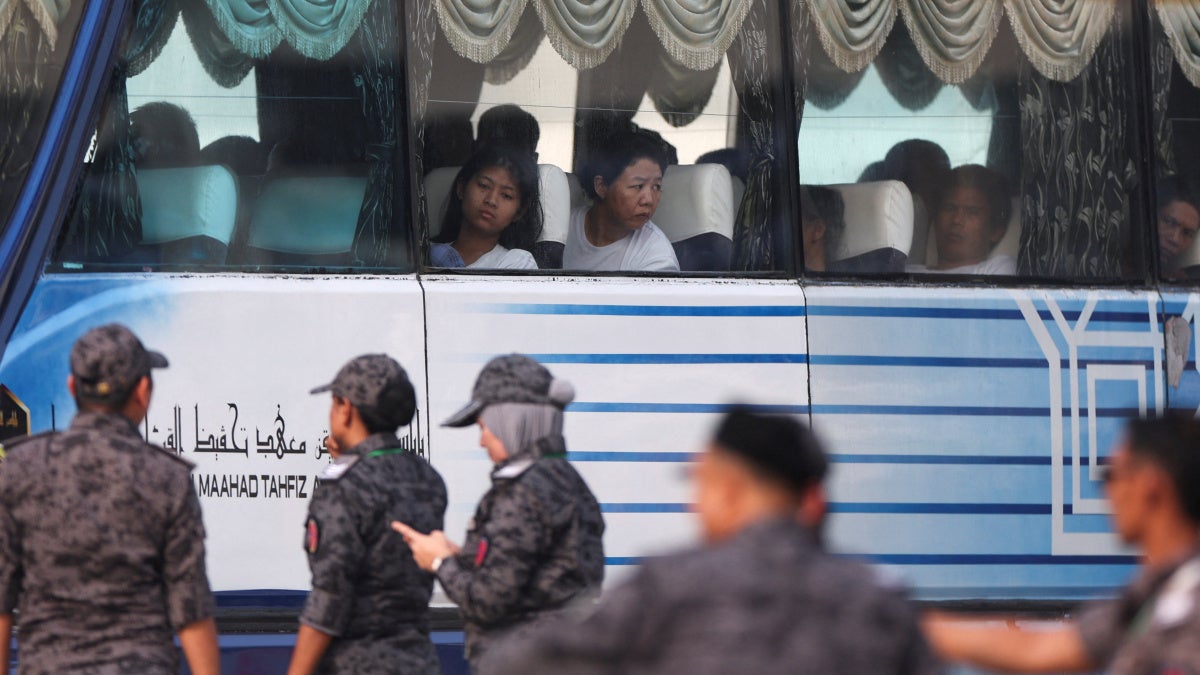
Click to expand Image Myanmar nationals to be repatriated from Malaysia sit inside a bus, at Lumut, Malaysia, September 29, 2026. © 2026 Hasnoor Hussain/Reuters (Bangkok) – Malaysian Prime Minister Anwar Ibrahim should press Myanmar’s junta leader, Min Aung Hlaing, to end human rights abuses during his visit to Kuala Lumpur on October 7, 2026, Human Rights Watch said today. The Malaysian government should also halt plans to forcibly return ethnic Rohingya and other people from Myanmar, where they face persecution and other rights violations. Malaysian authorities deported about 1,500 Myanmar nationals on September 29 in coordination with junta authorities, the first batch in a series of phased returns. “Malaysian Prime Minister Anwar Ibrahim’s invitation to Min Aung Hlaing to coordinate the forced return of people who fled military atrocities in Myanmar is an invitation for further abuse,” said Elaine Pearson, Asia director at Human Rights Watch. “The Malaysian government, which has provided protection to Rohingya and other refugees from Myanmar for decades, should halt any more returns and urge the junta leader to stop the abuses that have caused millions to leave the country.” On September 16, Prime Minister Anwar announced that he was inviting Min Aung Hlaing, who led the February 2021 military coup, to discuss the return of Myanmar nationals from Malaysia. This is Min Aung Hlaing’s sixth bilateral visit to an Asian country since he installed himself as president in April following sham elections and after stepping down as commander-in-chief of the Myanmar military. Min Aung Hlaing has been implicated in many abuses, and the International Criminal Court prosecutor has requested an arrest warrant for his alleged crimes against humanity. On September 29, Malaysian authorities sent back 1,476 Myanmar nationals—1,370 men, 79 women, 20 boys, and 7 girls, ages 8 to 60—according to Malaysia’s state news agency, Bernama, aboard two Myanmar navy ships and a hospital ship from Lumut naval base in Malaysia’s Perak state. The deportations come amid a wave of public hostility in Malaysia toward refugees, particularly Rohingya, that government officials have fomented. The Home Ministry has described refugees as a financial burden, a social problem, and a security threat. Online hate speech and misinformation targeting Rohingya and migrants generally have surged this year, leading to harassment and the closure of community schools. The transfer was the first phase of an arrangement between the Malaysian government and the Myanmar junta to return 5,000 people, initially announced by Malaysian officials in July. Based on media reports, Malaysia’s Home Ministry said the Myanmar junta authorities had identified those slated for return. It did not disclose their ethnicity or refugee status, or say whether Rohingya were among them. The ministry was quoted as saying that further phased returns would follow once identification, documentation, and verification were complete. Malaysian authorities have claimed the returns were strictly voluntary. But those deported were taken directly from immigration detention centers—where former detainees have reported physical abuse and psychological harm—raising serious concerns about whether consent was freely given. The United Nations Refugee Agency (UNHCR) said it had no role in the operation and was not involved in identifying those deported. Since 2019, the Malaysian government has denied UNHCR access to immigration detention centers, preventing the agency from reviewing asylum claims or assisting detainees who are registered refugees. Consent given while in indefinite detention, without access to UNHCR or a meaningful protection assessment, cannot be truly voluntary, Human Rights Watch said. A representative of the ethnic Chin refugee community in Malaysia told the media that community leaders knew of several asylum seekers among those deported, including one who had been recognized by UNHCR as a refugee. There are no authoritative figures on the number of Myanmar migrants, refugees, and asylum seekers in Malaysia. More than 224,000 refugees and asylum seekers are registered with UNHCR in Malaysia, about 90 percent from Myanmar, the vast majority ethnic Rohingya. Since Myanmar’s 2021 military coup, Malaysia has summarily deported thousands of asylum seekers to Myanmar without assessing their asylum claims or other protection needs, and in violation of a Malaysian court order. In May 2024, UNHCR issued guidance stating that people fleeing Myanmar “are likely in need of international refugee protection.” Conditions for safe, dignified, and voluntary return to Myanmar do not currently exist, Human Rights Watch said. The Myanmar military continues to commit war crimes and crimes against humanity. Junta authorities have arbitrarily arrested tens of thousands of people since the coup, and thousands have experienced torture and ill-treatment or died in custody. A day before the September deportations took place, Myanmar’s military carried out an airstrike near a market in the town of Kyauktaw, Rakhine State, killing 50 people. Rohingya face particular danger if they are forcibly returned. Myanmar authorities have long denied them citizenship and subjected them to atrocity crimes, including the ongoing crimes against humanity of apartheid, persecution, and deprivation of liberty. In Rakhine State since late 2023, Rohingya civilians have been caught in the fighting between the junta and ethnic Arakan Army forces. Both parties have carried out grave abuses, including extrajudicial killings, widespread arson, and unlawful recruitment. Malaysian Communications Minister Fahmi Fadzil said on September 30 that 3,524 people had been approved for a second phase of deportation from a list Myanmar authorities submitted in a diplomatic note dated August 13. Malaysia is awaiting a date from Myanmar. About 10,400 Myanmar nationals are held in Malaysian immigration detention, according to recent reports from the Malaysian Home Affairs Ministry. Malaysia has not ratified the 1951 UN Refugee Convention or its 1967 protocol, but it is still obligated to respect the international law principle of nonrefoulement, which prohibits countries from returning anyone to a place where they would face a real risk of persecution, torture or other serious ill-treatment, a threat to life, or other comparable serious human rights violations. The Malaysian government should immediately suspend all deportations to Myanmar, including its planned second phase, and grant UNHCR full and unimpeded access to all immigration detention centers. The Association of Southeast Asian Nations (ASEAN) should maintain the ban on Min Aung Hlaing and other junta leaders participating in the regional bloc’s meetings. ASEAN members should refrain from organizing bilateral visits that undermine their collective ban on junta officials. Concerned governments should press Malaysia to halt the returns, and expand resettlement places and support for countries hosting refugees from Myanmar. They should not treat returns arranged with Myanmar’s military-backed authorities as evidence that the country is safe. “The Malaysian government should not be outsourcing the decision about who can safely return to Myanmar to the junta authorities,” Pearson said. “Prime Minister Anwar should stop the next ships before they set sail, and provide the UN refugee agency access to refugees and asylum seekers.”

Journalist Amal Khalil was killed in April in what colleagues described as a sustained attack by Israeli forces. Rescuers attempted to dig her out of the rubble of a building that had been targeted by Israeli forces, who had also prevented them from providing life-saving assistance. Beirut-based Guardian correspondent Will Christou explains how investigations by Human Rights Watch (HRW), Amnesty International and Legal Agenda show that Israel deliberately and directly attacked Khalil and her colleague Zeinab Faraj, with apparent knowledge that they were journalists. The organisations called for the attacks to be investigated as war crimes, while HRW called for states to halt arms sales to Israel and put targeted sanctions on Israeli officials responsible for ongoing crimes. Deliberately attacking journalists is a war crime. Israel has killed at least 15 journalists in Lebanon and 210 in Gaza since 2023, according to the UN human rights office . Israel said it 'regrets any harm caused to journalists', and that they were killed 'as part of a series of events' during which two Hezbollah military operatives were killed Israeli strike that killed journalist in Lebanon was war crime, say rights groups Continue reading...
 Oct 6, 2026 · byThe Guardian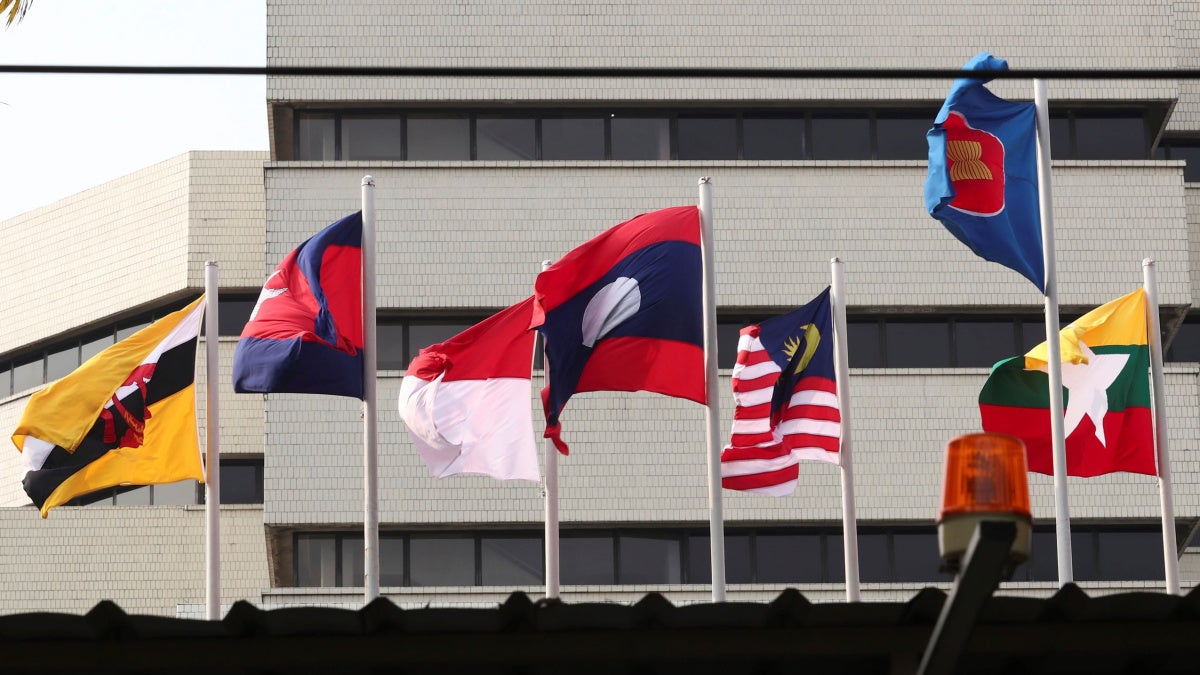
Click to expand Image Flags of member countries fly at the ASEAN Secretariat in Jakarta, Indonesia, April 22, 2021. © 2021 AP Photo/Tatan Syuflana, File Three weeks ago, 26-year-old Lao activist Khieo Lapchanh, an asylum seeker in Thailand, vanished in Samut Sakhon province following his shift at the restaurant where he worked. Khieo’s disappearance in the early hours of September 15 came one day before his first interview with the United Nations refugee agency (UNHCR) in Bangkok. Thai authorities have yet to provide any information regarding his whereabouts. Khieo had been posting videos critical of the Lao government to his Facebook page, Khiew Channel, which had about 158,000 followers. According to Manushya Foundation, a rights group that supported him, he had faced coordinated harassment, doxxing, and death threats. After Lao officials visited his mother's home in Laos this year on March 31 and April 17 concerning his activities, Khieo stopped posting political content. Given the threats he faced and the history of enforced disappearances of Lao activists both in Laos and abroad, Thai authorities should urgently locate him. On September 27, Human Rights Watch visited the area near the restaurant where Khieo worked and the building where he lived. Several businesses with cameras facing the street said their footage from the night of September 15 had already been automatically deleted. Khieo's case fits a troubling pattern of Lao activists abroad being targeted by transnational repression: efforts by governments or their agents to silence dissent by committing human rights abuses against their nationals or diaspora members outside their territorial jurisdiction. Od Sayavong, a Lao democracy activist and UNHCR-recognized refugee, forcibly disappeared in Bangkok in August 2019. His fate remains unknown and the Thai police investigation stalled. In May 2023, Lao activist Bounsuan Kitiyano was shot dead in Thailand’s Ubon Ratchathani province. Thailand has committed to preventing enforced disappearances under domestic and international law. The Prevention and Suppression of Torture and Enforced Disappearance Act, in force since February 2023, obligates Thai authorities to investigate cases in which state involvement is possible, and allows the Department of Special Investigation to take over such cases. Thai authorities have not said whether they are treating Khieo's case under this law. They should immediately escalate the investigation and make genuine efforts to find out what happened to Khieo. Concerned governments should also press Lao authorities for any information about Khieo Lapchanh's whereabouts, including whether he is in their custody.

Click to expand Image Cars pass through a darkened street during a nighttime power outage in Ariana, Tunisia, July 14, 2026. © 2026 Chedly Ben Ibrahim/NurPhoto via AP Photo (Beirut) – Tunisian authorities failed to ensure an adequate supply of electricity and water during two months of extreme summer heat, undermining the right to health and endangering lives, Human Rights Watch said today. President Kais Saied blamed the shortages on sabotage, yet authorities failed to provide transparent information and instead cracked down on protesters. Rolling power outages left hospitals and water pumping stations without electricity and households without running water, interrupted critical medical procedures, and contributed to a nationwide shortage of drinking water. Doctors and human rights groups have reported a rise in heat-related hospitalizations and deaths exacerbated by the cuts, including among detainees. “Tunisians have spent one of the hottest summers on record in the dark and facing water shortages because President Saied’s government failed to ensure adequate access to electricity for millions of people, risking lives,” said Bassam Khawaja, deputy Middle East and North Africa director at Human Rights Watch. “Instead of blaming sabotage, the authorities should address the root causes of the failure and ensure that everyone, including detainees, has access to water, electricity, and methods for cooling.” In July 2026, the second-hottest July since 1950, the Tunisian Electricity and Gas Company (STEG) reportedly imposed rotating outages due to inadequate capacity. Power outages were concentrated between 1 and 5 p.m., when air conditioning increased demand. According to crowd-sourced data, outages lasted up to 12 hours in some extreme cases. In late August, a second wave led to cuts of up to two hours at a time in every region. Tunisian authorities have not published transparent information about the impact of the outages. The Tunisian Young Doctors Association estimated on July 22 that between 150 and 200 people had died over the previous days from heatstroke or medical equipment failure in the case of patients who depended on electrically powered medical equipment. It reported on August 28 that emergency departments experienced an “unprecedented” rise in deaths and hospitalizations from heatstroke and high temperatures, including deaths of detainees. Local media reported five deaths after respirators in the victims’ homes stopped working. Four parliament members wrote to the health minister on July 23 about patients on home oxygen therapy. The Health Ministry on August 29 reported 633 medical cases related to the heat wave in public hospitals but made no mention of related deaths. The ministry also denied that health services had been disrupted. A doctor at one of Tunis’s largest hospitals told Human Rights Watch that due to limited generator capacity, the outages meant the hospital went without electricity in most areas. Its backup generator covered only the intensive care units and operating rooms, the doctor said, while the rest of the building, including the emergency department, had no backup power or contingency plan. Because hospital admissions depended on electronic medical records, staff could not register patients arriving during an outage, even those with life-threatening conditions. During one outage, neonatal unit doctors ventilated newborns by hand. Outages also affected recovery for patients in post-operative care left without ventilation or air conditioning, the doctor said. The blackouts also disrupted the water supply. As outages disrupted pumping stations, tap water became intermittent in many parts of Tunisia. The Tunisian Water Observatory recorded 361 cuts to distribution of potable water in August, contributing to a bottled water shortage in a country where much of the population relies on it as their main drinking source. Although the National Authority for Food Safety said tap water is safe, public confidence is low, with reports of cloudy or yellowed water and changes in taste and odor. Water and electricity cuts affected prisons and detention sites. On August 28, five detainees at Mornaguia prison reportedly died in one day. The Tunisian League for Human Rights documented 20 deaths in prisons and detention facilities amid conditions exacerbated by extreme heat and water and power outages. The General Secretary of the General Federation of Electricity and Gas said that STEG had alerted its supervising ministry to the risk of power shortfalls and need for additional capacity as early as 2024. A 2026 report by the Tunisian Economy Observatory found that STEG's investment in generating electricity fell by 87 percent over five years. Tunisian authorities provided no evidence of sabotage. In late July, prosecutors’ offices across the country opened investigations into STEG managers and employees. President Saied said on August 26 that the outages in several regions were not “ordinary outages,” but rather “deliberately planned acts of sabotage” intended to stoke tensions, spread lies and rumors, and deprive citizens of their right to access services, but provided no further information. The electricity crisis was foreseeable, and Tunisian authorities had an obligation to prepare for it, including by ensuring that essential services such as water supply and health care were not affected, Human Rights Watch said. The government’s mismanagement and failure to act preemptively compounded the harm. Protests over water and electricity shortages have spread. The Tunisian Social Observatory of the Tunisian Forum for Economic and Social Rights recorded 1,101 protest actions in July and 1,093 in August in all 24 governorates, the highest July and August figures in years. Following an August 13 protest in Borj Erras over the lack of water, the authorities arrested 12 people, including 9 children, investigating them on suspicion of conspiring against state security, then releasing them the next day. On August 20, the grassroots movement Nafas held a demonstration in Tunis under the slogan “No water, no electricity, no freedom.” The next day, the authorities arrested Seifeddine Arfaoui, a political activist and Nafas member, at his home. On August 31, a Tunis court sentenced him to 18 months in prison under article 86 of the Telecommunications Code, for a Facebook post about slogans chanted at the protest. Human Rights Watch has previously documented a years-long crackdown against all forms of dissent in Tunisia. Access to electricity is critical to ensuring other rights, including but not limited to health, housing, water, and education, and should be recognized as a distinct human right, Human Rights Watch said. Tunisia has an obligation to ensure access to electricity and water, including within prisons and detention facilities. Article 48 of the Tunisian Constitution requires the state to provide drinking water to everyone on an equal basis. The International Covenant on Economic, Social and Cultural Rights guarantees the right to an adequate standard of living and the highest attainable standard of physical and mental health. The African Commission on Human and Peoples' Rights has held that a government's failure to provide basic services including safe drinking water and electricity violates the right to health under the African Charter. As a party to the International Covenant on Civil and Political Rights and the African Charter, Tunisia is also bound to respect the rights to freedom of expression and peaceful assembly. “Tunisian authorities have known for years that the electricity grid was inadequate but failed to plan for rising demand and the risks of a scorching summer,” Khawaja said. “Instead of prosecuting protesters, the government should publicly account for the failures of the electric grid, publicize transparent information including a death toll, and set out a clear plan to restore adequate electricity and water.”

Country: Afghanistan Source: Raoul Wallenberg Institute Please refer to the attached file. By Maryam Safi. The Taliban takeover of Afghanistan occurred in 2022, and since then, the de facto government’s education policies have reportedly violated the right to education. As a result, the status of education, particularly school education, has worsened dramatically, with millions of children lacking access to education. At present, Afghanistan is the only country in the world where girls are not allowed to receive formal education beyond primary school. According to statistics reported by OCHA in December 2023, girls under the age of 12 are permitted to go to school; however, enrolment in primary education has decreased from 6.8 million in 2019 to 5.7 million in 2023.1 This problem represents a significant threat to the prospects of an entire generation, as well as to the country’s long-term peace, and has received widespread condemnation from both national and international sources (see, e.g., Human Rights Watch 2023; Nasir, 2025; Rawadari, 2024). However, there has been limited attention devoted to examining schooling under the Taliban from a human rights and violence perspective.
 Oct 6, 2026 · byReliefWeb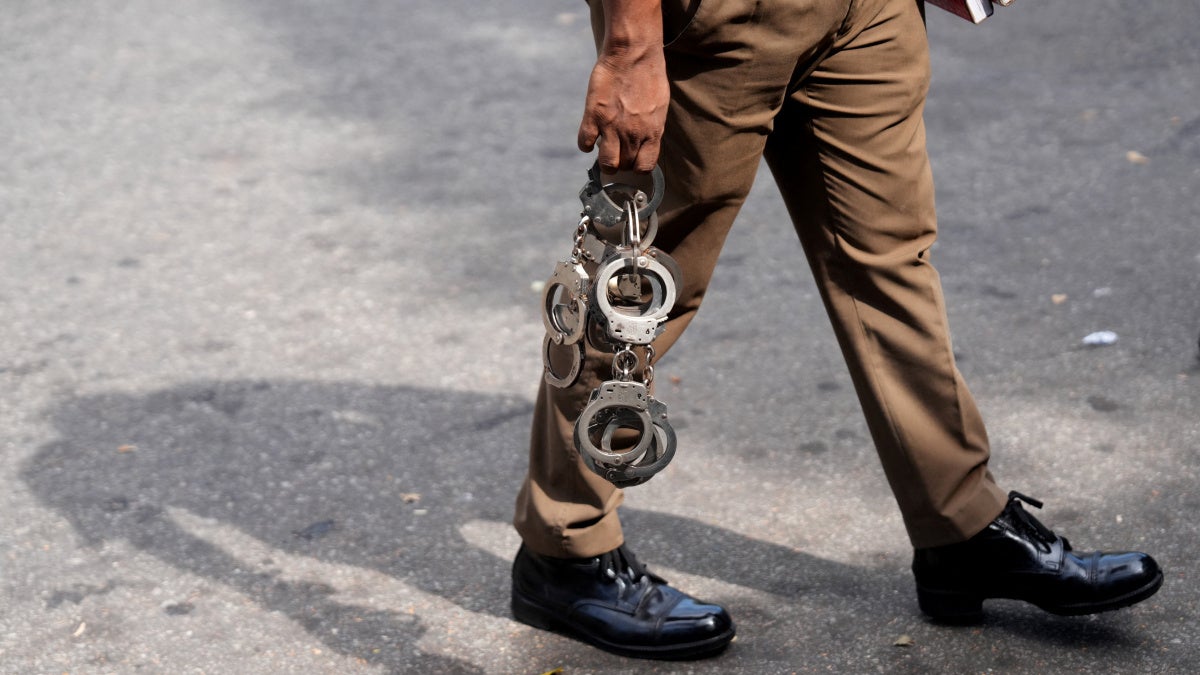
Click to expand Image A police officer holds handcuffs as he walks inside a court premises in Colombo, Sri Lanka, August 6, 2026. © 2026 Thilina Kaluthotage/Reuters (Brussels) – The Sri Lankan government’s latest attempt to replace its abusive Prevention of Terrorism Act (PTA) retains numerous provisions that have enabled serious human rights violations, Human Rights Watch said today. The proposed Protection of the State from Terrorism Bill (PSTB), which will be sent to Parliament on October 6, 2026, includes an overbroad definition of terrorism, inadequate judicial oversight, sweeping powers of search and arrest for the armed forces, and executive authority to curtail freedom of speech, assembly, association, and movement. These provisions neither meet the benchmarks set out by United Nations human rights experts, nor comply with human rights obligations and commitments that Sri Lanka made to the European Union under the Generalized System of Preferences (GSP+), which links trade benefits to human rights conditions. “Sri Lankan authorities have long used draconian counterterrorism legislation to persecute minorities and target the victims of rights abuses and activists seeking justice and accountability,” said Elaine Pearson, Asia director at Human Rights Watch. “The proposed law will allow similar abuses, breaching Sri Lanka’s obligations under international law and jeopardizing its EU trade benefits.” President Anura Kumara Dissanayake’s National People’s Power alliance pledged in its 2024 election manifesto to campaign for the abolition “of all oppressive acts including the Prevention of Terrorism Act (PTA) and ensuring civil rights of people in all parts of the country.” The bill is the proposed replacement for the PTA, which has enabled arbitrary detention, ill-treatment, and torture. That law—first enacted in 1979 as a “temporary” measure—has been used to target Tamil and Muslim communities, the media, human rights defenders, and others critical of successive governments, entrenching impunity in Sri Lanka for 46 years. In 2017, Sri Lanka committed to repealing the PTA as a condition for the EU to reinstate its GSP+ status. Since 2018, several attempts to repeal and replace the PTA have failed. The government introduced an earlier version of the bill in late 2025, but it was withdrawn and has been reintroduced with some changes following criticism by human rights groups, media, and others. Meanwhile, despite the government’s pledge to abolish the PTA, the Dissanayake government continued to use the law. In June 2026 it was used to arrest and detain Sangeethan Ganeshkumar, a 24-year-old Tamil hip-hop artist, in connection with a music video. According to information provided to the UN by the Human Rights Commission of Sri Lanka, there were 46 PTA-related detention cases in 2025 and 12 in the first 3 months of 2026. It has at times been used in cases—such as alleged organized crime—that should be addressed using ordinary criminal laws, not counterterrorism authority. In 2021, UN human rights experts set out five prerequisites to ensure that any proposed counterterrorism law complies with international human rights standards. They include providing a definition of terrorism that complies with international norms to ensure precision and legal certainty, especially when the legislation may affect the rights of freedom of expression, opinion, peaceful assembly, association, and religion or belief; instituting robust measures to prevent and halt arbitrary deprivation of liberty; ensuring measures to prevent torture and enforced disappearance; and enabling overarching due process and fair trial guarantees, including judicial oversight and access to legal counsel. The bill does not meet these standards, Human Rights Watch said. The draft law includes broad and vague definitions of terrorism and could undermine the rights to freedom of expression and peaceful assembly. The definition of terrorism problematically includes “unduly compelling a government or an international organization, to do or to abstain from doing any act.” The bill also includes a sweeping provision that anyone who, with “intention or knowledge…directly or indirectly,” induces any person to commit, attempt, abet, conspire to commit, or prepare to commit, the offense of “terrorism” by “distributing, circulating,” or providing “a service to others that enables them to obtain, read, listen to or look at a terrorist publication” commits an offense. The risk that this authority could be used to curtail free speech is shown by the repeated use of the PTA to interrogate, arrest, and detain journalists and social media users. While the definitions of offenses under the bill are overbroad, the bill includes some improvements. It provides that those who engage in protest, advocacy or dissent; industrial or labor action; or humanitarian and medical assistance will not be considered to commit an offense. However, this does not adequately address the dangers contained in other clauses that could result in abuse. A further serious concern, as with the previous counterterrorism drafts, is that the latest bill provides broad authority to Sri Lanka’s police, armed forces, and coast guard with “reasonable suspicion” to stop, search, question, enter premises, and take suspects into custody without a warrant. The proposed law enables the inspector general of police or a deputy inspector general of police to obtain an order from the defense secretary to detain a suspect for two months, which can be extended up to a year. A magistrate cannot overturn a detention order, removing effective judicial oversight. Using different provisions under the bill, a person could be held without charge for up to a total of two years. The bill provides some safeguards, such as allowing a magistrate to visit approved detention sites without notice, interview detainees, and direct officials to bring detainees before a Judicial Medical Officer if there is suspicion of torture or ill-treatment. The magistrate can also order a change of detention site. The bill provides for an Independent Review Committee appointed by the defense minister to review the “necessity, legality and proportionality” of a detention order within 30 days and recommend to the minister whether it should be confirmed, varied, or revoked. While independent reviews of detention orders could reduce abuses, the committee’s appointment by the minister would place the independence of such scrutiny in doubt. Finally, the proposed law grants sweeping government authority to curtail freedom of movement and association, including for the president to proscribe organizations without judicial oversight. The defense secretary is empowered to designate anywhere a “prohibited place,” while a deputy inspector general of police can obtain a court order to restrict an individual’s movement and communications for up to three months. Such broad powers with limited or no judicial oversight would have a chilling effect on free speech, association, assembly, and movement. The Sri Lankan government should impose an immediate moratorium on the use of the PTA while it comprehensively amends the PTSB or prepares a new bill that meets international standards, Human Rights Watch said. “Sri Lanka has a grim history of misusing bad counterterrorism laws to commit serious human rights violations, and this bill would do little to stop that from happening again,” Pearson said. “The Sri Lankan government should fulfill its international legal obligations and commitments to the EU and other international partners by legislating to end these abuses instead of simply repackaging the same abusive powers in new legislation.”

Erin Ogunkeye is pleased to welcome Letta Tayler, Senior Counterterrorism Advisor at Human Rights Watch. She warns of the detention of suspected Islamic State members transferred from northeast Syria to Iraq as part of a much wider "global detention crisis". The men and boys now held in Iraq are living in 'dire' conditions, including deaths from illness, allegations of torture, and serious questions surrounding access to effective legal representation. Can accountability be achieved through legal proceedings that respect the rule of law and provide genuine justice to both detainees and victims?
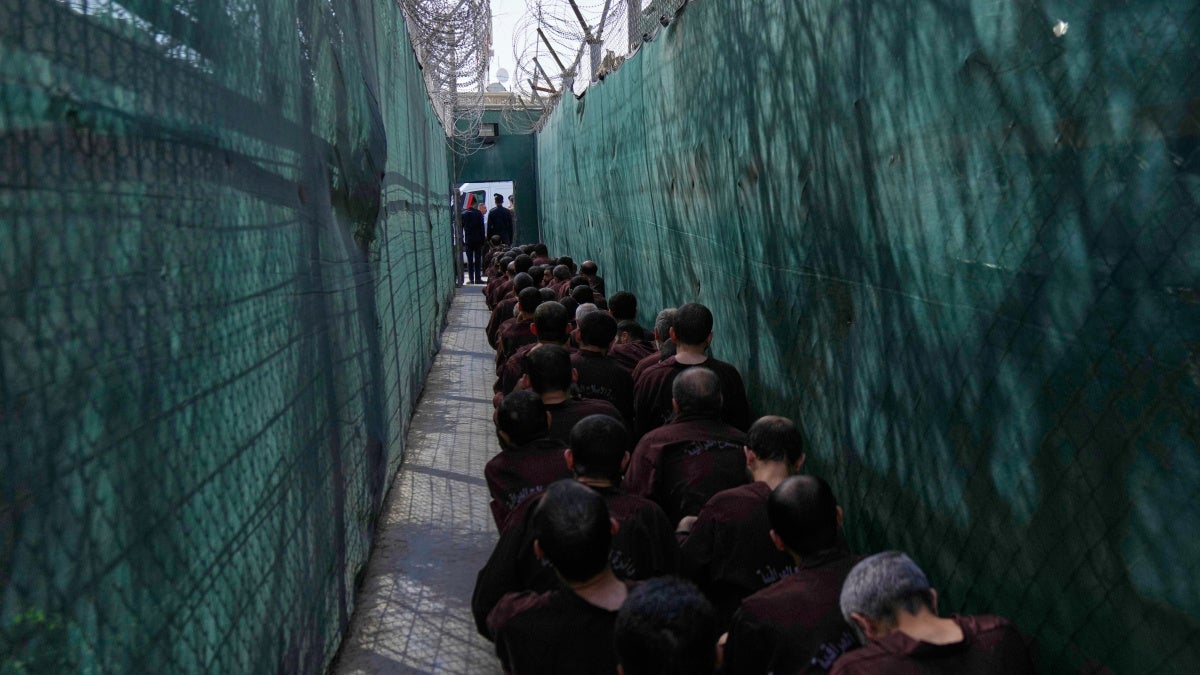
Click to expand Image Men accused of Islamic State links await questioning at Al-Karkh prison in Iraq following their transfer from northeast Syria, February 12, 2026. © 2026 Hadi Mizban/AP Photo Nearly 5,700 men and boys held as alleged Islamic State (ISIS) members and transferred to Iraq in early 2026 are at risk of abuse including imminent prosecution for adults in unfair trials, followed by execution.Dozens of countries are stalling on repatriating and providing aid to their nationals detained in Iraq amid allegations of torture, as well as grave illnesses and several deaths in custody.Governments should stop outsourcing responsibility for their nationals and ensure they are afforded their full rights to humane treatment, whether abroad or at home. (Beirut) – Nearly 5,700 men and boys held as alleged Islamic State (ISIS) members and transferred to Iraq in early 2026 are at risk of abuse including imminent prosecution for adults in unfair trials, followed by execution, Human Rights Watch said today. Dozens of countries are stalling on repatriating and providing aid to their detained nationals amid torture allegations, grave illnesses, and several deaths in custody. The detainees, about 3,500 from Syria and 2,200 from Iraq and 65 other countries, were already held in life-threatening conditions for up to seven-and-a-half years in northeast Syria. None of the foreigners were prosecuted or charged, making their prolonged detention in Syria arbitrary and unlawful. The US military abruptly transferred them to Iraq between January 21 and February 12, 2026. “The thousands of boys and men sent to Iraq deserve humane treatment and due process, just as the thousands of survivors of ISIS crimes deserve genuine justice,” said Letta Tayler, senior counterterrorism advisor at Human Rights Watch. “The international community shouldn’t leave Iraq to manage this immense responsibility on its own.” Human Rights Watch interviewed 56 people, including detainees’ family members and lawyers, Iraqi and foreign government officials, United Nations representatives and independent experts, Iraqi and international human rights defenders, and legal and security analysts. Many spoke on condition of anonymity for fear of reprisal. Human Rights Watch also reviewed media reports, social media postings, and documents, statements and correspondence with families from countries whose nationals were transferred. Judicial authorities in Iraq said that they have finished interrogating the detainees and that trials on terrorism charges are to begin in the coming days. Six of forty-seven French nationals separately transferred from Syria in 2025 for alleged ISIS ties are scheduled to be prosecuted starting October 5. The detainees are among tens of thousands of Syrians, Iraqis, and other foreign men, women, and children rounded up during and since the collapse of ISIS in northeast Syria in 2019. They were held by the US-backed, Kurdish-led Syrian Democratic Forces (SDF) armed group until January 2026, when clashes between those fighters and advancing Syrian transitional government troops plunged northeast Syria into chaos. Fearing prison breaks, US military forces airlifted and bused 5,704 to neighboring Iraq. Iraq had only days to prepare, and the authorities were not expecting large numbers who are gravely ill, an Iraqi government official, a Western government official, and two other sources said. Yet over 1,100 adults arrived with serious and contagious diseases including tuberculosis, they said. Tuberculosis is highly infectious and can be fatal if untreated. Hundreds had died from tuberculosis while detained in northeast Syria. One man died in transfer and 14 others died after arrival, apparently from serious health conditions, according to sources including an Iraqi prison authority. The detainees’ cells lacked adequate ventilation and sanitation. Those conditions have improved and Iraqi doctors are providing specialized medical treatment and psychological assessments of the children, they said. But cells are filled to 158 percent capacity, the prison authority said. More than 440 transferred detainees are children, including one who is 12. Of those, 305 are believed to be Syrians and the rest from about 15 other countries, according to an Iraqi judicial official. Some of their mothers and siblings are still detained in Roj camp in northeast Syria for alleged ISIS ties. As many as 1,000 others are young men who had been captured by the Syrian Democratic Forces as boys and held without charge ever since. The boys and men are being held in separate sections of Al-Karkh maximum-security prison near Baghdad International Airport. None of those transferred were provided an opportunity to contest their transfer or told where they were being sent, one Western government source with knowledge of the operation said. The Iraqi justice system has a documented history of torture and unlawful executions.unlawful executions. Absent an assessment of the risks and credible safeguards, transferring the detainees to a justice system with this record may violate international law on a massive scale. Human Rights Watch received information from three sources that five foreign detainees alleged they were tortured during interrogations upon transfer in 2026 to Iraq. In January, 13 of the French men transferred in 2025 alleged they were subjected to torture and other abuse in an attempt to induce false confessions, their lawyer said. Iraqi judicial and prison authorities denied any mistreatment. The judicial official said the detainees may have created marks and bruises as a “trick” to appear abused. He said any torture complaints would be referred to judicial authorities for investigation. Human Rights Watch was unable to confirm the torture allegations. The transfers have heightened the fears of family members whose loved ones had already spent years detained in dire conditions in northeast Syria. “It’s just scaring me,” said a relative of one transferred man, a citizen of a Western country. “What are they going to do? When is this going to end? It just keeps going and going and you don’t see any light ahead.” Iraq needs far more international support given the volume of detainees and their acute medical conditions, Iraqi and Western government officials said. One Iraqi official called the need for more medical supplies “urgent.” Iraqi judicial authorities said they are also seeking international help with investigations and confirming nationalities, including from the detainees’ countries of origin, as they did not arrive with case files or even identification papers. “The international community must step up and assume its responsibility” for its nationals, said Ali Diaa, administrative director of Iraq’s National Center for International Judicial Cooperation, which is overseeing the detainee investigations. “We are looking for tangible support, not workshops and conferences.” ISIS committed mass atrocities in Iraq from 2014 to 2017 and in Syria from 2014 to 2019, including against the Yazidi religious minority group. The transferred detainees include several ISIS “first-tier leaders,” according to Iraq’s Supreme Judicial Council. While those responsible for serious international crimes should be held accountable, the detainees are to be prosecuted under Iraq’s Anti-Terrorism Law of 2005, which imposes death sentences for overbroad and vaguely defined offenses. This raises the specter of an unknown number of the detainees being arbitrarily sentenced to death. Iraq’s legal jurisdiction over most of the foreign detainees is also highly questionable. Iraq has called on countries to repatriate any foreigners they do not convict of crimes linked to Iraq and prosecute them if warranted. The United States has also called for repatriations. But most governments of these nationals have either rebuffed or stalled on promising repatriations, fearing security risks and, sources said, prosecution challenges and political fallout. Repatriations to some countries would further expose returnees to risks of torture, unfair trials, and disappearances. Only two detainees, both children, are known to have been repatriated, both in April 2026. Governments that avoid reasonable steps to protect their nationals from inhumane treatment and unfair trials, including by actively blocking their return, may be complicit in any resulting abuse. “Transferring these boys and men to Iraq is no ‘Mission Accomplished’ on its own,” Tayler said. “Governments should stop outsourcing responsibility for their nationals and ensure they are afforded their full rights to humane treatment, whether abroad or at home.” Detainees by Nationality The detainees come from 67 countries, of which 16 are in the Middle East and North Africa and 19 in the European Union, according to Iraq’s Supreme Judicial Council. Iraqi authorities have only provided numbers for Syria (3,497 nationals) and Iraq (474). According to provisional information from governmental and nongovernmental sources with knowledge of the transfers, other countries with high numbers include Tunisia (about 230), Morocco (nearly 200), Türkiye (184), Russia (about 140), Egypt (about 115) and Saudi Arabia (nearly 70). The 32 other countries include Australia, Canada, Indonesia, and the United Kingdom. Iraqi authorities initially were dependent on detainees’ self-identification and several gave apparently false nationalities, including to evade returns to countries where they face a risk of torture. Scores said they were from Turkestan, a region spanning Central Asia and northwest China, according to information shared with Human Rights Watch. The vast majority of these are believed to be Uyghur Muslims from Xinjiang Uyghur Autonomous Region in China. The Chinese government’s ongoing severe repression in Xinjiang, including mass arbitrary detention, mass surveillance, and cultural and religious erasure, amounts to crimes against humanity. Given the high risk of enforced disappearance, torture, and other abuse, any involuntary transfers of Uyghurs by Iraq to China would violate international law. Detainees forcibly sent to other countries with records of abuse, such as Russia and Egypt, would face similar risks that ,Iraq is obligated to assess before any transfer. Chaotic Transfers US forces transferred the 5,704 boys and men to Iraq after the Syrian Democratic Forces (SDF) abandoned their guard posts at detention centers holding them. The SDF fighters, trained and funded by the US military, were fleeing Syrian government forces that ultimately captured northeast Syria, for years a largely autonomous Kurdish-led region. The US military’s Central Command feared further prison breaks after about 200 men escaped al-Shaddadi prison south of al-Hasakah on January 19. Also during that period, up to 20,000 alleged ISIS-linked women and their children left al-Hol detention camp, including when it was under the Syrian government’s control. Sources including one former and two current Western officials described the US military transfers as chaotic. SDF guards removed the men and boys from prisons and brought them to US military forces, two of the sources said. The US forces “were just taking who was produced,” one source said. The Syrians sent to Iraq reportedly include boys as young as 14 and people with no links to ISIS, such as opponents of the SDF or of ousted Syrian President Bashar al-Assad and common criminals. Many had not been prosecuted, and others were convicted on bogus charges in courts administered by non-state authorities in northeast Syria, said Ibrahim al-Halabi, a Syrian spokesman for the families. By September, Iraq had begun preparations to return approximately 460 Syrians for lack of evidence. Ali Diaa, the administrative director of Iraq’s National Center for International Judicial Cooperation (NCIJC), said that number included all 305 Syrian children. Justice Minister Khaled Shwani said Iraq wants to repatriate up to 3,000 Syrians. Most countries with nationals transferred to Iraq apparently were not given advance notification, sources including the two Western officials said. Central Command said forces from both the United States and the military component of the US-led International Coalition to Defeat ISIS, an alliance of 90 countries and organizations, “led mission planning, coordination, and execution” of the detainee transfer operation. Officials from Central Command and the US State Department did not respond to repeated questions, including about which of the 21 countries in the military arm of the coalition participated. Shwani said Iraq agreed to the transfers to protect national security but called them “a heavy burden on us.” Al-Karkh Prison and Torture Allegations Al-Karkh Central Prison was formerly Camp Cropper, a US Army detention center for seven years following the US-led invasion of Iraq in 2003. That year, US military interrogators reportedly subjected Iraqi detainees there to abuses that were replicated months later at the notorious Abu Ghraib prison. By 2007, Camp Cropper detainees included members of Al-Qaeda in Iraq, the precursor to ISIS, and the camp had reportedly become a recruitment center for armed Islamist extremist groups. In March, a month after the detainees’ arrival in Iraq, the area including Al-Karkh prison and Baghdad International Airport came under repeated drone attacks by one of the many pro-Iranian militias in Iraq that oppose the US-Israel war with Iran, threatening the prison’s security and the safety of staff and detainees. Human Rights Watch has previously documented unlawful executions, suspicious deaths, and enforced disappearances in other prisons in Iraq. Several sources said that such abuses continue. The five allegations of torture in Iraqi custody in 2026 involved men from Middle Eastern and Western countries. One man from a Middle Eastern country said he had been tortured into signing a false confession, said an Iraqi source with knowledge of the investigations. “The man began to cry, saying he feared that if he complained to the Iraqi authorities about the torture, he would be tortured even more,” the source said. Another foreign detainee alleged he and several others were “tied and beaten on their backs” in Iraqi custody, and two others said they had heard sounds that they feared were torture, according to a news report. Thirteen of the French men claimed they were slapped, strangled, handcuffed behind their backs “with a pulley system,” and threatened with rape with iron bars or otherwise mistreated, said one of their French lawyers, Matthieu Bagard. The men said they were scared to tell their court-appointed lawyers, who spoke to them within earshot of guards and called them “terrorists,” Bagard said. Families Desperate for Information Families of those transferred said they were desperate for information about their loved ones. By September, many family members had received a “safe and well” notice or a letter from their relative through the International Committee of the Red Cross. Some had received a brief phone call. But others remained unsure where their family members were or if they were alive. The boys and younger men had already been separated for years from their mothers and siblings. Some were captured in their teens and imprisoned by the SDF during the fall of ISIS. Others were taken from their mothers and siblings in Roj and al-Hol camps and locked up in so-called rehabilitation centers when they reached puberty. They include Yusuf Zahab, 22, an Australian citizen who was taken by relatives to live under ISIS in Syria when he was 12. In 2019, Zahab was captured and locked in an overcrowded prison for alleged ISIS members in the northeast Syrian city of al-Hasakah, where relatives said he contracted tuberculosis. Zahab was wounded in the head and arm in a deadly ISIS attack on that prison in 2022. Unable to locate him for months, relatives in Australia gave him up for dead, only to learn in 2024 that he had been foundalive in a different prison. After years of effort, family members in Australia were able to obtain a passport for Zahab and permission from the SDF in 2025 to release him to try to bring him home, a family member told Human Rights Watch. But when a team arrived with the passport in early February 2026, he was nowhere to be found. “Days earlier, he’d been moved to Iraq,” the relative said. Some mothers in Roj camp said they are terrified the Iraqis will repatriate their sons despite the grave risks of abuse in their countries of origin. A Russian mother feared her two sons, both with heart conditions, would be repatriated from Iraq only to be dispatched by Russia to fight its war with Ukraine. “My sons are not at fault for anything,” she said. “They were only 5 and 6 years old when they were brought to Syria, and no one gave them a choice.” An Egyptian mother said she feared treatment of her two sons “would be even worse” if Iraq sent them to Egypt, a country with a documented record of abusing national security suspects. “They had no charge or conviction,” she said. “By what right did they separate me from my children?” Two Uyghur mothers were panicked that their sons would be subjected to serious abuse if sent to China. “They show no mercy, not even to young children,” said one, whose son was 14 when sent to Iraq. “Please help me, Madam,” the other said. “I beg you. I just want to be reunited with my child.” One mother held in Roj said she had seen her sons only twice since the SDF imprisoned them in 2019, when they were 14 and 15. “As for any visual or any hard solid evidence like their conditions or how they are, I have nothing,” said the mother, who did not want her nationality revealed. Both sons were in terrible health when she last saw them in 2022 and their father, also detained in northeast Syria, died of tuberculosis that year, she said. “I don’t want them to suffer the same fate,” she said of her sons. One Canadian woman received a letter in July 2026 from a family member held in Iraq saying he was eating well, but she had heard from another family that their detained relative said food was scarce. “I can't help feeling that he is trying to reassure me rather than tell me how things really are,” the woman said. Her concerns mounted when she received a six-minute phone call from her relative in July. “I sensed that he was very discouraged and had lost hope,” she said. As with Zahab, the Canadian man’s transfer quashed a possible imminent path to bringing him home. Because of a psychological condition, the man appeared to qualify for repatriation under a special Canadian protocol for nationals held in northeast Syria, documents shared with Human Rights Watch show. But once the US military moved the man to Iraq, the Canadian authorities told the family member the protocol no longer applied. Inadequate Funding; Few Repatriation Commitments Iraqi government officials have said the United States and the Coalition to Defeat ISIS had indicated they would provide aid to detain, care for, investigate, and prosecute the detainees. Iraq requested at least US$250 million as an initial payment, a Western source with knowledge of the discussions said. The United States has sent supplies such as generators and handcuffs, the source said. It has also said it will fund detention-related stipends. The United Kingdom has provided about 400,000 pounds ($540,500), the source said. But few if any other countries with nationals held in Iraq appear to have sent significant or any aid, two sources with knowledge of the funding discussions said. The burden comes at a time when the Iraqi government is already “under significant fiscal stress due to the disruption of oil exports” because of the US-Israeli war with Iran, a US Defense Department internal watchdog reported in May. Iraqi authorities have said they wish to repatriate all foreigners except those they convict of crimes against Iraqis or plots against Iraq. In September, Iraq’s Supreme Judicial Council, which oversees the NCIJC, said foreigners’ returns will be negotiated case by case, based on bilateral agreements. But with the exception of Syria, most countries already are stalling as much on repatriations as on aid, several sources said. The only confirmed repatriations are of one boy to Finland and another boy, who had US and another nationality, to a North African country. Iraqi authorities denied media reports that Türkiye had repatriated its nationals. Governments’ unwillingness to repatriate raises the prospect of Iraqi authorities indefinitely and arbitrarily detaining thousands of foreign detainees they acquit, do not prosecute, or prosecute for crimes over which Iraqi courts may have no jurisdiction. Scant Evidence ISIS atrocities in Iraq and Syria include what the UN, Iraq, and numerous other governments have recognized as genocide against the Yazidi. The detainees sent to Iraq include “several highly dangerous” ISIS suspects and six involved in the enslavement or trafficking of Yazidi women, according to Iraq’s Supreme Judicial Council. Evidence includes videos showing how some transferred detainees “gleefully slaughtered their victims with knives,” one Iraqi judicial official said. However, the lack of case files and even identification cards makes it difficult to determine not only ages and nationalities but also possible links to crimes, five sources said. “No passports. No IDs. No names. No list. Just humans,” Diaa said. Hundreds of detainees claim to be dual nationals, he said. Some countries have balked at confirming detainees’ nationalities, two sources with knowledge of the transfers said. Iraqi and foreign intelligence services have files on the better-known ISIS suspects, an Iraqi legal expert said, “but not for more than 5,000 people.” The US Federal Bureau of Investigation (FBI) performed biometric scans on most of the detainees but they only linked some to crimes, two sources with knowledge of the investigations said. Even before the transfers to Iraq, evidence against most detainees was limited, one Western official said: “The understanding was that yes, among them were some of the worst of the worst. But for the rest, they [investigators] just didn’t know. Were they petty thieves, or did they execute somebody?” Genuine Justice Concerns Iraqi judicial authorities have vowed to prosecute the detainees in full compliance with international legal standards. Diaa said proceedings would be open to monitors subject to court approval, though not fully open to the public. But the sheer volume of cases and nationalities, Iraq’s tarnished terrorism-related trial record, international pressure for swift results, and Iraq’s ongoing use of the death penalty raise serious questions as to whether it can serve genuine justice for ISIS crimes. Some court-appointed lawyers for those transferred to Iraq represent up to 250 detainees each, sources said. Cumbersome and costly requirements have effectively blocked French lawyers from serving as co-counsel to several French men transferred from Syria in 2025 and 2026, raising questions about meaningful representation by any of the detainees’ foreign lawyers. Monitors including UN entities have documented systemic due process flaws in Iraq’s past prosecutions of alleged ISIS members. These include rushed proceedings, inadequate defense counsel, failure to investigate torture claims, and convictions based on apparent torture-tainted confessions. Iraq’s overbroad Anti-Terrorism Law imposes the death penalty or life sentences for vaguely defined offenses regardless of the severity of the act or form of participation. Most defendants were prosecuted for affiliation rather than individual crimes. The courts did not include survivors of ISIS crimes and families of those killed in the proceedings, depriving them of genuine redress. It is unclear how many of the foreign detainees have ever before set foot in Iraq or plotted against it, raising serious questions about Iraq’s jurisdiction over them. Iraq has not criminalized the core international crimes of war crimes, crimes against humanity, and genocide. If enacted, an international crimes draft law under consideration by Parliament would apply retroactively. Among other concerns, the draft law mandates the death penalty for certain crimes and includes references to Iraq’s vague and overbroad Anti-Terrorism Law. Iraqi law allows for the prosecution of children as young as nine. In the past, Iraqi authorities have used torture and coerced confessions to convict children suspected of ISIS association. Diaa estimated that 95 percent of children were unlikely to be prosecuted and said seven Iraqi children among those transferred had been released. But the outcome for young men detained since childhood remains unclear. Despite some reforms, concerns over Iraq’s due process shortcomings, including its death sentences, derailed information sharing with Iraqi judicial authorities by a UN investigative team called UNITAD, which collected and preserved evidence of core international crimes by ISIS in Iraq. The concerns also derailed proposals by Western European countries to create a hybrid international-domestic court in Iraq to prosecute many or some of the tens of thousands of alleged ISIS members rounded up in northeast Syria in 2019. Many of these same Western countries—including European states that ban the death penalty—now support Iraqi prosecutions of their nationals because they still do not want to bring them home, several sources said. “These people, they also have rights. Even those who are criminals, they have the right to defend themselves,” an Iraqi legal expert said. Iraq should not execute foreigners “just because other countries don’t agree to take them back.” About half the countries with nationals in Iraq have ended capital punishment in law or practice. Iraq has made informal agreements with a number of countries to waive the death penalty, two sources said, but has stopped short of an official commitment. Diaa confirmed that some countries had approached Iraq about waiving the death penalty but emphasized that it remains legal. Capital punishment following unfair trials or based on nationality would violate international law. Human Rights Watch opposes the death penalty in all circumstances. Recommendations Countries with nationals in Iraq should help identify their citizens and promptly ensure they can repatriate them unless they are at risk of violations of their fundamental rights, including torture and other ill-treatment, once repatriated. These countries should pursue domestic prosecutions for any adults accused of crimes if warranted, and provided the detainees are not at risk of torture, flawed trials, and other ill-treatment once home. In the meantime, these countries along with the US-led International Coalition to Defeat ISIS, UN agencies, and the EU should help ensure the detainees are treated humanely and that any prosecutions meet international standards, including fair and transparent proceedings and strict respect for the rights of the defendants. These countries, groups, and organizations should help identify safe resettlement options in third countries for detainees at risk of torture, persecution, or other serious abuse if repatriated. Iraqi judicial and detention authorities should adhere to international fair trial and detention standards, including by investigating and showing zero tolerance for torture and other abuse. They should ensure that no one is arbitrarily or otherwise unlawfully detained. They should detain only those linked to clear offenses applicable in Iraq and bring detainees to trial within a reasonable time or release them. Anyone detained should be promptly brought before an independent judge, who should assess their detention on an individual basis and order their immediate release if they do not find detention lawful and necessary. Iraqi authorities should treat child detainees and young men detained since childhood as victims first and foremost and ensure genuine participation by survivors of ISIS crimes in judicial proceedings. Children and young men detained since childhood should be promptly reunited with their families unless competent, independent authorities determine doing so is not in their best interests. Iraqi authorities should swiftly enact an international core crimes law that aligns with international law standards, does not include the death penalty, and does not conflate serious international crimes with terrorism-related offenses. They should assist other countries seeking to fairly prosecute Iraqis for such crimes under the principle of universal jurisdiction. They should scrupulously respect the principle of nonrefoulement, to not return or send anyone to a country where they would be at risk of torture, persecution, or other serious threats to their life or freedom. Iraq should end the death penalty, an inherently cruel and irreversible punishment. International Legal Standards The right to a fair trial and the presumption of innocence are embodied in international treaties and customary international law. Deprivation of liberty without a clear legal basis in international and domestic law or without access to a fair and prompt judicial review amounts to arbitrary and unlawful detention. The international prohibition against torture is absolute, including in situations of armed conflict and cases involving national security. The Convention Against Torture as well as customary international law strictly prohibit the transfer of individuals or groups to a place where they face a substantial risk of torture, persecution, or other inhumane treatment. Before any such transfer, each person has the right to challenge their case before an independent administrative or judicial body. Case law on the European Convention on Human Rights (ECHR) also prohibits any state party from transferring its nationals to a country where they are at risk of flagrantly unfair trial proceedings. Countries have a responsibility to take steps to protect their citizens when they face serious human rights violations, including torture and arbitrary loss of life. This obligation can extend to nationals in foreign countries when reasonable action by their home governments can protect them from such harm. The Universal Declaration of Human Rights states that everyone has the right to a nationality and that no one shall be arbitrarily deprived of this right.International law also states that no one shall be arbitrarily denied the right to return to or otherwise enter their own country. The UN Human Rights Committee has found that the death penalty must be limited to the most serious crimes, understood as crimes involving intentional killing, and that it cannot lawfully be carried out after proceedings that fail to meet fair trial guarantees. The case law of the ECHR strictly prohibits member states from sending individuals to countries where they might face the death penalty. The UN Convention on the Rights of the Child considers actions that disrupt family unity, such as transfers to other countries, to infringe on the child’s best interests unless deemed necessary for their well-being. The convention states that no child shall be deprived of liberty unlawfully or arbitrarily, and any detention must be a last resort. International guidance calls for children associated with armed groups to be treated as victims first and foremost, and recognizes that children who carry out crimes in this context have often been subjected to abuse and forced to act under duress. The UN Standard Minimum Rules for the Treatment of Prisoners (Mandela Rules) state that people in prison are to be treated with dignity and have prompt access to medical attention, and that in the case of deaths in custody, the prison will report the cases to independent judicial or other authorities to ensure a prompt, impartial, and effective investigation. Under the UN standards for juvenile justice (Beijing Rules), children including those awaiting trial must be held separately from adults to protect their safety and well-being. Provisional List of Detainees’ Nationalities This provisional list is based on information Human Rights Watch received from several sources with knowledge of the transfers. Some countries are missing and in other cases, detainees self-identified as citizens of historical regions. The countries and historic regions include: Afghanistan, Albania,*Algeria,* Australia,* Austria,* Azerbaijan,* Bahrain, Bangladesh, Belgium,* Canada,* China (primarily Turkic Muslims), Denmark,* Egypt, Finland (repatriated),* France,* Georgia,* Germany,* India, Indonesia, Iran, Iraq, Ireland,* Israel, Jordan, Kazakhstan,* Kosovo,* Kurdistan (historic region), Kyrgyzstan,* Lebanon,* Libya, Malaysia, Maldives,* Morocco, Netherlands,* New Zealand,* Occupied Palestinian Territory, Pakistan, Poland,* Russia (including Chechnya and Dagestan),* Saudi Arabia, Serbia,* South Africa,* South America (region), Spain,* Sudan, Surinam,* Sweden,* Switzerland,* Syria, Tajikistan,* Tunisia, Turkestan (historic region), Türkiye,* Trinidad and Tobago, Ukraine,* United Kingdom, United States, Uzbekistan,* Yemen. *Country has ended the death penalty in law or practice.
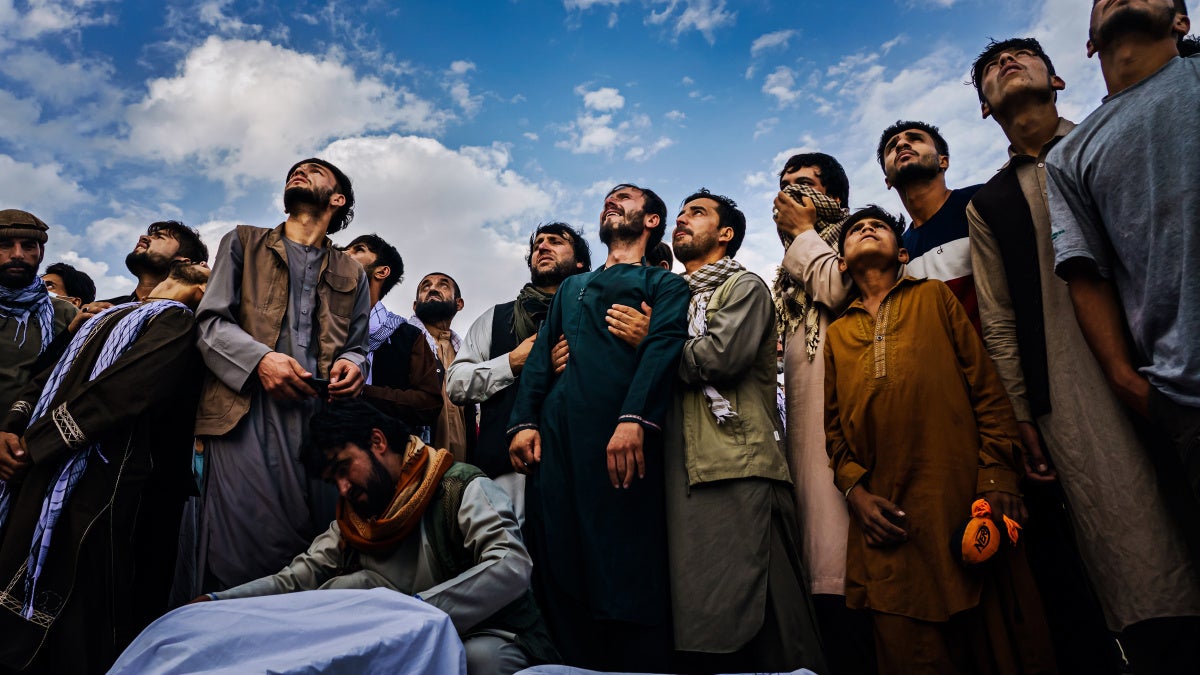
Click to expand Image Mourners at a mass funeral for victims of a US drone strike, including seven children, look up as fighter jets circle a cemetery in Kabul, Afghanistan, on August 30, 2021. © 2021 Marcus Yam/The Los Angeles Times via Getty Images (Washington, DC) – The United States and coalition countries have yet to provide genuine justice or redress for war crimes and other grave abuses in Afghanistan in the 25 years since the war began on October 7, 2001, Human Rights Watch said today, issuing a timeline of its reporting of the conflict. After Al-Qaeda’s September 11 attacks on the United States, the US government authorized the use of interrogation methods of suspected militants amounting to torture. Human Rights Watch and others also documented torture and other ill-treatment by US forces in Afghanistan, including beatings, humiliation, waterboarding, prolonged sleep deprivation, and mock executions. Many civilian detainees were released only after months or years without ever being charged with a crime. The US government has never provided full accountability or compensation for these abuses. Afghanistan: 25 Years Since the US-Led Invasion This feature compiles Human Rights Watch reporting on international human rights and humanitarian law issues by all parties during the conflict and the continuing need for accountability. Read more here “Twenty-five years on, Afghans tortured in US custody and families of those wrongfully killed still have no clear path for filing a claim or receiving redress from the US government,” said Patricia Gossman, senior associate Asia director at Human Rights Watch. “Successive US administrations have swept grave abuses under the rug, leaving those most affected with neither compensation nor justice.” The 20-year US conflict in Afghanistan, which ended with the Taliban’s recapture of Kabul in August 2021, was governed by the Geneva Conventions of 1949and customary international humanitarian law, which prohibits summary executions, torture and other ill-treatment, and deliberate or indiscriminate attacks on civilians, as well as international human rights law, including the United Nations Convention Against Torture. A farmer told Human Rights Watch that US forces detained him in Ghazni in 2019 while he was recovering from an eye operation. He said that he permanently lost his eyesight after US soldiers beat him during questioning and did not provide him with medical care. “Whenever one didn’t like my answers, the other American would hit me with his rifle butt,” he said. “They told me I was lying and beat me with fists, kicks, and rifle butts.” He was never charged but only released in August 2021. The United States prosecuted some US soldiers for unlawful killings. Sgt. Robert Bales was convicted in 2012 for killing 16 Afghan civilians in Kandahar. In the so-called “Kill Team” murders of 15 Afghan civilians in Kandahar in 2010, Staff Sgt. Calvin Gibbs was convicted of murder and sentenced to life in prison, Specialist Jeremy Morlock received 24 years, and 2 other unit members were sentenced—one to 3 years and the other to 7—for failing to prevent the killings. Many other prominent cases were never prosecuted, including the massacre of at least 18 civilians in the Nerkh district of Wardak province in 2014. US President Donald Trump pardoned several US soldiers convicted of unlawful killings: Lt. Clint Lorance was convicted of murder on the basis of testimony by fellow soldiers but was pardoned after serving 6 years of a 19-year sentence. The US army dropped charges against Maj. Mathew Golsteyn, who admitted to killing an Afghan man and then covering it up, after Trump pardoned him in 2019. Other coalition forces have also done little to meaningfully address serious abuses by their military personnel. While both Australia and the United Kingdom have investigations underway into alleged summary killings and mistreatment of civilians by their forces, progress has been slow. Almost six years after the release in Australia of the Independent Afghanistan Inquiry (the Brereton Report), which detailed alleged war crimes by Australian special forces in Afghanistan from 2005 to 2016, there have only been two arrests, the trials have not begun, and no victims or their families are known to have received compensation. After media in the UK exposed evidence of summary executions and other war crimes by British special forces in Afghanistan, successive UK governments tried to prevent any prosecutions by covering up crimes and shutting down criminal inquiries. An independent inquiry into the Afghanistan allegations was eventually established in December 2022, but its scope was limited to three years, 2010-2013. US-backed strongmen in the then-Afghan government were responsible for serious abuses, including attacks on civilians, the torture and rape of detainees, and enforced disappearances. Local militias funded and trained by US forces and CIA-run Afghan “strike forces” carried out summary executions and disappearances. The Taliban and other insurgents targeted civilians and caused thousands of civilian deaths and injuries during the conflict. Taliban forces assassinated women officials and journalists and attacked embassies, hotels, polling places, and aid organizations. The Taliban’s use of indiscriminate improvised explosive devices on public roads and in populated areas was a leading cause of civilian deaths and injuries. The Taliban did not hold their personnel to account for abuses. Other armed groups, including an Islamic State affiliate, carried out suicide attacks targeting the Hazara and other minority communities. The International Criminal Court (ICC) initially undertook an investigation into possible war crimes and crimes against humanity in Afghanistan since May 1, 2003, by all warring parties, including the Taliban, the Islamic State, Afghan government forces, and the US military and CIA. The Trump administration denounced any attempt to investigate alleged crimes by US personnel and sanctioned the court’s judges and prosecutors. In 2021, then-ICC Prosecutor Karim Khan prioritized only those crimes allegedly committed by the Taliban and Islamic State. Investigations into crimes by other parties have not publicly progressed. In October 2025, the UN Human Rights Council crucially decided to establish an independent investigative mechanism for Afghanistan to collect, consolidate, preserve, and analyze evidence of past and ongoing international crimes by all parties, and to prepare files to facilitate future prosecutions. UN leadership should ensure the mechanism receives adequate resources and begins its investigations without delay. Judicial authorities abroad should engage with the mechanism to ensure that its work includes consultations with Afghan survivors of abuses, including women and girls, and supports prosecutions of those implicated in serious international crimes. “The United States and other countries that took part in the war in Afghanistan should properly investigate and prosecute alleged war crimes by their forces and provide appropriate redress to the victims of abuses and their families,” Gossman said. “The indifference of governments and the passage of time should not deny people the justice, compensation, and recognition they are due.”
Click to expand Image Left: Panayote Dimitras. Right: Tommy Olsen. © 2019 EIN Secretariat – Agnes Ciccarone © 2015 Adam Rosser (Athens, October 3, 2026) – The ongoing prosecution of two prominent human rights defenders in Greece is a politically-motivated attempt to silence their efforts to expose abuses against migrants, Human Rights Watch said today. The trial of the two activists, Panayote Dimitras and Tommy Olsen, is set to begin on the Greek island of Rhodes on October 6, 2026. “The upcoming trial of Panayote Dimitras and Tommy Olsen is a blatant attempt to criminalize and silence their legitimate human rights work,” said Eva Cossé, senior Europe researcher at Human Rights Watch. “Prosecutors should drop this politically motivated case against Dimitras and Olsen once and for all.” Dimitras, founder and president of the Greek nongovernmental group Greek Helsinki Monitor, and Olsen, a Norwegian national and founder of the nongovernmental group Aegean Boat Report, are being prosecuted alongside two Cameroonian asylum seekers on charges of “forming or joining for profit and by profession a criminal organization with the purpose of facilitating the entry and stay of third country nationals into Greek territory.” If convicted, they face up to 20 years in prison. The charges brought against the activists in early 2023 stem from their peaceful human rights and humanitarian work, Human Rights Watch said. The indictment seeks to criminalize the defendants’ practice of notifying Greek authorities and international bodies of the whereabouts of newly arrived asylum seekers and migrants on the Greek islands, to help ensure that they have access to the country’s asylum procedure and not be pushed back to Türkiye. Dimitras and Olsen have for years documented and exposed human rights violations against asylum seekers and migrants, including violent pushbacks by Greek authorities, that have been characterized as “systematic” by the European Court of Human Rights. On May 15, a Norwegian appeals court rejected Greek authorities’ request to extradite Olsen, who lives in Norway, to Greece through a European Arrest Warrant. The Norwegian court concluded that the acts described by Greek authorities do not constitute criminal offenses under Norwegian law, noting that assisting someone in initiating an asylum procedure is a lawful act protected by international treaties. The court also found that extraditing Olsen to Greece would present a real risk of violating his right to freedom of expression. Because Greek prosecutors have maintained arrest warrants, including the European Arrest Warrant, against Olsen, Olsen faces arrest and detention if he travels to Greece to defend himself. Dimitras who lives in Greece, is not in detention but is subject to a travel ban preventing him from leaving the country. The court summons specifies that, under Greek law, defendants will be tried in their absence if they do not appear or are not represented by a lawyer. Proceeding on that basis would amount to an in absentia prosecution under international law. Under international law, including the European Convention on Human Rights, to which Greece is a party, anyone convicted in absentia, who later returns to the country where the conviction was issued, should have the opportunity to a fresh determination of the merits of their case by a court there. The prosecution of Dimitras and Olsen is part of a wider, well-documented pattern of Greek authorities misusing criminal and administrative law to harass and intimidate human rights activists and civil society organizations defending the rights of asylum seekers and migrants. In January, a Greek court on the island of Lesbos acquitted 24 humanitarian workers of similar charges, after prosecutors subjected them to a devastating seven-year legal ordeal. Despite this high-profile acquittal, Greek authorities have failed to change course, Human Rights Watch said. In February, the Greek government passed a migration law that makes membership in a nongovernmental organization an aggravating circumstance in migration-related criminal offenses, in some cases elevating them to felonies, with draconian penalties. In 2023, the then-United Nations special rapporteur on the situation of human rights defenders, Mary Lawlor, stated in a report to the UN Human Rights Council that “human rights lawyers, humanitarian workers, volunteers and journalists [working on migration in Greece] have been subjected to smear campaigns, a changing regulatory environment, threats and attacks, and the misuse of criminal law against them, to a shocking degree.” Lawlor has also said that the criminal investigation against Dimitras and Olsen “strongly appears” to be arbitrary. “The Norwegian court firmly recognized that helping people present themselves to seek asylum is not a crime,” Cossé said. “Greek authorities should take a cue from the court and end this farce by dropping the case and halting the weaponization of criminal law against human rights defenders.”
Click to expand Image Six journalists from the independent investigative journalism platform Matsda2sh arrested by Egyptian security forces between September 28 and 29, 2026. © Photo courtesy of The Tahrir Institute for Middle East Policy (TIMEP). (Beirut) – Egyptian security forces arrested six journalists working for the independent investigative journalism platform Matsda2sh on September 28 and 29, 2026, and appear to have forcibly disappeared them, Human Rights Watch said today. The journalists’ whereabouts are unknown and their families and lawyers have not been permitted contact with them. Security forces arrested the journalists in raids across the country. They are: Abdallah Qadry, Mohamed Ashraf Abu Emeira, Islam Barakat, Omar Helal, Mohamed Mahmoud, and Mohamed Adel. The six journalists constitute the investigate platform’s entire editorial newsroom. “Egyptian authorities’ simultaneous arrest of the entire newsroom at a prominent independent news platform is deeply alarming,” said Bassam Khawaja, deputy Middle East and North Africa director at Human Rights Watch. “Dismantling an entire newsroom in a matter of hours without warning or cause sends a chilling message to all journalists working in Egypt and shows just how little space is left there for critical reporting.” Matsda2sh was established in 2018 and publishes investigations and verifies information on issues of public interest in Egypt and the wider region. The Egyptian Initiative for Personal Rights (EIPR), whose lawyers represent all six journalists, said in a statement that security personnel who raided some of the journalists’ homes did not present arrest or search warrants and did not disclose the basis for their arrests or where they would be held. Security personnel also seized electronic devices belonging to the journalists and their family members. On October 1, Egypt’s Interior Ministry acknowledged the arrests and said the six journalists were suspected of preparing what it described as “fabricated news” for Matsda2sh and alleged that the platform is linked to the Muslim Brotherhood, an international Islamic social and political movement. The ministry did not, in its statement, identify the specific criminal charges the journalists face or disclose where they were being held. The platform has denied the allegations. More than 80 organizations including Human Rights Watch condemned the arrests and called for the release of the journalists. The arrests of the Matsda2sh journalists come amid longstanding restrictions on independent journalism and freedom of expression in Egypt. The country remains one of the world’s leading jailers of journalists, with 25 journalists behind bars, according to the Committee to Protect Journalists. In September 2025, authorities detained an independent journalist, Ismail Iskandarani, over Facebook posts and charged him with offenses including “spreading false news” and “belonging to a terrorist organization.” In 2026, the authorities prosecuted and imprisoned a writer and activist, Ahmed Douma, on “false news” charges stemming from an article and a social media post about detention conditions in Egypt. Human Rights Watch has previously documented repeated arrests and prosecutions of peaceful critics, human rights defenders, journalists, and online content creators in Egypt. Egyptian authorities routinely flout due process protections and security forces subject individuals under investigation to forcible disappearance, holding them in various places of detention. The International Covenant on Civil and Political Rights, to which Egypt is a party, protects the right to freedom of expression, including the freedom to seek, receive, and impart information and ideas. Under international law, the detention or abduction of a person by state forces, followed by the authorities’ refusal to acknowledge the deprivation of liberty or reveal the person’s whereabouts or situation, may constitute an enforced disappearance. “The incommunicado detention and potential enforced disappearance of six journalists raises serious concerns for their safety and due process rights,” Khawaja said. “Egyptian authorities should immediately disclose their whereabouts, grant access to their lawyers and families, and ensure that no journalist is detained or prosecuted for exercising their right to freedom of expression or for doing their job.”
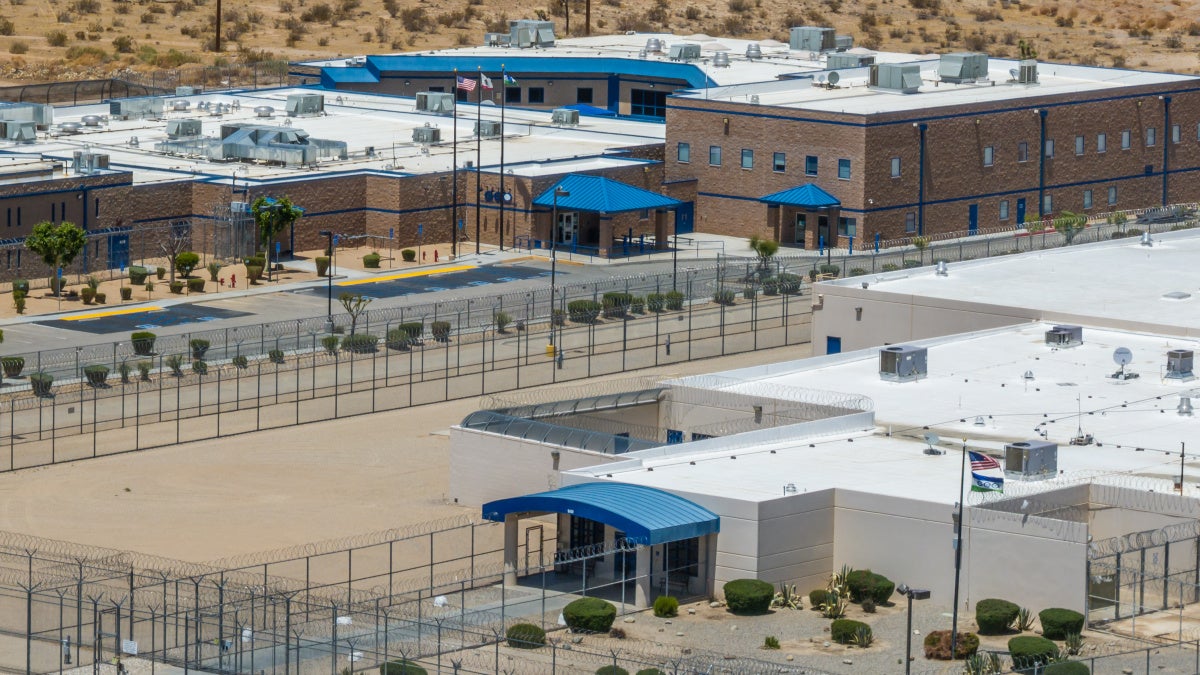
Click to expand Image Immigration Customs Enforcement processing center which consists of East and West wings, located in Adelanto, California on May 18, 2025. © 2025 Getty Images The United States Immigration and Customs Enforcement (ICE) on September 21 detained Mark Mabasa, the 40-year old son of slain Philippine journalist Percival “Percy Lapid” Mabasa, who was shot to death in Metro Manila in October 2022. Mark Mabasa had received death threats in the Philippines following the murder of his father and had sought asylum in the US. Mabasa is being held at the Adelantado ICE processing center in California according to ICE’s website. He is scheduled for a hearing today, according to his uncle, Roy Mabasa, which falls on the eve of the fourth anniversary of Percy Lapid’s killing. The uncle told Human Rights Watch that his nephew went to the US in February 2023 and holds work authorization. Mark is a musician and performed in a show in Chicago earlier in September and was detained by ICE after he returned home to Los Angeles. The Philippine consulate in Los Angeles has carried out a welfare visit to check on Mark at the request of his family. The Philippine Ambassador to the United States, Jose Manuel Romualdez, told Human Rights Watch that the consulate is coordinating with the lawyers of the Mabasa family. The man allegedly responsible for the killing of Percy Lapid is Gerald Bantag, the former chief of Philippine corrections, who remains at large. Percy Lapid’s case is among 12 journalist killings in the Philippines in the four years since President Ferdinand Marcos Jr. took office. The United Nations Human Rights Committee has stated that detaining an asylum seeker “in the absence of particular reasons specific to the individual, such as an individualized likelihood of absconding, a danger of crimes against others, or a risk of acts against national security” is arbitrary. Unless the US government can demonstrate lawful grounds for detention, authorities should release Mark Mabasa and ensure that his asylum application is examined fairly.

Click to expand Image A group of detained fishermen are transported on a National Police bus to the Community Surveillance Unit (UVC) from the port of Manta, Ecuador, on September 4, 2026. © 2026 ARIEL OCHOA / AFP via Getty Images (Washington, DC) – United States forces intercepted and destroyed eight Ecuadorian fishing vessels between August 28 and September 16, 2026, detaining over 140 of 160 crew members and abusing some, Human Rights Watch said today. The US and Ecuadorian governments should disclose the legal basis for these operations and promptly investigate the abuses. US military forces have alleged that the vessels were operating as floating refueling stations for drug trafficking operations linked to Los Choneros, an Ecuadorian criminal group. However, neither the US nor the Ecuadorian government has publicly disclosed compelling evidence linking individual crew members to any crime. Of the 160 crew members, 90 are facing criminal investigations in Ecuador, while Ecuadorian judges ruled that the arrest of 56 was unlawful, and 14 were not brought before a judge. Some reported being beaten, threatened in an effort to coerce them into confessing that they were trafficking fuel, and forced to sign documents could not understand. “Intercepting fuel trafficking at sea may be an important step to stop criminal groups, but that doesn’t allow security forces to arrest people without evidence, destroy their vessels, or abuse them,” said Juanita Goebertus, Americas director at Human Rights Watch. “Ecuador and the United States should disclose the legal basis for these operations, clarify the criteria used to intercept and destroy vessels, and establish robust safeguards to prevent further abuse.” Human Rights Watch interviewed 27 people, including captains, crew members, relatives of people detained, and lawyers representing some detained crew members. Researchers also reviewed photographs and videos of the interceptions, reports by Ecuador’s Judicial Police, court proceedings, statements by US authorities, and Ecuadorian media reports. Human Rights Watch requested comments from the Ecuadorian Attorney General’s Office and the US Southern Command regarding its findings, but has not received a response. Human Rights Watch could not determine whether any of the vessels operated as illicit refueling stations. US authorities alleged that they did, while crew members interviewed denied involvement. Neither government has publicly disclosed evidence supporting the allegations, and the destruction of the vessels may have eliminated evidence that could have helped establish what happened. On August 28, US military forces intercepted Los Tres Hermanos, the first vessel. The captain and crew members said that armed US forces ordered them to lie face down and restrained them with zip ties without any explanation. They said that US forces did not inspect the vessel in their presence before taking them aboard the USS San Antonio. US forces then replaced the plastic restraints with tightly fastened metal handcuffs, they said, covered their eyes and ears, collected biometric data, and questioned some about their alleged links to organized crime. The crew members denied any such links and said they had no criminal records. After about seven hours, US forces placed them aboard the Los Tres Hermanos’ four support boats, ordered them to leave, and then destroyed the main vessel. None were detained when they reached shore. “I asked what evidence they had found, what procedure they were following, and whether I should take the boat to Jaramijó or Manta,” the captain said. “One of the US forces asked me, ‘What do you prefer, death or prison?’ I said, ‘Neither.’ He then told me not to return to the boat and ordered us to go to Manta in our support boats.” Crew members from at least four vessels said that US forces kicked and struck them while boarding their fishing vessels, although they offered no resistance. Once aboard the USS San Antonio, US forces punched or kicked them for moving or failing to follow orders, crew members said. They said the orders were in English, which they do not speak. Crew members said that US forces covered their eyes and ears and forced them to remain seated for hours without moving, denying them food, adequate water, and access to toilets. US forces did not tell them why they were being held or what would happen to them. Several said US forces, speaking through interpreters, threatened them with prison or said they would go after crew members’ families unless they admitted to supplying fuel to boats carrying drugs. “He threatened me, saying that if I did not confess that we were trafficking fuel, I would go to prison, and that if I did not cooperate, they would come after my family,” a crew member from the María Candelaria said. He said two armed US military members interrogated him through an interpreter. A member of the US forces made him sign an electronic document that he was not allowed to read. “I do not know what that document said,” he said. “We were not doing anything wrong; we were only fishing. It is very unfair.” On September 5, a judge in Manta ruled as unlawful the detention of 28 crew members—9 from the Conquista II and 19 from the OM 2—and ordered their release without charges. An official record of the hearing reviewed by Human Rights Watch shows that the judge rejected prosecutors’ request to treat the arrests as “flagrancy” for alleged unlawful association, and found they had presented no evidence that the crew members had committed a crime. On September 10, a judge on San Cristóbal Island, Galápagos, ordered the release without charge of 28 crew members, 22 from the Montecristi and 6 from the Don Rufo. Ecuadorian prosecutors have charged 90 crew members with “unlawful association,”8 from the Conquista II, 26 from the María Candelaria, 10 from the Don Rufo, 26 from the X Siempre Don Carlos, and 20 from the Karla Franccesca. They are required to report weekly to the court and the prosecutor’s office and are not allowed to leave the country. On September 28, a Manta court held a trial hearing for 8 crew members of the Conquista II and 26 of the María Candelaria. Defense lawyers told Human Rights Watch that the prosecutor presented a forensic report on some crew members’ phones, which contained only photos of them and their families, along with seafarers’ registration cards and a Judicial Police report. They also said Ecuadorian police and Navy officials acknowledged in court that US forces had provided no evidence of a crime and that Ecuadorian authorities had collected none. The court is expected to rule on October 7. Human Rights Watch reviewed two Ecuadorian Judicial Police reports concerning 74 of the detained crew members. Both reports state that the Ecuadorian Navy brought the crew members to the port of Manta as “shipwreck survivors” and handed them over to the Judicial Police there. At the direction of the prosecutor on duty, police nevertheless recorded them as having been apprehended in the act of committing a crime and detained them. The reports list only seafarers’ registration cards and some identity documents as evidence and identify no drugs, fuel, cargo, or other evidence to support allegations of fuel trafficking or “unlawful association.” International human rights law prohibits arbitrary detention and cruel and inhumane ill-treatment. The US and Ecuadorian governments should ensure that any interception and detention is lawful and promptly reviewed by a judge. “Ecuador and the United States are not going to dismantle organized crime networks by arresting fishermen in cases backed by dubious evidence,” Goebertus said.
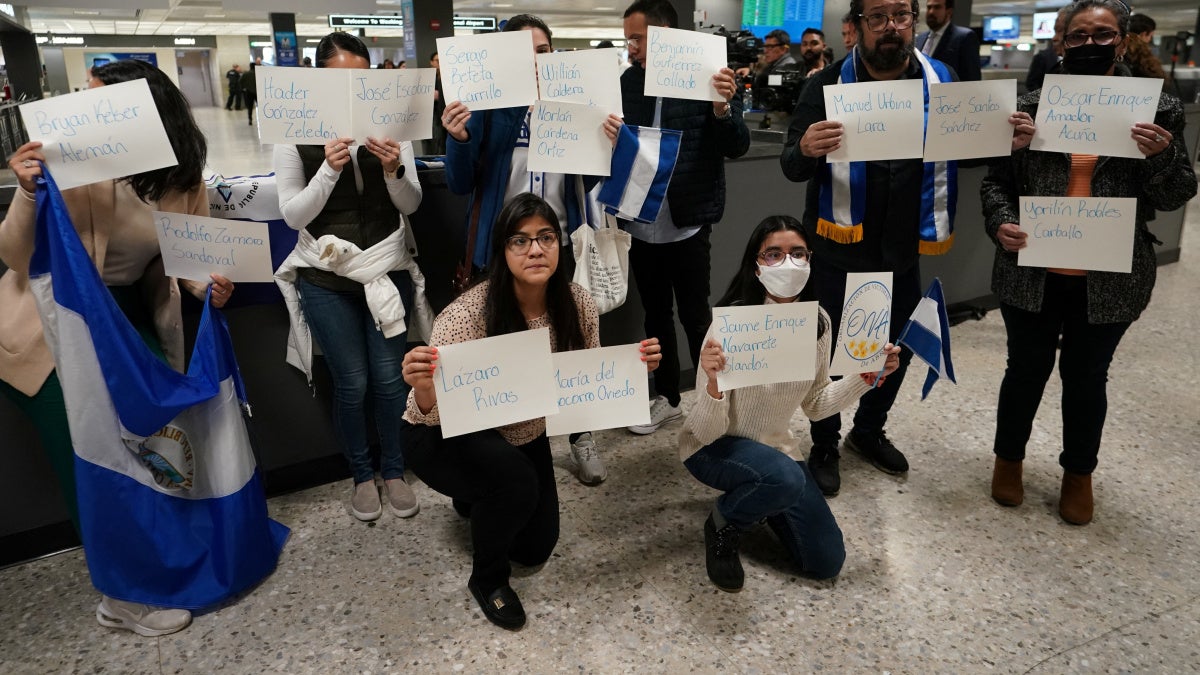
Click to expand Image Activists hold signs with the names of some of the 222 former prisoners released and expelled by the Nicaraguan government, as they await their arrival at Dulles International Airport, Virginia, United States, February 9, 2023. © 2023 Kevin Lamarque/Reuters (Washington, DC) – US immigration authorities have detained at least eight Nicaraguan exiles whom the Ortega-Murillo government has stripped of their nationality, including some with pending asylum claims, Human Rights Watch said today. Seven of the people detained were among 222 political prisoners whom the Nicaraguan government expelled to the United States, declared “traitors,” and stripped of their nationality on February 9, 2023. The US government granted them humanitarian parole for two years. The eighth, Luis Galeano, a journalist, was stripped of his nationality on February 15, 2023, along with 93 other government critics. People with knowledge of their cases told Human Rights Watch that at least four had pending asylum claims. “After offering refuge to these critics of the Nicaraguan government just three years ago, the United States is now detaining and threatening to deport them,” said Juanita Goebertus, Americas director at Human Rights Watch. “International law prohibits the United States from returning anyone to face the threat of persecution or torture. US authorities should not be trying to send these men back into danger.” At least two of the eight were arrested during a court appointment or asylum interview between April and September 2026. It appears that five of the eight men are still in detention. In September 2026, Human Rights Watch interviewed the legal representative of two of the detainees and the wife of a third. Human Rights Watch also confirmed through the Online Detainee Locator System, maintained by US Immigration and Customs Enforcement (ICE), that four of the men are currently in ICE custody and reviewed the status of their cases in the Executive Office for Immigration Review’s automated case information system. The detention of another has been reported by news outlets, but Human Rights Watch was unable to independently verify his case. Two others have since been released. Galeano was released on bond on September 26. Marvin Castellón Ubilla was released in July after more than two months in ICE custody. Two of the men had been convicted in Nicaragua on drug charges in cases that Nicaraguan human rights groups describe as politically motivated. One was charged with illegal possession of a regulated firearm in the United States and placed on probation, according to a court order reviewed by Human Rights Watch. ICE detained Galeano, 48, on September 14. An immigration judge granted him bond on September 23, and he was released on September 26 after being held for several days at the Krome immigration detention center in Miami. His family told Human Rights Watch that he applied for asylum in June 2019, holds a work permit, and has no criminal record in the United States. He has an immigration court hearing scheduled for October 27. Human Rights Watch has documentedabusive conditions at Krome, detainees being held for days in overcrowded and freezing intake cells without bedding, practices that amount to inhuman and degrading treatment. On September 11, the Department of Homeland Security Office of the Inspector General published findings from an unannounced May 2025 inspection of Krome. It documented violations of medical and use-of-force standards, including the improper use of a chokehold on a detainee. Under Co-Presidents Daniel Ortega and Rosario Murillo, Nicaragua has become one of the most authoritarian countries in the Western Hemisphere, Human Rights Watch said. Those who criticize the government face prison, exile, and/or the loss of their nationality. The Mechanism for the Recognition of Political Prisoners, a Nicaraguan human rights group, registered at least 68 political prisoners, 31 of whom it considered victims of enforced disappearance, as of September 2026. Between February 2023 and September 2024, the Nicaraguan government stripped 452 Nicaraguans of their nationality and confiscated their property, including the 222 people it expelled to the United States. The Trump administration has imposed sanctions on numerous Nicaraguan officials for their role in repression. The US government has sharply increased deportations to Nicaragua. Based on a Human Rights Watch analysis of Immigration and Customs Enforcement data, the government deported over 6,300 Nicaraguans between January and July 2026, nearly twice the 3,323 for the same period in 2025. According to media reports, many Nicaraguan deportees face surveillance upon return. US authorities are also increasingly deporting Nicaraguans to third countries. Since January 2025, over 1,100 Nicaraguans, including 400 through July 2026, have been sent to third countries, including 864 to Mexico, 63 to El Salvador, 50 to Guatemala, 49 to Honduras, and 26 to Panama, Human Rights Watch analysis of ICE data has found. In November 2025, the US deported Juan Barilla to Honduras. He is a peasant who had spent over two years in prison and was among the 222 people expelled to the United States in 2023. In March 2026, the UN Group of Human Rights Experts on Nicaragua reported that the government runs a transnational “surveillance and intelligence network … to identify, monitor and target exiled Nicaraguans.” It documented at least a dozen killings or attempted killings of exiled critics, including the June 2025 murder in San José, Costa Rica, of retired army major Roberto Samcam. Deporting Nicaraguan exiles to Honduras or other neighboring countries may place them within reach of the Nicaraguan authorities they fled, Human Rights Watch said. The Convention against Torture prohibits the US government from returning anyone to a country where they would face a real risk of torture. The 1967 Protocol relating to the Status of Refugees also bars returning refugees to face the threat of persecution. This can include indirect returns, in the form of chain deportations from third countries. US authorities should not deport anyone to Nicaragua who faces a risk of persecution or torture there, Human Rights Watch said. Nor should it deport people to third countries where they face such risks, including through onward deportation to Nicaragua. Anyone facing removal to a third country should receive adequate notice and a meaningful opportunity to challenge it before an immigration judge. While people remain in detention, US authorities should guarantee humane treatment, adequate medical care, and access to their lawyers. Congress should require the Department of Homeland Security to report how many Nicaraguans who have been stripped of citizenship are in ICE custody, how long they have been detained, and which countries have been designated for their removal.
Nebraska’s efforts to implement new, federally mandated work requirements for Medicaid underscore fears that millions of people will experience avoidable barriers to healthcare coverage.Federal authorities could have chosen to blunt the impact of the federal legislation’s Medicaid cuts. Instead, they added even more convoluted requirements that will deprive people of health care they are entitled to.Nebraska is the canary in the coal mine for issues that most states will face when they begin implementing these work requirements. As they do, they should make sure red tape doesn’t strip people of health care. (Washington, DC) – Nebraska’s efforts to implement new, federally mandated work requirements for Medicaid underscore fears that millions of people will experience avoidable barriers to healthcare coverage, Human Rights Watch, Oxfam America, and Nebraska Appleseed said today. On May 1, 2026, Nebraska became the first state to implement work requirements for Medicaid, the public health insurance program for people with low- or no-income, as part of public spending cuts mandated by the Trump administration’s One Big Beautiful Bill Act (OBBBA), which also extended and deepened tax cuts that overwhelmingly benefit high-income households and corporations. These new rules will require most adults without dependents to document at least 80 hours per month of work, education, or other approved activities to maintain Medicaid coverage. States must implement the requirements by January 1, 2027, though they may do so sooner, as Nebraska has. “Nebraska is the canary in the coal mine for issues that most states will face when they begin implementing these work requirements,” said Matt McConnell, US researcher on economic, social, and cultural rights at Human Rights Watch. “As they do, they should make sure red tape doesn’t strip people of health care.” Human Rights Watch and Oxfam America in August and September interviewed a dozen Nebraskans with personal or professional experience with Medicaid and a public employee involved in the process. People interviewed said that the state’s rollout of new work requirements increased administrative burdens and risked disruptions in access to health care following the rushed implementation of these federal requirements. Data suggests that large numbers of people are already losing coverage in Nebraska because of the work requirements. Eli McCreary, age 64 at the time, said he lost his Medicaid coverage while undergoing treatment for kidney cancer and multiple chronic health conditions. He said a representative of the health plan that managed his Medicaid coverage informed him he lost access because he was not working, even though he is unable to work due to his condition. “If I could work, I would work,” he said. “But I can’t…. I can’t walk around. I mean, I can’t breathe. I can’t walk very far.” The sudden lapse in coverage disrupted his planned care. “I was supposed to go see the cancer specialist here…. And that date was canceled, so I couldn’t. I had to wait until I got insurance again to even come back out here.... Everything was delayed.” A Medicaid eligibility worker from the Nebraska Department of Health and Human Services said that poor training, vague and inconsistent guidance, and technical issues, including unprepared software systems, had caused stress and uncertainty for applicants and for state employees. “We just sometimes don’t know what we’re doing,” the worker said, describing the rollout as rushed and confusing. “I wish the people who make policies knew what they were doing.” The OBBBA, which became law in July 2025, imposed new eligibility criteria on the nearly 20 million adults without dependents in the 40 states and the District of Columbia who rely on expanded Medicaid coverage under the Affordable Care Act. Nebraska expanded coverage through a ballot initiative in 2018. Adults in this expansion population will be required to prove that they either satisfy these new work requirements or qualify for a statutory exemption, including for caregivers of young children, pregnant people, certain people with disabilities, and those deemed medically frail. States may also choose to offer short-term hardship exceptions for certain individuals, such as those in counties with a federally declared emergency or disaster. The Urban Institute estimated that between 3 and 7 million people in the United States could lose Medicaid coverage by 2028 because of these new requirements. The Congressional Budget Office, a nonpartisan government research agency, estimated that work requirements would increase the number of uninsured people in the United States by 4.8 million by 2034. Nebraska Appleseed, a Lincoln-based nonprofit advocacy organization, has repeatedly requested data from the state regarding its implementation of these requirements. On September 29, 2026, Nebraska publicly released initial figures showing that over 1,000 people lost or were denied Medicaid coverage under the new requirements between May and August of this year. The number of people affected is likely to grow significantly over the coming months as state officials review enrollees’ eligibility on a rolling basis. “Getting data from the state about how many people are losing coverage and why shouldn’t be like pulling teeth,” said Sarah Maresh, healthcare access program director at Nebraska Appleseed. “Nebraskans deserve access to this information. You can’t fix problems you refuse to measure.” In May, Human Rights Watch and Oxfam America warned that millions of people were at risk of losing coverage due to the work requirements. In a joint letter to the US Department of Health and Human Services and the Centers for Medicare & Medicaid Services (CMS), the organizations urged federal authorities to issue guidance for states that would help prevent these new federal requirements from causing harmful and unnecessary Medicaid denials and terminations. But CMS issued binding guidance on June 1 that will require burdensome case-by-case assessments. “Federal authorities could have chosen to blunt the impact of the OBBBA’s inequality-fueling Medicaid cuts,” said Jackson Gandour, senior economic justice policy adviser at Oxfam America. “Instead, they added even more convoluted requirements that will deprive people of the health care they are entitled to.” Under international human rights law, everyone has the right to the highest attainable standard of physical and mental health. Medicaid eligibility requirements already exclude people who earn too much to meet extremely low-income eligibility limits but not enough to afford private health insurance. Complex work reporting requirements may exclude millions more, undermining their rights to health, social security, and an adequate standard of living. Because the rules largely affect people with low incomes, these losses may also deepen inequality, the organizations said. Officials in Nebraska and other states preparing to implement the work requirement provisions should identify ways to reduce administrative burdens and simplify eligibility assessments. Officials should also take steps to strengthen existing exemptions; improve communication about, and understanding of, who is subject to work requirements and who is exempt; and enhance transparency by regularly publishing data on application denials, coverage terminations, appeals, reinstatements, and the reasons underlying these decisions. “Work requirements are a solution in search of a problem,” McConnell said. “The truth is that they make life harder for people who are already working or can’t work.” Widespread Confusion; Risk of Disrupted Care People currently on Medicaid expressed confusion about whether work requirements or relevant exemptions applied to them, and what steps they needed to take to maintain coverage. “I got a letter early in January stating that the work requirements were coming, and then basically, that’s it,” said Schmeeka Simpson, a 44-year-old community organizer in Omaha and mother of three. She said she received a letter informing her that she was approved for Medicaid in August, but with no explanation for how Nebraska determined she complied with the work requirements. “I’m like ‘great, that’s wonderful,’ but I don't know how they came to those conclusions.” Due to the lack of clarity, Simpson said, it is difficult to know how to maintain Medicaid eligibility. “Who, what, when, where, why, and how hasn’t been answered…. These are life and death situations for people. This is not just politics.” Melissa Craig, a single mother in Omaha who relies on Medicaid, said she only learned that she qualified for an exemption to work requirements shortly before they went into effect: “It is very stressful for me on a day-to-day basis about what my future and my son’s future looks like. Staying on top of it is a full-time job.” Megan Word, government relations director covering Nebraska and Kansas for American Cancer Society Cancer Action Network (ACS CAN), said “The workers can’t even quickly identify whether somebody is on the expansion population or not.” She said even Medicaid eligibility workers may be unaware of whether someone will be subject to work requirements. “The biggest concern is the administrative burden that is going to be placed on ... the patient,” said Amy Behnke, who leads the Health Center Association of Nebraska, which represents the seven healthcare providers operating federally qualified health centers in Nebraska. She said: “Prior to Medicaid expansion, our health centers had a 50 percent uninsured rate, and now we’re down to about a third. So, expansion has been incredibly significant to our health centers and to their patients … [But] often what we see with patients is that … they’re working sometimes multiple jobs, they’re taking care of their families, they’re figuring out how to put food on their table. And so, any time you ask somebody to take one more step when it comes to verifying their health insurance, the higher the likelihood is that something is going to fall through the cracks.” She described a recent case at one of the centers she represents. A pregnant woman arrived for a prenatal appointment and learned she no longer had Medicaid coverage, despite being exempt from work requirements. Eventually staff determined that state officials had overlooked a box indicating she was pregnant and the woman was able to regain Medicaid coverage, but it took multiple calls and she had to reschedule appointments. “This never should have been an issue,” Behnke said. Confusion surrounding work requirements may also discourage otherwise eligible people from applying for Medicaid coverage. “I had three different patients outright tell me, ‘What’s the point of enrolling? I’m not employed,’” said a licensed social worker based in Omaha who like some others spoke on condition of anonymity. She stressed that working with a social worker was essential to getting these people to apply. “It really, in our experience, becomes a game of how connected you are to a caseworker who can write these accommodations or write these letters and verify your status. And it really just becomes, just kind of a dice roll of privilege, unfortunately.” This confusion may already be causing disruptions in care. McCreary, the Omaha man who lost coverage while undergoing cancer treatment, learned that he had lost Medicaid coverage from his healthcare providers. “Unless you’re going to self-pay, we can’t take you, because your insurance canceled out,” he said, describing his conversation with hospital staff. “I had to cancel all of my appointments.” He said that when he contacted the managed care organization that administered his Medicaid coverage, he was informed that he had lost coverage because he was not working. “They said, you’re not working. I can’t really do anything for you.” Administrative Capacity and Perverse Incentives Implementing these work requirements involves creating new administrative processes within state agencies overseeing Medicaid, as well as training for the public employees who administer them, the organizations said. The federal law also requires all states, starting in January 2027, to increase the frequency of eligibility redeterminations from once per year, as required by the federal Affordable Care Act, to every six months. While this will effectively double the number of eligibility determinations the department must process each year, staffing is not keeping up with the increased workload. In the December 2025 news conference to announce that Nebraska would be the first state to implement work requirements under the OBBBA, Governor Jim Pillen said that no extra staff would be hired to help track work requirements. In July, Nebraska instituted a hiring freeze for state agencies including the health department citing a state budget shortfall that has been worsened by a 2023 law that nearly halved Nebraska’s tax rate for the highest earners. One Medicaid eligibility worker said that capacity issues, along with internal bureaucratic incentives, exacerbate the risk that eligible people will be denied coverage. They said chronic understaffing and pressure to clear cases is compounded by confusion and a lack of adequate training around the eligibility changes: “We just sometimes don’t know what we are doing … and then you have [Medicaid applicants] coming in, understandably they’re upset.” They said staff had recently been required to revisit some cases because supervisors had relayed incorrect information. “The supervisors were told something wrong and told us something wrong and now we’re having to go back and fix all these cases.” The worker said they face pressure to increase the number of cases closed. “You have to get your numbers up,” the worker said, relaying the message they and other staff regularly get from managers. “That’s really messed up because denials are the easiest.” This prioritizes speed over accuracy, the worker said, incentivizing staff to rapidly deny applications if there is any cause and disincentivizing staff from spending the time necessary to correct apparent errors, omissions, or inquiring more about potential pathways to coverage through existing exemptions. “All of that work that you do to try to verify, it doesn’t count. So, it looks like you did nothing,” the worker said. “All I think about is numbers and getting it done. I get so anxious and nervous.” Rushed and Unclear Implementation In Nebraska’s rush to be the first state to implement the work requirements, it developed eligibility criteria before official federal guidance was issued. The result has been a mismatch between the state and federal eligibility rules. “Nebraska went live with their work requirement implementation on May 1 and the Feds published their [mandatory guidance] on June 1,” said Megan Word of the ACS CAN. “[Nebraska] did not pause. They did not say, ‘Wait a minute … we need to review the differences,’ because there were many.” She said before the federal government issued mandatory guidance in June, through the Interim Final Rule, Nebraska had created a list of medical codes for diagnoses that might automatically satisfy the “medically frail” exemption to work requirements written into the OBBBA. “If you can find one of those medical conditions on the list, then theoretically, you should be eligible for an exemption,” Word said. However, this was inconsistent with the federal rule. Under that rule, a diagnosis such as cancer does not automatically establish an exemption, leaving many people who are unable to work because of their health unsure of whether they remain eligible for Medicaid. Instead, the federal rule defines “medically frail” as a “physical, mental, or other behavioral health condition [that] significantly impairs the individual’s ability to comply” with work requirements. “The Interim Final Rule makes it harder for patients to obtain this exemption,” Word said, because it puts the burden of proving one’s inability to work on enrollees, while also requiring a case-by-case review from implementing agencies. “That will involve some sort of independent verification, a process that no one really understands at this point.” For the time being, Nebraska is allowing people to submit a declaration—“self-attest”—that they are “medically frail” without having to provide additional supporting documentation. Human Rights Watch and Oxfam America recommended that federal authorities should help enable self-attestation in its May letter. Although the rules published in June allowed states to accept self-attestation for an exemption from work requirements, it only allows states to do so until January 2028, after which states will only be allowed to accept self-attestation when documentation is not “reasonably available.” In practice, both a lack of awareness regarding the availability of these exemptions and a broad misunderstanding about who may be eligible for them undermines the temporary availability of self-attestation, the groups found. People who may be unable to work because of their health must also juggle bureaucratic hurdles to prove their eligibility, frequently while undergoing sometimes intensive medical treatment. According to KFF, a nonpartisan health policy research organization, more than 6 out of every 10 people under age 65 on Medicaid are already working full or part time. About 3 out of 10 are not working because of caregiving responsibilities, disability, or illness, or because they are attending school. Fewer than 1 in 10 are unemployed for another reason, including retirement or the inability to find work. “Why are you putting in work requirements when the majority of people who rely on Medicaid are already working anyway?” Word said. Lessons from Georgia Human Rights Watch and Oxfam America’s joint research in the state of Georgia—which in 2023 expanded Medicaid coverage to adults without dependents but conditioned eligibility on meeting work requirements similar to those in OBBBA—indicate that work requirements compound existing barriers to accessing health care. According to data provided by the state to the Georgia Budget & Policy Institute, a nonprofit advocacy organization, over 100,000 people are estimated to be eligible for Georgia’s Medicaid expansion, but as of August 2026, only 20,321 were enrolled. According to the latest data published by the state of Georgia, about half of the 17,638 denials for their Medicaid expansion program between October 2024 and September 2025 were due to a failure to either meet or verify compliance with work requirements. Lack of Transparency Because Nebraska has been slow to release data on the impact of work requirements on Medicaid enrollment, advocates have struggled to assess the impacts of these policies. “We’re flying blind,” Behnke said. Without detailed data, health centers cannot identify where patients are losing coverage or adjust outreach strategies effectively. OBBBA’s Disproportionate Impact on Low-Income Households The addition of work requirements to Medicaid was among a series of provisions in OBBBA that reduced federal spending on public services and programs, including through restrictive eligibility and reporting requirements. These reductions were designed in part to offset tax cuts that disproportionately benefit high-income households and corporations. The nonpartisan Congressional Joint Committee on Taxation found that the top 0.1 percent of earners will receive an average tax cut of $311,000 in 2027 because of the OBBBA, while taxes will increase for the lowest-income households. The Congressional Budget Office found that the OBBBA’s Medicaid work requirements will reduce federal spending by $326 billion over the next decade. Meanwhile, the total cost of the OBBBA’s tax breaks for corporations and the wealthiest 1 percent of households is estimated at around $2 trillion.
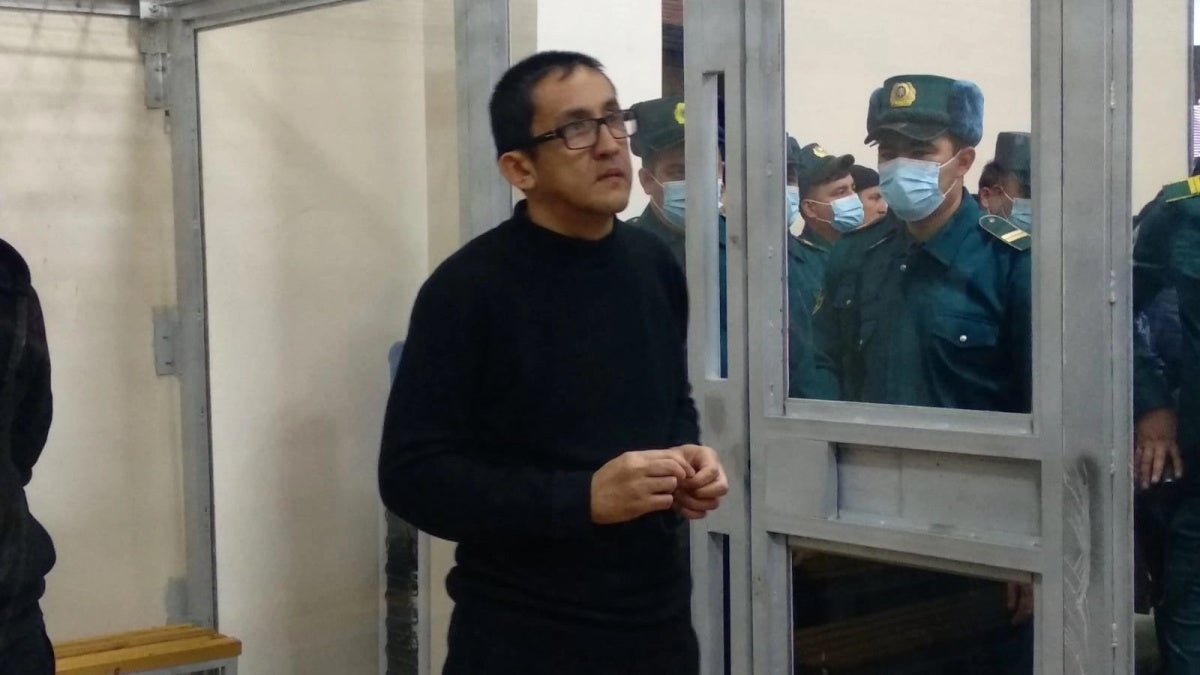
Click to expand Image Dauletmurat Tazhimuratov in the defendants' cage on the last day of his trial on charges related to the July 2022 protests in Nukus, the main city in Karakalpakstan, at a court in Bukhara, Uzbekistan on January 31, 2023. © 2023 Eurasianet (Berlin, October 1, 2026) – Uzbek officials should immediately ensure the safety and well-being of an imprisoned Karakalpak blogger and lawyer, Dauletmurat Tazhimuratov, and secure his release, Human Rights Watch said today. Since his conviction and transfer to prison in 2023, prison officials and other prisoners have apparently beaten and subjected Tazhimuratov to other humiliations repeatedly and with impunity. “The torture and humiliation of Dauletmurat Tazhimuratov needs to stop,” said Hugh Williamson, Europe and Central Asia director at Human Rights Watch. “Tazhimuratov shouldn’t have been imprisoned in the first place, but until he is released, Uzbek officials should ensure that he is not subjected to further ill-treatment or torture.” In a letter addressed to the United Nations that was smuggled out of prison in September 2026, a copy of which Human Rights Watch has seen, Tazhimuratov describes inhumane prison conditions and beatings by prison officials. “[T]here are 8 of us in a 4x5 meter cell…” Tazhimuratov wrote. “…60 days have passed since I saw the bathhouse, I wash in the toilet.” In his letter, he says that on July 8, five prison officials beat him, dragged him on the ground, and ordered him “say you are Uzbek.” He notes that for a week he passed blood when he went to the bathroom. Tazhimuratov wrote that he was beaten again on September 9 by two men at a prison official’s behest. Tazhimuratov is a blogger and lawyer from Karakalpakstan, an autonomous republic in northern Uzbekistan. In January 2023, he was convicted for his alleged role in anti-government protests in Karakalpakstan in July 2022 and given a 16-year prison sentence. Tazhimuratov was convicted for calling for a peaceful protest and speaking out against proposed constitutional amendments that would have stripped Karakalpakstan of its sovereign status. In May, Tazhimuratov was additionally prosecuted for “disrupting the work of a penal institution,” and two-and-a-half-years were added to his prison term. Tazhimuratov should not be in prison, Human Rights Watch said. In a decision adopted in November 2024, the UN Working Group on Arbitrary Detention determined that Tazhimuratov’s detention is arbitrary under international law and therefore unlawful. The UN group said that the Uzbekistan government should release him immediately. In his September letter, Tazhimuratov cites his need for protection under the UN Standard Minimum Rules for the Treatment of Prisoners (known as the Nelson Mandela Rules) and the Universal Declaration of Human Rights. He concluded his letter by pleading: “I beg you to help and protect the fallen from being finished off.” Tazhimuratov has the right to absolute protection against cruel, inhuman or degrading treatment or punishment. Under international human rights law, Uzbek authorities have a duty of care for people in detention, including an obligation to protect their rights to life, bodily integrity, health, safety, dignity, and security. Uzbekistan is a party to the International Covenant on Civil and Political Rights (ICCPR) which prohibits arbitrary arrest or detention (article 9) and requires that all detainees be treated humanely and with respect for their dignity (article 10 (1)). The Human Rights Committee, which oversees compliance with the ICCPR, requires states under article 10(1), to ensure that prisoners have among other standards, adequate sanitation, floor space, cubic content of air, and ventilation. The Nelson Mandela Rules provide that at a minimum every prisoner should be able to have a bath or shower once a week (rule 16), and that all sleeping accommodation meets all requirements for health, including minimum floor space and ventilation (rule 13). This is not the first time Tazhimuratov has alleged ill-treatment and torture in prison and raised other concerns about the conditions of his detention, Human Rights Watch said. Human Rights Watch has repeatedly urged Uzbek authorities, pending his full release, to review the conditions in which Tazhimuratov is being held and ensure his access to adequate health care, food, and sanitation, and freedom from torture. Other human rights bodies have also called for Tazhimuratov’s release. In January, the UN Special Rapporteur on human rights defenders Mary Lawlor, issued a statement calling on the Uzbek government to “guarantee [Tazhimuratov’s] safety … and release him.” Uzbekistan’s international partners, including the United Nations office in Tashkent, participating states of the Organization for Security and Cooperation in Europe, and the European Union delegation and other diplomatic representations to Uzbekistan, should urgently raise concerns about Tazhimuratov’s well-being in detention. They should also call on Uzbekistan to implement the decision of the UN working group and release Tazhimuratov. “Uzbek prison officials should recognize that they are accountable for rights violations in places of detention, including for the abusive and inhumane treatment of Dauletmurat Tazhimuratov,” Williamson said. “Uzbekistan’s international partners should press Uzbek authorities to immediately stop Tazhimuratov’s abusive treatment in violation of international human rights law and release him.”
Click to expand Image Samuel Peter Oyay © Private (Beirut) – A South Sudanese political commentator remains in prison in the United Arab Emirates (UAE) without charge a year after his arrest, Human Rights Watch said today. Emirati authorities have not disclosed the legal basis for the arrest of the commentator, Samuel Peter Oyay, to his family. Oyay fled South Sudan in 2014, fearing for his safety. He moved to the UAE and had been running a private business there. While in the UAE, Oyay had written regularly for independent South Sudan-focused platforms, accusing its government of corruption that benefits the elite. The UAE and South Sudan have strengthened their bilateral relations in recent years. In 2025, President Salva Kiir visited the UAE at least three times. “The UAE government’s zero-tolerance policy toward peaceful criticism is increasingly targeting critics of Abu Dhabi’s foreign allies who live in the UAE,” said Joey Shea, senior United Arab Emirates researcher at Human Rights Watch. “Emirati authorities should immediately release Samuel Oyay, who has been held for a year without charge.” In the last article published before his detention, on September 21, 2025, Oyay criticized the trial of Riek Machar, the suspended first vice president and leader of the main opposition party, as a ploy by President Kiir to weaken a rival rather than deliver justice. On September 22, 2026, the president dissolved the transitional government, most likely to pave the way for elections, while Machar and other key opposition figures’ trial was ongoing. On September 30, 2025, Emirati security forces in civilian clothes arrested Oyay in front of his four children at their home in Dubai after searching his home for two hours, an informed source told Human Rights Watch. During Oyay’s arrest, Emirati security forces did not show his family a warrant, or inform him of the charges or the legal basis for his arrest, the source said. UAE authorities allowed Oyay to call his family two weeks later, the source said, but did not disclose his whereabouts to his relatives for five months. On February 24, 2026, Oyay told the informed source that he was being held in al-Wathba prison. He was moved to another prison on March 3, the source said. Prison authorities allow Oyay one short phone call per week. Oyay’s family received a call from UAE authorities on March 2 authorizing a visit for March 3, but when they tried to visit him, the authorities told them that he had been moved to another prison that day, the source said. Emirati authorities called the family again on July 1 to schedule a visit for July 8, when they were finally able to visit, and have not been able to visit since. Human Rights Watch has previously documented that South Sudanese critics in exile have been disappeared or forcefully returned with support of the South Sudan government. In April 2024, a UAE company signed a €12 billion (US$12.9 billion) oil-for-cash deal with South Sudan. Most of South Sudan’s crude is refined in Fujairah, one of the UAE’s seven emirates. But South Sudan’s oil exports have been significantly impacted by the war in neighboring Sudan. Human Rights Watch has documented the UAE’s longstanding record of arbitrary detention, enforced disappearances, torture, denial of medical care, prolonged solitary confinement, and continued detention beyond completed sentences. Article 48 of the UAE’s criminal law of procedure states that detainees should be taken before the public prosecutor within 48 hours. The UAE’s 2003 State Security Apparatus Law, however, gives state security officers wide powers to hold detainees for lengthy periods without any judicial scrutiny. Article 28 of the state security law, read in conjunction with article 14, allows the head of the state security apparatus to detain a person for 106 days “if he has sufficient reasonable causes to make him believe” that the person is involved in, among other things, “activities that undermine the state … or jeopardize national unity,” “activities deemed harmful to the economy,” or anything that “could undermine, weaken the position of, stir animosity against or undermine trust in the State.” The state security apparatus law inherently violates international human rights law including article 14(5) of the Arab Charter on Human Rights, which states that “anyone arrested or detained on a criminal charge shall be brought promptly before a judge or other officer authorized by law to exercise judicial power and shall be entitled to trial within a reasonable time or to release.” The UAE ratified the Arab Charter in 2008. The UAE should ensure that in its law and practice, every detainee is taken within 48 hours before an independent judge to consider the legality and necessity of their detention and whether they should be immediately released, Human Rights Watch said. “The UAE’s continued detention of Oyay shows authorities’ relentless attack on human rights against its own citizens and residents who make the UAE their home,” Shea said. “The UAE isn't content with silencing their own critics but is also doing the same for its allies.”
![Syria: Reconstruction Deals Lack Critical Rights Framework [EN/AR]](https://reliefweb.int/sites/default/files/styles/thumbnail/public/previews/29/02/2902c62f-8774-4c7b-9a06-aa31cf098046.png)
Country: Syrian Arab Republic Source: Human Rights Watch Please refer to the attached file. Government, Donors, Investors Should Ensure Rebuilding Serves Communities (Amman) – The Syrian transitional government is signing billions of dollars in reconstruction deals without a human rights framework that would ensure that rebuilding respects, protects, and fulfills the rights of affected people, Human Rights Watch said today. In March 2026, the transitional government unveiled a national recovery blueprint, and billions of dollars in international pledges for aid, and financing and investment commitments have followed. But the legal frameworks governing reconstruction do not require the government or developers to consult affected communities, including those still displaced, before projects are approved. The process should also require negotiating—instead of imposing—compensation terms and providing an independent mechanism for residents to challenge decisions about their homes and land. “Syria's reconstruction is progressing slowly, but without a rights framework, it could leave many Syrians with a raw deal,” said Hiba Zayadin , senior Middle East advisor at Human Rights Watch. “The legal framework being finalized now will determine whose homes are rebuilt, whose claims are recognized, and whose voices are heard.” Human Rights Watch conducted field research in Syria in May 2026, including interviews with residents of Ghadfa village in the Idlib countryside who had returned from displacement camps. Human Rights Watch also interviewed an activist, whose identity is being withheld for their protection, calling for the repeal of Decree 66 and the restoration of property rights in Marota City. Human Rights Watch reviewed Syrian government statements and documents including President al-Sharaa's March 2026 remarks on reconstruction published by the Syrian Arab News Agency, and the Constitutional Declaration of March 2025. Human Rights Watch also reviewed reports and data from the World Bank, the International Rescue Committee, the International Organization for Migration, UNHCR, OCHA, the Arab Reform Initiative, and The Syria Report. People returning to their communities are finding homes destroyed, and villages without water, electricity, or health care services. Housing, land, and property claims from the Assad era remain unresolved. Reconstruction projects are being initiated without meaningful participation by affected residents. In Jobar, a neighborhood east of central Damascus, approximately 95 percent of buildings were destroyed, according to The Syria Report . In Ghadfa, in the Idlib countryside, residents who returned from displacement told Human Rights Watch in May 2026 that they had no running water, functioning electricity grid, adequate sanitation, operating schools, or nearby medical services. Syria is emerging from more than a decade of conflict, which caused mass devastation to cities, homes, and infrastructure across many parts of the country. In October 2025, the World Bank estimated physical damage at US$108 billion and average reconstruction costs at $216 billion, with the full range between $140 billion and $345 billion. The transitional government has moved quickly to attract reconstruction investment, successfully restoring diplomatic ties and welcoming foreign capital, as the US and European countries lifted crippling sanctions that had frozen investment for years and impoverished Syrians . Gulf states have led investment. Saudi Arabia has pledged $6.4 billion across real estate, infrastructure, telecoms, and energy; and together with Qatar, jointly cleared Syria's $15.5 million in World Bank arrears in April 2025, unlocking engagement after 14 years of suspension.Qatar has committed $4 billion , and the UAE's DP World secured a 30-year concession over Tartus port. The World Bank has since approved over $1 billion in grant-funded projects, and the International Monetary Fund has established a technical cooperation program with Damascus. Among European governments, France , Germany , and to some extent Italy, have emerged as the most active bilateral partners. The EU, which pledged €620 million (about $713 million) for humanitarian aid and socio-economic recovery in 2026-2027, announced an investment conference in Syria in 2027 and is strengthening its political ties with Syria. EU member states are in a strong position to lead by example and mobilize other donors to ensure that human rights frameworks are strongly anchored in Syria’s reconstruction and recovery. But as the Global Governance Institute noted in August 2026 , pledges and announcements have far outpaced actual investment on the ground, and meaningful disbursements from international creditors will only follow once governance and legal frameworks are in place. According to a July 2026 report by the International Rescue Committee, over 3.5 million refugees and internally displaced Syrians have returned to their communities since December 2024, but not all returns have been fully voluntary. Many were driven by the deteriorating conditions for displaced people, the end of aid, precarious legal status, and unaffordable rent in places where they were living. Syria is bound by the International Covenant on Economic, Social and Cultural Rights, which under General Comment 4 , defines the right to adequate housing as including guarantees security of tenure, access to services, habitability, and suitable location. It is also bound by the International Covenant on Civil and Political Rights, which guarantees the right to an effective remedy. Both treaties require rights to be respected without discrimination on grounds including ethnicity and religion. The UN Basic Principles and Guidelines on Development-Based Evictions establish what consultation, compensation, and due process must look like before any displacement for development purposes. The UN Guiding Principles on Internal Displacement and the Pinheiro Principles on housing, land, and property restitution establish clear standards for how states should manage return and reconstruction in post-conflict settings. International donors should ensure that their funding supports rights-aligned recovery and does not cause or contribute to violations. Businesses and investors should conduct human rights due diligence before entering reconstruction agreements and throughout their implementation. “The legal frameworks governing Syria's reconstruction are still being written,” Zayadin said. “That is an opportunity, but only if the international community and the transitional government use it to build protections for affected communities. A durable recovery depends on getting things right.” Background In October 2025, the International Organization for Migration found that conditions for Syrians returning to their communities remained fragile, with widespread housing, land, and property disputes, limited access to public services, and pervasive explosive ordnance contamination hampering safe movement and livelihoods. Halfway through 2026, the UN humanitarian appeal for Syria was just under one-third funded . Since May, the World Food Programme has halved emergency food assistance in Syria, from 1.3 million people to 650,000. About 5.5 million people remain internally displaced, according to the March operational update by UNHCR, the UN refugee agency. The gap between pledges and delivery has real consequences for rights. While affected residents can in principle pursue individual cases through Syrian courts, the judiciary remains under-resourced and inaccessible for most property disputes, with documentation requirements prohibitive for many returnees . There is no practical avenue to contest reconstruction decisions more broadly, and no specialized grievance mechanism for reconstruction disputes has yet been established. Some reconstruction is underway. The Al-Rastan Bridge in Homs, a key economic artery linking several Syrian provinces, reopened in June 2026 after rehabilitation financed by the Syria Humanitarian Fund in partnership with the UN Development Program (UNDP). Rashid Bridge over the Euphrates in Raqqa reopened in July 2026 after a four-month reconstruction project. And the World Bank approved a $146 million grant in 2025 to rehabilitate the national electricity transmission infrastructure. While these infrastructure projects are meaningful, efforts remain modest relative to the scale of need, and there is no framework in place to ensure that projects uphold the rights of Syrians as reconstruction proceeds. Economic, Social, and Cultural Rights in Reconstruction Under the International Covenant on Economic, Social and Cultural Rights , to which Syria acceded in 1969, and under Article 12 of Syria’s Constitutional Declaration of March 2025 , the Syrian government has an obligation to respect, protect, and fulfill economic, social and cultural rights throughout the reconstruction process. These include the rights to adequate housing, water and sanitation, electricity, health, education, food, and social security. Electricity is also essential to the realization of many other rights, including powering water and sanitation systems, healthcare facilities, schools, and homes. The government should ensure that all these rights are secured without discrimination of any kind including on the grounds of ethnicity or race, or religion. The conditions Human Rights Watch documented in areas of return place these rights at serious risk. In Ghadfa, for example, residents described living without running water, a functioning electricity grid, adequate housing, operating schools, or nearby medical services. Residents must purchase water privately and pool money to pay teachers’ salaries, shifting the cost of public services onto households already facing severe economic hardship. The government should make a commitment to provide as much of its available resources as possible toward the full realization of economic, social and cultural rights, Human Rights Watch said. It should ensure minimum essential levels of these rights. Reconstruction plans and budgets should use transparent, rights-aligned criteria to address the most serious rights deprivations. Syria is also under an obligation to respect the right to property, including property held in association with others, without discrimination. This right is protected under Article 17 of the Universal Declaration of Human Rights , Article 5(d)(v) of the International Convention on the Elimination of All Forms of Racial Discrimination, to which Syria acceded in 1969, and Article 31 of the Arab Charter on Human Rights , which Syria ratified in 2007. The Right to Participate International human rights law requires that communities affected by reconstruction have meaningful input into decisions that affect their homes, land, and neighborhoods before those decisions are made. The relevant instruments include Article 11 of the International Covenant on Economic, Social and Cultural Rights, which guarantees the right to adequate housing and has been interpreted to require genuine participation in housing-related decisions; the UN Basic Principles and Guidelines on Development-Based Evictions and Displacement , which establish that consultation must be meaningful, timely, and capable of influencing outcomes; and the UN Guiding Principles on Internal Displacement , which require that displaced persons participate in the planning and management of their return and reintegration. In Syria, these standards are not being met. President Ahmed al-Sharaa outlined in March 2026 that for cities where destruction has reached 90 to 100 percent, the government cannot finance construction alone and is considering an investment-based reconstruction model, with legal frameworks still being finalized. But the Arab Reform Initiative, drawing on 45 interviews with residents, civil society actors, officials, investors, and others between July 2024 and May 2026, found that reconstruction decisions are already being made without community participation, clear compensation standards, or accessible grievance mechanisms. It documents how this gap is already generating conflicts. In Homs, Aleppo, and Damascus, projects announced without prior community consultation have triggered protests, partial reversals, and deepening distrust of public authorities. In Damascus, Decree 66, an Assad-era law issued in 2012 was used to displace thousands without due process or adequate compensation and has not been repealed by the transitional government. The Damascus governor suspended its implementation in October 2025 pending legal review, but no presidential decree has resolved its legal status, and the projects it enabled continue to be marketed to investors. Law No. 10 of 2018 extended the Decree 66 model nationwide, requiring residents to prove ownership within a short time or forfeit their rights, which has disproportionately affected those displaced by conflict. Wartime redevelopment frameworks, including the Marota City and Basilia City development projects in Damascus, are being repackaged as investment opportunities for the private sector or other governments, according to the Arab Reform Initiative, risking legitimizing past dispossessions rather than providing redress. Both projects are managed by Damascus Cham Holding, a company established under Assad and now operating under the transitional government. A presidential committee was formed in December 2025 to review Decree 66 procedures, and some compensation decisions were issued in May 2026, but the legal framework governing both projects remains unresolved and affected residents continue to await a durable solution. In Jobar, the neighborhood east of central Damascus where approximately 95 percent of buildings were destroyed, authorities told residents they could not rebuild even on their own initiative and that a proposed foreign-backed project would provide them with new housing with floor area equivalent to only 50 percent of the area of their former homes, according to the Syria Report and Al Jazeera . Former homeowners would receive new units equivalent to only 50 percent of their former homes as compensation; residents of informal settlements would receive 30 percent of their land area, with no recognition of structures built on it; and tenants would receive nothing. The Right to Return in Safety and Dignity The UN Guiding Principles on Internal Displacement and the 1951 Refugee Convention stipulate that returns of displaced persons and refugees must be voluntary, safe, and dignified. To be voluntary, a decision to return must be free and informed, not driven by deteriorating conditions in displacement. Safety requires that adequate housing and public services are available upon return. Dignity requires that property rights are respected and that residents' claims are received and fairly adjudicated. Though UNHCR has said economic conditions in Syria remain dire, political momentum around returns is accelerating. During President al-Sharaa's state visit to Berlin in March 2026 , Chancellor Friedrich Merz and al-Sharaa expressed a shared hope that 80 percent of Syrians in Germany would return within three years; a figure Merz subsequently clarified was aspirational rather than a formal target. A September 2025 UNHCR survey found that while 18 percent of Syrian refugees expressed a desire to return within 12 months, the most cited concerns among those considering it included housing availability, limited employment opportunities, lack of financial resources, and inadequate access to basic services. Many returns, whether of refugees or internally displaced people, are not voluntary in any meaningful sense. Funding cuts to displacement camps in northwest Syria, including the near-total collapse of US humanitarian funding in 2025, have left camp residents with little choice but to return to communities that cannot yet support them. The transitional government's “Syria Without Camps” initiative aims to phase out displacement camps entirely by 2027. And yet, the communities to which displaced people are expected to return often lack the required infrastructure and public services to guarantee an adequate standard of living. During the visit to Ghadfa, Human Rights Watch interviewed three residents who had returned from displacement camps to find no running water, no electricity, and no functioning schools. They said they truck in water privately and pool money to pay teachers' salaries. Individual solar panels on buildings have replaced an electricity grid that does not function. Noureddine Othman, head of Ghadfa's municipal council, said that before the war the village had 8,500 residents, at least five schools, and a hospital serving the surrounding area. It now has an estimated 13,000 people, he said, with only 7 houses out of about 1,500 with concrete roofs. Many residents have pitched tents where their homes once stood or on top of damaged structures that lack roofs. “I returned after the fall [of Assad] and found nothing, not even a room to rest in, so I went back to displacement for another five or six months,” he said. “My wife and I eventually came back and we're living in a room with no kitchen and no bathroom. We came back hoping God would send us some organization, someone, to help us [get back on our feet].” Sohaib al-Othman, a Ghadfa resident who had recently returned with 13 family members including 3 children with disabilities, said: “After years of displacement, I returned home to find the house in complete ruins. We are deprived of everything needed for a dignified life; water, sewage, electricity, medical services. The thing I struggle with the most is that the nearest operating medical point to me is 50 kilometers away and I don't have a vehicle.” The transitional government should treat the need to restore public services as an immediate rights obligation, not a future phase of reconstruction, Human Rights Watch said. The Right to an Effective Remedy The right to an effective remedy, guaranteed under the ICCPR, requires accessible, independent, and enforceable mechanisms for people whose rights are violated during reconstruction to seek redress. Syria's reconstruction framework does not yet provide such mechanisms. Communities confronting decisions about their land, homes, and neighborhoods have no independent formal channel through which to challenge those decisions. They resort instead to street protest, social media pressure, and political mediation, as residents of Jobar , Marota, and Basilia City are all reported to have done. An activist who called for the repeal of Decree 66 and the restoration of residents' property rights in Marota City in Damascus told Human Rights Watch on June 20 that appeals through official channels have gone unanswered. The authorities had repeatedly cited political instability and the absence of a People's Assembly as reasons for the delay. The People’s Assembly began functioning in July. “Then we were shocked to learn that Damascus Cham Holding Company was promoting investment opportunities for Gulf investors that included the sale of our land,” he said. “We met with the minister of justice, who promised to refer our case to the presidency. This remained only a promise, and no action was taken.” Recommendations To Syria’s Transitional Government Ensure that the rights and freedoms guaranteed under Article 12 of the Constitutional Declaration of March 2025, including all rights under international human rights treaties ratified by Syria, are applied fully to reconstruction and recovery processes; adopt interim guidance requiring all state authorities involved in reconstruction to comply with those obligations, without discrimination on grounds of ethnicity, religion, or political opinion. Incorporate binding community participation requirements in legal frameworks and planning processes before any reconstruction project is approved, contracted, or presented to investors; Treat displacement as a last resort in reconstruction, prioritize restitution and return for all those displaced; and where restitution is not possible, establish clear, fair compensation standards that reflect actual use and occupancy for all those displaced by reconstruction, including those with informal tenure and tenants; Institute a moratorium on demolition where ownership and compensation arrangements have not been publicly established and accepted by residents; Repeal or independently review Decree 66 and Law No. 10 of 2018, which extends its provisions across Syria, to assess what restitution is owed to affected residents; Create accessible, independent grievance mechanisms for all reconstruction projects; Ensure reconstruction processes are linked to transitional justice on housing, land, and property; Prioritize immediate restoration of public services—water, sanitation, electricity, schools, healthcare—in areas of active return, not as a future phase of reconstruction. To International Donors and Investors Make rights compliance a binding condition of reconstruction financing, including consulting communities, protecting property, and providing grievance mechanisms; Require human rights impact assessments before funding projects in areas with unresolved displacement or contested property; Use the upcoming EU-Syria investment conference to make rights standards a prerequisite, not an afterthought, and encourage participating companies, to adopt human rights due diligence frameworks; Coordinate with other international donors to ensure reconstruction financing is consistently conditioned on rights compliance across all bilateral and multilateral channels; Require fulfilling conditions for voluntary, safe, and dignified return in any political return timelines; Fund public service delivery alongside capital investment and maintain humanitarian funding as reconstruction scales up. To International Financial Institutions Require prior assessment of the human rights impacts of fiscal consolidation, privatization, or user fees to ensure that they do not discriminate, result in unjustified retrogressive measures, or deny anyone minimum essential levels of water, healthcare, housing, or other rights; Ensure that financing and technical assistance programs incorporate human rights impact assessments and housing, land, and property protections as core conditions, not peripheral considerations; Support the establishment of an independent property dispute resolution mechanism as part of governance reform programming. To Corporations and Financial Actors Conduct human rights due diligence before entering reconstruction agreements, including the need to resolve contested ownership and community opposition; Require evidence of community consultation and grievance mechanisms before investing; Enter agreements involving land or property only if mechanisms are in place to resolve claims over land or property from affected communities, including through compensation and replacement land where appropriate.
Sep 28, 2026 · byReliefWeb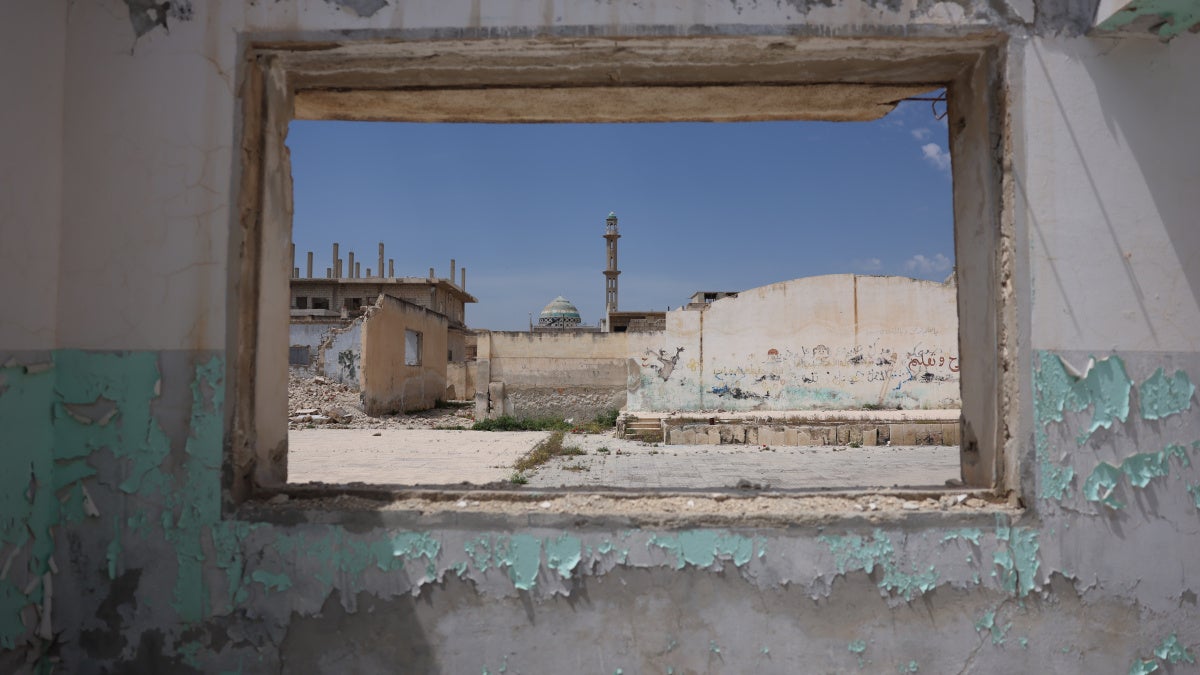
Click to expand Image A destroyed school in Ghadfa village, Idlib countryside, Syria. © 2026 Ali Haj Suleiman/Human Rights Watch (Amman) – The Syrian transitional government is signing billions of dollars in reconstruction deals without a human rights framework that would ensure that rebuilding respects, protects, and fulfills the rights of affected people, Human Rights Watch said today. In March 2026, the transitional government unveiled a national recovery blueprint, and billions of dollars in international pledges for aid, and financing and investment commitments have followed. But the legal frameworks governing reconstruction do not require the government or developers to consult affected communities, including those still displaced, before projects are approved. The process should also require negotiating—instead of imposing—compensation terms and providing an independent mechanism for residents to challenge decisions about their homes and land. “Syria's reconstruction is progressing slowly, but without a rights framework, it could leave many Syrians with a raw deal,” said Hiba Zayadin, senior Middle East advisor at Human Rights Watch. “The legal framework being finalized now will determine whose homes are rebuilt, whose claims are recognized, and whose voices are heard.” Human Rights Watch conducted field research in Syria in May 2026, including interviews with residents of Ghadfa village in the Idlib countryside who had returned from displacement camps. Human Rights Watch also interviewed an activist, whose identity is being withheld for their protection, calling for the repeal of Decree 66 and the restoration of property rights in Marota City. Human Rights Watch reviewed Syrian government statements and documents including President al-Sharaa's March 2026 remarks on reconstruction published by the Syrian Arab News Agency, and the Constitutional Declaration of March 2025. Human Rights Watch also reviewed reports and data from the World Bank, the International Rescue Committee, the International Organization for Migration, UNHCR, OCHA, the Arab Reform Initiative, and The Syria Report. People returning to their communities are finding homes destroyed, and villages without water, electricity, or health care services. Housing, land, and property claims from the Assad era remain unresolved. Reconstruction projects are being initiated without meaningful participation by affected residents. In Jobar, a neighborhood east of central Damascus, approximately 95 percent of buildings were destroyed, according to The Syria Report. In Ghadfa, in the Idlib countryside, residents who returned from displacement told Human Rights Watch in May 2026 that they had no running water, functioning electricity grid, adequate sanitation, operating schools, or nearby medical services. Syria is emerging from more than a decade of conflict, which caused mass devastation to cities, homes, and infrastructure across many parts of the country. In October 2025, the World Bank estimated physical damage at US$108 billion and average reconstruction costs at $216 billion, with the full range between $140 billion and $345 billion. The transitional government has moved quickly to attract reconstruction investment, successfully restoring diplomatic ties and welcoming foreign capital, as the US and European countries lifted crippling sanctions that had frozen investment for years and impoverished Syrians. Gulf states have led investment. Saudi Arabia has pledged $6.4 billion across real estate, infrastructure, telecoms, and energy; and together with Qatar, jointly cleared Syria's $15.5 million in World Bank arrears in April 2025, unlocking engagement after 14 years of suspension.Qatar has committed $4 billion, and the UAE's DP World secured a 30-year concession over Tartus port. The World Bank has since approved over $1 billion in grant-funded projects, and the International Monetary Fund has established a technical cooperation program with Damascus. Among European governments, France, Germany, and to some extent Italy, have emerged as the most active bilateral partners. The EU, which pledged €620 million (about $713 million) for humanitarian aid and socio-economic recovery in 2026-2027, announced an investment conference in Syria in 2027 and is strengthening its political ties with Syria. EU member states are in a strong position to lead by example and mobilize other donors to ensure that human rights frameworks are strongly anchored in Syria’s reconstruction and recovery. But as the Global Governance Institute noted in August 2026, pledges and announcements have far outpaced actual investment on the ground, and meaningful disbursements from international creditors will only follow once governance and legal frameworks are in place. According to a July 2026 report by the International Rescue Committee, over 3.5 million refugees and internally displaced Syrians have returned to their communities since December 2024, but not all returns have been fully voluntary. Many were driven by the deteriorating conditions for displaced people, the end of aid, precarious legal status, and unaffordable rent in places where they were living. Syria is bound by the International Covenant on Economic, Social and Cultural Rights, which under General Comment 4, defines the right to adequate housing as including guarantees security of tenure, access to services, habitability, and suitable location. It is also bound by the International Covenant on Civil and Political Rights, which guarantees the right to an effective remedy. Both treaties require rights to be respected without discrimination on grounds including ethnicity and religion. The UN Basic Principles and Guidelines on Development-Based Evictions establish what consultation, compensation, and due process must look like before any displacement for development purposes. The UN Guiding Principles on Internal Displacement and the Pinheiro Principles on housing, land, and property restitution establish clear standards for how states should manage return and reconstruction in post-conflict settings. International donors should ensure that their funding supports rights-aligned recovery and does not cause or contribute to violations. Businesses and investors should conduct human rights due diligence before entering reconstruction agreements and throughout their implementation. “The legal frameworks governing Syria's reconstruction are still being written,” Zayadin said. “That is an opportunity, but only if the international community and the transitional government use it to build protections for affected communities. A durable recovery depends on getting things right.” Click to expand Image Rubble and damaged buildings in Ghadfa village, Idlib countryside, Syria, May 2026. © 2026 Ali Haj Suleiman/Human Rights Watch Background In October 2025, the International Organization for Migration found that conditions for Syrians returning to their communities remained fragile, with widespread housing, land, and property disputes, limited access to public services, and pervasive explosive ordnance contamination hampering safe movement and livelihoods. Halfway through 2026, the UN humanitarian appeal for Syria was just under one-third funded. Since May, the World Food Programme has halved emergency food assistance in Syria, from 1.3 million people to 650,000. About 5.5 million people remain internally displaced, according to the March operational update by UNHCR, the UN refugee agency. The gap between pledges and delivery has real consequences for rights. While affected residents can in principle pursue individual cases through Syrian courts, the judiciary remains under-resourced and inaccessible for most property disputes, with documentation requirements prohibitive for many returnees. There is no practical avenue to contest reconstruction decisions more broadly, and no specialized grievance mechanism for reconstruction disputes has yet been established. Some reconstruction is underway. The Al-Rastan Bridge in Homs, a key economic artery linking several Syrian provinces, reopened in June 2026 after rehabilitation financed by the Syria Humanitarian Fund in partnership with the UN Development Program (UNDP). Rashid Bridge over the Euphrates in Raqqa reopened in July 2026 after a four-month reconstruction project. And the World Bank approved a $146 million grant in 2025 to rehabilitate the national electricity transmission infrastructure. While these infrastructure projects are meaningful, efforts remain modest relative to the scale of need, and there is no framework in place to ensure that projects uphold the rights of Syrians as reconstruction proceeds. Economic, Social, and Cultural Rights in Reconstruction Under the International Covenant on Economic, Social and Cultural Rights, to which Syria acceded in 1969, and under Article 12 of Syria’s Constitutional Declaration of March 2025, the Syrian government has an obligation to respect, protect, and fulfill economic, social and cultural rights throughout the reconstruction process. These include the rights to adequate housing, water and sanitation, electricity, health, education, food, and social security. Electricity is also essential to the realization of many other rights, including powering water and sanitation systems, healthcare facilities, schools, and homes. The government should ensure that all these rights are secured without discrimination of any kind including on the grounds of ethnicity or race, or religion. The conditions Human Rights Watch documented in areas of return place these rights at serious risk. In Ghadfa, for example, residents described living without running water, a functioning electricity grid, adequate housing, operating schools, or nearby medical services. Residents must purchase water privately and pool money to pay teachers’ salaries, shifting the cost of public services onto households already facing severe economic hardship. The government should make a commitment to provide as much of its available resources as possible toward the full realization of economic, social and cultural rights, Human Rights Watch said. It should ensure minimum essential levels of these rights. Reconstruction plans and budgets should use transparent, rights-aligned criteria to address the most serious rights deprivations. Syria is also under an obligation to respect the right to property, including property held in association with others, without discrimination. This right is protected under Article 17 of the Universal Declaration of Human Rights, Article 5(d)(v) of the International Convention on the Elimination of All Forms of Racial Discrimination, to which Syria acceded in 1969, and Article 31 of the Arab Charter on Human Rights, which Syria ratified in 2007. The Right to Participate International human rights law requires that communities affected by reconstruction have meaningful input into decisions that affect their homes, land, and neighborhoods before those decisions are made. The relevant instruments include Article 11 of the International Covenant on Economic, Social and Cultural Rights, which guarantees the right to adequate housing and has been interpreted to require genuine participation in housing-related decisions; the UN Basic Principles and Guidelines on Development-Based Evictions and Displacement, which establish that consultation must be meaningful, timely, and capable of influencing outcomes; and the UN Guiding Principles on Internal Displacement, which require that displaced persons participate in the planning and management of their return and reintegration. In Syria, these standards are not being met. President Ahmed al-Sharaa outlined in March 2026 that for cities where destruction has reached 90 to 100 percent, the government cannot finance construction alone and is considering an investment-based reconstruction model, with legal frameworks still being finalized. But the Arab Reform Initiative, drawing on 45 interviews with residents, civil society actors, officials, investors, and others between July 2024 and May 2026, found that reconstruction decisions are already being made without community participation, clear compensation standards, or accessible grievance mechanisms. It documents how this gap is already generating conflicts. In Homs, Aleppo, and Damascus, projects announced without prior community consultation have triggered protests, partial reversals, and deepening distrust of public authorities. In Damascus, Decree 66, an Assad-era law issued in 2012 was used to displace thousands without due process or adequate compensation and has not been repealed by the transitional government. The Damascus governor suspended its implementation in October 2025 pending legal review, but no presidential decree has resolved its legal status, and the projects it enabled continue to be marketed to investors. Law No. 10 of 2018 extended the Decree 66 model nationwide, requiring residents to prove ownership within a short time or forfeit their rights, which has disproportionately affected those displaced by conflict. Wartime redevelopment frameworks, including the Marota City and Basilia City development projects in Damascus, are being repackaged as investment opportunities for the private sector or other governments, according to the Arab Reform Initiative, risking legitimizing past dispossessions rather than providing redress. Both projects are managed by Damascus Cham Holding, a company established under Assad and now operating under the transitional government. A presidential committee was formed in December 2025 to review Decree 66 procedures, and some compensation decisions were issued in May 2026, but the legal framework governing both projects remains unresolved and affected residents continue to await a durable solution. In Jobar, the neighborhood east of central Damascus where approximately 95 percent of buildings were destroyed, authorities told residents they could not rebuild even on their own initiative and that a proposed foreign-backed project would provide them with new housing with floor area equivalent to only 50 percent of the area of their former homes, according to the Syria Report and Al Jazeera. Former homeowners would receive new units equivalent to only 50 percent of their former homes as compensation; residents of informal settlements would receive 30 percent of their land area, with no recognition of structures built on it; and tenants would receive nothing. The Right to Return in Safety and Dignity The UN Guiding Principles on Internal Displacement and the 1951 Refugee Convention stipulate that returns of displaced persons and refugees must be voluntary, safe, and dignified. To be voluntary, a decision to return must be free and informed, not driven by deteriorating conditions in displacement. Safety requires that adequate housing and public services are available upon return. Dignity requires that property rights are respected and that residents' claims are received and fairly adjudicated. Though UNHCR has said economic conditions in Syria remain dire, political momentum around returns is accelerating. During President al-Sharaa's state visit to Berlin in March 2026, Chancellor Friedrich Merz and al-Sharaa expressed a shared hope that 80 percent of Syrians in Germany would return within three years; a figure Merz subsequently clarified was aspirational rather than a formal target. A September 2025 UNHCR survey found that while 18 percent of Syrian refugees expressed a desire to return within 12 months, the most cited concerns among those considering it included housing availability, limited employment opportunities, lack of financial resources, and inadequate access to basic services. Many returns, whether of refugees or internally displaced people, are not voluntary in any meaningful sense. Funding cuts to displacement camps in northwest Syria, including the near-total collapse of US humanitarian funding in 2025, have left camp residents with little choice but to return to communities that cannot yet support them. The transitional government's “Syria Without Camps” initiative aims to phase out displacement camps entirely by 2027. And yet, the communities to which displaced people are expected to return often lack the required infrastructure and public services to guarantee an adequate standard of living. During the visit to Ghadfa, Human Rights Watch interviewed three residents who had returned from displacement camps to find no running water, no electricity, and no functioning schools. They said they truck in water privately and pool money to pay teachers' salaries. Individual solar panels on buildings have replaced an electricity grid that does not function. Noureddine Othman, head of Ghadfa's municipal council, said that before the war the village had 8,500 residents, at least five schools, and a hospital serving the surrounding area. It now has an estimated 13,000 people, he said, with only 7 houses out of about 1,500 with concrete roofs. Many residents have pitched tents where their homes once stood or on top of damaged structures that lack roofs. Click to expand Image A roofless home covered with tarp beside a tent in Ghadfa village, Idlib countryside, Syria, May 2026. © 2026 Ali Haj Suleiman /Human Rights Watch “I returned after the fall [of Assad] and found nothing, not even a room to rest in, so I went back to displacement for another five or six months,” he said. “My wife and I eventually came back and we're living in a room with no kitchen and no bathroom. We came back hoping God would send us some organization, someone, to help us [get back on our feet].” Sohaib al-Othman, a Ghadfa resident who had recently returned with 13 family members including 3 children with disabilities, said: “After years of displacement, I returned home to find the house in complete ruins. We are deprived of everything needed for a dignified life; water, sewage, electricity, medical services. The thing I struggle with the most is that the nearest operating medical point to me is 50 kilometers away and I don't have a vehicle.” The transitional government should treat the need to restore public services as an immediate rights obligation, not a future phase of reconstruction, Human Rights Watch said. The Right to an Effective Remedy The right to an effective remedy, guaranteed under the ICCPR, requires accessible, independent, and enforceable mechanisms for people whose rights are violated during reconstruction to seek redress. Syria's reconstruction framework does not yet provide such mechanisms. Communities confronting decisions about their land, homes, and neighborhoods have no independent formal channel through which to challenge those decisions. They resort instead to street protest, social media pressure, and political mediation, as residents of Jobar, Marota, and Basilia City are all reported to have done. An activist who called for the repeal of Decree 66 and the restoration of residents' property rights in Marota City in Damascus told Human Rights Watch on June 20 that appeals through official channels have gone unanswered. The authorities had repeatedly cited political instability and the absence of a People's Assembly as reasons for the delay. The People’s Assembly began functioning in July. “Then we were shocked to learn that Damascus Cham Holding Company was promoting investment opportunities for Gulf investors that included the sale of our land,” he said. “We met with the minister of justice, who promised to refer our case to the presidency. This remained only a promise, and no action was taken.” RecommendationsTo Syria’s Transitional GovernmentEnsure that the rights and freedoms guaranteed under Article 12 of the Constitutional Declaration of March 2025, including all rights under international human rights treaties ratified by Syria, are applied fully to reconstruction and recovery processes; adopt interim guidance requiring all state authorities involved in reconstruction to comply with those obligations, without discrimination on grounds of ethnicity, religion, or political opinion. Incorporate binding community participation requirements in legal frameworks and planning processes before any reconstruction project is approved, contracted, or presented to investors;Treat displacement as a last resort in reconstruction, prioritize restitution and return for all those displaced; and where restitution is not possible, establish clear, fair compensation standards that reflect actual use and occupancy for all those displaced by reconstruction, including those with informal tenure and tenants; Institute a moratorium on demolition where ownership and compensation arrangements have not been publicly established and accepted by residents;Repeal or independently review Decree 66 and Law No. 10 of 2018, which extends its provisions across Syria, to assess what restitution is owed to affected residents;Create accessible, independent grievance mechanisms for all reconstruction projects;Ensure reconstruction processes are linked to transitional justice on housing, land, and property;Prioritize immediate restoration of public services—water, sanitation, electricity, schools, healthcare—in areas of active return, not as a future phase of reconstruction.To International Donors and InvestorsMake rights compliance a binding condition of reconstruction financing, including consulting communities, protecting property, and providing grievance mechanisms; Require human rights impact assessments before funding projects in areas with unresolved displacement or contested property;Use the upcoming EU-Syria investment conference to make rights standards a prerequisite, not an afterthought, and encourage participating companies, to adopt human rights due diligence frameworks;Coordinate with other international donors to ensure reconstruction financing is consistently conditioned on rights compliance across all bilateral and multilateral channels;Require fulfilling conditions for voluntary, safe, and dignified return in any political return timelines;Fund public service delivery alongside capital investment and maintain humanitarian funding as reconstruction scales up. To International Financial InstitutionsRequire prior assessment of the human rights impacts of fiscal consolidation, privatization, or user fees to ensure that they do not discriminate, result in unjustified retrogressive measures, or deny anyone minimum essential levels of water, healthcare, housing, or other rights;Ensure that financing and technical assistance programs incorporate human rights impact assessments and housing, land, and property protections as core conditions, not peripheral considerations;Support the establishment of an independent property dispute resolution mechanism as part of governance reform programming.To Corporations and Financial ActorsConduct human rights due diligence before entering reconstruction agreements, including the need to resolve contested ownership and community opposition;Require evidence of community consultation and grievance mechanisms before investing;Enter agreements involving land or property only if mechanisms are in place to resolve claims over land or property from affected communities, including through compensation and replacement land where appropriate.
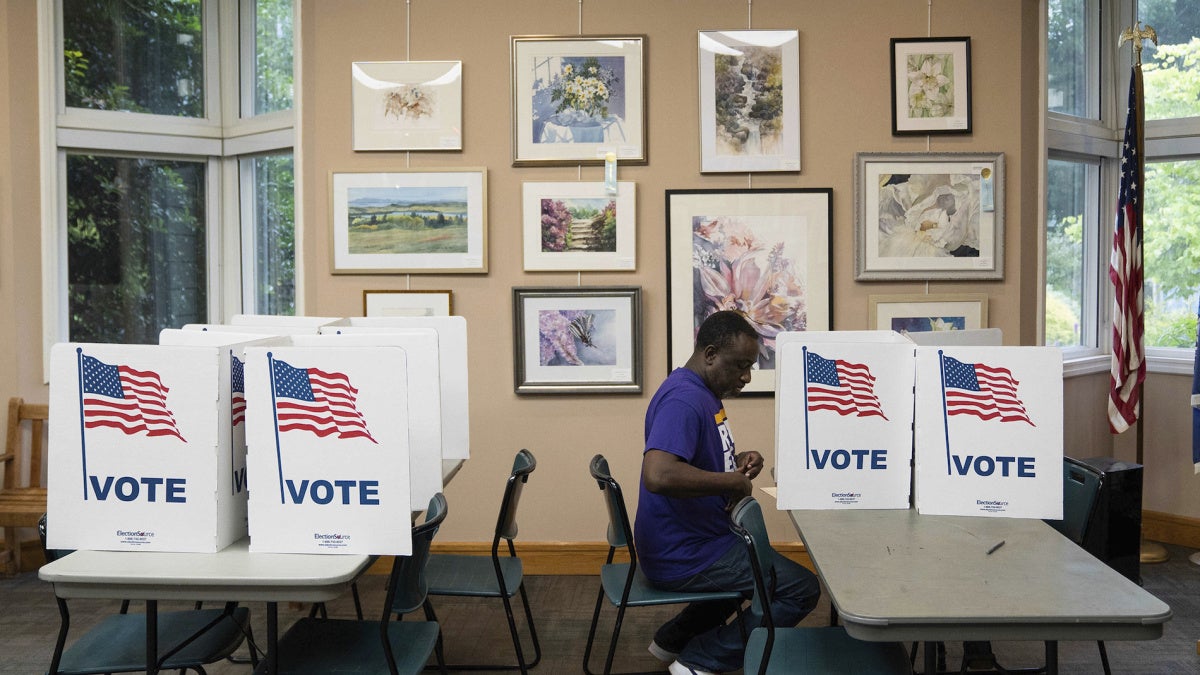
Click to expand Image A voter filling out a ballot at the Green Spring Gardens polling station in Lincolnia, Virginia, US, June 20, 2023. © 2023 Minh Connors/The Washington Post via AP Photo (New York) – The Trump administration’s decision not to invite the leading international election observation body to monitor crucial US midterm polls fuels fears of serious human rights concerns around the upcoming elections, Human Rights Watch said today. “The US government has long criticized Russia and other governments for dodging external scrutiny of their elections,” said Philippe Bolopion, executive director of Human Rights Watch. “Now the Trump administration is mimicking that behavior.” The Organization for Security and Cooperation in Europe (OSCE), which has observed every US federal election since 2002, called the decision “regrettable” and “not in line with” US commitments. Just over a month before the elections, the United States is mired in several controversies that raise concerns about the rights of voters, Human Rights Watch said. The Supreme Court on September 25, 2026, granted an emergency appeal by the Trump administration to overturn a ruling that had temporarily barred the government from using the current version of the Department of Homeland Security’s Systematic Alien Verification for Entitlements (SAVE) database to verify voters’ citizenship. Since 2002, the OSCE has observed 12 rounds of elections in the United States, including six midterm elections. OSCE observers were invited to observe the 2018 midterms during President Donald Trump’s first term and issued a 38-page report at the time. Most recently, the organization observed the 2024 election, which brought President Trump into office for a second term. The organization deemed that election “well-run” and said that candidates campaigned “freely across the country,” with “voters engaging actively.” Human Rights Watch wrote to the State Department seeking comment on the OSCE’s September 23, 2026 press release but has not yet received a response. The Trump administration has previously threatened to quit the OSCE, and its ambassador to the OSCE, Darrell Owens, has been pushing an effort to “reform, refocus, and refine” the OSCE since his confirmation by the US Senate in June. This is the first time the United States has declined to invite in OSCE monitors since they began observing US elections. The OSCE Parliamentary Assembly president, Pere Joan Pons, said that the Trump administration’s decision “represents a significant departure from an established democratic practice.” It is notable that an administration ostensibly committed to combatting fraud is unwilling to invite external observers who have cultivated expertise in exactly this issue, Human Rights Watch said. The decision is a serious one, and its consequences will reverberate beyond the United States. The 57 OSCE participating countries all made a reciprocal commitment to support democratic elections by enabling trained monitors from other OSCE countries to monitor major elections in their countries. Most countries continue to abide by this commitment and work to implement the OSCE’s recommendations. The United States should be signaling to other governments how vital it is to uphold the rights of voters, not breaking with a tradition of cooperation, Human Rights Watch said. In recent years, the OSCE has been unable to monitor elections in Belarus, Georgia, and Tajikistan due to the refusal of these governments to engage with monitoring procedures in a timely way, and in Russia’s case a refusal to issue an invitation at all. In 2024, the United States issued a pointed critique of Russia for its noncooperation with the OSCE, saying that “for decades, the United States has invited OSCE observers to assess our own elections and encouraged fellow participating States to do the same. We value the thorough, professional, impartial assessments of the OSCE observers and we take their recommendations seriously.” The lead-up to the 2026 midterm elections in the US has been accompanied by a series of new federal policies which, if implemented, could make access to polling places more difficult and limit US voters’ ability to exercise their right to vote. Trump and senior officials in his administration have been advancing a largely debunked claim that the outcomes of US elections have been affected by widespread noncitizen voting. The administration’s rhetoric has often implied, without any evidentiary basis, that state and local officials have deliberately conspired to push noncitizens to vote unlawfully. The US Department of Justice has sent letters to local election officials warning them of the risk of criminal prosecution if they allow noncitizen voting and have been pressuring states to use the SAVE database to screen their voter rolls. Continued use of the database, which the Supreme Court greenlighted on September 25, could lead states to wrongfully block people from voting. Reliance on this incomplete source has already incorrectly flagged some naturalized citizens’ voter registrations for further scrutiny. Practically, these flags create barriers to access the polls since only some people are being asked to meet administrative burdens and provide additional proof of citizenship. The Trump administration is also proceeding with plans to send about 1,000 monitors to midterm polling places. This move has sparked concern because the effort is framed around preventing ineligible people from voting, rather than ensuring that eligible voters are able to cast their ballots. Wyoming Governor Mark Gordon, a Republican, expressed concern about the “aggressive” conduct of some Justice Department monitors during the primary cycle. That track record raises concerns about whether their presence during the general election will deter some people from voting, Human Rights Watch said. When asked directly, neither President Trump nor the heads of the Department of Homeland Security or the Federal Bureau of Investigation have ruled out sending armed federal agents to polling places. The specter of Immigration and Customs Enforcement (ICE) officers serving warrants at polling places has led to a legal challenge from Latino civil rights organizations, the NAACP and a group of unions, the city of Denver, and Democrats, who all allege in four separate lawsuits that the presence of forces with ICE’s abusive track record will chill voter turnout. During the 2026 primary election cycle, ICE enforcement activities in and around polling places in New York, Texas, California, and on the main road leading to at least one polling place in Florida drew criticism for the same reasons. Princeton University’s Bridging Divides Initiative reported that a Pennsylvania polling place delayed opening while immigration enforcement proceeded nearby. “The test for November 3 will not be only on who wins, but whether everyone’s rights are respected before, during, and after the vote,” Bolopion said. “Without external monitors, it will be harder for the world to reliably know if this happened.”
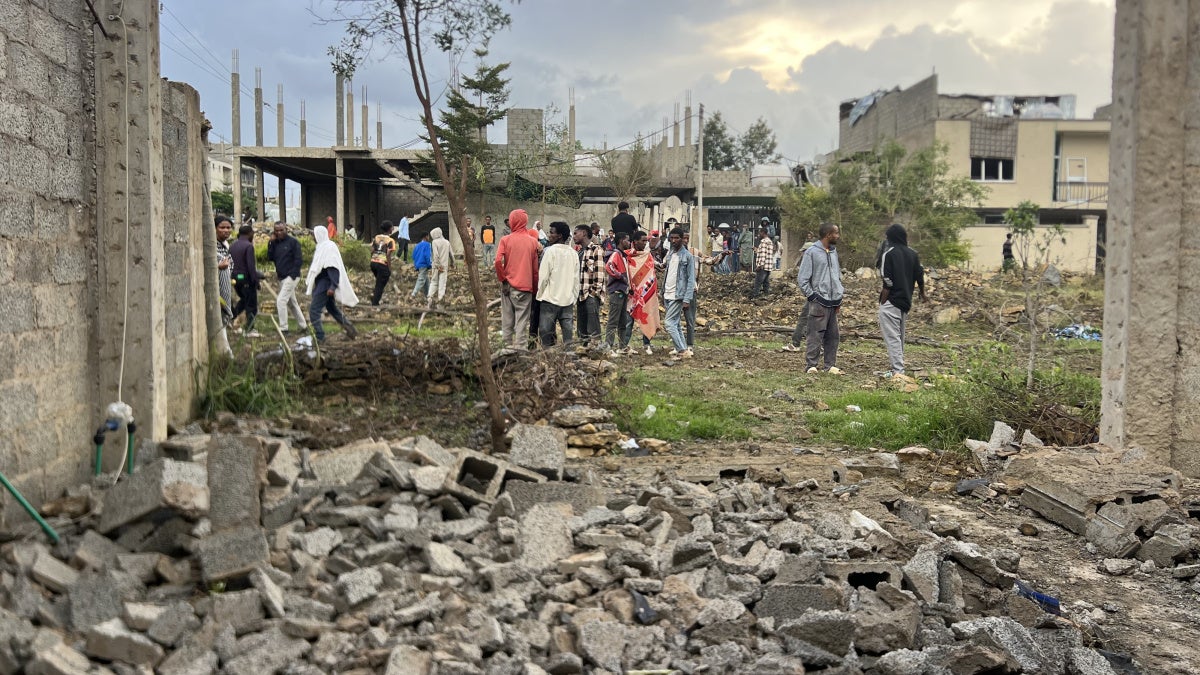
Click to expand Image A collapsed wall in a residential house following the August 20, 2026 airstrike on a residential compound in Daero neighborhood, Mekelle, Tigray region, Ethiopia. The image was taken the same day by a Mekelle resident. © 2026 Private (Nairobi) – An apparent Ethiopian government airstrike on a residential compound in Ethiopia’s northern Tigray region on August 20, 2026, should be investigated as a possible war crime, Human Rights Watch said today. The attack wounded 13 civilians, including seven children. The airstrike hit the Daero neighborhood of Mekelle, Tigray’s regional capital, which had no evident military targets, making the strike unlawfully indiscriminate. Ethiopian authorities should impartially and transparently investigate the attack, prosecute those responsible for any wrongdoing, and adequately compensate the victims. “The resumption of hostilities in northern Ethiopia heightens concerns about unlawful attacks and the grave threat posed to civilians,” said Laetitia Bader, deputy Africa director at Human Rights Watch. “To prevent further harm to civilians, the Ethiopian military needs to abide by the laws of war and ensure that they take all feasible precautions before carrying out any attack.” Between August 21 and September 6, Human Rights Watch interviewed three survivors of the Daero attack, two medical workers, and two residents who visited the site. Human Rights Watch also analyzed satellite imagery and verified photographs and videos depicting the attack site and remnants of an air-dropped munition. Additional photographs and descriptions of blast and fragmentation injuries were consistent with the detonation of an air-dropped general-purpose bomb. Human Rights Watch contacted and wrote to the army’s spokesperson with key questions but at publication had received no response. On the same day as the attack on the compound, a second airstrike hit Quiha, a neighborhood near Mekelle’s airport that has been used for military purposes. There were no reported casualties in the second strike. The strikes occurred amid renewed clashes between the Ethiopian federal government and forces of Tigray’s main political party, the Tigray People’s Liberation Front (TPLF), which fought during the 2020-2022 armed conflict. The parties had signed an African Union-mediated cessation of hostilities agreement in November 2022. Heavy fighting erupted between Ethiopian federal forces and Tigrayan forces on August 1 near the country’s border with Sudan, and sporadic clashes have continued. Tigrayan regional authorities have accused the federal government of carrying out several airstrikes causing civilian casualties. On September 21, a drone struck an aid convoy in Tigray, which the United States government condemned. On September 23, Tigrayan forces controlled key regional airports, leading Ethiopian airlines to suspend flights. Fighting intensified in Tigray, and spread to the Amhara and Afar regions, pitting federal forces against several armed groups, including Tigrayan forces. Daero residents said that on August 20, shortly after 11 a.m., they saw a likely fighter jet drop a munition that struck an open area in a residential compound for teachers and their families. Residents provided accounts and photos of collapsed walls, doors, and ceilings as the detonation’s blast wave significantly damaged concrete block houses surrounding the impact area. Click to expand Image A damaged residential house after the August 20, 2026 airstrike on a residential compound in Daero neighborhood, Mekelle, Tigray region, Ethiopia. The image was taken the same day by a Mekelle resident. © 2026 Private One survivor, who suffered a blast-related soft tissue injury and a deep scalp wound requiring surgery, said: “I was inside with my family when I heard a very loud sound. I went out. A plane came lower and then climbed before it released a weapon. The explosion caused the wall of my compound to completely collapse.” Another survivor, whose four relatives were injured, said: “My children were in the kitchen. The explosion caused the house to fall on them. I had to dig three of them out from under the corrugated metal and wood.” A Mekelle resident who went to the site soon after the attack described seeing a “blackened crater” in the compound. The strike “had impacted around 10 houses on both sides of the [residential] block,” the resident said, and caused “holes in the walls [of the houses] struck by some kind of shrapnel.” A satellite image captured on September 1 shows a crater measuring about four meters in diameter and the collapsed wall of one house. Human Rights Watch also examined photographs and videos recorded by a witness on the day of the attack showing the strike’s aftermath. One video shows a crater in the courtyard and the same collapsed concrete wall visible in satellite imagery. Several photographs show gates and windows shattered by the blast, weapon remnants of various-sized steel fragments, and remnants of the bomb body within the crater. International humanitarian law, also called the laws of war, requires warring parties to distinguish between military objectives and civilians. Parties must take all feasible precautions to verify that targets are military objectives. Indiscriminate attacks, which strike military targets and civilians or civilian objects without distinction, including attacks not directed at a specific military objective, are prohibited. Individuals who commit serious violations of the laws of war with criminal intent—that is, deliberately or recklessly—can be prosecuted for war crimes. Click to expand Image A large crater caused by an air-dropped munition in the courtyard of a residential compound in Daero neighborhood, Mekelle, Tigray region, Ethiopia, August 20, 2026. © 2026 Private Residents and witnesses said that they saw no Tigrayan fighters or other military presence at the compound or in the vicinity before or following the strike. Human Rights Watch found no evidence to support some public reporting suggesting that the Daero attack was a failed attempt to strike Tigrayan military and civilian leaders nearby. Residents said they rushed the wounded to Ayder Referral Hospital, Tigray’s largest public hospital, for treatment. Medical workers said they treated 13 patients with trauma wounds, including 10 with soft tissue or mild chest injuries, and 3 with more severe injuries, including a 12-year-old girl who had a complicated leg fracture that required surgery. Availability of medical care in Tigray is minimal. One medical worker said Ayder lacked basic supplies: “We have nothing … We’ve not received anything from the federal government for the last 4-5 months … lifesaving equipment, tubes, anesthesia and the like, unless patients buy from a private pharmacy, we can’t treat.” Two teachers said they were still living in damaged homes in the compound. Some families of those injured were struggling to afford medical treatment. One survivor whose daughter was harmed in the attack said: “The kids aren’t playing outside anymore. My injured daughter is still in the hospital. We buy everything from outside – the hospital only provides a bed. She needs medication daily, which we can’t afford.” Following the November 2022 truce, the African Union established a monitoring mechanism, but it has not reported publicly on abuses against civilians. The AU should urgently convene the parties under the agreement’s framework and ensure that the mechanism provides a robust human rights monitoring component and public reporting. The AU, the UN, concerned governments, and the AU mediator, former Nigerian President Olusegan Obasanjo, and other key leaders, should also publicly call on all warring parties, including those that haven’t signed the agreement, to protect civilians and facilitate impartial investigations into alleged war crimes, Human Rights Watch said. The UN Office of the High Commissioner for Human Rights should closely monitor the situation in Ethiopia, release regular public reports, and brief the UN Human Rights Council. Ethiopia should endorse the Political Declaration on Strengthening the Protection of Civilians from the Humanitarian Consequences Arising from the Use of Explosive Weapons in Populated Areas. “The Ethiopian government is legally obligated to impartially investigate the airstrike in Daero and take appropriate action to reduce civilian harm,” Bader said. “Concerned governments should press all the warring parties to meet their international humanitarian law obligations and hold those responsible for abuses to account.”
Click to expand Image A person checks their phone in the Red Square in Moscow, Russia, March 31, 2026. © 2026 Pavel Bednyakov/AP Photo (Berlin, September 24, 2026) – Russian authorities are doubling down on their efforts to quash freedom of expression, including access to information, by increasingly suppressing tools to circumvent draconian censorship laws, Human Rights Watch said today. Virtual Private Networks (VPNs) services face intensifying blocking and takedowns from app stores. “The Russian government’s escalating attacks on censorship circumvention services is part of its broader assault on access to information, privacy, and freedom of expression,” said Hugh Williamson, Europe and Central Asia director at Human Rights Watch. “These repressive tactics affect millions of people in Russia seeking to connect to the internet without state censorship.” On August 4, 2026, Exploit media outlet reported that 20 Virtual Private Network (VPN) providers in Russia had faced service disruptions caused by the blockings carried out by the Russian authorities. A representative of one of the affected VPN services told Human Rights Watch that the recent waves of blocking targeted VPN services’ infrastructure, namely, large blocks of IP addresses they use, including entire subnets of IP addresses allocated to them by their hosting service providers. Restoring VPN services following such bulk blocking can take more time and be more costly in comparison to previous more granular state blocking, the representative said. In June, the authorities carried out a coordinated attack targeting Amnezia VPN, one of the most popular VPN services in Russia. One of Amnezia’s developers said that the authorities blocked its IP addresses in bulk, targeted employees with phishing emails in an attempt to obtain sensitive data, and used distributed denial of service (DDoS) attacks, which overwhelmed the service and disrupted its work. It took Amnezia one and a half months to fully restore its services. The new tactics in state crackdown on VPNs have created significant technical, financial, and operational challenges and damaged their reputation as reliable services, Human Rights Watch said. In April, the Ministry of Digital Development, Communications and Mass Media instructed more than 20 of the largest internet companies, which together provide digital services to the vast majority of Russians, to gather information on their clients’ VPN use and deny access to services when detecting VPN connections. According to a study published by RKS Global, a group of experts working on internet freedom, at least 30 of the largest Russian apps gathered this information. An expert at RKS Global told Human Rights Watch that the information included IP addresses used by the VPN services and was used in the recent attack on VPNs’ infrastructure. Over the past decade, VPNs have become a lifeline for accessing millions of censored websites in Russia, including to access independent media, foreign social media and messaging platforms such as Instagram, YouTube, and WhatsApp. Since spring 2025, the authorities have increasingly carried out “whitelists” shutdowns, blocking access to all but state approved websites. The 2017 law on VPN services prohibited them from providing access to state-blocked websites. By February 2026, the authorities had blocked at least 469 VPNs under this law. In 2025, the authorities banned advertising VPNs, introduced fines for “intentionally” searching for “extremist” content on the internet, including via VPNs, and classified the use of VPNs as an aggravating circumstance with regard to certain crimes. Nevertheless, the number of VPN downloads consistently grows, and about 40 percent of Russia’s population—57 million people—are estimated to use VPN. In addition to direct blocking, Russian authorities increasingly pressure foreign technology companies to take down VPN apps from their app stores, Human Rights Watch said. In its transparency report, Apple said that in 2025 it removed 468 “utility” applications, which includes VPNs, from its App Store. Overall, 1,213 applications were removed in response to Russian government requests, nearly 60 percent of all such removals globally. In March 2026, Apple removed several popular VPNs—Streisand, V2Box, v2RayTun, Happ, and Proxy Utility—from its App Store. v2RayTun shared Apple’s removal notification, which cited a demand from Roskomnadzor, the state media and communications watchdog, on the grounds that the application “included content that is illegal in Russia.” The notice referred to part 7 of article 15.1 of Russia’s Law on Information, which the Russian authorities widely use to restrict privacy, freedom of expression, and access to information online. In March 2026, the Ministry of Digital Development, Communications and Mass Media ordered the four largest mobile service providers in the country to stop allowing payments to Apple account holders using mobile phone billing, a popular method for paying for VPNs. In July, Human Rights Watch sent a letter to Apple, inquiring about company policy on VPN takedowns in Russia, as well as the exact number of VPNs taken down by Apple on the authorities’ demand. Apple responded that “[Apple is] required to follow the law everywhere we operate, even where we may disagree with a country’s laws. In Russia, failure to comply with lawful orders could result in Apple no longer being able to operate the App Store or distribute content in the country, and we believe that would not be in the best interests of our users, because the App Store remains an important platform for Russian users to access information.” Russian authorities also repeatedly demanded that Google take down hundreds of VPN apps from its Play Store. In February, a Russian court fined Google 22.8 million rubles (around USD 300,000) for failure to remove VPN apps as authorities ordered. In July, both Apple and Google faced apparent blocking in Russia. VPNs that do not collect their clients’ logs, or digital footprint, and do not transfer data to state authorities can ensure privacy of internet communications for their users, including against the advanced state surveillance system in Russia, Human Rights Watch said. By escalating their blocking of VPNs, the authorities push users to repeatedly change VPN service providers, with privacy and security risks, such as choosing a VPN service that stores data without their consent, or shares data with Russian authorities. Multiple United Nations human rights institutions condemn restrictions on anonymity, including the blocking of VPNs, that are essential for safeguarding rights online, as violating the right to privacy, freedom of expression, access to information, the right to peaceful assembly, and other rights and freedoms. The 2015 UN Special Rapporteur on the promotion and protection of the right to freedom of opinion and expression said in a report that anonymity and encryption are key for freedom of opinion and expression, and that blanket prohibitions fail necessity and proportionality criteria. Foreign technology companies should resist Russian government pressure to take down VPNs from their app stores. Governments, intergovernmental institutions, groups, and foundations concerned with promoting human rights including freedom of expression, access to information, and other internet freedoms should continue developing and supporting the tools that maximize privacy, ensure anonymity, and enable internet users in Russia to circumvent draconian internet censorship. “With the government escalating attacks on digital rights, it is crucial for groups working to ensure uncensored access to the internet in Russia receive financial, institutional, and other essential support,” Williamson said.