← News
Topic · Place

Bangui

9 articles

See also
📰

Latest Bangui articles

📰

CAR: Central African crisis: renewed momentum for durable solutions to forced displacement

Country: Central African Republic Source: UN High Commissioner for Refugees Bangui – Meeting in Bangui, ministers and heads of delegation from the Central African Republic, Cameroon, the Republic of the Congo, the Democratic Republic of the Congo, Chad and Sudan reaffirmed their commitment to accelerate implementation of the Yaoundé Declaration and the Support Platform for Solutions for people forcibly displaced by the Central African crisis. At the extraordinary ministerial meeting of the Steering Committee of the Support Platform for Solutions for the Central African Republic (CAR Platform), participants welcomed progress since its launch in October 2023, particularly on voluntary returns, assistance to spontaneous returnees, sustainable reintegration, the identification of development hubs, progress towards inclusion and solutions for refugees in countries of asylum, and national and regional coordination. “Durable solutions are not limited to the return of populations. Returning home must also mean being able to live in safety, access essential services, exercise one’s rights, and have the means to rebuild one’s life and contribute to the development of one’s country… The voluntary, safe and dignified return of Central African refugees, as well as their sustainable reintegration, are essential pillars of the implementation of the Yaoundé Declaration,” said Felix Molua, Prime Minister of the Central African Republic. Since 2017, 75,031 Central African refugees have been assisted to voluntarily return, including 16,265 in 2024 and 21,455 in 2025. Several thousand others have returned spontaneously, according to local authorities. However, as of 31 March 2026, more than 1.16 million people remained forcibly displaced by the Central African crisis, including more than 650,000 refugees in countries of asylum and 427,479 internally displaced people in the Central African Republic. Renewed priorities to accelerate solutions In their final communiqué, ministers and heads of delegation recommended strengthening the CAR Platform’s governance structures and mobilizing additional financial and technical resources to support national action plans. They also called for the implementation of recommendations from the technical working groups, including the resumption of voluntary repatriation in 2026 and a provisional schedule for return convoys in 2027, aligned with reception capacities, reintegration programmes, health measures, and development initiatives in areas of return. Civil documentation, access to water, health care, education and economic opportunities were identified as investment priorities in development hubs to support reintegration, strengthen social cohesion and foster voluntary, safe and dignified returns. “Reintegration can only be sustainable if populations find, in areas of return, the conditions they need to rebuild their lives. This means investing in essential services, infrastructure and economic opportunities, for the benefit of returnees as well as the communities that host them,” said William Chemaly, UNHCR Representative in the Central African Republic. Participants nevertheless noted persistent challenges, including insecurity in some areas of return, socio-economic and infrastructure constraints, insufficient resources, growing reintegration needs and additional health measures linked to the Ebola virus. They invited technical and financial partners, international financial institutions, United Nations agencies, regional organizations, the private sector, civil society and new partners to strengthen support for the Yaoundé Declaration and the CAR Platform. “Durable solutions require structural investments that strengthen community resilience, stimulate local economic development and create opportunities for refugees, returnees, internally displaced people and host communities. The African Development Bank will remain engaged alongside Governments, UNHCR and partners,” said Mamadou Coulibaly, Resident Representative of the African Development Bank (AfDB) in the Central African Republic. Media contacts in Bangui: Gloria Ramazani, ramazang@unhcr.org, +236 74147892 Fatime Stella, fatime@unhcr.org, +236 74083734 About the CAR Platform The Support Platform for Solutions for the Central African Republic (CAR Platform) was officially launched in Bangui in October 2023, following the adoption of the Yaoundé Declaration in April 2022. It is a regional mechanism for dialogue, coordination and partnership mobilization aimed at promoting durable solutions for Central African refugees, internally displaced people, returnees and host communities affected by the Central African crisis. As of 31 March 2026, more than 1.16 million people remained forcibly displaced as a result of the Central African crisis, including more than 650,000 refugees in countries of asylum and 427,479 internally displaced people in the Central African Republic.

Oct 2, 2026 · byReliefWeb
A Long Road to Justice in the Central African Republic

A Long Road to Justice in the Central African Republic

Click to expand Image Seleka forces patrol a street of Bangui, Central African Republic, March 28, 2013. © 2013 SIA KAMBOU/AFP via Getty Images In November 2013, I went to Bangui and met Michel Djotodia, then the Central African Republic’s self-proclaimed interim president. He had taken over the country as the head of a rebel coalition called the Seleka. He received me in a run-down military camp on a hill overlooking the capital, in a darkened office watched over by security cameras and guarded by ragtag soldiers. I had the uncomfortable task of handing the “president” our latest report. By then, we had documented the killing of civilians and the destruction of more than 1,000 homes by Seleka forces. Djotodia was courteous, engaged, but mostly deflected and sought to distance himself and his forces from many of the crimes we had documented, blaming abuses on criminals. What struck me then was not simply the denial. It was the chaos of the military camp, the lawlessness in the country, the collapse of the justice system and the complete absence of accountability. But justice is finally catching up. Last week, the International Criminal Court (ICC) convicted Mahamat Said Abdel Kani, a senior Seleka commander, of crimes against humanity committed in Bangui in 2013. It is an important, if overdue, measure of justice for victims who have waited far too long. The Seleka's abuses were not the acts of a few isolated individuals. We have documented a pattern of serious crimes and many of those responsible have not faced justice. This includes Nouradine Adam, Seleka’s head of intelligence, whom I also met. He remains at large, despite an ICC arrest warrant issued in 2019. Today, the ICC is under attack by the United States. Offended by the ICC’s attempts to advance justice for Palestinians, the Trump administration has promised to dismantle the court “brick by brick” and has imposed crippling sanctions on its officials and others supporting its work. Human Rights Watch has joined forces with partners to sue the Trump administration in US courts and get rid of these sanctions. ICC members should stand up for the court and those who make its work possible. At stake is the very idea that there should be no impunity for the most serious crimes. It matters to the victims in the Central African Republic and to all civilians caught in the wars tearing our world apart.

Oct 1, 2026 · byHuman Rights Watch
CAR: Déclaration du Coordonnateur humanitaire - Des attaques répétées contre le personnel et les opérations humanitaires risquent de priver des milliers de personnes d'une assistance essentielle dans la préfecture du Haut-Mbomou, au sud-est de la RCA

CAR: Déclaration du Coordonnateur humanitaire - Des attaques répétées contre le personnel et les opérations humanitaires risquent de priver des milliers de personnes d'une assistance essentielle dans la préfecture du Haut-Mbomou, au sud-est de la RCA

Country: Central African Republic Source: UN Office for the Coordination of Humanitarian Affairs Please refer to the attached file. Bangui, le 29 septembre 2026 – Je condamne fermement les récentes attaques perpétrées contre le personnel humanitaire et les opérations humanitaires sur l'axe Zémio-Djéma les 17 et 21 septembre.

Sep 29, 2026 · byReliefWeb
Statement from the Humanitarian Coordinator - Repeated attacks against humanitarian personnel leave thousands at risk of being cut off from essential assistance in Haut-Mbomou Prefecture, South-Eastern Central African Republic.

Statement from the Humanitarian Coordinator - Repeated attacks against humanitarian personnel leave thousands at risk of being cut off from essential assistance in Haut-Mbomou Prefecture, South-Eastern Central African Republic.

Country: Central African Republic Source: UN Office for the Coordination of Humanitarian Affairs Please refer to the attached file. Bangui, 29 September 2026 – I strongly condemn the recent attacks against humanitarian personnel and humanitarian operations along the Zemio-Djema axis on 17 and 21 September.

Sep 29, 2026 · byReliefWeb
📰

Asky Airlines Oct 2026 Service Changes

Published at 0000PDT / 0700GMT 25SEP26 Asky Airlines in October 2026 schedules selected service changes, reflected in recent schedule update. Lome – Douala – Bangui eff 01OCT26 Increase from 4 to 7 weekly, 737-800 (Douala overall service increases from 7 to 10 weekly) Lome – Malabo – Yaoundé eff 01OCT26 3rd weekly service resumes after 2.5-month reduction (Yaoundé overall increases from 6 to 7 weekly) Lome – Yaoundé – Bangui eff 30SEP26 2 weekly service cancelled Lome – Yaoundé – N’djamena eff 04OCT26 Increase from 2 to 4 weekly, 737-800/MAX 8

Sep 25, 2026 · byAeroRoutes
Central African Republic: ICC Verdict in Seleka Commander Case

Central African Republic: ICC Verdict in Seleka Commander Case

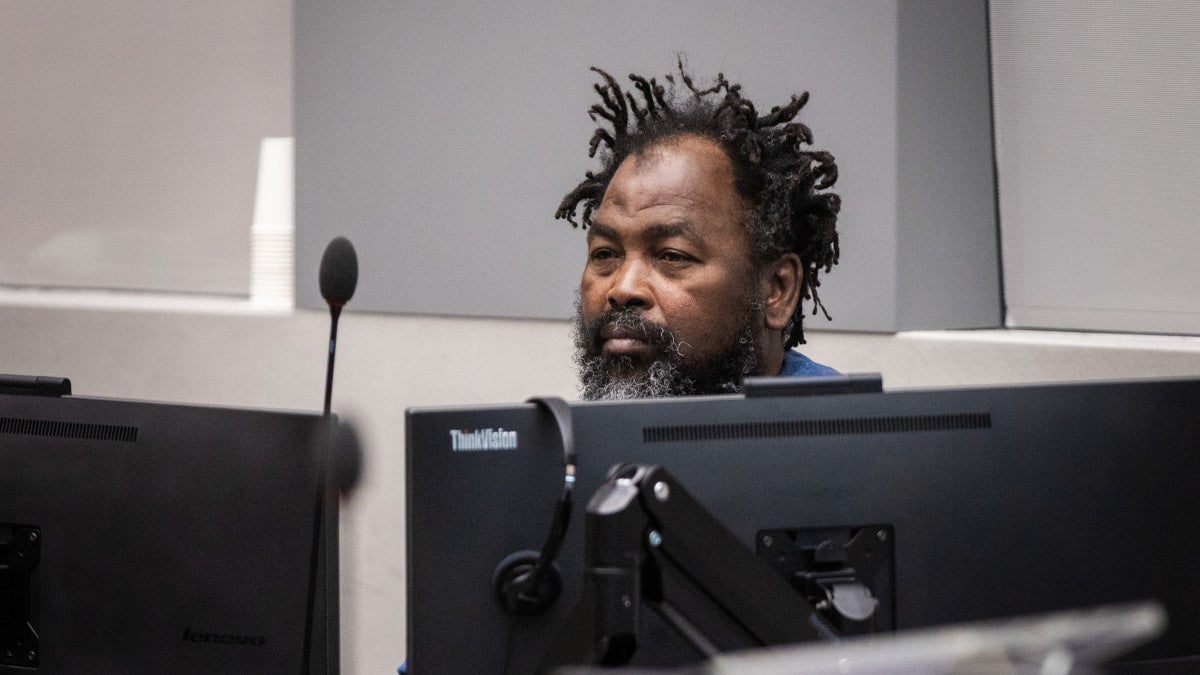
Click to expand Image Mahamat Said Abdel Kani during closing statements in the courtroom of the International Criminal Court in The Hague, Netherlands, November 25, 2025. © 2025 ICC-CPi (The Hague) – The International Criminal Court (ICC)’s conviction of Mahamat Said Abdel Kani for crimes against humanity in the Central African Republic offers an important measure of long-awaited justice for victims of the abusive Seleka armed group, Human Rights Watch said today. In 2012, the predominantly Muslim Seleka rebels ousted the Central African Republic president, François Bozizé, and seized power through a campaign of violence and terror. In March 2013, the Seleka took control of Bangui, the capital, attacking civilians and pillaging the city. In late 2013, Christian and animist militias known as anti-balaka, began to organize counterattacks against the Seleka. Both the Seleka and anti-balaka have been implicated in widespread atrocities against civilians. “As the first ICC verdict against a high-level Seleka commander, the judgment against Said is a significant milestone in the fight against impunity for serious crimes in the Central African Republic,” said Lewis Mudge, Central Africa director at Human Rights Watch. “But this should only be considered a first step. The verdict is also a stark reminder of the ongoing abuses in the country, and the need for increased support for both international and domestic justice efforts to end the accountability gap that helps fuel recurring cycles of violence.” ICC judges convicted Said for crimes committed at the Central Office for the Repression of Banditry (Office Central de Répression du Banditisme, OCRB) in Bangui between April and August 2013. The crimes include imprisonment or other severe deprivation of physical liberty, torture, other inhumane acts, and persecution. Said was acquitted on the charges of war crimes. The majority of the judges found that the ouster of François Bozizé in March 2013 ended the conflict that had begun between the Seleka and the Central African armed forces in 2012, and therefore, there was no conflict at the time the alleged crimes were committed. Said was also acquitted for some incidents related to the crimes against humanity charges, including for lack of sufficient evidence. The court laid out a timeline for the sentencing proceedings, which will include a hearing in November. The court should take all necessary steps to ensure that affected communities in the Central African Republic learn about the judgment and next steps, including any appeals and reparations proceedings, Human Rights Watch said. Said is believed to have joined the Seleka in 2012 and was promoted to lieutenant, colonel, and then commander. In April 2013, when Seleka abuse in Bangui was acute, he was given a key role in the Central Office for the Repression of Banditry. The agency is a police unit created in the late 1990s to address a rise in banditry, which developed a reputation for abuse. Its abuse continues today and the government uses the unit at times to warn government critics of potential consequences of their criticism. Said was arrested in the Central African Republic and surrendered to the ICC on January 24, 2021. The court’s judges had issued an under-seal arrest warrant against him on January 7, 2019. In 2014, the Seleka splintered into several groups, including the Popular Front for the Renaissance (Front populaire pour la renaissance de la Centrafrique, FPRC), headed by Noureddine Adam and Michel Djotodia. Some factions of the FPRC aligned themselves with anti-balaka forces. Djotodia, who is sanctioned by the US Treasury, lives in Benin but returned to Bangui in 2020 for a short stay and is sometimes back in the country. Adam is reported to be between Chad and Sudan, where he continues to evade justice. On July 28, 2022, the ICC unsealed an arrest warrant against Adam, which was first issued against him under seal on January 7, 2019. ICC member countries should make every effort to support the court in arresting Adam and bring him to justice, Human Rights Watch said. Other high-profile Seleka leaders, such as Mahamat Al Khatim, Saleh Zabadi, and Ali Darassa, continue to lead splinter Seleka groups. In July 2025, ICC judges convicted two anti-balaka leaders, Alfred Yékatom and Patrice-Edouard Ngaïssona, for war crimes and crimes against humanity in the Central African Republic between December 2013 and August 2014. Yékatom and Ngaïssona were sentenced to 15 and 12 years in prison, respectively, and appeals are ongoing. Another anti-balaka commander, Maxim Mokom, was surrendered to the court in March 2022, but the prosecution withdrew the charges against him in October 2023, citing a lack of evidence and witnesses. The ICC opened the investigation into crimes committed in the Central African Republic since 2012, following a request from the Central African Republic government in 2014. This was the ICC’s second investigation into crimes committed in the country. The first investigation related to an earlier conflict, in 2002 and 2003, and resulted in the acquittal of Jean-Pierre Bemba, a former vice president from the Democratic Republic of Congo. In December 2022, the ICC prosecutor announced the completion of his office’s investigative activities in the Central African Republic. ICC investigations in the Central African Republic have been complemented by proceedings before the Special Criminal Court in Bangui, staffed by international and Central African judges and prosecutors. The court has issued verdicts in four cases and has several ongoing proceedings and investigations. This critical justice avenue is facing significant financial challenges. International partners should provide the court with the resources it needs to fulfill its important mandate, Human Rights Watch said. Said’s verdict comes at a time when the ICC is facing extreme pressure. In February 2025, US President Donald Trump issued an executive order authorizing sanctions on ICC officials and others supporting the court’s work. Since then, the US government has imposed sanctions on ICC officials and staff, a UN expert, and three leading Palestinian human rights organizations. Together with three other human rights groups, Human Rights Watch has sued the Trump administration in a US court over its sanctions targeting the ICC. On July 13, 2026, US Secretary of State Marco Rubio announced an escalated campaign to “dismantle” the court, including an increased use of sanctions and pressure on ICC member countries to leave the court. “The ICC is a critical court of last resort to deliver justice for the most serious crimes in the Central African Republic and across its docket,” Mudge said. “ICC member countries should redouble their efforts to protect the ICC and those supporting its work, so it can deliver on its essential global mandate.”

Sep 23, 2026 · byHuman Rights Watch