US says it is open to talks with Cuba if it changes government
 Sep 23, 2026 · byAl Jazeera
44 articles · 1+ stories

Marco Rubio made comments after Trump called Cuba a 'failed state' at the UN, prompting Cuban delegation to walk out.
Sep 23, 2026 · byAl Jazeera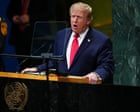
US-Iran meeting takes place on sidelines despite president’s threat to ‘annihilate’ Tehran regime. Plus, one man’s month-long pilates odyssey Good morning. Donald Trump has used the platform of the UN general assembly in New York to threaten to “annihilate the Islamic republic” of Iran, “and do it quickly”. He called on countries to unite to isolate Tehran and bring down global energy prices. Despite his bombastic rhetoric, Trump also said Iranian officials held three hours of talks with the US special envoy Steve Witkoff on the sidelines of the meeting. Witkoff said he felt very good about the meeting, the first such contact since the US-vice-president, JD Vance, met an Iranian delegation in Switzerland in June. A senior Iranian official also indicated that Iran was prepared to reopen the strait of Hormuz within a week. What else did Trump say at the UN? The president doubled down on his defence of AI development, saying warnings about runaway agents were a “hoax”; announced the US would build new military bases in Greenland; attacked the international criminal court as a “rogue organisation”; and prompted the Cuba’s delegation to stage a walkout when he described the country as a “failed state”. Did he continue his attacks on US media networks ? Trump scolded a CNN anchor for covering him at the UN, saying “I’m surprised that CNN is here covering me. You should not be here covering me. You said you weren’t going to cover me.” Last week, the president announced he was banning CNN, Politico and MS Now from the White House. Follow UN proceedings live today here . Where else is the president seeing dissent from Republicans? Another prominent Florida Republican has publicly distanced himself from Trump , days after María Elvira Salazar called out the president’s immigration-enforcement policy targeting law-abiding undocumented immigrants. Byron Donalds, the Republican nominee for governor in November’s midterm elections, launched an updated campaign website on Tuesday that was stripped of almost every mention of Trump. Continue reading...
 Sep 23, 2026 · byThe Guardian
Donald Trump has once again criticised Cuba, saying in his UN General Assembly address on Tuesday that the country would “fall.” His remarks prompted reactions ranging from outrage to indifference among Cubans, as the island faces one of its most severe economic crises and continues to deal with pressure and threats from its US neighbour. Camille Corcoran reports.
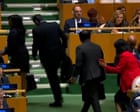
Cuban delegates left the room during the US president's speech to the UN general assembly, where he called Cuba 'a failed state' and said the country 'will fall'. The US has maintained a trade embargo on Cuba for more than 60 years, and Trump's administration has stepped up pressure on the communist-controlled island nation. Continue reading...
Sep 23, 2026 · byThe Guardian
Delegates from both nations walked out on the president’s address at the 81st session of the U.N. General Assembly.

US President Donald Trump launched a full-throated defence of the deeply unpopular US-Israeli war against Iran before the UN General Assembly on Tuesday, claiming that Washington would reach a deal with Tehran after the upcoming US midterm elections. Trump also rejected the idea of global regulation of artificial intelligence, said the government of Cuba would soon "fall", and urged member countries of the International Criminal Court to "resign".

The Cuban delegation to the United Nations General Assembly walked out during President Trump’s speech to the global body Tuesday after the president called for freedom on the island. Trump said “freedom will be coming to Cuba,” and accused the Cuban communist regime of fomenting opposition in the U.S. “My administration is also seeking a…
 Sep 22, 2026 · byThe Hill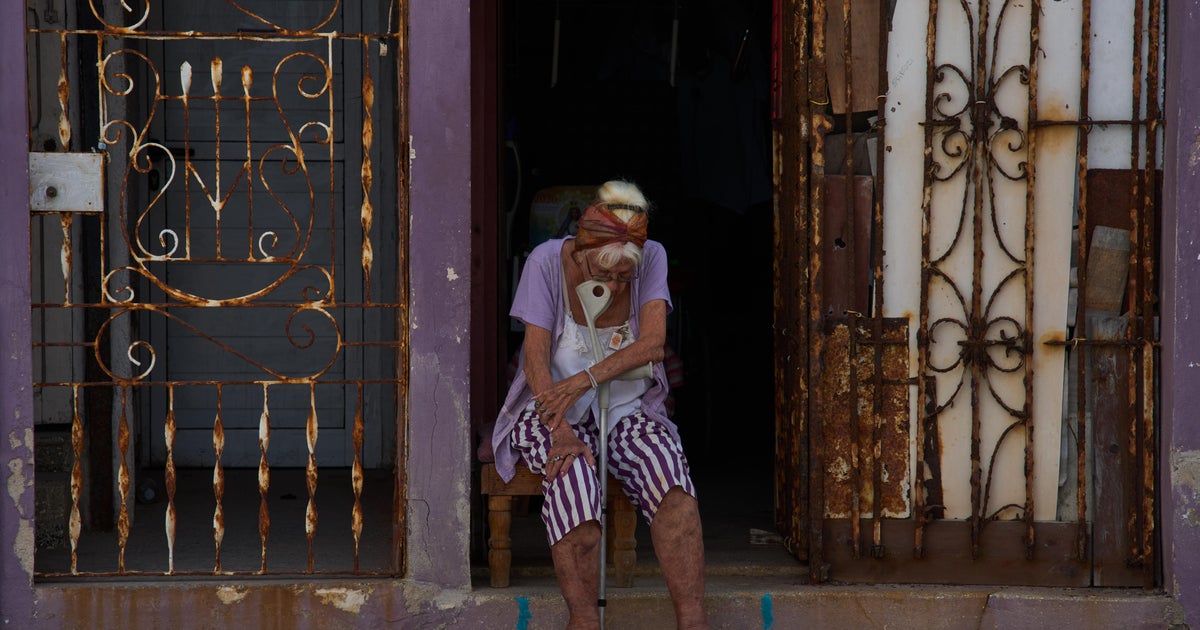
One Cuba resident said there is "no way to know" when power will be restored to the island nation.

Widespread power outages have become increasingly common due to fuel shortages made worse by a US blockade.
 Sep 19, 2026 · byBBC
Cuba’s electrical grid suffered a total collapse Friday, plunging millions into darkness as the island grapples with chronic fuel shortages and deteriorating infrastructure, compounded by a US oil pressure campaign that has sharply restricted fuel supplies.
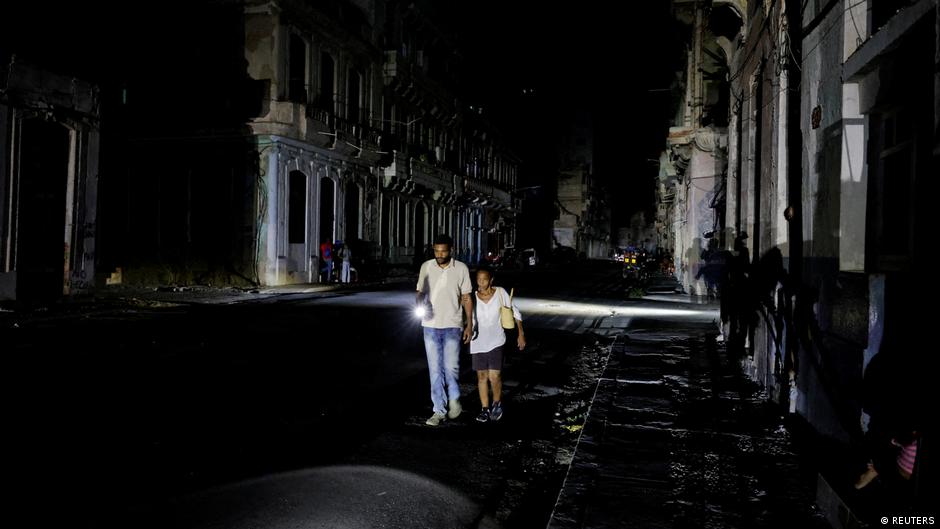
Millions were left without electricity as Cuba's aging power grid collapsed under the weight of fuel shortages, deteriorating infrastructure and US sanctions.
 Sep 19, 2026 · byDeutsche Welle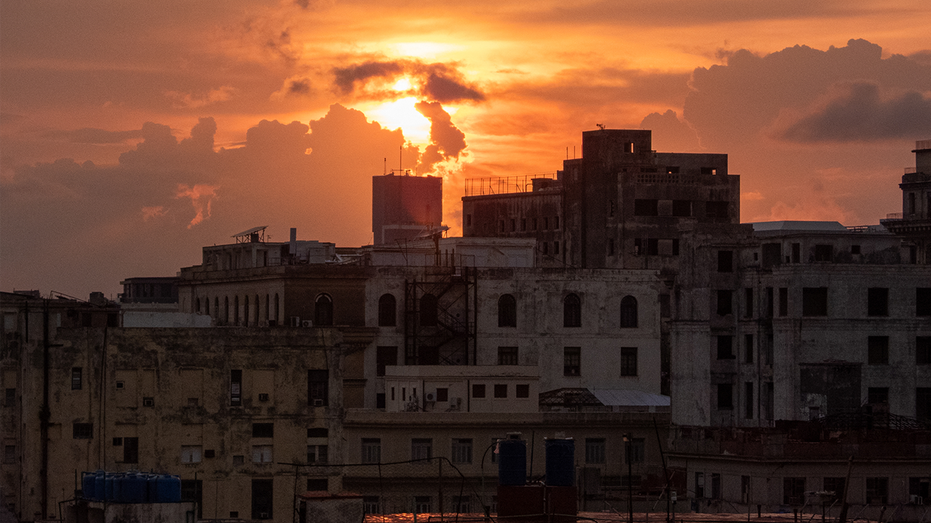
Cuba's entire electrical grid collapsed Friday, triggering a nationwide blackout with cellphone and internet outages reported across the island.

Cuba’s power grid has collapsed, leaving millions of people across the island without electricity
 Sep 18, 2026 · byABC News
The year 2026 has brought sweeping change to Latin America’s relationship with the United States. Following a major military buildup in the Caribbean and strikes against vessels suspected of drug trafficking, U.S. forces captured Venezuelan President Nicolás Maduro on Jan. 3 — unilaterally deposing the country’s leader and making new oil deals with the post-Maduro government. Washington has also intensified economic and political pressure against Cuba, imposed more tariffs across the region, and said it would not renew the United States-Mexico-Canada Agreement, triggering renegotiations. Meanwhile, Washington has deepened security cooperation with several countries, including shifting some funds from other regions The post Latin America’s Balancing Act: Washington, Beijing, and the Post-Maduro Environment appeared first on War on the Rocks .
 Sep 17, 2026 · byWar on the Rocks
Country: Cuba Source: UN Office for the Coordination of Humanitarian Affairs Please refer to the attached Infographic. Por su ubicación geográfica en el Caribe, Cuba está altamente expuesta a ciclones tropicales que con frecuencia evolucionan en tormentas o huracanes de gran intensidad, planteando riesgos severos para la población y sus medios de vida. La evidencia acumulada demuestra que los impactos se pueden mitigar de forma significativa mediante la acción anticipatoria, brindando, de manera coordinada, asistencia humanitaria basada en disparadores científicos y financiamiento preestablecido durante la ventana de tiempo crítica entre el pronóstico oficial y el impacto en tierra. Bajo el liderazgo del Estado Mayor Nacional de la Defensa Civil (EMNDC), el Instituto de Meteorología (INSMET), el Ministerio del Comercio Exterior y la Inversión Extranjera (MINCEX) y el Instituto Nacional de Recursos Hidráulicos (INRH) de Cuba, y en estrecha colaboración con la Oficina de la Coordinación Residente de Naciones Unidas y el UNETE, se ha actualizado el marco colectivo para las temporadas ciclónicas 2026 y 2027. Este marco incorpora las lecciones clave de la exitosa activación frente al huracán Melissa en 2025, para responder con mayor agilidad ante la actual crisis energética que afecta al territorio cubano.
 Sep 17, 2026 · byReliefWeb
Country: Cuba Source: UN Office for the Coordination of Humanitarian Affairs Please refer to the attached Infographic. Cuba’s location in the Caribbean leaves it highly exposed to tropical cyclones, which often intensify into major storms or hurricanes and pose serious risks to people and their livelihoods. Experience shows that anticipatory action can significantly reduce these impacts: coordinated humanitarian assistance, triggered by scientific forecasts and backed by prearranged funding, delivered in the critical window between the official forecast and landfall. The National Civil Defence General Staff (EMNDC), the Institute of Meteorology (INSMET), the Ministry of Foreign Trade and Foreign Investment (MINCEX) and the National Institute of Water Resources (INRH) of Cuba have led an update of the collective framework for the 2026 and 2027 hurricane seasons, working closely with the UN Resident Coordinator’s Office and the UN Emergency Technical Team (UNETT). The updated framework builds on key lessons from the successful activation ahead of Hurricane Melissa in 2025, positioning partners to respond more nimbly amid the energy crisis currently affecting the country.
Sep 17, 2026 · byReliefWeb
Washington and Florida insiders are exploring lucrative deals for a post-communist Cuba crushed by ever-increasing US sanctions Spanish hotel chains . A Canadian mining firm . European shipping giants . Visa and Mastercard . Scores of foreign companies have been driven out of Cuba this summer over fear of being hit with potent, new secondary sanctions . Marco Rubio, the secretary of state, told Axios last month there are “no escape valves” from his unprecedented pressure campaign against the island. But not everybody is losing out. A growing cast of Washington and Florida insiders – from billionaire Trump cronies and Rubio-linked lobbyists to Cuban exiles – are jockeying for control of the communist-ruled island-nation’s key assets, charging top dollar to help clients navigate the ever-expanding web of sanctions, and positioning themselves for lucrative business opportunities in the case of regime collapse. Continue reading...
Sep 17, 2026 · byThe Guardian
The U.S. says its sanctions are not aimed at depriving Cuba of essential goods. Thousands of stranded shipping containers tell a different story.
 Sep 17, 2026 · byThe New York Times
Countries: World, Afghanistan, Angola, Bangladesh, Burkina Faso, Cameroon, Central African Republic, Chad, Colombia, Cuba, Djibouti, Ecuador, El Salvador, Ethiopia, Fiji, Guatemala, Haiti, Honduras, Indonesia, Kenya, Kiribati, Madagascar, Malawi, Mali, Mozambique, Myanmar, Nepal, Nicaragua, Niger, Nigeria, Papua New Guinea, Peru, Solomon Islands, Somalia, South Sudan, Sudan, Timor-Leste, Tuvalu, Uganda, Vanuatu, Venezuela (Bolivarian Republic of), Zambia, Zimbabwe Sources: International Federation of Red Cross and Red Crescent Societies, Save the Children, UN Office for the Coordination of Humanitarian Affairs, World Food Programme Please refer to the attached file. OVERVIEW El Niño is firmly established and is forecast to reach very strong intensity. WMO forecasts indicate a nearly 100 per cent likelihood that it will persist through February 2027, with the event expected to strengthen further and peak towards the end of 2026. Its effects may lag and persist beyond the peak. A very strong El Niño is likely to bring major shifts in rainfall and temperature patterns, increasing the risk of drought, flooding, extreme heat and other weather and climate hazards. These effects will not be felt everywhere at the same time or in the same way. Their severity will depend on where the climate signal coincides with agricultural and livelihood calendars, existing humanitarian needs and people's ability to cope. WMO cautions that the strength of the global event does not translate directly into the scale of impacts in any individual country or region. El Niño is also occurring against the backdrop of long-term climate warming. The emerging risks must be understood alongside conflict, displacement, high food insecurity and high food prices, malnutrition, disease outbreaks, economic pressures and overstretched essential services. These conditions have not improved since the June update. In many places, repeated shocks have depleted household assets, increased debt and weakened the coping mechanisms that people would ordinarily rely on when drought, floods or high prices affect their livelihoods. WFP estimates suggest that up to 50 million people globally could be affected over the next six to nine months, indicating the potential scale of the humanitarian consequences.
Sep 17, 2026 · byReliefWeb
Countries: World, Argentina, Armenia, Australia, Chile, Cuba, Democratic Republic of the Congo, Djibouti, Dominican Republic, Eritrea, Ethiopia, France, Haiti, Indonesia, Iran (Islamic Republic of), Jamaica, Jordan, Malaysia, Nigeria, Pakistan, Philippines, Somalia, South Africa, Sri Lanka, Syrian Arab Republic, Thailand, Türkiye, United States of America, Viet Nam Source: World Meteorological Organization Please refer to the attached file. WMO: Recent water trends have serious future implications The WMO State of Global Water Resources report is a comprehensive science-based annual assessment of the hydrological cycle and extreme events in 2025 and over the past five years. 2025 was one of driest years for river discharge in 35 years Past 7 years have seen abnormal river flows Water storage on Earth’s land surface has decreased in past 10 years Widespread glacier loss across all regions for 4th consecutive year Asia and Africa are the regions most affected by water-related disasters Water data availability has improved, but gaps remain in hard hit areas Geneva, Switzerland, 17 September 2026 (WMO) – Rivers across the globe in 2025 had one of the driest years in more than three decades, according to a new report from the World Meteorological Organization (WMO). It shows a continuation of the long-term decline in Earth’s freshwater storage and in glacier retreat - trends with serious implications for people and economies in the future. The WMO State of Global Water Resources Report shows that the water cycle has become more erratic and unpredictable, swinging between too little or too much. The past seven years have seen the fewest rivers with “normal” flows since 1991. Asia and Africa together accounted for at least half of all recorded water-related extreme events and more than 80% of reported associated deaths over the past five years, it says. The report provides a comprehensive, science-based assessment of the entire water cycle loop, including river discharge, groundwater, evapotranspiration, land water storage, and snow and ice, as well as high-impact events. It covers the year 2025 and summarizes findings of the past five years since it was first published. Some parts of this cycle are fast – such as precipitation, river flow, soil moisture – they respond to weather within days or weeks. Others, like groundwater, glaciers and seasonal snowpack, are slow, they accumulate or deplete over seasons to decades or longer. Traditionally these slow reserves have acted as the planet's savings account: a buffer that absorbs bad years so that a single drought or a single dry season does not translate directly into a water crisis,” said WMO Secretary-General Celeste Saulo. “We are depleting that savings account. Global terrestrial water storage has shown a declining trend since 2014–2016 - a persistent, decade-long signal. For the fourth consecutive year, every major glaciated region on Earth lost ice mass. Groundwater tells a similar story: nearly two-thirds of monitored wells worldwide showed conditions outside the historical norm in 2025, and the balance shifted further toward deficit compared with 2024, not toward recovery,” said Celeste Saulo. “At the same time, we are seeing more water-related disasters. The strengthening El Niño will increase the risk of drought in some areas, and flooding in others,” she said. The report highlights some major areas of concern: 2025 was one of driest years for river discharge globally in 35 years, with below-normal flows over 36% of global basin area. This is based on data from simulations from 13 global hydrological models, driven by observed weather data. For the seventh year in a row, the number of river basins with “normal” conditions was in a clear minority: ranging between 34-38%, compared to the average of 46% between 1991-2020, according to the report. Terrestrial water storage – the total amount of water stored in groundwater, lakes and rivers, soil moisture, vegetation and ice and snow – has been in decline since mid-2010s. 2025 marked the fourth consecutive year with widespread glacier loss across all regions – leading to short term hazards like floods and long-term water insecurity. Between 2023-2025 glaciers lost mass in each reporting year with cumulative global glacier mass loss at 1400 Gigatonnes of water. This is roughly equal to the water required to fill about 560 million Olympic-sized swimming pools, or about one third of annual freshwater withdrawals. In each of the past five years, National Meteorological and Hydrological Services around the globe reported record-breaking floods and droughts. Some places have had no recovery time between one event and the next. “Water respects no borders. A river basin's water balance depends on what happens in another country. A glacier's retreat in one country reshapes water availability for populations hundreds of kilometers downstream. This is precisely why we need shared data, shared standards, and shared early warning — the exact function WMO exists to perform,” said Celeste Saulo. Dozens of experts from National Meteorological and Hydrological Services, data centres, researchers and partner institutions shared in situ observations, model outputs and space-based data and contributed to the report, which has expanded from three to 15 hydrological variables since the first edition in 2021. Country coverage has greatly expanded. However, Africa and Asia are still among the least represented regions in terms of hydrological observations in the report, even though they are most affected by extremes. 2025 was one of the warmest years on record. A weak La Niña emerged towards the end of the year after neutral conditions, and there was a predominantly negative Indian Ocean Dipole, which influenced precipitation. River basins Across the five reporting years (2021-2025), recurring below-normal river discharge was observed in major parts of the Amazon and La Plata basins, North America, Central and East Africa, Central Asia and the Middle East. Annual river discharge in 2025 was above-normal to much-above-normal across South and South-East Asia and parts of northern South America. In Africa, there were above-normal flows in the Senegal, Niger, Lake Chad, Orange and Limpopo basins, but much-below-normal discharge in the Nile, Congo and Zambezi basins. Below-normal to much-below-normal river discharge affected several major regions, including much of North America, the La Plata and São Francisco basins of South America, Eastern European basins, the Middle East and Central Asia. Reservoir and lake levels followed similar geographical trends as for river basins. African lakes were largely much above normal, with Kariba a notable exception. Terrestrial water storage Terrestrial water storage shows a persistent negative trend since 2014-2016 with increasing area under below-normal conditions. Between 2021-2025 below-normal terrestrial water storage repeatedly affected the south-western United States, Patagonia and the subtropical Andes, the Ganges–Indus headwaters, North Africa, the Middle East, Central Asia and eastern China, while persistent positive anomalies occurred in parts of sub-Saharan Africa, the Sahel and the Tibetan Plateau. In 2025, it was below-normal in northern and southwestern North America, Patagonia, Eastern Europe, the Middle East, Central Asia, eastern Brazil, northern India, parts of Northern Europe, the Russian Federation, China and Northern Africa. La Plata in South America showed signs of partial recovery from the long-term drought. Much-above-normal storage continued from 2024 into 2025 in Central and Southern Africa. Groundwater levels Persistent groundwater deficits were observed during 2022–2025 in parts of the Americas, Europe, the Middle East, India, southern Africa and Australia. Persistent and widespread below-normal to much-below-normal groundwater levels were observed across Central and Eastern Europe, central United States, parts of Mexico, northern and central Chile, northeastern and central-western Brazil, northern South Africa, northwestern India and parts of southern Australia, pointing to a cumulative depletion with multi-year drying trend. There were above-normal to much-above-normal conditions include parts of France, much of Northern Europe, the southeastern United States, large parts of South Africa, South-East Asia, and eastern Australia. Snow cover and glaciers Snow conditions were below normal across Europe in 2025, whilst the Russian Federation and North America showed strong regional contrasts. In the hydrological year 2025, glaciers lost 408 (±132) Gigatonnes of mass, equivalent to 1.1 (±0.4) mm of sea-level rise. It marked the fourth consecutive year in which every major glaciated region recorded a net loss. Central Asia, South Asia West, Russian Arctic, Iceland, Western Canada and USA all recorded annual mass balances that ranked among the three most negative years on record for that region. Some regions dominated by smaller glaciers, such as the Caucasus, Western Canada and the USA, and Central Europe may already have reached “peak water conditions,” the threshold where the glacier reaches its maximum runoff due to melting. Extreme events From 2021-2025, South America’s La Plata and Amazon basins, the Middle East and the Greater Horn of Africa experienced persistent multi-year drought conditions, while severe floods repeatedly affected West and Central Africa and South-East Asia. Asia and Africa were the regions most affected by extreme hydrometeorological events in 2025, with several African countries experiencing major flooding for two (Nigeria) or three consecutive years (Democratic Republic of the Congo). South and South-East Asia was hit by compound tropical cyclones and intense monsoon, leading to up to 3 600 deaths across affected countries - Sri Lanka, Pakistan, Viet Nam, Indonesia, Thailand, Malaysia, the Philippines. Assessing the economic losses associated with water-related disasters remains challenging in many countries. Jamaica reported that hurricane Melissa resulted in losses equivalent to 41% of GDP. Cyclone Ditwah cost Sri Lanka around 4% of GDP. Severe drought gripped East Europe, the Mediterranean, and Middle East and also returned to the Greater Horn of Africa after one of the driest October–December seasons on record linked to La Niña and a negative Indian Ocean Dipole. Notes to Editors The WMO State of Global Water Resources 2025 report includes scientific contributions from dozens of WMO Members, partners and scientists. Full details of the datasets, references and institutions involved are available in the report. The WMO Secretariat wishes to thank everyone who dedicated their time and expertise to this report. The World Meteorological Organization is the United Nations System’s authoritative voice on Weather, Climate and Water. For further information, please contact: Clare Nullis, WMO media officer, cnullis@wmo.int, +41 79 709 13 97 Global Communication and Engagement Media Contact media@wmo.int
Sep 17, 2026 · byReliefWeb
Countries: Montenegro, Cuba, Russian Federation, Serbia, Türkiye, Ukraine, World Source: UN High Commissioner for Refugees Please refer to the attached file. Since March 2022, Montenegro has granted temporary protection (TP) to Ukrainians fleeing the war and hosts one of the largest refugee communities relative to its population in Europe. UNHCR supports the Government to strengthen asylum procedures, improve reception standards and develop a conducive environment for refugees’ socio-economic inclusion. UNHCR supports the authorities to improve statelessness determination procedures and access to socio-economic inclusion of stateless people. HIGHLIGHTS Strengthening asylum procedures UNHCR advocates with national authorities to secure access to asylum procedures for all people in need, further strengthen identification and referral mechanisms, improve the decision-making process and develop inclusion prospects to foster self-reliance of asylum seekers and refugees. Statelessness Montenegro is progressing towards the full implementation of the remaining three of seven statelessness Global Refugee Forum (GRF) pledges, by further enhancing the statelessness determination procedures (SDP), implementing fully functional birth registration procedures for people born in Montenegro and amending relevant legislation to secure access to socio-economic rights for stateless people.
Sep 16, 2026 · byReliefWeb
Countries: Spain, Canary Islands (Spain), Colombia, Cuba, Nicaragua, Peru, Syrian Arab Republic, Ukraine, Venezuela (Bolivarian Republic of), World Source: UN High Commissioner for Refugees Please refer to the attached file. In 2025, 36,775 people arrived in Spain by land and sea, 43% less than in 2024. Around 52% arrived through the West Mediterranean route and 48% through the West Africa Atlantic route. Most common nationalities included Mali, Senegal and Guinea among arrivals in the Canary Islands, and Algeria, Morocco and Somalia in the rest of the country. Sea arrivals to the Balearic Islands increased by 24% in comparison to 2024, with more nationals from Somalia and Mali traveling from Algeria. In the Canary Islands, there was a significant rise in the proportion of women arriving by boat, while children continue to represent a substantial share. Also noteworthy is the increase of Sudanese nationals arriving in Ceuta. During the same period, around 144,400 people applied for asylum in Spain, mostly from Venezuela, Mali and Colombia. There was a notable increase in asylum applications from Venezuelans compared to 2024. Meanwhile, around 30,300 people received temporary protection in Spain, mainly Ukrainian refugees.
Sep 15, 2026 · byReliefWeb
Country: Cuba Source: UN Country Team in Cuba Please refer to the attached file. DESTACAMOS ● Los meses de verano concluyeron con récord de cortes eléctricos, que incluyeron días con el 74% de la Isla apagada, y por lo menos cuatro episodios de desconexión del Sistema Eléctrico Nacional. Hasta mayo de 2026, habían dejado de entrar al país 2 millones 667 mil toneladas de combustible, respecto a lo planificado. ● Organizaciones alertan sobre “etapa alarmante” de los impactos humanitarios, que abarcan ya a todos los sectores de la población y no solo a grupos vulnerables. Expertos de la ONU instaron a la comunidad internacional a actuar con rapidez para evitar que Cuba se convierta en una “Gaza silenciosa”. ● Más de 3 millones 500 mil personas están afectadas por el abasto de agua, en su mayoría debido a la falta de bombeo provocada por los cortes eléctricos. Los ciclos de suministro a través de pipas exceden los 60 días en algunas localidades, agravando el riesgo de brotes de enfermedades. ● La mortalidad infantil se ha disparado particularmente en territorios como La Habana (14.2, en contraste con el indicador de 5.3 en el año 2020). Los servicios neonatológicos exhiben un deterioro en cascada, con funcionamiento deficiente de ventiladores pulmonares, incubadoras y otro equipamiento requerido de suministro eléctrico estable. ● Se han incrementado las sanciones en los sectores logístico, minero, energético y de servicios médicos, . Aunque los canales de diálogo entre los gobiernos de Cuba y Estados Unidos se mantienen, autoridades cubanas aseguraron que las negociaciones están estancadas
Sep 14, 2026 · byReliefWeb