Biman Bangladesh Airlines places firm order for ten Airbus aircraft
 Oct 7, 2026 · byAviation24.be
18 articles · 1+ stories

Biman Bangladesh Airlines has placed a firm order for 10 Airbus aircraft as part of its fleet modernisation plans. The order comprises four A350-900 widebody aircraft and six A321neo single-aisle aircraft. The new aircraft will support the Bangladeshi flag carrier’s plans to expand its international network from Dhaka, including new services to North America and […]
Oct 7, 2026 · byAviation24.be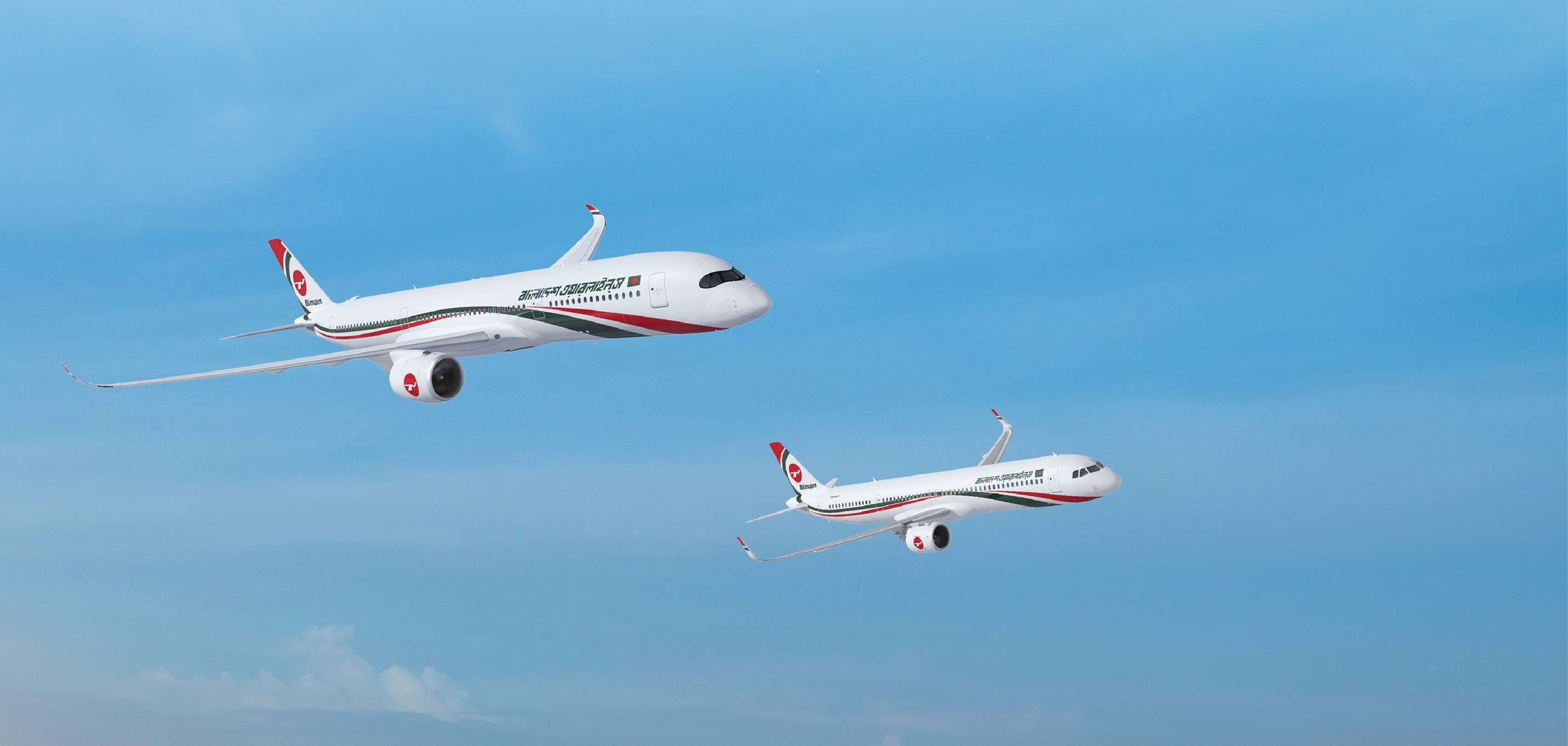
Biman Bangladesh Airlines, the national flag carrier of Bangladesh, has signed a firm order for 10 latest-generation Airbus aircraft. The order includes four A350-900 widebody and six A321neo single-aisle aircraft, marking a significant step in the airline’s fleet modernisation strategy and its ambition to expand its international network. Operating from its primary hub in Dhaka, […]
 Oct 7, 2026 · byWorld Airline News
Published at 1000PDT / 1700GMT 05OCT26 US-Bangla Airlines in October 2026 schedules Airbus A330-300 aircraft on Dhaka – Guangzhou route. From 08OCT26 to 29OCT26 (Dhaka departure), 1 of 7 weekly flight to be operated by the 436-seater, instead of 737-800. BS325 DAC2215 – 0350+1CAN 333 3 BS325 DAC2215 – 0350+1CAN 738 x3 BS326 CAN0500 – 0710DAC 333 4 BS326 CAN0500 – 0710DAC 738 x4
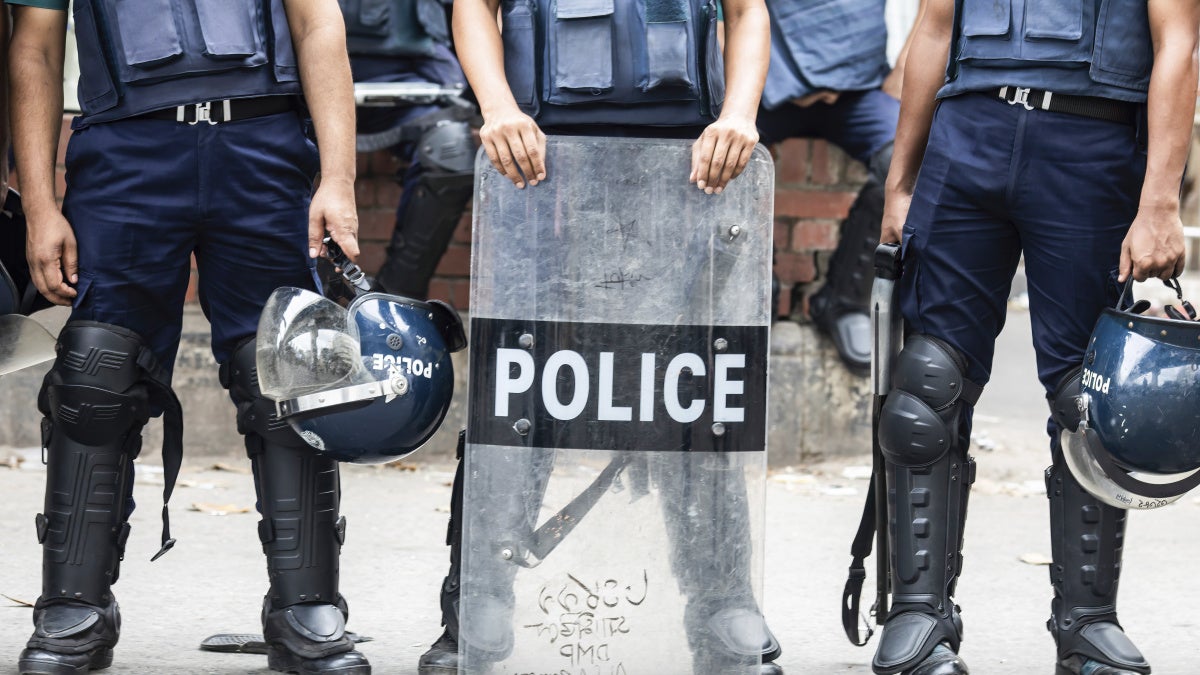
Click to expand Image Police officers in Dhaka, Bangladesh, July 9, 2024. © 2024 Sipa via AP Images The mass arrest of attendees at a small left-wing party’s meeting in Dhaka on September 26 is the latest incident in the Bangladesh authorities’ ongoing assault on civil and political rights. Police took around 290 supporters of the Jatiya Samajtantrik Dal into custody after members of the ruling Bangladesh Nationalist Party’s youth wing – the Jubo Dal-- claimed the gathering was a “secret” meeting of the former prime minister Sheikh Hasina’s Awami League, which is banned. A court remanded 27 of those arrested to custody, because it was alleged they had chanted the slogan “Joy Bangla” (Victory to Bengal), a slogan associated with the Awami League. The Jatiya Samajtantrik Dal was part of a 14-party alliance, led by the Awami League, that governed Bangladesh from 2009 until 2024, when it was toppled by student led protests in which hundreds were killed by security forces. The current ruling party, the Bangladesh National Party, faced severe repression under the Awami League government. Since being elected in February, it has targeted its own perceived opponents with arbitrary detention and hundreds of Awami League members are currently in jail, mostly without charge. Police have repeatedly raided alleged gatherings of Awami League supporters. On September 26, the same day as the Jatiya Samajtantrik Dal meeting, police in Barisal detained 12 Awami League activists for allegedly holding a "secret" meeting to “plan sabotage”; two days later, 15 were arrested in Dhaka under the Anti-Terrorism Act on similar allegations. In both cases those detained said they had gathered to mark Sheikh Hasina’s birthday. During Sheikh Hasina’s authoritarian rule, there were widespread and grave rights violations—including extra-judicial killings, enforced disappearances, torture and the arbitrary detention of political opponents. The Bangladesh Nationalist Party came to power promising to restore human rights and the rule of law. Instead, the new government has arbitrarily detained perceived opponents and rolled back human rights safeguards the interim government proposed. International human rights law guarantees freedoms of expression and association for all. Past violations of those rights committed when the Awami League was in power cannot justify the Bangladesh Nationalist Party’s current violations of the same rights. Bangladeshi history is rife with examples of where such repression can lead.
The first artist selected for the program is Munem Wasif, a Dhaka-based artist and curator.
 Sep 30, 2026 · byARTnews
Countries: Bangladesh, Myanmar Sources: Bangladesh Red Crescent Society, International Federation of Red Cross and Red Crescent Societies Dhaka, 24 September 2026, Thursday: The Bangladesh Red Crescent Society (BDRCS), with support from the International Federation of Red Cross and Red Crescent Societies (IFRC) and partners, is scaling up its six-month dengue response to support approximately 300,000 people, prioritising communities and vulnerable families in areas experiencing high dengue transmission. Supported by the IFRC Disaster Response Emergency Fund (DREF), the operation will focus primarily on Dhaka, Khulna, Barishal, Chattogram, including camps for displaced people from Rakhine State, Myanmar and host communities in Cox’s Bazar. It can be expanded to other affected areas as the situation evolves. The effort comes as dengue cases has increased sharply following heavy monsoon rains in late August. According to the Directorate General of Health Services (DGHS) data, till 23 September; 67,367 dengue patients had been hospitalised and 201 deaths recorded, compared with over 43,173 hospitalisations and 184 deaths during the corresponding period in 2025. ‘This is a rapidly evolving public health situation, and our volunteers and teams are already supporting communities and coordinating closely with health authorities,’ said Md. Habibur Rahman Khan, Secretary General of BDRCS. ‘With support from the IFRC and partners, we are strengthening these efforts to reach more people in high-risk areas and help families cope with the health and economic impacts of dengue’, he added. The operation complements the Government’s ongoing dengue response, led by the DGHS and supported through national and local health coordination mechanisms. The BDRCS-IFRC response will combine community awareness, cleaning campaigns, health-service support, blood services and assistance to vulnerable households. Key initiatives include: Mobilizing 1,000 Red Crescent volunteers to raise community awareness on dengue prevention, health promotion, household-level awareness and community clean-up activities. Support public hospitals and BDRCS health facilities with 100,000 units of IV saline, 50,000 dengue test kits, 3,000 triple blood bags, 100 apheresis kits, and 2,500 mosquito nets. Providing one-time multipurpose cash assistance of BDT 10,000 to 2,500 vulnerable dengue-affected households, particularly families facing hospitalization, loss of income and increased healthcare-related expenses. Orienting 150 health professionals on the updated national dengue treatment guideline. The wider Red Cross and Red Crescent network is already supporting the response. Through existing programmes, IFRC has contributed 38,000 NS1 dengue test kits to DGHS and 50 apheresis kits to the BDRCS Dhaka Blood Centre. Community engagement and surveillance activities are also ongoing. ‘Dengue is placing growing pressure on families, communities and health services across Bangladesh. While treatment and healthcare support are essential, preventing infections starts at the community level through awareness, early action and efforts to reduce mosquito breeding sites,’ said Seval Guzelkilinc, Head of Delegation, IFRC in Bangladesh. She also said, ‘The strength of this response lies in linking community action with access to timely health services. Through the Bangladesh Red Crescent's volunteer network and close coordination with health authorities, we can help people protect themselves, access timely support and reduce the impact of dengue on the most vulnerable communities.’ Since dengue cases began rising, BDRCS has supported the national response through community awareness, cleanliness activities, health services and blood centres. On 12 September, it mobilized 1,000 volunteers for the Government’s nationwide dengue prevention campaign. -End- For media inquiries, please contact: Areefa Mehera Sinha, Director, International Relations and Communication, BDRCS Email: areefa.sinha@bdrcs.org; Mobile: +880 18 9481 5516 Or Shameul Islam Shovon, Senior Communications Officer, IFRC Bangladesh Delegation Email: shameul.islam@ifrc.org ; Mobile: +88016774575388 Note for the Editor: About BDRCS: BDRCS established by Presidential Order 26 of 1973, serves as an auxiliary to the Public Authority and is part of the International Red Cross and Red Crescent Movement. BDRCS has consistently supported the Bangladeshi population through relief, rescue, and rehabilitation efforts during floods, cyclones, and other disasters. Bdrcs.org | Facebook | X | YouTube | LinkedIn About IFRC: IFRC is the world’s largest humanitarian network, comprising 191 National Red Cross and Red Crescent Societies working to save lives and promote dignity around the world. ifrc.org | Facebook | X | YouTube | LinkedIn
 Sep 24, 2026 · byReliefWeb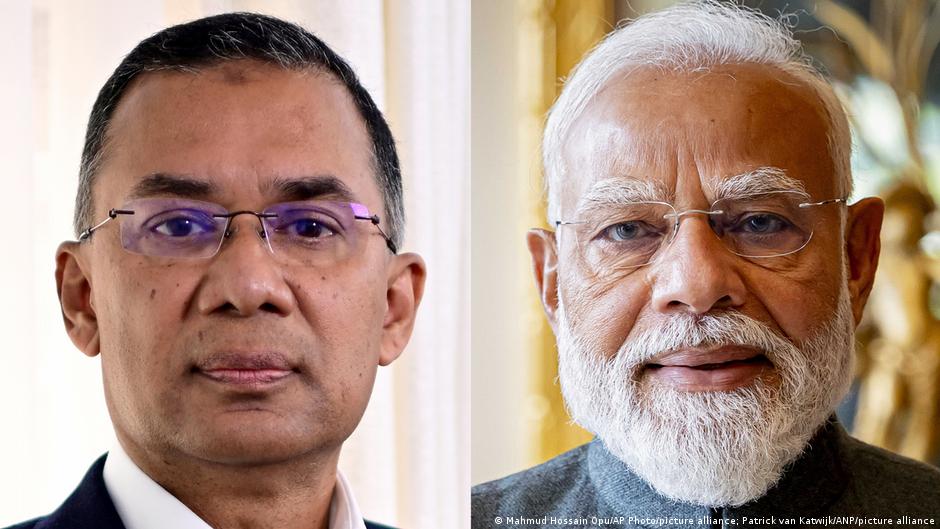
Bangladesh's absence from this month's BRICS summit in New Delhi has raised fresh questions about strained ties. Ousted PM Sheikh Hasina's exile in India remains a major obstacle to normalizing relations.
 Sep 24, 2026 · byDeutsche Welle
State-owned airline adds five 787-10s and six 737 MAX 8s, completing the number announced by Dhaka during trade negotiations with the Trump administration
 Sep 24, 2026 · byAir Data News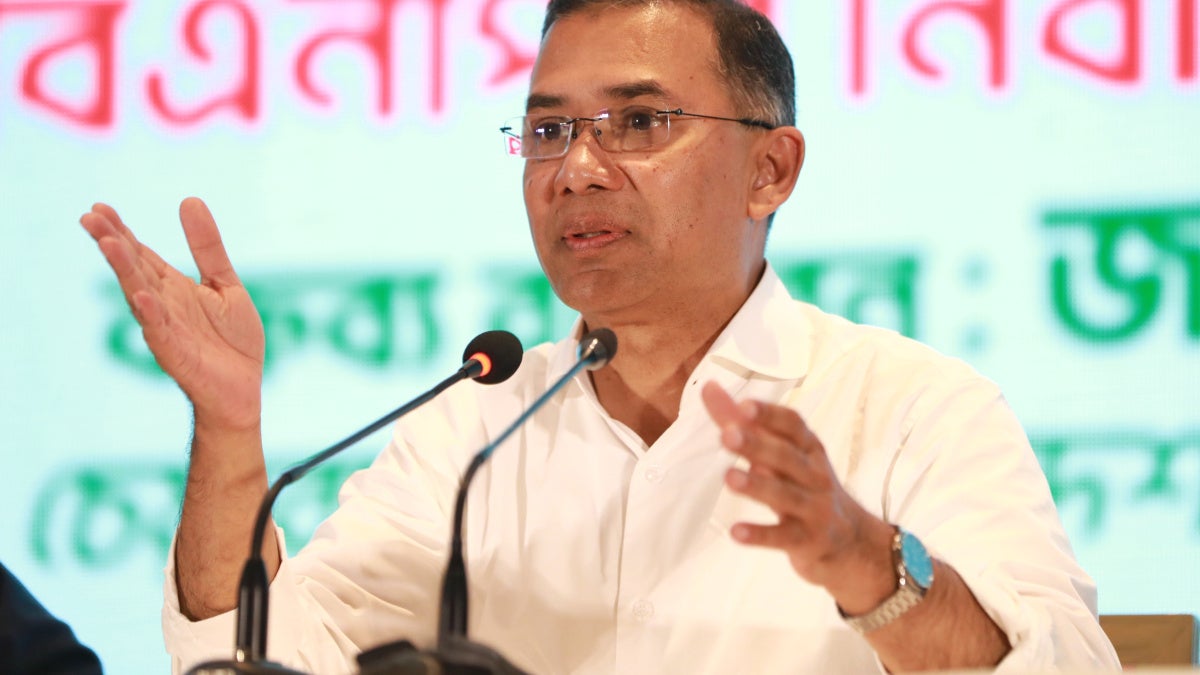
Click to expand Image Bangladesh Nationalist Party (BN) chairman and Prime Minister Tarique Rahman in Dhaka, Bangladesh, on February 14, 2026. © 2026 MD Abu Sufian Jewel/NurPhoto via AP Photo (London, September 23, 2026) – Three laws approved in September 2026 by the Bangladeshi parliament have reversed human rights protections and broken the ruling Bangladesh Nationalist Party’s (BNP) commitments to reform, Human Rights Watch said today. The legislation removes safeguards created by the interim government, which ruled Bangladesh between August 2024 and February 2026, reducing protections that could prevent a return to violations such as enforced disappearances and extrajudicial killings which were widespread in the past. The interim government had introduced two ordinances to strengthen the National Human Rights Commission (NHRC), including powers to prevent, investigate, and seek accountability for enforced disappearances. After being elected earlier this year, the government of Prime Minister Tarique Rahman has now legislated to remove the NHRC’s independence and weaken its investigative powers. The third law purports to abolish the paramilitary Rapid Action Battalion (RAB), a law enforcement agency responsible for extrajudicial killings, enforced disappearances, and torture, but in effect only renames it while providing fewer safeguards than apply to the regular police. “To prevent a return to the terrible abuses of the past, Bangladesh needs real security sector reform and an independent human rights body with the authority to investigate allegations of abuse,” said Elaine Pearson, Asia director at Human Rights Watch. “The new government’s efforts to shield security forces from scrutiny and accountability offer no reason to trust that killings and disappearances will remain a thing of the past.” Under the Awami League government of former Prime Minister Sheikh Hasina, which ruled Bangladesh between 2009 and 2024, law enforcement agencies committed widespread abuses, including extrajudicial killings, enforced disappearances, arbitrary arrests of critics, and the use of excessive force against protesters. Although killings and disappearances have sharply declined, the Rahman government, like its predecessor, is holding hundreds of perceived political opponents in arbitrary detention. The Awami League established the NHRC in 2009, but it lacked independence and had no power to investigate allegations against security agencies. Under the law in force at the time, a committee dominated by government or government-aligned officials selected the commissioners. If it received allegations against law enforcement agencies, the NHRC could only “call for a report from the government” and submit recommendations. The interim government sought to strengthen the NHRC with an ordinance that empowered it to investigate security agencies, created a more independent appointments process, and provided more robust and independent arrangements for funding and staffing. For the first time it created a National Preventive Mechanism, which is required under the Optional Protocol to the Convention against Torture, to inspect and monitor places of detention. However, after a new government was elected in February, the ordinance had to be confirmed or it would automatically lapse. The BNP administration let it lapse. The new legislation, passed on September 6 following a walkout by opposition legislators, does not allow the NHRC to directly investigate alleged rights violations by security forces. It can only request a report from the agency facing the allegation, although a vaguely worded provision seems to allow the NHRC to open its own inquiries if that agency fails to respond, or its report is deemed unsatisfactory. The new law also restores government control of the appointments process, reduces the NHRC’s budgetary and administrative independence, and downgrades the status and independence of the National Preventive Mechanism. As with the NHRC that existed under the Awami League’s 2009 law, the law adopted by the current government does not appear to comply with standards for investigatory powers, political independence, or adequate resourcing under the Paris Principles, the minimum international standard for national human rights institutions. Also on September 6, parliament adopted the Enforced Disappearance Prevention and Redress Act, which reverses reforms in another ordinance of the interim government. While the lapsed ordinance empowered the NHRC to investigate allegations of enforced disappearance, under the new act the government will appoint a security agency other than the agency implicated to investigate such allegations. While the ordinance empowered the NHRC to monitor, inspect, and investigate detention facilities, including if it suspects a secret detention facility, those powers have been removed. The legal standard for command responsibility for enforced disappearances, which was previously based on the Rome Statute of the International Criminal Court and held officers responsible for violations they should have known about and prevented, has also been changed. It now requires evidence of direct orders to hold a commanding officer responsible for enforced disappearances. On September 10, parliament passed the Special Response Battalion Act, renaming the RAB, which had been sanctioned by the United States for its role in serious human rights abuses. Seven of its former senior officers have been placed under targeted US sanctions, and several former members are facing trial at Bangladesh’s International Crimes Tribunal for alleged crimes against humanity, such as enforced disappearance. The ruling BNP had previously called for RAB’s dissolution, as had Human Rights Watch. The new law transfers the battalion’s personnel, powers, and property, including records to a supposedly new force, the Special Response Battalion (SRB), which began operating on September 16. Even the logo remains the same, only changing the letters RAB to SRB. In May, Home Minister Salahuddin Ahmed had said that renaming the unit might lead the United States to “reconsider” the sanctions against it. Human rights experts have expressed dismay at the lack of provision for safeguards, training, oversight, or accountability in the new law. As a matter of urgency, Bangladesh’s international partners should press the government to ensure that the as-yet undrafted rules for the SRB’s activities under the new law include rigorous human rights vetting of personnel, independent external oversight, safeguards governing arrest and detention, preservation of RAB’s records and other evidence, and an end to the routine deployment of seconded military personnel for civilian law enforcement, Human Rights Watch said. The United States should maintain its sanctions on the renamed entity until adequate measures to ensure respect for human rights and accountability for past violations, are in effect. Bangladesh’s international partners, including the European Union and the United Kingdom, should also strongly express their concern at the emerging human rights record and policies of Bangladesh’s new government. “Tarique Rahman came to office promising reform, after protesters risked their lives to overthrow a government that had committed widespread and severe rights violations,” Pearson said. “It is deeply alarming to see the new government so quickly following in the abusive footsteps of Sheikh Hasina, because we have seen where this can lead.”
The country has been left in the dark as it endures power cuts caused by the Iran war and reliance on gas imports At 1am, Halder’s alarm goes off and the 34-year-old Bangladeshi bank employee rises and heads to her kitchen. She is up at this time not for work but to cook for her family. An energy crisis paralysing the capital, Dhaka, a city of almost 40 million people , means this has become the only time when the piped gas supply is strong enough to allow cooking. The city now operates in darkness, as people try to continue their lives with power even in public areas shut off early in the evening to preserve energy. Continue reading...
 Sep 18, 2026 · byThe Guardian
Etihad is moving its biggest aircraft to the markets showing the strongest demand, from Paris and Tokyo to high-capacity Dhaka.

Switching to a more sustainable diet could halve food-related emissions in cities such as Amsterdam, while in cities such as Dhaka and Delhi, the focus should be more on making food production more sustainable as they widen food access. A new database by Leiden researchers shows that different cities need different approaches to achieve a more sustainable food system.
Hundreds of Biman Bangladesh Airlines passengers faced an ordeal lasting almost 40 hours at Rome Fiumicino Airport after their Boeing 787-9 Dreamliner (registered S2-AJY) made an emergency landing following a technical problem. Flight BG306, carrying 259 passengers from Toronto to Dhaka, departed Toronto Pearson on Thursday evening and arrived in Rome after about 8 hours […]
Aug 9, 2026 · byAviation24.beUnited Arab Emirates-based SolitAir this month began flying from its hub in Dubai to Jinan Yaoquiang International Airport in China’s Shandong province, its third destination in the country. The flight was operated July 1 by SolitAir’s 2005-vintage 737-800BCF (33023) via Dhaka, Bangladesh (DAC), and marked the first Chinese route launched by the carrier this year. […] The post SolitAir flies to third Chinese destination from UAE appeared first on Cargo Facts .

Riyadh Air has opened bookings for flights to three new cities as the startup carrier looks to continue… The post Riyadh Air opens flight bookings to Kuala Lumpa, Dhaka and vibrant Spanish city appeared first on AeroTime .
 Jun 30, 2026 · byAeroTime
Etihad Airways, the national airline of the United Arab Emirates, launched its inaugural flight to Dhaka on 26 June, operating a sold-out B777 to the capital of Bangladesh. The route strengthens trade and cargo connectivity across the South Asia corridor and responds to sustained demand for both passenger travel and logistics between the UAE and Bangladesh.
On June 26th, Etihad launched its inaugural flight to Dhaka, operating a sold-out Boeing 777-300ER to the capital of Bangladesh. The new service operates four times weekly. Follow Aeronews on...
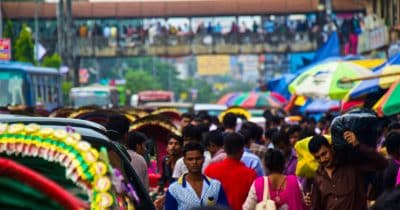
Crypto partnerships in the World Cup could revolutionize fan engagement and investment dynamics, impacting global sports and finance sectors. The post Argentina fans celebrate in Dhaka ahead of 2026 World Cup debut as crypto partnerships reshape tournament appeared first on Crypto Briefing .
 Jun 16, 2026 · byCryptoBriefing