AP Photo
11 articles
Latest AP Photo articles

Missing Lao Critic in Thailand Feared ‘Disappeared’
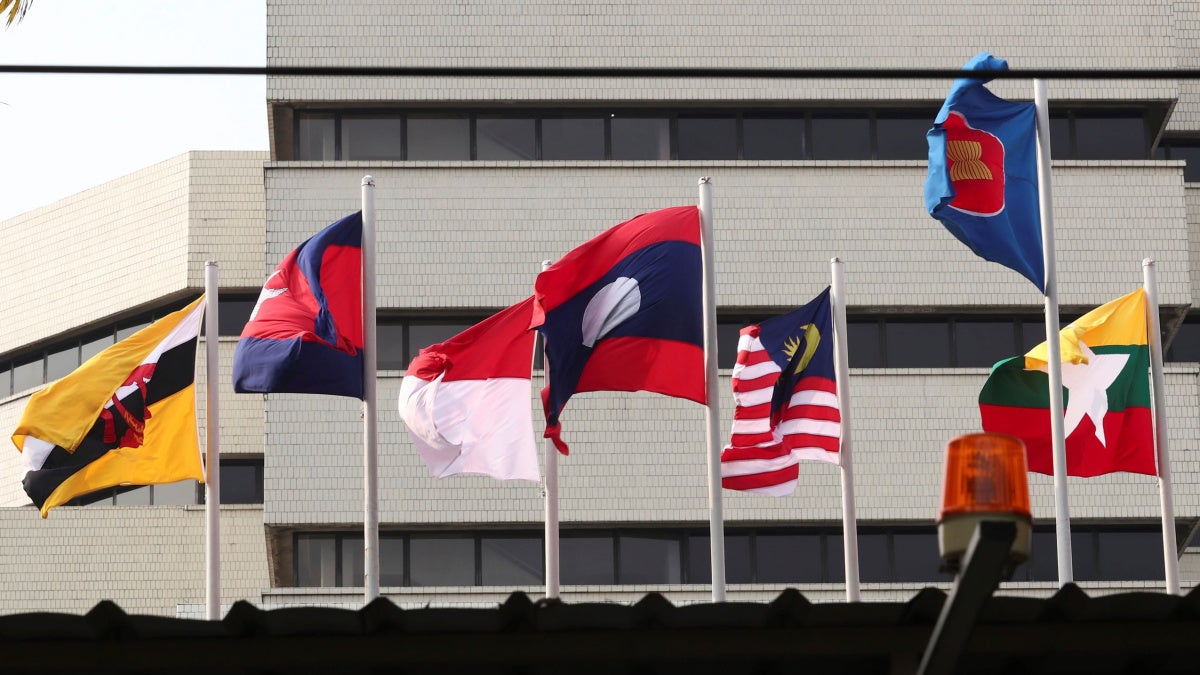
Click to expand Image Flags of member countries fly at the ASEAN Secretariat in Jakarta, Indonesia, April 22, 2021. © 2021 AP Photo/Tatan Syuflana, File Three weeks ago, 26-year-old Lao activist Khieo Lapchanh, an asylum seeker in Thailand, vanished in Samut Sakhon province following his shift at the restaurant where he worked. Khieo’s disappearance in the early hours of September 15 came one day before his first interview with the United Nations refugee agency (UNHCR) in Bangkok. Thai authorities have yet to provide any information regarding his whereabouts. Khieo had been posting videos critical of the Lao government to his Facebook page, Khiew Channel, which had about 158,000 followers. According to Manushya Foundation, a rights group that supported him, he had faced coordinated harassment, doxxing, and death threats. After Lao officials visited his mother's home in Laos this year on March 31 and April 17 concerning his activities, Khieo stopped posting political content. Given the threats he faced and the history of enforced disappearances of Lao activists both in Laos and abroad, Thai authorities should urgently locate him. On September 27, Human Rights Watch visited the area near the restaurant where Khieo worked and the building where he lived. Several businesses with cameras facing the street said their footage from the night of September 15 had already been automatically deleted. Khieo's case fits a troubling pattern of Lao activists abroad being targeted by transnational repression: efforts by governments or their agents to silence dissent by committing human rights abuses against their nationals or diaspora members outside their territorial jurisdiction. Od Sayavong, a Lao democracy activist and UNHCR-recognized refugee, forcibly disappeared in Bangkok in August 2019. His fate remains unknown and the Thai police investigation stalled. In May 2023, Lao activist Bounsuan Kitiyano was shot dead in Thailand’s Ubon Ratchathani province. Thailand has committed to preventing enforced disappearances under domestic and international law. The Prevention and Suppression of Torture and Enforced Disappearance Act, in force since February 2023, obligates Thai authorities to investigate cases in which state involvement is possible, and allows the Department of Special Investigation to take over such cases. Thai authorities have not said whether they are treating Khieo's case under this law. They should immediately escalate the investigation and make genuine efforts to find out what happened to Khieo. Concerned governments should also press Lao authorities for any information about Khieo Lapchanh's whereabouts, including whether he is in their custody.

Tunisia: Power, Water Shortages Endanger Rights
Click to expand Image Cars pass through a darkened street during a nighttime power outage in Ariana, Tunisia, July 14, 2026. © 2026 Chedly Ben Ibrahim/NurPhoto via AP Photo (Beirut) – Tunisian authorities failed to ensure an adequate supply of electricity and water during two months of extreme summer heat, undermining the right to health and endangering lives, Human Rights Watch said today. President Kais Saied blamed the shortages on sabotage, yet authorities failed to provide transparent information and instead cracked down on protesters. Rolling power outages left hospitals and water pumping stations without electricity and households without running water, interrupted critical medical procedures, and contributed to a nationwide shortage of drinking water. Doctors and human rights groups have reported a rise in heat-related hospitalizations and deaths exacerbated by the cuts, including among detainees. “Tunisians have spent one of the hottest summers on record in the dark and facing water shortages because President Saied’s government failed to ensure adequate access to electricity for millions of people, risking lives,” said Bassam Khawaja, deputy Middle East and North Africa director at Human Rights Watch. “Instead of blaming sabotage, the authorities should address the root causes of the failure and ensure that everyone, including detainees, has access to water, electricity, and methods for cooling.” In July 2026, the second-hottest July since 1950, the Tunisian Electricity and Gas Company (STEG) reportedly imposed rotating outages due to inadequate capacity. Power outages were concentrated between 1 and 5 p.m., when air conditioning increased demand. According to crowd-sourced data, outages lasted up to 12 hours in some extreme cases. In late August, a second wave led to cuts of up to two hours at a time in every region. Tunisian authorities have not published transparent information about the impact of the outages. The Tunisian Young Doctors Association estimated on July 22 that between 150 and 200 people had died over the previous days from heatstroke or medical equipment failure in the case of patients who depended on electrically powered medical equipment. It reported on August 28 that emergency departments experienced an “unprecedented” rise in deaths and hospitalizations from heatstroke and high temperatures, including deaths of detainees. Local media reported five deaths after respirators in the victims’ homes stopped working. Four parliament members wrote to the health minister on July 23 about patients on home oxygen therapy. The Health Ministry on August 29 reported 633 medical cases related to the heat wave in public hospitals but made no mention of related deaths. The ministry also denied that health services had been disrupted. A doctor at one of Tunis’s largest hospitals told Human Rights Watch that due to limited generator capacity, the outages meant the hospital went without electricity in most areas. Its backup generator covered only the intensive care units and operating rooms, the doctor said, while the rest of the building, including the emergency department, had no backup power or contingency plan. Because hospital admissions depended on electronic medical records, staff could not register patients arriving during an outage, even those with life-threatening conditions. During one outage, neonatal unit doctors ventilated newborns by hand. Outages also affected recovery for patients in post-operative care left without ventilation or air conditioning, the doctor said. The blackouts also disrupted the water supply. As outages disrupted pumping stations, tap water became intermittent in many parts of Tunisia. The Tunisian Water Observatory recorded 361 cuts to distribution of potable water in August, contributing to a bottled water shortage in a country where much of the population relies on it as their main drinking source. Although the National Authority for Food Safety said tap water is safe, public confidence is low, with reports of cloudy or yellowed water and changes in taste and odor. Water and electricity cuts affected prisons and detention sites. On August 28, five detainees at Mornaguia prison reportedly died in one day. The Tunisian League for Human Rights documented 20 deaths in prisons and detention facilities amid conditions exacerbated by extreme heat and water and power outages. The General Secretary of the General Federation of Electricity and Gas said that STEG had alerted its supervising ministry to the risk of power shortfalls and need for additional capacity as early as 2024. A 2026 report by the Tunisian Economy Observatory found that STEG's investment in generating electricity fell by 87 percent over five years. Tunisian authorities provided no evidence of sabotage. In late July, prosecutors’ offices across the country opened investigations into STEG managers and employees. President Saied said on August 26 that the outages in several regions were not “ordinary outages,” but rather “deliberately planned acts of sabotage” intended to stoke tensions, spread lies and rumors, and deprive citizens of their right to access services, but provided no further information. The electricity crisis was foreseeable, and Tunisian authorities had an obligation to prepare for it, including by ensuring that essential services such as water supply and health care were not affected, Human Rights Watch said. The government’s mismanagement and failure to act preemptively compounded the harm. Protests over water and electricity shortages have spread. The Tunisian Social Observatory of the Tunisian Forum for Economic and Social Rights recorded 1,101 protest actions in July and 1,093 in August in all 24 governorates, the highest July and August figures in years. Following an August 13 protest in Borj Erras over the lack of water, the authorities arrested 12 people, including 9 children, investigating them on suspicion of conspiring against state security, then releasing them the next day. On August 20, the grassroots movement Nafas held a demonstration in Tunis under the slogan “No water, no electricity, no freedom.” The next day, the authorities arrested Seifeddine Arfaoui, a political activist and Nafas member, at his home. On August 31, a Tunis court sentenced him to 18 months in prison under article 86 of the Telecommunications Code, for a Facebook post about slogans chanted at the protest. Human Rights Watch has previously documented a years-long crackdown against all forms of dissent in Tunisia. Access to electricity is critical to ensuring other rights, including but not limited to health, housing, water, and education, and should be recognized as a distinct human right, Human Rights Watch said. Tunisia has an obligation to ensure access to electricity and water, including within prisons and detention facilities. Article 48 of the Tunisian Constitution requires the state to provide drinking water to everyone on an equal basis. The International Covenant on Economic, Social and Cultural Rights guarantees the right to an adequate standard of living and the highest attainable standard of physical and mental health. The African Commission on Human and Peoples' Rights has held that a government's failure to provide basic services including safe drinking water and electricity violates the right to health under the African Charter. As a party to the International Covenant on Civil and Political Rights and the African Charter, Tunisia is also bound to respect the rights to freedom of expression and peaceful assembly. “Tunisian authorities have known for years that the electricity grid was inadequate but failed to plan for rising demand and the risks of a scorching summer,” Khawaja said. “Instead of prosecuting protesters, the government should publicly account for the failures of the electric grid, publicize transparent information including a death toll, and set out a clear plan to restore adequate electricity and water.”
Hong Kong Silences Remembrance of Police Abuses
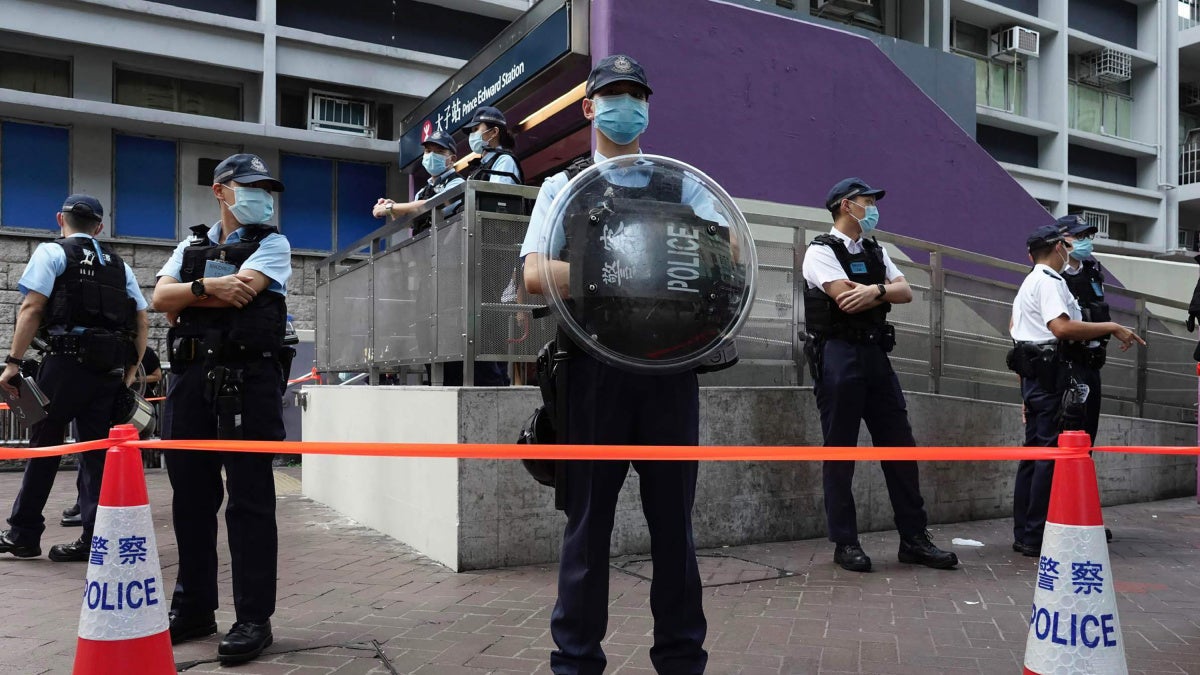
Click to expand Image Police officers stand guard outside the Prince Edward subway station in Hong Kong on August 31, 2020, the first anniversary of the day riot police stormed the station using excessive force, including batons and pepper spray, against people in subway carriages. © 2020 AP Photo/Vincent Yu Laying flowers, speaking out, reporting the news – once ordinary acts in Hong Kong— can now lead to prison under the city’s sweeping national security laws. National Security Police said on October 1 that they had arrested eight people in September for alleged “sedition.” Police accused them of “spreading false information” and “inciting hatred” against the government by “holding bouquets and shouting seditious slogans” outside Prince Edward metro station on August 31, the anniversary of police brutality there in 2019. Those arrested included citizen journalist Tang Ho-wing, who covered the gathering for his online news platform, Boom News, and activist Lee Ying-chi, whom police had stopped and warned before she even reached the station. Hong Kong’s sedition prosecutions have a 100 percent conviction rate. The broadly defined offense covers speech deemed to “incite hatred, contempt, or disaffection” against the Chinese or Hong Kong authorities, without any need to establish intent to cause violence. Authorities have prosecuted people for writing news articles, publishing children’s books, posting online criticism of the government, and wearing T-shirts bearing banned protest slogans. The arrests underscore authorities’ refusal to account for what happened at Prince Edward station on August 31, 2019. Footage showed riot police storming the station after clashes between protesters and counterprotesters, then using batons and pepper spray indiscriminately against people in train cars, including passengers. Some were seen bleeding from the head. Police also barred journalists and volunteer paramedics from entering the station. No independent investigation has examined police use of force during the months-long 2019 protests, including what has become known as the infamous “831 incident”, and no officer has been held accountable. The government continues to portray the largely peaceful protests as “black-clad violence” to justify its intensifying crackdown, while ignoring ongoing demands for democracy and accountability. Beijing may believe it has the upper hand, but repression without accountability fuels further resistance. History suggests Hong Kongers—those in the city and those abroad—will not easily forget.
US: Trump Administration Rejects External Election Observers
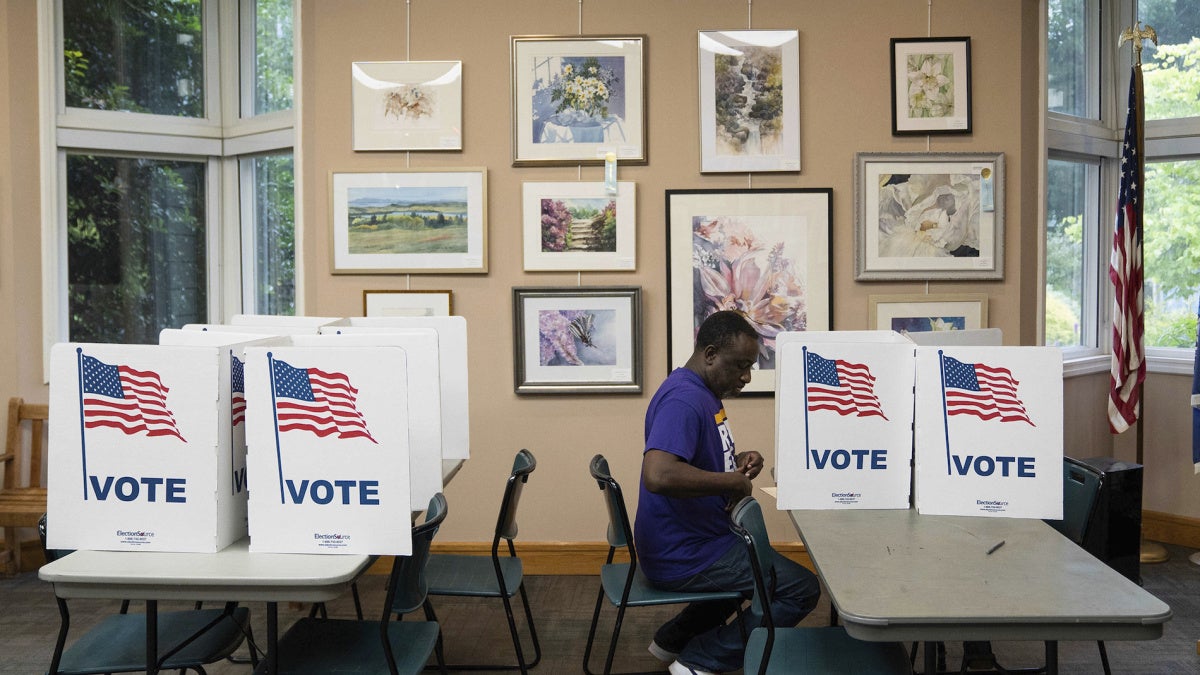
Click to expand Image A voter filling out a ballot at the Green Spring Gardens polling station in Lincolnia, Virginia, US, June 20, 2023. © 2023 Minh Connors/The Washington Post via AP Photo (New York) – The Trump administration’s decision not to invite the leading international election observation body to monitor crucial US midterm polls fuels fears of serious human rights concerns around the upcoming elections, Human Rights Watch said today. “The US government has long criticized Russia and other governments for dodging external scrutiny of their elections,” said Philippe Bolopion, executive director of Human Rights Watch. “Now the Trump administration is mimicking that behavior.” The Organization for Security and Cooperation in Europe (OSCE), which has observed every US federal election since 2002, called the decision “regrettable” and “not in line with” US commitments. Just over a month before the elections, the United States is mired in several controversies that raise concerns about the rights of voters, Human Rights Watch said. The Supreme Court on September 25, 2026, granted an emergency appeal by the Trump administration to overturn a ruling that had temporarily barred the government from using the current version of the Department of Homeland Security’s Systematic Alien Verification for Entitlements (SAVE) database to verify voters’ citizenship. Since 2002, the OSCE has observed 12 rounds of elections in the United States, including six midterm elections. OSCE observers were invited to observe the 2018 midterms during President Donald Trump’s first term and issued a 38-page report at the time. Most recently, the organization observed the 2024 election, which brought President Trump into office for a second term. The organization deemed that election “well-run” and said that candidates campaigned “freely across the country,” with “voters engaging actively.” Human Rights Watch wrote to the State Department seeking comment on the OSCE’s September 23, 2026 press release but has not yet received a response. The Trump administration has previously threatened to quit the OSCE, and its ambassador to the OSCE, Darrell Owens, has been pushing an effort to “reform, refocus, and refine” the OSCE since his confirmation by the US Senate in June. This is the first time the United States has declined to invite in OSCE monitors since they began observing US elections. The OSCE Parliamentary Assembly president, Pere Joan Pons, said that the Trump administration’s decision “represents a significant departure from an established democratic practice.” It is notable that an administration ostensibly committed to combatting fraud is unwilling to invite external observers who have cultivated expertise in exactly this issue, Human Rights Watch said. The decision is a serious one, and its consequences will reverberate beyond the United States. The 57 OSCE participating countries all made a reciprocal commitment to support democratic elections by enabling trained monitors from other OSCE countries to monitor major elections in their countries. Most countries continue to abide by this commitment and work to implement the OSCE’s recommendations. The United States should be signaling to other governments how vital it is to uphold the rights of voters, not breaking with a tradition of cooperation, Human Rights Watch said. In recent years, the OSCE has been unable to monitor elections in Belarus, Georgia, and Tajikistan due to the refusal of these governments to engage with monitoring procedures in a timely way, and in Russia’s case a refusal to issue an invitation at all. In 2024, the United States issued a pointed critique of Russia for its noncooperation with the OSCE, saying that “for decades, the United States has invited OSCE observers to assess our own elections and encouraged fellow participating States to do the same. We value the thorough, professional, impartial assessments of the OSCE observers and we take their recommendations seriously.” The lead-up to the 2026 midterm elections in the US has been accompanied by a series of new federal policies which, if implemented, could make access to polling places more difficult and limit US voters’ ability to exercise their right to vote. Trump and senior officials in his administration have been advancing a largely debunked claim that the outcomes of US elections have been affected by widespread noncitizen voting. The administration’s rhetoric has often implied, without any evidentiary basis, that state and local officials have deliberately conspired to push noncitizens to vote unlawfully. The US Department of Justice has sent letters to local election officials warning them of the risk of criminal prosecution if they allow noncitizen voting and have been pressuring states to use the SAVE database to screen their voter rolls. Continued use of the database, which the Supreme Court greenlighted on September 25, could lead states to wrongfully block people from voting. Reliance on this incomplete source has already incorrectly flagged some naturalized citizens’ voter registrations for further scrutiny. Practically, these flags create barriers to access the polls since only some people are being asked to meet administrative burdens and provide additional proof of citizenship. The Trump administration is also proceeding with plans to send about 1,000 monitors to midterm polling places. This move has sparked concern because the effort is framed around preventing ineligible people from voting, rather than ensuring that eligible voters are able to cast their ballots. Wyoming Governor Mark Gordon, a Republican, expressed concern about the “aggressive” conduct of some Justice Department monitors during the primary cycle. That track record raises concerns about whether their presence during the general election will deter some people from voting, Human Rights Watch said. When asked directly, neither President Trump nor the heads of the Department of Homeland Security or the Federal Bureau of Investigation have ruled out sending armed federal agents to polling places. The specter of Immigration and Customs Enforcement (ICE) officers serving warrants at polling places has led to a legal challenge from Latino civil rights organizations, the NAACP and a group of unions, the city of Denver, and Democrats, who all allege in four separate lawsuits that the presence of forces with ICE’s abusive track record will chill voter turnout. During the 2026 primary election cycle, ICE enforcement activities in and around polling places in New York, Texas, California, and on the main road leading to at least one polling place in Florida drew criticism for the same reasons. Princeton University’s Bridging Divides Initiative reported that a Pennsylvania polling place delayed opening while immigration enforcement proceeded nearby. “The test for November 3 will not be only on who wins, but whether everyone’s rights are respected before, during, and after the vote,” Bolopion said. “Without external monitors, it will be harder for the world to reliably know if this happened.”

Benchmark mortgage rate tops 7 percent
Welcome to The Hill’s Business & Economy newsletter {beacon} Business & Economy Business & Economy The Big Story Benchmark mortgage rate tops 7 percent The benchmark 30-year fixed mortgage rate is 7.03 percent this week, up from 6.95 percent last week, according to data from Freddie Mac. AP Photo/Matt Rourke, File It marks the…
 Sep 24, 2026 · byThe Hill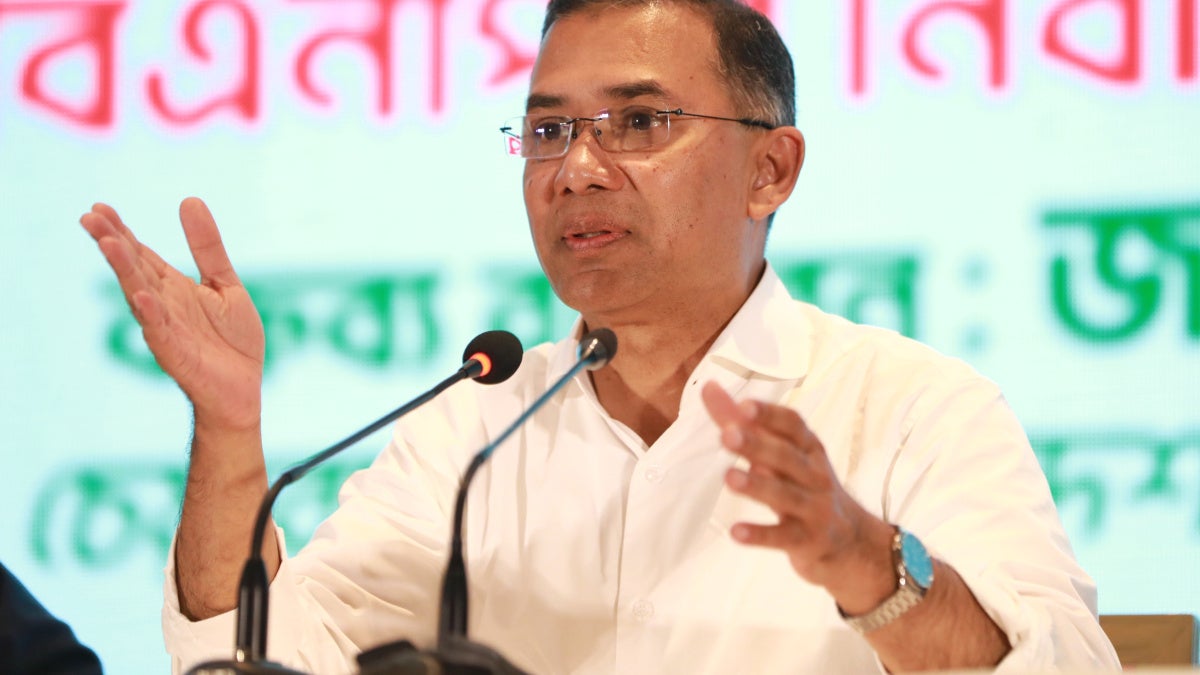
Bangladesh: New Laws Reverse Rights Protections, Empower Abusers
Click to expand Image Bangladesh Nationalist Party (BN) chairman and Prime Minister Tarique Rahman in Dhaka, Bangladesh, on February 14, 2026. © 2026 MD Abu Sufian Jewel/NurPhoto via AP Photo (London, September 23, 2026) – Three laws approved in September 2026 by the Bangladeshi parliament have reversed human rights protections and broken the ruling Bangladesh Nationalist Party’s (BNP) commitments to reform, Human Rights Watch said today. The legislation removes safeguards created by the interim government, which ruled Bangladesh between August 2024 and February 2026, reducing protections that could prevent a return to violations such as enforced disappearances and extrajudicial killings which were widespread in the past. The interim government had introduced two ordinances to strengthen the National Human Rights Commission (NHRC), including powers to prevent, investigate, and seek accountability for enforced disappearances. After being elected earlier this year, the government of Prime Minister Tarique Rahman has now legislated to remove the NHRC’s independence and weaken its investigative powers. The third law purports to abolish the paramilitary Rapid Action Battalion (RAB), a law enforcement agency responsible for extrajudicial killings, enforced disappearances, and torture, but in effect only renames it while providing fewer safeguards than apply to the regular police. “To prevent a return to the terrible abuses of the past, Bangladesh needs real security sector reform and an independent human rights body with the authority to investigate allegations of abuse,” said Elaine Pearson, Asia director at Human Rights Watch. “The new government’s efforts to shield security forces from scrutiny and accountability offer no reason to trust that killings and disappearances will remain a thing of the past.” Under the Awami League government of former Prime Minister Sheikh Hasina, which ruled Bangladesh between 2009 and 2024, law enforcement agencies committed widespread abuses, including extrajudicial killings, enforced disappearances, arbitrary arrests of critics, and the use of excessive force against protesters. Although killings and disappearances have sharply declined, the Rahman government, like its predecessor, is holding hundreds of perceived political opponents in arbitrary detention. The Awami League established the NHRC in 2009, but it lacked independence and had no power to investigate allegations against security agencies. Under the law in force at the time, a committee dominated by government or government-aligned officials selected the commissioners. If it received allegations against law enforcement agencies, the NHRC could only “call for a report from the government” and submit recommendations. The interim government sought to strengthen the NHRC with an ordinance that empowered it to investigate security agencies, created a more independent appointments process, and provided more robust and independent arrangements for funding and staffing. For the first time it created a National Preventive Mechanism, which is required under the Optional Protocol to the Convention against Torture, to inspect and monitor places of detention. However, after a new government was elected in February, the ordinance had to be confirmed or it would automatically lapse. The BNP administration let it lapse. The new legislation, passed on September 6 following a walkout by opposition legislators, does not allow the NHRC to directly investigate alleged rights violations by security forces. It can only request a report from the agency facing the allegation, although a vaguely worded provision seems to allow the NHRC to open its own inquiries if that agency fails to respond, or its report is deemed unsatisfactory. The new law also restores government control of the appointments process, reduces the NHRC’s budgetary and administrative independence, and downgrades the status and independence of the National Preventive Mechanism. As with the NHRC that existed under the Awami League’s 2009 law, the law adopted by the current government does not appear to comply with standards for investigatory powers, political independence, or adequate resourcing under the Paris Principles, the minimum international standard for national human rights institutions. Also on September 6, parliament adopted the Enforced Disappearance Prevention and Redress Act, which reverses reforms in another ordinance of the interim government. While the lapsed ordinance empowered the NHRC to investigate allegations of enforced disappearance, under the new act the government will appoint a security agency other than the agency implicated to investigate such allegations. While the ordinance empowered the NHRC to monitor, inspect, and investigate detention facilities, including if it suspects a secret detention facility, those powers have been removed. The legal standard for command responsibility for enforced disappearances, which was previously based on the Rome Statute of the International Criminal Court and held officers responsible for violations they should have known about and prevented, has also been changed. It now requires evidence of direct orders to hold a commanding officer responsible for enforced disappearances. On September 10, parliament passed the Special Response Battalion Act, renaming the RAB, which had been sanctioned by the United States for its role in serious human rights abuses. Seven of its former senior officers have been placed under targeted US sanctions, and several former members are facing trial at Bangladesh’s International Crimes Tribunal for alleged crimes against humanity, such as enforced disappearance. The ruling BNP had previously called for RAB’s dissolution, as had Human Rights Watch. The new law transfers the battalion’s personnel, powers, and property, including records to a supposedly new force, the Special Response Battalion (SRB), which began operating on September 16. Even the logo remains the same, only changing the letters RAB to SRB. In May, Home Minister Salahuddin Ahmed had said that renaming the unit might lead the United States to “reconsider” the sanctions against it. Human rights experts have expressed dismay at the lack of provision for safeguards, training, oversight, or accountability in the new law. As a matter of urgency, Bangladesh’s international partners should press the government to ensure that the as-yet undrafted rules for the SRB’s activities under the new law include rigorous human rights vetting of personnel, independent external oversight, safeguards governing arrest and detention, preservation of RAB’s records and other evidence, and an end to the routine deployment of seconded military personnel for civilian law enforcement, Human Rights Watch said. The United States should maintain its sanctions on the renamed entity until adequate measures to ensure respect for human rights and accountability for past violations, are in effect. Bangladesh’s international partners, including the European Union and the United Kingdom, should also strongly express their concern at the emerging human rights record and policies of Bangladesh’s new government. “Tarique Rahman came to office promising reform, after protesters risked their lives to overthrow a government that had committed widespread and severe rights violations,” Pearson said. “It is deeply alarming to see the new government so quickly following in the abusive footsteps of Sheikh Hasina, because we have seen where this can lead.”
Niger: Junta Strips 5 More Exiled Critics of Nationality
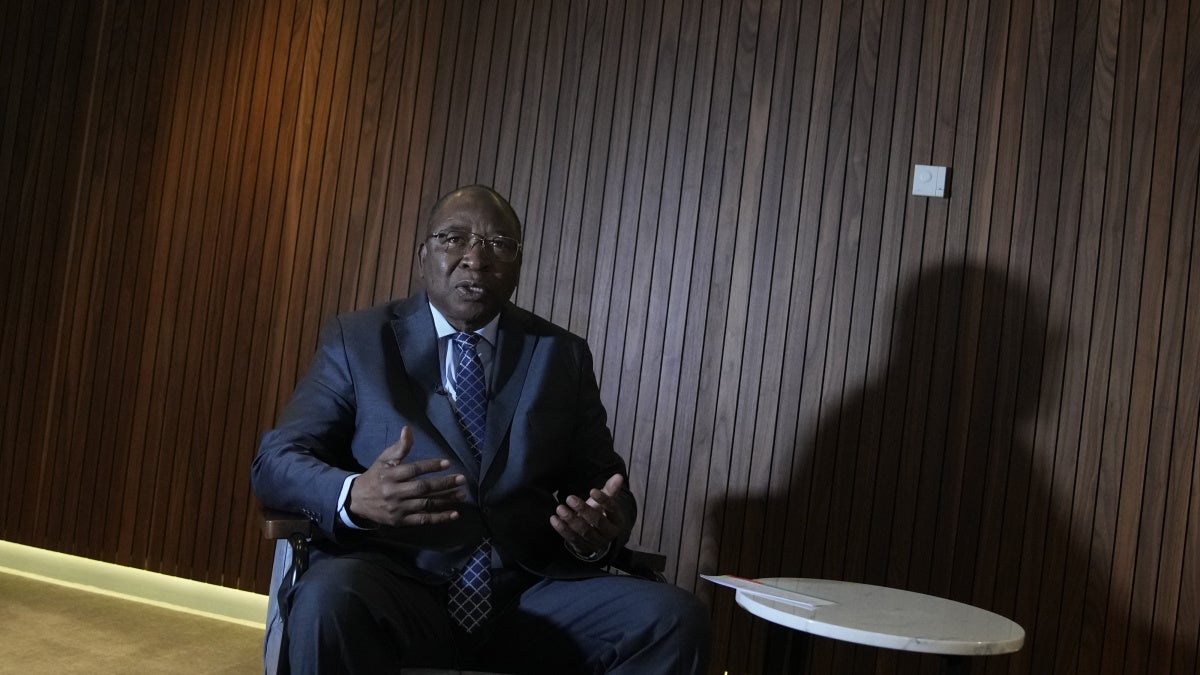
Click to expand Image Former Niger Prime Minister Ouhoumoudou Mahamadou speaks to the media in Paris, August 1, 2023. © 2023 AP Photo/Christophe Ena (Nairobi) – Niger’s junta has provisionally stripped five more exiled opposition figures of their nationality, extending a controversial policy increasingly used against critics of the military authorities, Human Rights Watch said today. On September 17, 2026, Gen. Abdourahamane Tiani, who has led Niger’s junta since the July 2023 coup, signed a decree removing the nationality of five prominent Nigeriens living in exile. The decree derives authority from a 2024 order creating a national terrorism database with overbroad inclusion criteria and inadequate due process requirements and safeguards for redress. The order jeopardizes privacy and data protection rights and increases the risk of statelessness. “The Niger junta’s use of a terrorism database to deprive people of their nationality without any meaningful legal safeguards raises serious human rights concerns,” said Ilaria Allegrozzi, senior Sahel researcher at Human Rights Watch. “Nationality is a fundamental legal status, not a privilege that governments can take from people for political reasons.” The five affected are former Prime Minister Ouhoumoudou Mahamadou; Amadou dit Ange Barou Chekaraou, Oumarou Moussa Ibrahim, and Ousmane Abdoul Moumouni, all former advisers to President Mohamed Bazoum, who was ousted in 2023 and remains arbitrarily detained; and Boubacar Seyni Souley, a social media activist critical of the junta. The September 17 decree accuses the men of various offenses, including disseminating information capable of disturbing public order, providing intelligence to foreign powers, electronic defamation, demoralizing the armed forces, and threatening state security. The decree raises questions about compliance with Niger’s existing legal framework. The 1984 Nationality Code does not provide for “provisional loss” of nationality. Where deprivation of nationality is permitted, the law requires the authorities to notify the person concerned and give them one month to submit a written defense before the measure is published in the official journal. “Nothing of the sort is happening here,” the Alliance of Sahel Democrats, a coalition of Nigerien, Malian, and Burkinabè diaspora political opposition groups advocating a return to constitutional rule, said in a statement on September 18. The alliance also noted that the September 17 decree is depriving individuals of their nationality while they are still being prosecuted, in contravention of the 2024 order, which states that deprivation of nationality can only be imposed after a conviction. According to Niger’s press agency, the junta’s latest action brings the number of people provisionally deprived of Nigerien nationality under the 2024 order to 25. In October 2024, the junta provisionally stripped nine people linked to former President Bazoum of their nationality. In June, authorities revoked the citizenship of Mariama Djibrine, an opposition figure living in exile. In a September 19 statement, the G25-Niger, an opposition coalition of civil society groups and media organizations formed in 2025, said the 2024 order “is being used as a tool of political repression … to crack down on opponents and other dissenting voices.” Since taking power in 2023, Niger’s military junta has entrenched authoritarian rule and consolidated sweeping and unchecked powers, systematically weakening institutions capable of holding the military authorities to account. In the past year alone, the military authorities have dissolved all political parties and several independent unions, suspended dozens of civil society groups, detained journalists under a broad cybercrime law, criminalized consensual same-sex relations, announced Niger’s withdrawal from the International Criminal Court, and prolonged the country’s political transition without any roadmap toward democratic elections. In addition to Bazoum, the junta continues to arbitrarily detain Moussa Tchangari, a prominent human rights defender. The authorities have also taken steps to curb criticism from abroad. In June, Niger’s foreign affairs minister instructed diplomatic missions to monitor online criticism of the military authorities, signaling growing scrutiny of the diaspora’s discussions of the country’s political and human rights situation. The political climate in Niger has become increasingly tense in recent weeks, Human Rights Watch said. On August 28, mutinous soldiers attacked a military base at the international airport in Niamey, Niger’s capital, and the presidential palace, with hours of gunfire. The mutineers also briefly seized the headquarters of the state-run national television, disrupting broadcasts. General Tiani called in Russia’s government-controlled Africa Corps, whose intervention, including the use of armed drones, helped loyalist forces suppress the mutiny. Niger is a party to the United Nations Convention on the Reduction of Statelessness, which restricts states from depriving people of their nationality when doing so would leave them stateless. Colleagues of the five affected by the September 17 decree said that at least four of them only possess a Nigerien passport. Those who are without a nationality as well as their families risk being deprived of legal and social protection abroad. It could prevent them from returning to Niger, which is their right under international human rights law. “The Niger junta has been depriving perceived political opponents of their nationality without meaningful due process, and contrary to Niger’s obligations to prevent statelessness and protect fundamental rights,” Allegrozzi said. “The junta should immediately revoke the decree and suspend the use of the easily abused terrorism database.”
US Revokes Limits on Power Plants’ Climate Pollution
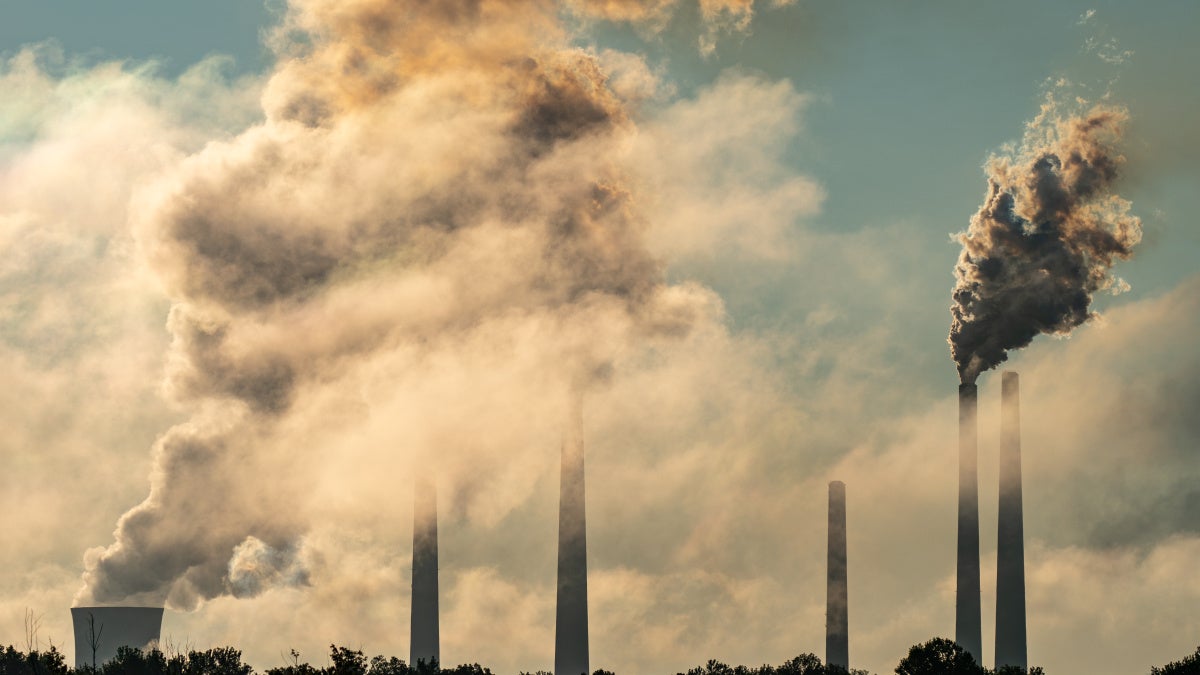
Click to expand Image Pollution and steam are seen rising from the stacks of the Miami Fort Power Station along the Ohio River, in North Bend, Ohio, on July 23, 2026. © 2026 Jason Whitman/NurPhoto via AP Photo The United States Environmental Protection Agency (EPA) announced on September 14 that it is repealing limits on climate-warming pollution from coal and gas-fired power plants, the second largest source of greenhouse gas emissions in the country. By gutting the 2024 Carbon Pollution Standards, the EPA is eliminating most of the limits on power plants’ carbon emissions. The move is one of the Trump administration’s most significant attacks yet on the US government’s ability to confront the climate crisis and protect communities devastated by pollution. The 2024 standards required existing coal plants and new gas plants to capture 90 percent of carbon emissions or shut down by 2039, which would have reduced carbon pollution by an estimated 1.38 billion metric tons through 2047. The Biden-era rule was also projected to help reduce power plants’ emissions of health-harming pollutants, including sulfur dioxide, nitrogen oxides, and fine particulate matter. Human Rights Watch has documented how these pollutants from industrial operations can degrade air quality and harm the health of communities living nearby. Our research in countries like Bulgaria, Bosnia and Herzegovina, and Türkiye has shown how coal-fired plants, in particular, can emit pollution that contributes to dangerous levels of air pollution. The Biden administration estimated that the 2024 Carbon Standards would prevent 1,200 deaths and 360,000 asthma attacks in the US in 2035 alone. The EPA claimed its repeal of the 2024 standards would save businesses $370 million in regulatory costs but did not say what the costs to public health would be. In January, the agency said it would no longer factor in health costs when estimating the economic impact of pollution limits. In its announcement rescinding the 2024 carbon standards, the EPA also proposed removing “all remaining greenhouse gas emissions requirements for power plants,” arguing these emissions do not impact climate change. In 2025, the agency also revoked its 2009 finding that greenhouse gases endanger public health, a finding grounded in scientific evidence that had provided a legal foundation for federal regulation of greenhouse gas emissions. While the Trump administration mounts a full-throated denial of decades of scientific evidence, communities across the country—and the world—are already contending with the consequences of the climate crisis. The EPA should restore the 2024 standards and strengthen its regulation of the fossil fuel industry.

<a href="https://news.sky.com/story/the-most-striking-pictures-of-the-week-13584410">Most striking pictures of the week</a>
The Tribute in Light is tested over the skyline of lower Manhattan, Wednesday, Sept. 9, 2026, in Jersey City, NJ. (AP Photo/Adam Gray)
 Sep 11, 2026 · bySky News
Cambodia: Legal Revisions Reinforce One-Party Rule
Click to expand Image Cambodian Senate building, the Solidarity Palace, Phnom Penh, Cambodia, August 21, 2026. © 2026 AP Photo/Heng Sinith (Bangkok, September 4, 2026) – The Cambodian government should withdraw proposed legal amendments that would drastically reduce opposition party representation in top positions on local councils, Human Rights Watch said today. On August 20, 2026, the Cambodian National Assembly, which is dominated by the Cambodian People’s Party (CPP), unanimously passed amendments to the Law on the Administration and Management of Commune/Sangkat. The changes to four articles in the law determine the apportionment of elected local council positions across Cambodia’s more than 1,600 communes. The Senate approved the amendments on September 4, which will be in effect for the next commune elections, slated for June 2027. “The new amendments to Cambodia’s commune law, combined with the ruling party’s other repressive measures, appear aimed at eliminating opposition influence and cementing one-party rule at the local level,” said Bryony Lau, deputy Asia director at Human Rights Watch. “The Cambodian People’s Party is forever seeking to minimize if not eliminate the role of opposition politicians in the country’s rule.” Elected commune councilors have broad authority, including issuing identity documents, maintaining local security, and managing local budgets. The amended law targets the allocation of the three key positions within each commune council: the commune chief; the first deputy, who assists on financial and economic matters; and the second deputy, who assists on administration, social affairs, and public services. Existing law apportions these positions to ensure power-sharing and multiparty representation on local councils. Currently, if two parties earn enough votes for at least one council seat in a commune, the winner gets the commune chief and first deputy positions, and the runner-up gets the second deputy position. If three or more parties earn a seat in a single commune, the top three parties each get one of the key positions. The new amendments change this formula, granting all three of the positions to any party that earns two-thirds of the vote in a commune, or granting the top two positions to any party that earns a simple majority of votes. This would heavily favor the CPP, which has consolidated power in recent years in part through banning opposition parties to splinter the opposition into multiple, smaller parties. The expected effects of the amendments can be seen by applying them to past election results. In 2022 in the last local commune elections, the opposition Candlelight Party won 87 second-deputy positions across Phnom Penh’s 105 communes. If those elections were held under the new amendments, the party would have won only three positions. In Siem Reap province, the Candlelight Party won one first-deputy and 90 second-deputy positions across the province’s 100 communes. Under the new amendments, Candlelight would have won just 28 second-deputy positions. Since Cambodia’s Supreme Court in November 2017 dissolved the main opposition party, the Cambodia National Rescue Party, and the ensuing July 2018 national election, Cambodia has been a de facto one-party state. The CPP controls all national governmental institutions, including the National Assembly, Senate, and National Election Committee. Results from the 2022 commune elections analyzed by Human Rights Watch show numerous and significant irregularities suggesting possible fraud and vote tampering to favor the ruling party. These new amendments reflect a broader campaign of political repression to consolidate CPP power. After competing in the 2022 commune elections, the Candlelight Party was banned from participating ahead of the 2023 national election on concocted administrative grounds. The party could be disqualified on similar grounds from next year’s commune elections. The authorities have engaged in judicial harassment and arbitrarily arrested members of several opposition parties that emerged to contest in Candlelight’s absence. More than 40 opposition activists are currently detained or imprisoned, including Candlelight’s vice president, Thach Setha. Several current and former opposition leaders have been prosecuted on baseless charges and barred from politics by the courts, such as the former Nation Power Party adviser, Rong Chhun. “Cambodia’s elections won’t be taken seriously so long as the government adopts laws and takes other actions that prevent opposition parties and politicians from exercising their basic rights,” Lau said. “Concerned governments should press the Cambodian authorities to reverse the trend of arbitrary restrictions and arrests of opposition politicians.”