After Warm Meeting With Trump, Venezuela’s Leader Is Set to Address U.N.
ONUneutral
 Sep 23, 2026 · byThe New York Times
182 articles · 1+ stories

She will be the first head of state from her country in eight years to make a speech to the body in person, and she is likely to sound radically different from her recent predecessors.
Sep 23, 2026 · byThe New York Times
Donald Trump’s UN address was packed with claims that are misleading, false or exaggerated. He said the US has more munitions than it could ever use, despite reports of depleting stocks. He claimed the US and Venezuela hold 60% of the world’s oil, despite the numbers not adding up, and he said he had ended the war in Gaza despite ongoing Israeli strikes and deaths since last year's ceasefire. Vedika Bahl fact-checks the speech in Truth or Fake.

Venezuelan opposition leader María Corina Machado was blocked from returning to her country three times over a 24-hour timeframe on Tuesday. “She has attempted to enter the country by air and sea but has been turned away each time,” adviser David Smolansky told The Hill. Machado, the 2025 Nobel Peace Prize recipient, left the country…
 Sep 23, 2026 · byThe Hill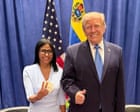
Interim president, who agreed a 65bn-barrel oil deal with the US, did not say whether she would visit her snatched predecessor, Nicolás Maduro, in jail Venezuela’s interim president, Delcy Rodríguez, has celebrated a “historic” meeting with Donald Trump in New York, posing for a smiley photo with the US president less than nine months after he ordered the abduction of her boss, Nicolás Maduro. The former foes met at a five-star hotel in Manhattan a few blocks from Trump Tower late on Tuesday, on the sidelines of the United Nations general assembly. The hotel is about 7 miles from the Brooklyn prison where Maduro has been held since he was snatched during a special forces raid on Caracas. Continue reading...
 Sep 23, 2026 · byThe Guardian
Through Operation Absolute Resolve, the United States succeeded in disarming the dictator; now it is time to dismantle the dictatorship.
Sep 23, 2026 · byThe Hill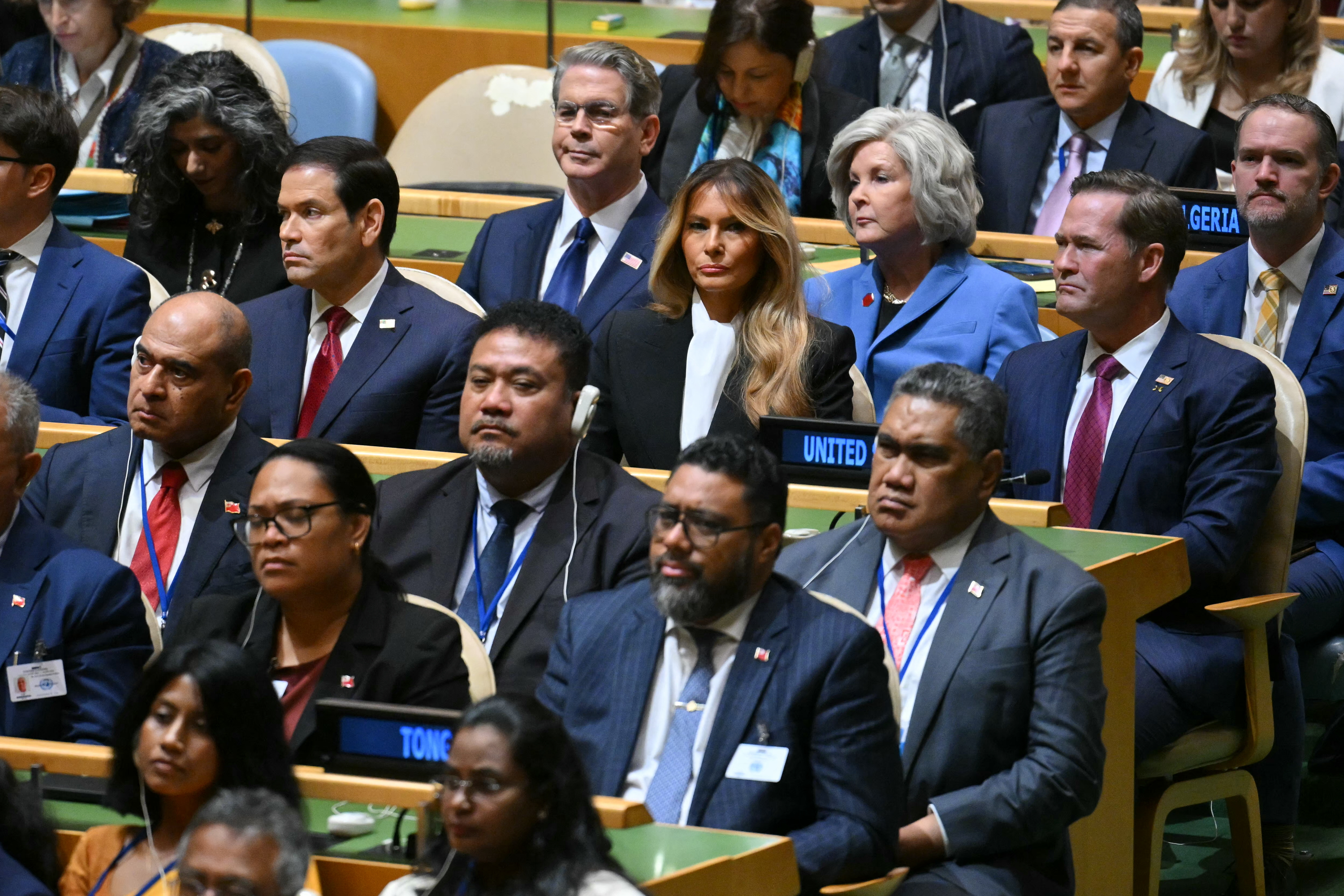
Deals, threats and oil are all on the table as the president's foreign policy takes center stage.
 Sep 23, 2026 · byNPR
Deals, threats and oil are all on the table as the president's foreign policy takes center stage.
Sep 23, 2026 · byNPR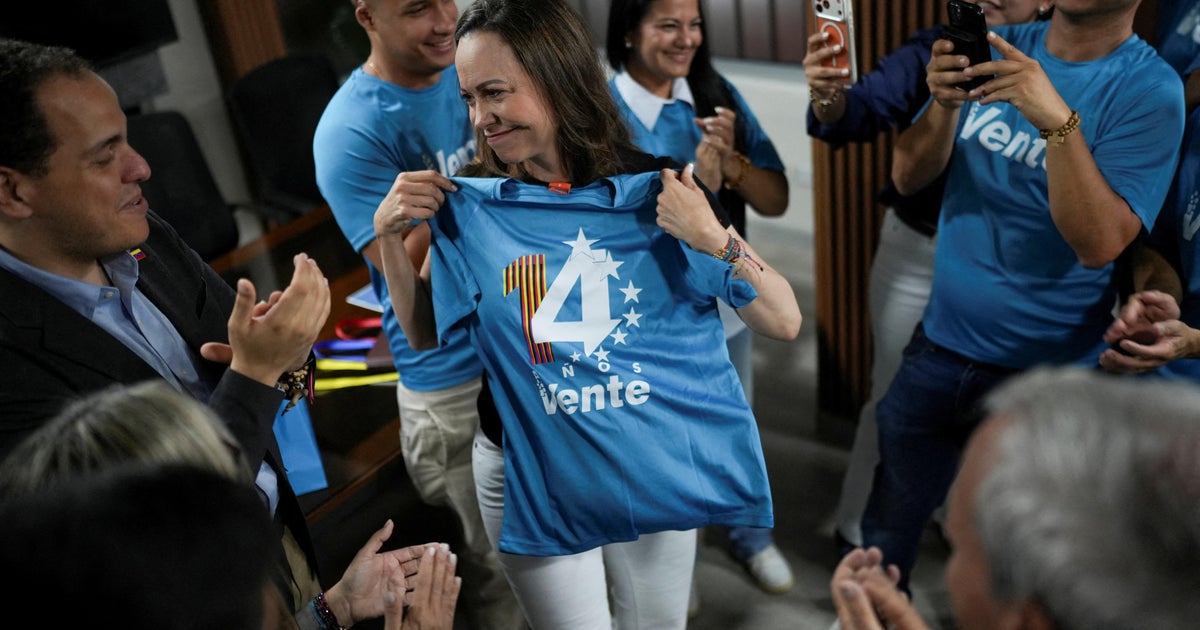
Venezuelan opposition leader María Corina Machado tried 3 times to enter her country "by air and sea but has been turned away each time," her team says.

Rodriguez was handpicked by Trump as leader of Venezuela was arrested and taken to the US
 Sep 23, 2026 · byBBC
Country: Venezuela (Bolivarian Republic of) Sources: Logistics Cluster, World Food Programme Please refer to the attached file.
 Sep 23, 2026 · byReliefWeb
Country: Colombia Source: International Federation of Red Cross and Red Crescent Societies Please refer to the attached file. A. SITUATION ANALYSIS Description of the crisis On 10 August 2026 at 07:34 local time, a magnitude 7.4 earthquake struck western Colombia, with its epicentre near the municipality of San José del Palmar in Chocó Department, at a depth of 103 km. The earthquake was followed by multiple aftershocks and was felt across much of the country, affecting densely populated urban centres and rural communities alike. The departments most severely impacted include Chocó, Valle del Cauca, Risaralda, Caldas, and Quindío, while significant impacts were also reported in Antioquia, Cundinamarca, Huila, Boyacá, Tolima, Cauca, Putumayo, Sucre, and Santander. As of 14 September, the National Disaster Risk Management Unit (UNGRD) reports indicate impacts across 16 departments and 500 municipalities, while the earthquake was felt across much of Colombia and reported in Ecuador, Panama, and Venezuela. Search and rescue efforts were concentrated in these departments and, as of this date, operations have concluded. In total, 16 accredited Colombian USAR teams, 4 international support teams from the United States, Ecuador and Israel, as well as 34 other support teams were deployed, comprising a total of 1,849 rescuers. These efforts resulted in a total of 356 people rescued and 259 bodies recovered. According to the UNGRD report of 10 September, in terms of human impact, 778,281 people were reported as affected (364,672 families), with 4,505 people injured and 331 deaths. In terms of infrastructure, 36,327 houses were destroyed, 758 buildings collapsed, and 6,047 buildings and more than 200,000 houses were damaged. Additionally, essential basic services remain in a critical situation, with 4,316 educational facilities and approximately 400 health facilities reported as affected. Likewise, according to the Ministry of Housing, City and Territory, 137 municipalities reported disruptions to water supply, sewerage and solid waste management services, of which 93 have not been able to restore these services. In addition, 286 Colombian Red Cross Society volunteers were themselves directly affected by the earthquake. The impacts of the earthquake are estimated to have caused direct physical damage to structures amounting to COP 42.1 trillion (USD 13.2 billion), equivalent to approximately 2.3 per cent of Colombia’s Gross Domestic Product (GDP). The damage is highly concentrated in Risaralda, Valle del Cauca, Chocó, Caldas and Quindío. (UNDP, 2026)1 . Critical disruptions to electricity, telecommunications, and health services have been reported in several affected areas. Airport closures, damaged roads, communication outages, and continuing aftershocks are affecting access to communities and delaying comprehensive damage and needs assessments, particularly in Chocó, where connectivity remains intermittent and some municipalities remain difficult to reach. Pre-existing vulnerabilities, poor health outcomes, and limited access to health services already constrained the ability of communities to cope with additional shocks. On the day of the earthquake, the Government of Colombia declared a national State of Emergency and activated national and departmental emergency management mechanisms. The Colombian Red Cross Society (Cruz Roja Colombiana – CRC) immediately activated its National Crisis Room and emergency response mechanisms. This response is unfolding against the backdrop of the El Niño phenomenon. The Institute of Hydrology, Meteorology and Environmental Studies (IDEAM)2 confirmed that El Niño conditions are already present in the equatorial Pacific Ocean and atmosphere, with more than 95% probability of strengthening during the second half of 2026 and persisting into the first quarter of 2027, potentially reaching “very strong” intensity comparable to the most significant events recorded since 1950. According to the United Nations Office for the Coordination of Humanitarian Affairs (OCHA)3 , the phenomenon is expected to act as a multiplier of humanitarian risk nationwide, with an estimated 4.3 million people across 508 municipalities (45% of the country) facing severe impacts, particularly water shortages, increased wildfire risk, and rising food insecurity. For the departments already affected by the earthquake, these compounding hazards risk further straining water, health and shelter systems that remain damaged, delaying recovery, and deepening the needs of already vulnerable households.
Sep 22, 2026 · byReliefWeb
President Trump threatened the annihilation of Iran if its leaders refuse to strike a deal and framed the U.S. as conquerors of Venezuela, while promoting himself as a problem solver in his speech to the United Nations General Assembly in New York on Tuesday. “To the victor go the spoils,” Trump told the crowd, touting…
Sep 22, 2026 · byThe Hill
Alejandro Betancourt was previously wanted by authorities in Switzerland as part of a money-laundering investigation

Country: Venezuela (Bolivarian Republic of) Source: UN Children's Fund Please refer to the attached file. Highlights UNICEF continued supporting the transition from emergency response to early recovery, sustaining access to essential health, nutrition, WASH, child protection and education services for children and families affected by the earthquakes. To date, UNICEF and partners have reached 42,265 people with primary health care, 17,391 people with access to safe water, 14,644 people with psychosocial support, and 19,052 people with nutrition services. UNICEF supported learning continuity and school readiness by reaching 5,148 children and adolescents with educational supplies and training 649 teachers and education personnel in basic pedagogy and mental health and psychosocial support. UNICEF has mobilized US$29.5 million against the US$65.7 million required under the Venezuela Earthquake Response Addendum, leaving a funding gap of approximately US$36.2 million. With the addendum, UNICEF’s revised 2026 HAC requirements now total US$203.3 million. SITUATION OVERVIEW AND HUMANITARIAN NEEDS As response efforts increasingly transition towards early recovery, humanitarian needs remain significant in earthquake-affected communities. According to the International Organization for Migration (IOM),3 authorities have assessed 60,785 structures to date. Of these, 35,545 have been declared safe for occupancy, 14,239 are subject to usage restrictions, and 11,001 have been classified as high risk. Authorities also report that 335 housing units have been provided to families whose homes were destroyed. Debris clearance operations have removed a cumulative 600,790.7 metric tons of rubble, representing 28.6 per cent of the estimated total. Official information further indicates that 107 temporary camps remain operational, with a capacity to accommodate 25,212 people. As of the latest reporting, 23,901 individuals continue to reside on these sites. Rising temperatures have increased water consumption, creating additional challenges in maintaining adequate access to safe water. Health services continue to face constraints related to human resources, medical supplies, cold-chain equipment and funding required to expand coverage in hard-to-reach communities. Population movements between temporary camps, host communities and other accommodation arrangements continue to affect follow-up for pregnant and breastfeeding women, as well as the identification and continuity of care for children and adolescents exposed to protection risks. The continued use of some schools as temporary camps, together with shared-school arrangements hosting students from multiple institutions, is placing additional pressure on education infrastructure and delaying the return of some children to the classroom. Humanitarian and government partners are increasingly focused on sustaining the transition from emergency response to early recovery, including the movement of families from temporary camps towards alternative accommodation and community-based solutions. UNICEF, in coordination with national and local authorities, is supporting the rehabilitation of damaged water supply systems to help restore safe and reliable access to drinking water for affected populations. Interventions include repairs to water infrastructure, rehabilitation of pumping stations and distribution networks, water quality monitoring, and the provision of technical assistance to local service providers. These efforts aim to reduce reliance on emergency water trucking while strengthening the resilience and functionality of community water systems as families move from temporary camps to more sustainable accommodation solutions. Coordination efforts also continue to support the safe return of children and adolescents to school and the restoration of essential services. Priorities remain centred on maintaining access to health, nutrition, WASH, child protection and education services for the most vulnerable, while strengthening national systems and community-based mechanisms to support continuity of services and recovery.
Sep 22, 2026 · byReliefWeb
Countries: Venezuela (Bolivarian Republic of), Belgium Source: Food and Agriculture Organization of the United Nations Please refer to the attached file. Synopsis (short abstract) In the aftermath of the June 2026 earthquakes in Venezuela (Bolivarian Republic of), FAO, thanks to support from Belgium through the Special Fund for Emergency and Resilience Activities, will help 2 160 people in the most affected areas. By combining support for food production, market revitalization, cash assistance and entrepreneurship for women caregivers, the project aims to improve access to nutritious food, restore livelihoods and lay the foundations for a sustainable recovery.
Sep 22, 2026 · byReliefWeb
Country: Venezuela (Bolivarian Republic of) Source: MapAction Please refer to the attached Map.
Sep 22, 2026 · byReliefWeb
Country: Venezuela (Bolivarian Republic of) Source: MapAction Please refer to the attached Map.
Sep 22, 2026 · byReliefWeb
Countries: Colombia, Venezuela (Bolivarian Republic of) Source: International Federation of Red Cross and Red Crescent Societies Please refer to the attached file. Event development Update regarding the event's development According to information provided by the United States government and various open sources, a military incursion reportedly took place in Caracas, Venezuela, in the early hours of Saturday, January 3, 2026, during which Nicolás Maduro and his wife were captured on the territory of the Bolivarian Republic of Venezuela. As a result of these events, on Monday, January 5, the Venezuelan government declared a state of internal emergency in response to a situation that has had a significant impact on the international community due to its implications for regional stability. This measure includes, among other aspects: i) the mobilization of the National Armed Forces throughout the territory; ii) the militarization of public service infrastructure, the oil industry, and other strategic industries; iii) the strengthening of controls and patrols at land, air, and sea borders; iv) restrictions on entry into the national territory; v) restrictions on the movement of people and vehicles; and vi) the suspension of public gatherings and demonstrations. In this context, and given the potential repercussions for Colombia—a country that is home to approximately 2.8 million Venezuelan citizens and whose border areas are characterized by complex dynamics linked to the presence of non-state armed groups, as well as security and humanitarian risks—the Colombian government adopted measures aimed at strengthening territorial control, including the militarization of the main border crossings with Venezuela. In response to these events, specific restrictions, and public order situations, a pattern of commuting emerged in border areas, as well as movements toward these areas to access basic goods and services. At the time of this operation, border crossings remained open, and according to organizations representing the Venezuelan migrant population, Colombia continues to be the primary destination country. This is partly because a significant number of people have expressed their intention to leave Venezuela in the wake of recent political and social events. According to data from Migración Colombia, between January 1 and 4, 2026, there were 6,117 entries into the country from Venezuela and 5,390 departures to the neighboring country, indicating that active migration flows continue. It was seen that this trend could intensify in the coming weeks, in line with trends observed in previous years, which show a spike in mixed migration flows between the second and third weeks of January, particularly in the departments of Norte de Santander, La Guajira, and Arauca. Additionally, restrictions on air travel have cemented land travel as the primary means of transit between the two countries. At the same time, recent political changes could encourage return flows to Venezuela, driven by expectations of domestic transformation, as expressed by Venezuelan citizens in various media outlets. The military intervention, combined with social unrest and the highly volatile situation, created an environment of instability during the planning of the operation that increases the likelihood of an intensification of mixed migration flows and, consequently, of humanitarian needs in border areas. This mobility, often characterized by the use of irregular crossing points, also faces restrictions on the Venezuelan side related to limitations on institutional mobility and access to media, which has reduced the availability of services and concentrated the response primarily on guidance for the local population. Based on the above, two main scenarios were projected: on the one hand, the possible massive arrival of Venezuelan migrants to Colombian border cities, which would place greater pressure on basic services and institutional and humanitarian response capacity; and, on the other, an increase in return flows to Venezuela, associated with changes in the political and security context. Added to these scenarios is the likelihood of increased cross-border commuting between the two countries, creating a highly dynamic environment that will require constant monitoring and flexible, coordinated responses.
Sep 22, 2026 · byReliefWeb
Country: Venezuela (Bolivarian Republic of) Sources: Amnesty International, CIVICUS, Fédération internationale pour les droits humains, Global Centre for the Responsibility to Protect, Human Rights Watch, International Service for Human Rights, Washington Office on Latin America, World Organisation Against Torture Please refer to the attached file. Preguntas y respuestas de organizaciones de sociedad civil 1. ¿Qué es la misión de determinación de los hechos? Un mecanismo de escrutinio e investigación independiente y riguroso. La misión internacional independiente de determinación de los hechos sobre Venezuela (MIIDH) es un mecanismo extraordinario creado por la ONU en 2019 para ejercer escrutinio e investigar graves violaciones de derechos humanos en Venezuela. Su labor ha sido altamente valorada, y su continuidad considerada necesaria, por lo que su mandato fue renovado en 2020 , 2022 , y 2024 por periodos de dos años. Un mandato orientado a las víctimas y la justicia . La MIIDH existe para contribuir a que las víctimas obtengan justicia, y que los perpetradores rindan cuentas por violaciones de derechos humanos, en ausencia de vías para lograr esto a nivel nacional. En concreto, la MIIDH investiga ejecuciones extrajudiciales, detenciones arbitrarias, tortura y otros tratos crueles, inhumanos y degradantes, desapariciones forzadas, y violencia sexual y basada en género, cometidas desde 2014. Fuente de información pública, regular y confiable. La MIIDH está compuesta por personas expertas e independientes con amplia experiencia y conocimiento del derecho internacional. Su trabajo se presenta ante el Consejo de Derechos Humanos (CDH) de la ONU, en Ginebra, permitiendo un escrutinio internacional y la participación de países de todo el mundo y de la sociedad civil. Identificación de posibles personas perpetradoras. Entre 2020 y 2026 , la MIIDH ha identificado a un número de personas perpetradoras de rangos medios y altos, cadenas de mando de servicios de inteligencia y fuerzas de seguridad, y una política de Estado contra la población civil considerada como disidente que constituiría crímenes de lesa humanidad, incluida la persecución por motivos políticos. 2. ¿Por qué es fundamental que se mantenga la misión hasta 2028? Las condiciones que justifican la existencia de la MIIDH continúan más vigentes que nunca. El contexto actual en Venezuela es volátil y la situación social, humanitaria y de derechos humanos sigue siendo preocupante. Desde los graves hechos de enero de 2026, se han materializado algunos cambios en la conducta del gobierno venezolano, pero la política de represión se mantiene intacta en sus integrantes, estructuras e instituciones. Los terremotos del 24 de junio han dejado en evidencia la desprotección de la población venezolana. Cientos de personas permanecen detenidas arbitrariamente por motivos políticos, personas identificadas como posibles perpetradores de crímenes de lesa humanidad, incluidas algunas nombradas por la MIIDH, siguen ostentando posiciones de alto poder en el gobierno, y los esfuerzos del gobierno por evadir la justicia a nivel nacional e internacional se han profundizado. Las recomendaciones basadas en evidencia ofrecen una hoja de ruta verificable. La continuidad de la información que provee la MIIDH ayudará a guiar a la comunidad internacional, y a actores dentro del país, hacia reformas necesarias que aseguren la reparación y la no repetición de la crisis de derechos humanos que ha sufrido el país desde hace más de una década. Su análisis también puede ayudar a la comunidad internacional a diferenciar entre anuncios de reformas cosméticas y cambios significativos a las normas y políticas del gobierno. La impunidad siembra repetición. Los esfuerzos por garantizar un futuro en el que se protejan los derechos humanos en Venezuela deben priorizar la verdad, la justicia, la reparación, y las garantías de no repetición por graves violaciones de derechos humanos y crímenes de derecho internacional. Las investigaciones, informes y recomendaciones de la MIIDH ofrecen un acervo único que sirve de guía para cambios necesarios en el país. Sus esfuerzos continuos de elaborar expedientes, e identificar públicamente, a personas sospechosas de tener responsabilidad por crímenes de lesa humanidad y otros graves abusos son una herramienta clave en este aspecto. 3. ¿Cómo se complementan la MIIDH y el trabajo de la Oficina de la ONU para los Derechos Humanos y los mecanismos de justicia internacional? Asistencia técnica y monitoreo en el país. La renovación del mandato de la MIIDH debe ir acompañada de la renovación del mandato de monitoreo y cooperación que tiene la Oficina del Alto Comisionado para los Derechos Humanos (OACNUDH), tal y como ha sucedido desde el 2020. Son dos mecanismos distintos, complementarios y necesarios. Mientras la MIIDH se ocupa de investigar graves violaciones de derechos humanos, con miras a luchar contra la impunidad y garantizar plena rendición de cuentas de perpetradores y justicia para las víctimas, de ofrecer información pública robusta, y de proveer guías y recomendaciones estructurales, la OACNUDH monitorea la situación de los derechos humanos en toda su amplitud y ofrece asistencia técnica a las autoridades, además de su labor habitual de información pública. La MIIDH, como muchos otros mecanismos de investigación, ha demostrado que es capaz de realizar investigaciones robustas a pesar de serle negado el acceso al país, pero la presión por que se les permita visitar el país debe aumentar ahora más que nunca. Al ser mandatos distintos y necesarios, los equipos de ambos mecanismos deben poder entrar al país y tener acceso a las víctimas, sus familiares, y personas defensoras de derechos humanos. Mecanismos de justicia internacional . El aparato de justicia venezolano ha sido un instrumento de represión sistemática y generalizada, incluyendo jueces, fiscales, y personal judicial. En este contexto, las instituciones de justicia internacional juegan un papel imprescindible. Los hallazgos de la MIIDH sirven de insumo para las instituciones judiciales que pueden atribuir responsabilidad penal individual y sancionar a personas que hayan cometido crímenes bajo el derecho internacional, incluyendo la Corte Penal Internacional y algunos tribunales nacionales, como en Argentina bajo el principio de jurisdicción universal . 4. ¿Cómo puede aportar la misión al futuro de Venezuela? Sin cambios estructurales, siguen siendo necesarias la disuasión y las recomendaciones fundamentadas. Venezuela enfrenta un contexto alterado, aunque la situación no ha cambiado de manera estructural. La comunidad internacional debe mantenerse alerta y exigir cambios sistémicos en materia de derechos humanos. Investigaciones y recomendaciones de la MIIDH durante los próximos dos años son la mejor herramienta que tiene a su disposición la comunidad internacional para exigir que se den los cambios necesarios que garanticen la verdad, justicia, reparación y garantías de no repetición. Ante la incertidumbre, hay que ofrecer certezas de escrutinio y debate internacional . La situación en Venezuela es dinámica y se deben exigir cambios urgentes y estructurales. En este panorama incierto, la continuidad del escrutinio y la investigación de la MIIDH y la OACNUDH por los próximos dos años garantiza que la situación de derechos humanos en el país vaya a ser expuesta y debatida entre la ONU, Estados, y sociedad civil periódicamente. Esta regularidad y previsibilidad ofrece un piso mínimo de escrutinio de cualquier avance que se pudiera materializar en el país. 5. ¿Quién es responsable de la renovación de la misión? Una resolución aprobada por el Consejo de Derechos Humanos de la ONU en Ginebra . El mandato de la MIIDH nace y se mantiene por decisión del CDH, conformado por 47 Estados miembros . La renovación de su actual mandato se deberá plasmar en una nueva resolución que se apruebe por votación durante su 63º periodo de sesiones, el cual se desarrollará entre el 7 de septiembre y el 7 de octubre de 2026. Liderazgo regional con apoyo global, basado en principios y los derechos humanos. Como en las resoluciones anteriores que mantuvieron el mandato de MIIDH, son Estados de las Américas los que siguen liderando la renovación de la MIIDH. Desde el 2024, los Estados que impulsan este esfuerzo han sido Argentina, Canadá, Chile, Ecuador, Guatemala, Paraguay, y Uruguay. Este liderazgo debe ser respaldado por los miembros de la Unión Europea y países africanos, asiáticos y europeos comprometidos con un futuro donde los derechos humanos sean protegidos y garantizados en Venezuela, incluidos Bolivia, Brasil, Ghana, Gambia, Malawi, Mauricio, Tailandia. Suscriben: Acceso a la Justicia AlertaVenezuela Amnistía Internacional Aula Abierta Centro de Derechos Humanos de la Universidad Católica Andres Bello (CDH-UCAB) Centro de Justicia y Paz (CEPAZ) CIVICUS CIVILIS Comité de Familiares de Víctimas de los Sucesos de Febrero y Marzo de 1989 (COFAVIC) Espacio Público Federación Internacional por los Derechos Humanos (FIDH) Foro Penal Fundación para el Debido Proceso (DPLF) Global Centre for the Responsibility to Protect Human Rights Watch International Service for Human Rights (ISHR) Justicia, Encuentro y Perdón Organización Mundial Contra la Tortura (OMCT) Programa Venezolano de Educación Acción en Derechos Humanos (PROVEA) Robert & Ethel Kennedy Human Rights Center Washington Office on Latin America (WOLA)
Sep 21, 2026 · byReliefWeb
Countries: Peru, Venezuela (Bolivarian Republic of) Source: UN High Commissioner for Refugees Please refer to the attached file. Context UNHCR Protection Spaces (Espacios de Protección, EdP) are safe, community-oriented multi-service points where refugees, asylum-seekers, host community members and other vulnerable populations receive information, guidance and assistance on access to rights and services from UNHCR and its partners, including information on access to asylum procedures, documentation, legal orientation, case management, health and mental health services, livelihoods support and other protection interventions. As of August 2026, UNHCR Peru operates six fixed and five mobile Protection Spaces across Lima, Tacna and Tumbes, with each being strategically located in areas with high concentrations of forcibly displaced people. These spaces were first established in 2023 and have since expanded both geographically and in scope, with mobile units reaching peri-urban and border areas and services extended through continued collaboration with government institutions, municipalities and humanitarian actors. Peru remains the second largest destination country for Venezuelan nationals who have been forced to flee, with over 1.63 million residing in the country by June 2026. The capital, Lima, hosts over one million Venezuelans, making it the city with the largest Venezuelan population outside of Venezuela. Tumbes serves as the primary land border crossing for Venezuelan refugees, and Tacna, on the southern border with Chile, acts as a critical mobility corridor for forcibly displaced persons. By bringing vital services directly to the community level, Protection Spaces successfully reduce accessibility barriers, facilitate coordinated access to essential services, and improve protection outcomes for vulnerable populations.
Sep 21, 2026 · byReliefWeb
Country: Venezuela (Bolivarian Republic of) Sources: Amnesty International, CIVICUS, Fédération internationale pour les droits humains, Global Centre for the Responsibility to Protect, Human Rights Watch, International Service for Human Rights, Washington Office on Latin America, World Organisation Against Torture Please refer to the attached file. A document from civil society organizations, available in English and Spanish. 1. What is the fact-finding mission? An independent and rigorous scrutiny and investigation mechanism. The Independent International Fact-Finding Mission on Venezuela (FFM) is a special mechanism created by the UN in 2019 to exercise scrutiny and investigate gross human rights violations in Venezuela. Its work has been highly regarded, and its continuity deemed necessary, so its mandate has been renewed in 2020 , 2022 , and 2024 for two-year periods. A victim and justice-centred mandate . The FFM exists to help victims obtain justice, and hold perpetrators accountable for human rights violations, in the absence of pathways to achieve this at the national level. Specifically, the FFM investigates extrajudicial executions, arbitrary detentions, torture and other cruel, inhuman and degrading treatment, enforced disappearances, and sexual and gender-based violence, committed since 2014. A source of public, regular and reliable information. The FFM is composed of independent experts with extensive experience and expertise of international law. Its work is presented to the UN Human Rights Council (HRC) in Geneva, allowing international scrutiny and the engagement of countries from around the world and civil society. Identification of suspected perpetrators: Between 2020 and 2026 , the FFM has identified a number of mid- and high-ranking perpetrators, chains of command within intelligence services and security forces, and a state policy against the civilian population who might be considered dissident that would constitute crimes against humanity, including persecution on political grounds. 2. Why must the mission be maintained until 2028? The conditions that warrant the existence of the FFM remain more valid than ever. The current context in Venezuela is volatile, and the social, humanitarian and human rights situation remain concerning. Since the concerning events of January 2026, some changes to the conduct of Venezuelan authorities have been observed, but the policy of repression remains intact, specifically in regard to its members, structures, and institutions. The June earthquakes have exposed the lack of protection of the Venezuelan population. Hundreds of people remain arbitrarily detained for political reasons, individuals identified as possible perpetrators of crimes against humanity, including those named by the FFM in its reports, continue to hold high-ranking government roles, and the government’s efforts to evade justice at the national and international levels have deepened. Evidence-based recommendations offer a verifiable roadmap. Continued reporting by the FFM will help guide the international community, and actors inside the country, in terms of necessary reforms to ensure reparation for, and the non-repetition of the human rights crisis that the country has suffered for long over a decade. Their analysis can also help the international community distinguish cosmetic reforms announced from meaningful changes to law and policy. Impunity breeds repetition. Efforts to secure a future in which human rights are protected in Venezuela must prioritize truth, justice, reparation, and guarantees of non-repetition for serious human rights violations and crimes under international law. The FFM’s investigations, reporting, and recommendations offer a unique body of ongoing work that serves as a guide for necessary changes in the country. Their continued efforts to build dossiers on – and publicly identify – individuals suspected of responsibility for crimes against humanity and other grave abuses is a key tool in this regard. 3. How is the FFM complementary to the work of the UN Human Rights Office and international justice mechanisms? Technical assistance and monitoring in the country. The renewal of the FFM’s mandate must go hand-in-hand with the renewal of the monitoring and cooperation mandate of the Office of the High Commissioner for Human Rights (OHCHR), as has been the case since 2020. They are two different, complementary, and necessary mechanisms. While the FFM focuses on investigating gross human rights violations, with a view of combating impunity and ensuring full accountability for perpetrators and justice for victims, robust public reporting, and provision of guidance and structural recommendations, the OHCHR monitors the human rights situation as a whole and offers technical assistance to the authorities in addition to its regular reporting. The FFM, like many other investigative bodies, has proved it is able to carry out robust investigations despite being barred from the country, but pressure should be increased now to allow them to visit.As two different and necessary mandates, staff of both mechanisms must be able to enter the country and have access to victims, their relatives, and human rights defenders. International justice mechanisms . The Venezuelan justice system has been a tool for systematic and widespread repression, including by judges, prosecutors, and other judicial personnel. In this environment, international justice institutions play an essential role. The FFM’s findings serve as a source of information for courts that can attribute individual criminal responsibility and sanction those who have committed crimes under international law, including the International Criminal Court as well as some national courts, as in Argentina under the principle of universal jurisdiction . 4. How can the Mission contribute to the future of Venezuela? Without structural changes, deterrence and informed recommendations are still necessary. Venezuela faces an altered context, but not one structurally different. The international community must remain vigilant and demand systemic human rights changes. Investigations and recommendations by the FFM over the next two years are the best tool at the international community’s disposal to demand that the necessary changes be made to ensure truth, justice, reparation, and guarantees of non-repetition. In the face of uncertainty, it is necessary to guarantee international scrutiny and debate . The situation in Venezuela is dynamic, and demands for urgent and structural changes must be made. In this uncertain landscape, the continuity of the OHCHR and of the FFM’s scrutiny and investigations over the next two years guarantees that the human rights situation in the country will be subject to periodic review and debate by the UN, states, and civil society. Regularity and predictability offer a minimum floor of scrutiny over any progress that could materialize in the country. 5. Who is responsible for the renewal of the mission? A resolution approved by the UN Human Rights Council in Geneva . The FFM’s mandate was created and has been maintained by decision of the UN HRC, which is made up of 47 member states . The renewal of its current mandate must be decided through a new resolution that should be tabled and voted on during its 63rd session, which will take place between 7 September and 7 October 2026. Regional leadership with global support, based on principles and human rights. As in previous resolutions that sustained the FFM’s mandate, states in the Americas continue to lead the renewal of the mandate of the FFM. Since 2024, the states that lead this effort are Argentina, Canada, Chile, Ecuador, Guatemala, Paraguay, and Uruguay. This leadership must be supported by the members of the European Union as well as African, Asian, and European countries committed to a future where human rights are protected and guaranteed in Venezuela, including Bolivia, Brazil, Ghana, Gambia, Malawi, Mauritius, Thailand. Joined by: Acceso a la Justicia AlertaVenezuela Amnesty International Aula Abierta Centro de Derechos Humanos de la Universidad Católica Andres Bello (CDH-UCAB) Centro de Justicia y Paz (CEPAZ) CIVICUS CIVILIS Comité de Familiares de Víctimas de los Sucesos de Febrero y Marzo de 1989 (COFAVIC) Due Process of Law Foundation (DPLF) Espacio Público Foro Penal Global Centre for the Responsibility to Protect Human Rights Watch International Federation for Human Rights (FIDH) International Service for Human Rights (ISHR) Justicia, Encuentro y Perdón Programa Venezolano de Educación Acción en Derechos Humanos (PROVEA) Robert & Ethel Kennedy Human Rights Center Washington Office on Latin America (WOLA) World Organisation Against Torture
Sep 21, 2026 · byReliefWebThe US-Venezuela talks could reshape global energy and mineral supply chains, impacting geopolitical alliances and economic dependencies. The post Venezuelan delegation led by interim president Rodriguez discusses energy, debt, and mining in US appeared first on Crypto Briefing .
 Sep 21, 2026 · byCryptoBriefing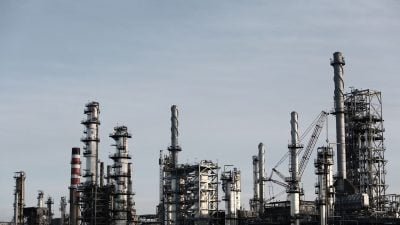
The deal's success hinges on overcoming infrastructure challenges, impacting U.S. geopolitical influence and energy security in Latin America. The post Trump administration’s Venezuela oil deal faces steep odds from aging, neglected oil fields appeared first on Crypto Briefing .
Sep 21, 2026 · byCryptoBriefing
Country: Venezuela (Bolivarian Republic of) Source: United Nations Population Fund Please refer to the attached file. Two months after the earthquakes, affected communities continue to face challenges related to housing, access to health services, water and livelihoods. Damage to health facilities, together with shortages of medicines, equipment and health personnel, continues to pressure the health system and affect the continuity of essential health services. Ensuring access to sexual and reproductive health (SRH) services remains particularly important, including antenatal care, maternal and newborn health services, contraception and family planning. To support the continuity of sexual and reproductive health (SRH) services, UNFPA continues supporting 16 health facilities and has distributed 61 (IARH) kits along with essential reproductive health supplies, benefiting an estimated 32,727 people across health centres and transitional shelters. UNFPA and its implementing partners have delivered SRH and GBV services to 6,840 people across four transitional shelters, providing prenatal care, family planning services, psychosocial support, GBV case management, and dignity kits. In addition, 4,796 people have been reached with SRH and GBV awareness and information sessions.
Sep 21, 2026 · byReliefWeb