Samuel Alito
29 articles
Latest Samuel Alito articles

Alito plans to stay on Supreme Court, even if Democrats regain Senate: Report
Samuel Alito is one of six conservative justices on the Supreme Court, three of whom were nominated by President Donald Trump.

Alito’s first book pushes conservative justice into spotlight
Two decades after joining the Supreme Court, Justice Samuel Alito joins the ranks of justices as authors. Alito’s first book, “So Ordered,” set for release Tuesday, is an adapted collection of speeches he’s given over the years commenting on abortion, originalism, threats to the judiciary and more. It doesn’t break much new ground for those…
 Oct 6, 2026 · byThe Hill
Seeing threats to religious liberty, Alito calls same-sex marriage a 'decisive' turn
A new book by Justice Samuel Alito presents his view of the Constitution, the Supreme Court, and the country with a focus on religious freedom.
 Oct 6, 2026 · byABC News
Opening the book on the October Term 2026
The first Monday in October brings the new Supreme Court term and, with it, the first day of oral arguments. The opening case is Suncor Energy Inc. v. County Commissioners of Boulder County , on whether state-tort claims against energy companies brought by the city and county of Boulder, Colorado, are preempted by federal law. It’s a big case, with potentially significant implications. Before argument begins, Justice Brett Kavanaugh’s wife, Ashley Kavanaugh, and his parents, Everett and Martha Kavanaugh, arrive to take seats in the justices’ guest box. Also here are three Boulder County commissioners – Ashely Stolzmann, Marta Loachamin, and Claire Levy, as well as Boulder City Manager Nuria Rivera-Vandermyde. They will make brief remarks to the press on the court’s plaza after the arguments. Here as well are Suncor General Counsel Mike Korenblat and ExxonMobil General Counsel Jeffrey Taylor. They will not go to the plaza. At 10 a.m., the justices take the bench, except for Justice Samuel Alito, of course. He announced last week that he would no longer participate in Suncor . Some advocacy groups had called for his recusal based on his ownership of individual energy stocks, though not of Suncor or ExxonMobil. Alito told Bloomberg’s Greg Stohr last week, an interview tied to Tuesday’s release of his book “ So Ordered: An Originalist’s View of the Constitution, the Court, and Our Country ,” that he felt it was “prudent” to withdraw even though the court’s legal office had advised him recusal was not required. One question debated among a certain especially law-nerdy set of observers, possibly just a couple of us here at SCOTUSblog, was whether the court would switch the order of today’s cases because of the late recusal. The court’s preferred custom is that when a justice is recused and there is more than one case being argued in a day, the case with the recusal will go second so the non-participating justice can slip out relatively quietly in the short break between cases. But Suncor was seemingly scheduled as a high-profile term opener (and touted as such in many a term preview session). The court evidently decided not to disrupt the narrative. The chief justice opens with some traditional business: “I have the honor to announce, on behalf of the court, that the October 2025 Term of the Supreme Court of the United States is now closed, and the October 2026 Term is now convened.” During bar admissions, one movant departs from the short, scripted motion to tout his “fellow Marine” who will “make a great ambassador for the court.” The chief justice does not seem amused by the ad lib. Among the groups being admitted today are several graduates of the University of the District of Columbia’s David A. Clarke School of Law, where Justice Ketanji Brown Jackson last month received a raucous welcome for her speech and conversation about the emergency docket, and a group from the U.S. House office of legislative counsel, whose members’ ears will perk up during the Suncor arguments and its many mentions of the potential role of Congress in regulating greenhouse gas emissions. Roberts then calls the Suncor case for “argument first this term.” Amy Howe has this site’s main account of the argument. To me, it was clear from early on that the question presented that the court added to the case, about whether it has jurisdiction over a Colorado Supreme Court decision that arguably isn’t final, was more than just a formality. Justice Clarence Thomas asks Kannon Shanmugam, the lawyer representing Suncor and ExxonMobil, the defendants in Boulder city and county’s lawsuit, to “spend some time and explain why we have jurisdiction.” Shanmugam was then forced to spend almost all of his allotted 20 minutes of traditional time on the jurisdiction question. When Justice Elena Kagan suggests that he was switching back and forth between two theories of jurisdiction that were perhaps in tension with each other and so he should maybe choose one, Shanmugan says, “Like my children, I love both of our theories equally, Justice Kagan.” She doesn’t seem amused and continues to press him. Only when he gets to the seriatim round does Shanmugam get to expound on the merits, though this is after Roberts turns to Thomas, who has no further questions, and then reflexively turns to Alito’s chair (which also has no questions). Before his time is up, Shanmugam is able to make a sweeping point that more than 60 municipalities across the country have filed some three dozen similar lawsuits seeking to hold oil and gas companies liable for damages related to greenhouse gas emissions. “I would submit that, given the extraordinary magnitude of these cases, where, in each of these cases, plaintiffs are seeking billions of dollars of damages, that we need an answer to this question sooner rather than later,” he says. Sarah Harris, the current principal deputy solicitor general arguing in support of the petitioners, argues that the Colorado Supreme Court treated the case as a self-contained original proceeding, and thus the U.S. Supreme Court has jurisdiction to review that court’s ruling allowing the lawsuit to proceed. Kevin Russell, representing the two Boulders and their officials, makes a few merits points before saying, “all of this must await another case because petitioners have failed to establish this Court's jurisdiction to hear this interlocutory appeal.” Roberts, who had suggested to Harris that this suit may not be different from other mass tort suits the Supreme Court has allowed to proceed in state court, takes a more skeptical tone with Russell. “If you prevail, the next day, a municipality in every single state will file a lawsuit—they’ll probably copy your pleadings—and then there will be at least 50, you know, different cities’ … causes of action filed,” the chief justice says. “[H]ow do you think that will work out on the ground?” Russell responds calmly, giving a little but saying, “the mere fact that … there could be a lot of litigation, I don't think there’s anything in the Constitution that says preemption arises from whenever, you know, a state law, if copied in other states, could cause a lot of litigation.” On rebuttal, Shanmugam takes one more stab at emphasizing the scope of the climate lawsuits that he is hoping the court will nip in the bud. “The breadth of Boulder's theory here is astonishing,” he says, “[t]here is no limit under Boulder's theory on who could be sued.” Under the lawsuit’s theory, he adds, “Boulder could tag me with personal jurisdiction when I am in Colorado in two weeks and sue me on a nuisance claim for refilling my car and thereby contributing to global climate change.” Shanmugam concludes by saying, “[T]his case and others like it reflect an all-too-regrettable trend of trying to resolve major political issues in court rather than leaving them to the political branches where they belong. Climate change is certainly one of the most pressing issues of the day, but we would submit that this is exactly the wrong way to go about resolving it.” With that, Roberts says the case is submitted, and many in the courtroom stand to leave. During this commotion, Alito slips in from the center curtain with a slight smile on his face and moves to his place on the bench. During the next argument , on veterans’ benefits , he will be back at home asking tough questions of counsel, rather than sitting around in his chambers, or perhaps worse, answering questions from news reporters, even if it is to promote his book.
 Oct 5, 2026 · bySCOTUSblog
Court sends mixed signals on whether it will allow state-tort suits seeking to hold energy companies liable for climate change to go forward
The Supreme Court on Monday opened its new term by hearing arguments in a lawsuit filed in state court by the city and county of Boulder, Colorado, seeking to hold two major energy companies responsible for their alleged role in climate change and its impact. After nearly two hours of debate in Suncor Energy Inc. v. County Commissioners of Boulder County , it wasn’t clear whether a majority of the justices agreed with the energy companies that federal law prohibits Boulder’s claims. With Justice Samuel Alito recused from the dispute, a 4-4 tie would leave the ruling by the Colorado Supreme Court, allowing Boulder’s case to move forward, in place. Monday’s argument was the latest chapter in an eight-year-old battle that began when Boulder filed a lawsuit in a state court in Colorado against two energy companies: Suncor, a subsidiary of one of Canada’s largest energy companies, which operates the only two oil refineries in Colorado; and ExxonMobil, the largest energy company in the United States. It is seeking compensation for some of the costs that it has incurred as a result of the alleged effects of climate change – for example, protecting its own property as well as that of its residents. Boulder contends that both energy companies have long deceived the public about the effects of climate change and the role of fossil-fuel products in creating those effects; it also contended that the companies played a role in climate change by producing, refining, and marketing fossil fuels. After their efforts to move the case to federal court failed, the energy companies asked the state trial court to dismiss the case, but it turned down that request. The Colorado Supreme Court then agreed to decide whether Boulder’s state-law claims were trumped by federal law. It concluded that they were not, and its claims could go forward. The companies came to the Supreme Court last year, asking the justices to weigh in, which they agreed in February to do. Representing the energy companies, lawyer Kannon Shanmugam described Boulder’s claims as an “unprecedented effort to use state law to regulate global conduct.” The Constitution, he said, bars the application of state law to “certain inherently federal areas,” and the Supreme Court has long held that federal law governs interstate-pollution claims. Moreover, he added, a state cannot regulate out-of-state conduct “based solely on attenuated effects” that it might have within the state. Chief Justice John Roberts appeared skeptical, however. He suggested to both Shanmugam and Sarah Harris, the principal deputy U.S. solicitor general who argued on behalf of the Trump administration in support of the energy companies, that it was not uncommon for lawsuits to be based on conduct that occurs outside a state but has broad “effects,” including within the state. He asked Harris “what makes this situation different from those” other cases in which the court allowed lawsuits to proceed in state court. Harris answered that, unlike those lawsuits, Colorado would ban the production of fossil fuels anywhere in the country. Roberts did not appear persuaded. “That’s a question of relief” for Colorado, “and what might be available,” he said. It did not, in his view, necessarily seem to go to the question of whether Colorado could bring the lawsuit at all. Justice Elena Kagan also seemed dubious of the energy companies’ arguments. She told Shanmugam that Boulder’s “suit appears to be based on the old 1990s tobacco suits,” as well as more recent lawsuits against opioid manufacturers. Were those lawsuits also trumped by federal law, she asked? Shanmugam pushed back, describing the tobacco and opioid lawsuits as different. He stressed that the injury at the center of Boulder’s case “is not suffered by the Colorado consumer in the traditional sense.” He then pointed back to the principle that federal law has traditionally applied to claims involving interstate air and water pollution. Kagan remained doubtful, asking Shanmugam to point to the support for that argument in the text of the Constitution or federal law or in the Supreme Court’s cases. “Where,” she finally asked, “is the[re] anything for that?” Representing Boulder, lawyer Kevin Russell echoed Roberts’ point, telling the justices that states have long had the power to provide court remedies for injuries that occur within their borders even when the conduct that caused those injuries occurred elsewhere. Applying state law, he said, has never been interpreted as projecting that law nationwide. And he emphasized that Congress has the authority to pass laws that preempt state laws if and when it wants to. Russell faced tough questioning, however, from Justice Brett Kavanaugh, who was the member of the court most supportive of the energy companies’ position. He pointed to a series of Supreme Court cases that, in his words, “make crystal-clear that interstate air and water pollution are matters for federal law” unless Congress specifies otherwise. In Kavanaugh’s view, those cases mean that state law generally does not apply to claims like Boulder’s, and Congress could believe that interstate-pollution issues are federal issues – and that it therefore does not need to pass new legislation to say so explicitly. Several justices expressed concern about the possibility that allowing Boulder’s lawsuit to go forward would open the floodgates to even more cases in other states around the country. Justice Clarence Thomas asked Russell to describe any principles that might restrict whom state and local governments could sue. Russell cited constraints on a state’s jurisdiction over particular defendants and a constitutional doctrine (known as the dormant commerce clause) that bars states from discriminating against out-of-state defendants, among other things, as possible limiting principles. That prompted Thomas to ask whether, under Boulder’s theory, state and local governments could also sue “large retailers” of fossil fuels. Russell acknowledged that “[n]othing in our theory prevents that,” but he added that “when lots of people act together to cause widespread harm, it is not uncommon for multiple different defendants to be potentially liable.” Justice Amy Coney Barrett also sought to test the limits of Boulder’s theory, asking Russell whether Colorado could pass a law that sought to cap greenhouse-gas emissions in the other 49 states as well. Russell agreed that such a law would be prohibited and sought to distinguish that scenario from Boulder’s lawsuit. He emphasized that, with the lawsuit, Boulder wasn’t trying to directly regulate the energy companies’ actions. The lawsuit, he argued, “doesn’t prohibit them from engaging in the conduct.” Instead, he said, “[i]t requires them to internalize a portion of the cost of their activities by paying for some of the damage that those activities inflict.” Shanmugam picked up on these concerns in his rebuttal, telling the court that the “breadth of Boulder’s theory here is astonishing.” Indeed, he suggested, it would mean that on an upcoming visit to Colorado, Boulder could sue him “for refilling my car and thereby contributing to global climate change.” Moreover, he suggested, it would not be only state and local governments who could sue under Boulder’s theory, but “[a]ny individual who has suffered the effects of climate change.” “Climate change,” he concluded, “is certainly one of the most pressing issues of the day, but we would submit that this is exactly the wrong way to go about resolving it.” However the court opts to resolve the case, the justices devoted relatively little time to whether the Supreme Court has the power to consider the energy companies’ appeal at all – a question that the justices had asked the litigants to address when they agreed to take up the case earlier this year. Justices Sonia Sotomayor and Ketanji Brown Jackson appeared the most interested in the question, which would provide an off-ramp that would allow the justices to avoid deciding the merits of the dispute for now, but it received little traction elsewhere.
Oct 5, 2026 · bySCOTUSblog
Alito says he has hunch who leaked Dobbs decision
Supreme Court Justice Samuel Alito said in an interview that he has an “opinion” on who leaked the draft opinion of justices overturning Roe vs. Wade in 2022. During an appearance on “Fox News Sunday,” Alito said he “anticipated” the conservative majority’s ruling in Dobbs vs. Jackson Women’s Health would “anger a great many people…
Oct 5, 2026 · byThe Hill
The first Monday in October
Plus, Justice Alito’s press tour for his new book is underway.
Oct 5, 2026 · bySCOTUSblog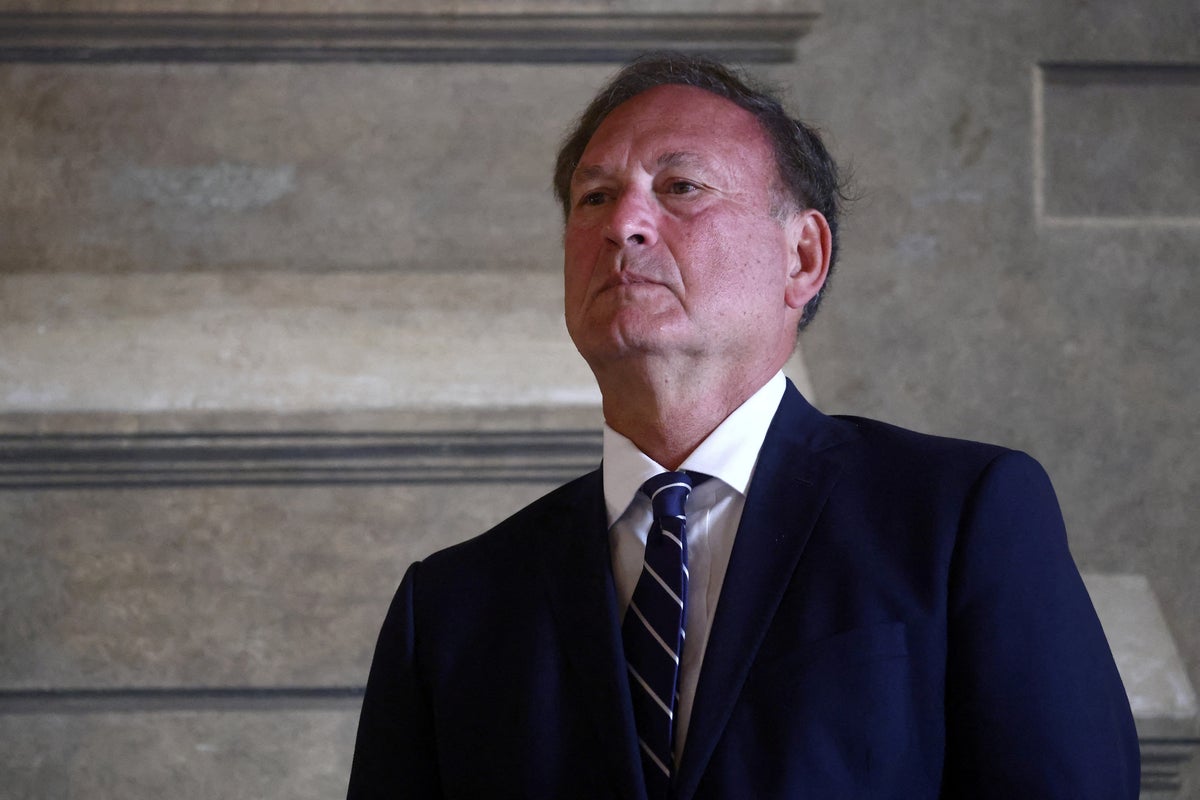
Justice Alito shares worry ‘about the future of the court’ amid Trump’s rhetoric
The justice does not give a timeline about when he would step aside

Supreme Court Justice Alito said he's 'thought about' retirement as Senate control hangs in balance
The Senate could flip to Democrats after November's midterm election, jeopardizing a potential Supreme Court nomination by President Donald Trump.

Alito on Trump’s praise of him, criticism of fellow justices: ‘I put all of that out of my mind’
Supreme Court Justice Samuel Alito said in a rare televised interview Sunday on Fox News that he tries not to pay too much attention to President Trump’s frequent praise of him — and recent criticism of some of his fellow justices on the bench. “I put all of that out of my mind. I trust…
Oct 4, 2026 · byThe Hill
Live updates: Trump set for Nebraska trip after Ohio rally; Alito, Cornell victim’s attorney to appear on Sunday shows
President Trump held a rally in a Dayton, Ohio-area suburb on Saturday night, where he promised a GOP win in the midterm elections. The rally was part of a red state swing for the president with just a month to go before the midterms, as recent polling shows promising signs for Democrats in their quest…
Oct 4, 2026 · byThe Hill
As Midterms Near, Justice Alito Says He Considers Each Year Whether to Retire
The justice, the second oldest on the court at 76, told CBS News that he decided against stepping down last term. He could face pressure should Democrats win the Senate in November.
 Oct 3, 2026 · byThe New York Times
Alito: ‘I thought about’ retiring at end of last term
Justice Samuel Alito said he “thought about” retiring from the Supreme Court at the end of his last term following speculation about his potential retirement this year. In an interview with CBS News, chief legal correspondent Jan Crawford asked Alito if he considered retiring in the face of “some pretty intense pressure from Republicans” who…
Oct 2, 2026 · byThe Hill
Alito: Overturning Roe v. Wade took ‘courage’ from Supreme Court justices
Justice Samuel Alito said his vote to overturn Roe v. Wade in 2022 alongside the Supreme Court’s six conservative justices, took “courage.” In a preview for his interview with CBS News, Alito was asked if there was a particular decision that took courage. “Well, the leading example is Dobbs [v. Jackson]. I think that required…
Oct 2, 2026 · byThe Hill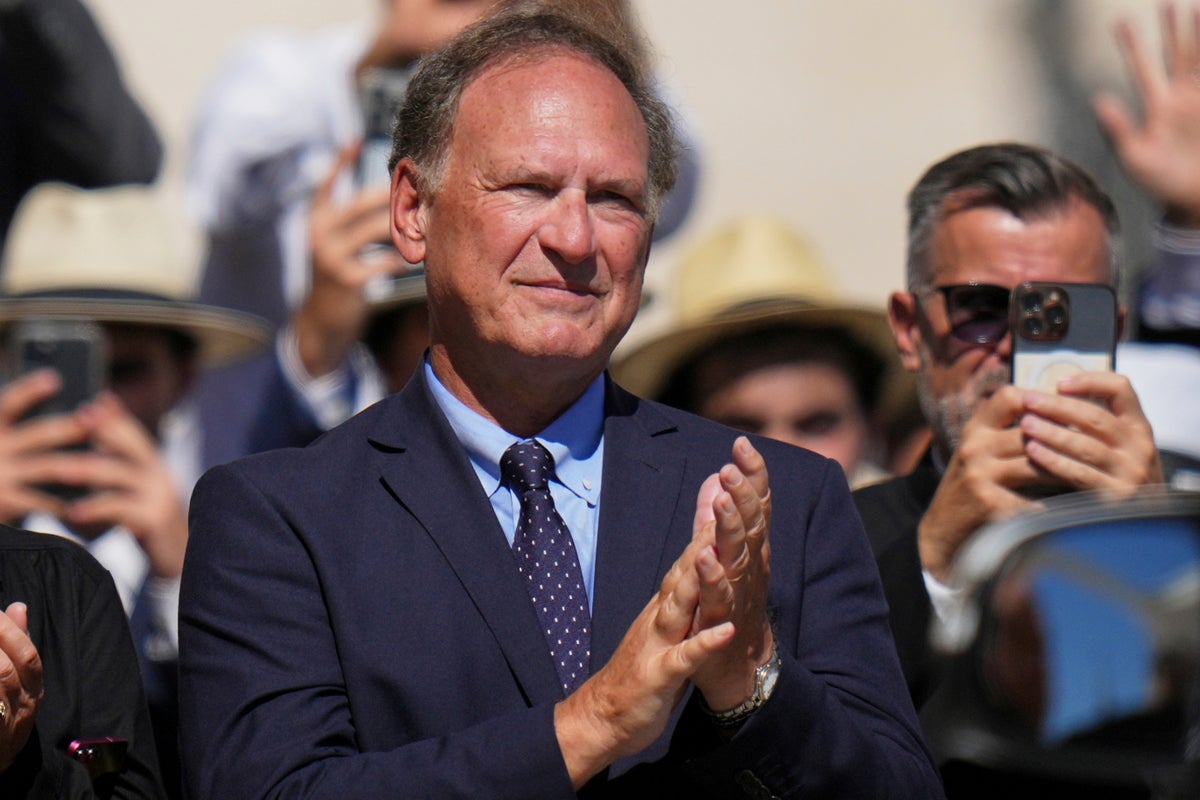
Supreme Court Justice Samuel Alito says he is considering retirement and could hand Trump another nomination
Alito, 76, is one of six conservative justices on the Supreme Court
Trump administration again asks for emergency relief
Plus, Justice Alito will no longer participate in a major climate change case.
Sep 29, 2026 · bySCOTUSblog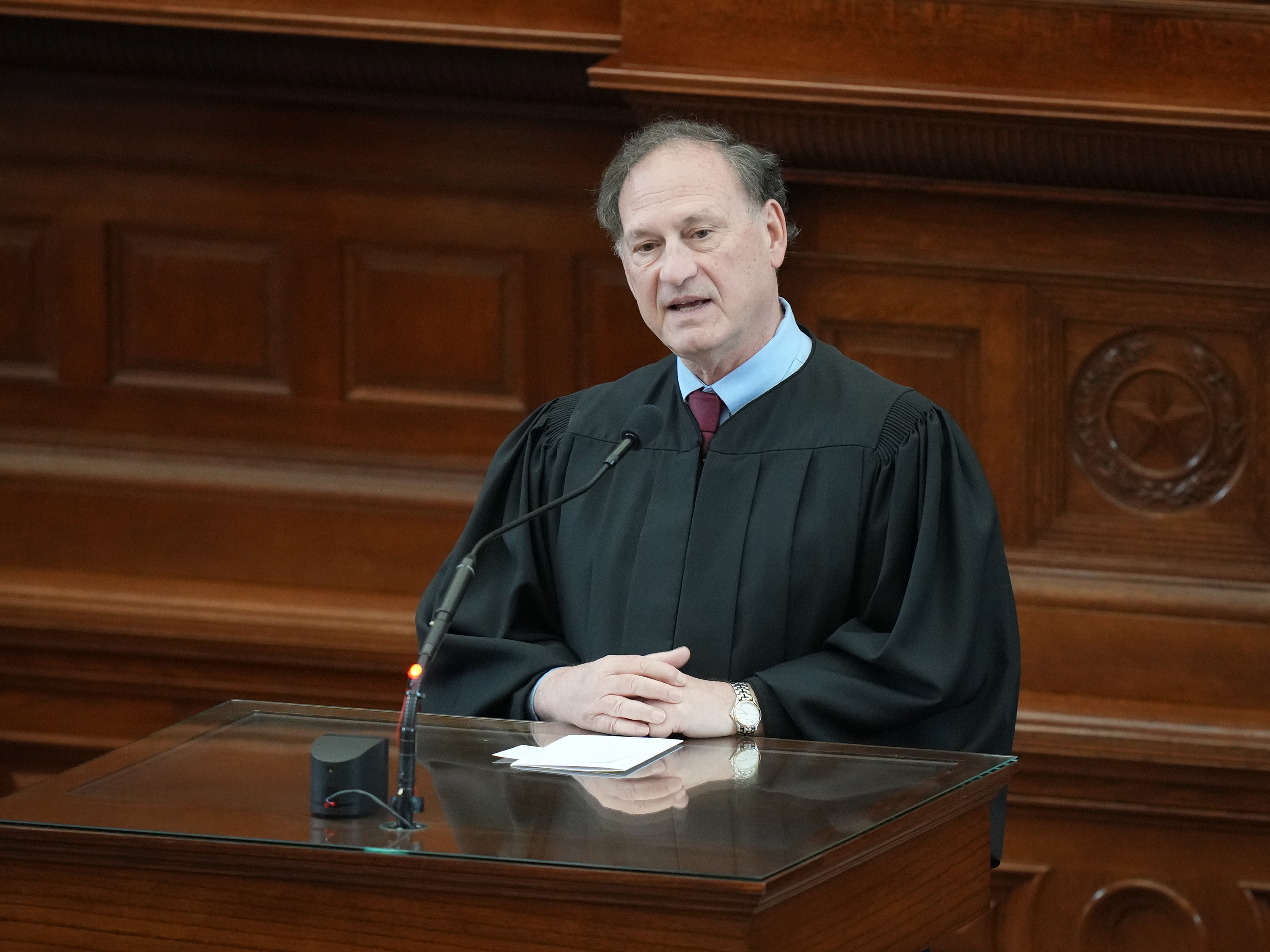
Alito’s Recusal From Climate Case: Too Little, Too Late?
Justice Samuel Alito decided Monday to sit out one of the most consequential climate change cases to reach the Supreme Court, but legal experts expected continuing ramifications due to his ownership of individual corporate stocks, including in the fossil fuel industry. After months of resisting calls for his recusal, Alito reversed himself one week before […]
 Sep 29, 2026 · byInside Climate News
Samuel Alito steps aside in a major climate case amid scrutiny over oil stock holdings
Decision from conservative justice comes before court hears case on whether fossil-fuel firms deceived US public Supreme court justice Samuel Alito recused himself Monday from a major climate-change case after facing calls to step aside due to stock holdings in oil companies. A letter posted in the case did not specify a reason, but the conservative justice has previously recused himself from other cases involving companies where he holds stock. Continue reading...
 Sep 28, 2026 · byThe Guardian
Alito steps aside in a major climate case after scrutiny over oil stock holdings
Supreme Court Justice Samuel Alito has recused himself from a major climate-change case
Sep 28, 2026 · byABC News
Justice Alito will no longer participate in climate change dispute
The Supreme Court on Monday announced that Justice Samuel Alito will not continue to participate in Suncor Energy Inc. v. County Commissioners of Boulder County , a significant dispute that will be argued in just one week, on Monday, Oct. 5, the first day of the 2026-27 term . Scott Harris, the clerk of the Supreme Court, revealed Alito’s last-minute recusal in a short letter to advocates involved in the case. Harris’ note does not provide an explanation for the decision, saying simply that “Justice Alito has determined that he will not continue to participate.” In Suncor Energy , the court is considering the use of state-level tort claims to hold oil and gas companies financially liable for their alleged role in exacerbating climate change. The case involves officials in the Boulder, Colorado, area, but it is likely to have nationwide ramifications, because similar lawsuits have been filed in states across the country. In May, a coalition of left-leaning watchdog groups urged the Senate Judiciary Committee to investigate Alito’s involvement in the dispute, contending that his “substantial holdings in individual oil and gas companies,” among other issues, would “undermin[e] public confidence in the impartiality of the Court.” They stated that Alito had “previously recused from considering a petition brought by” the same companies involved in Suncor Energy . “There is no apparent reason for this change in Justice Alito’s recusal practices, and Alito provided no statement justifying his failure to recuse,” the groups wrote. At the time, a Supreme Court spokeswoman told NBC News that “Justice Alito does not have a financial interest in any party” and that he had been advised that “recusal is not required” by the Supreme Court’s legal counsel. Under the Supreme Court’s code of conduct , which the justices issued in November 2023, justices are required to recuse themselves from “a proceeding in which the Justice’s impartiality might reasonably be questioned.” The code defines this as a situation in which “an unbiased and reasonable person who is aware of all relevant circumstances would doubt that the Justice could fairly discharge his or her duties.” The code of conduct notes that this includes cases in which a justice “has a financial interest in the subject matter in controversy or in a party to the proceeding.” Justices are not required to explain why they are recusing themselves, although they sometimes do, especially when the recusal stems from “prior … judicial service” – that is, the justice worked on the case at an earlier point in the proceedings. Nevertheless, the lack of explanation in Monday’s letter is still somewhat notable given the amount of detail provided when Harris announced in January – less than a week before oral argument – that Alito would not continue to participate in Chevron USA Inc. v. Plaquemines Parish, Louisiana , a dispute over the circumstances in which a federal contractor can transfer a case from state to federal court that also involved oil and gas companies. Harris pointed to Alito’s “financial interest in ConocoPhillips, the parent corporation for Burlington Resources Oil and Gas Company.” Harris explained that “Justice Alito initially decided not to recuse because on June 2, 2025 Burlington was dismissed as a petitioner in this Court under Rule 46.1 after Burlington advised the Court by letter that it was ‘withdrawing’ from the petition and that ‘neither Burlington Resources nor ConocoPhillips will be a party to (or have any other involvement in) the above-referenced case.’ Later briefing, however, noted that Burlington remained a party in the district court.”
Sep 28, 2026 · bySCOTUSblog
Justice Alito steps away from major climate dispute
Despite pushing back on earlier calls to step away from the case for his financial interests in oil companies, the conservative justice issued an about-face only a week before oral arguments.

Supreme Court Justice Alito will not participate in big climate change case next week
Environmental groups had called for Supreme Court Justice Samuel Alito to recuse himself from the case involving ExxonMobil and Suncor Energy.

Alito recuses from case that could toss climate suits against oil companies
Justice Samuel Alito on Monday recused from a major climate case set to be heard next week, stepping aside with no explanation after previously participating in the vote to take up the dispute. Alito has long held financial interests in the oil and gas sector, and as one of the only justices to own individual…
Sep 28, 2026 · byThe Hill