← News
Topic · Organization

Council

22 articles

See also
📰

Latest Council articles

UAE Gender Balance Council showcases the UAE’s experience at RISE 2026 conference in Belgrade

UAE Gender Balance Council showcases the UAE’s experience at RISE 2026 conference in Belgrade

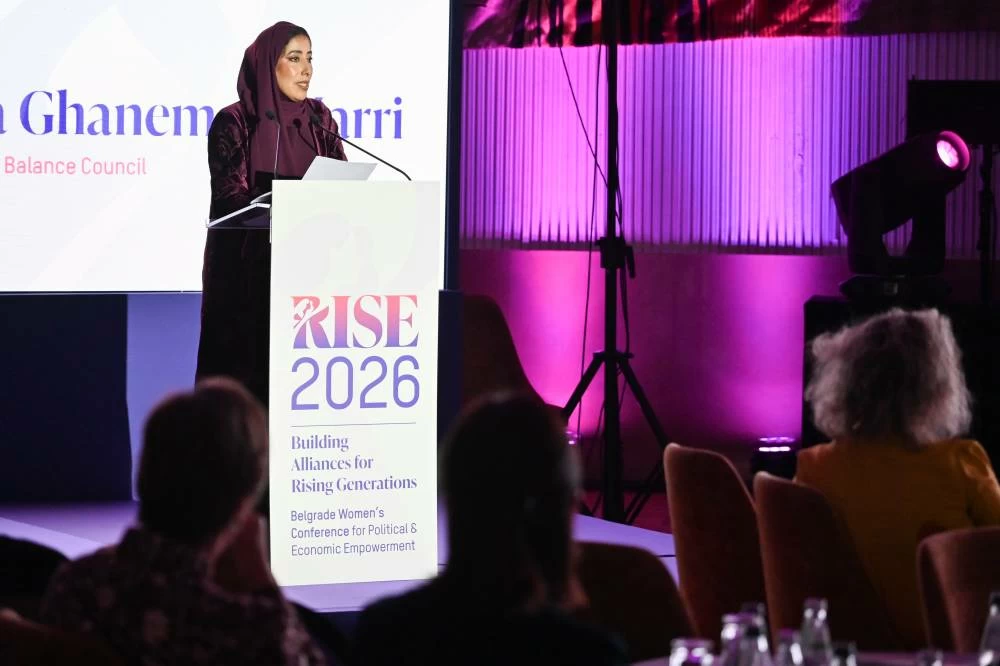
Dubai: The UAE Gender Balance Council participated in the Second International High-Level Political Conference on the Political and Economic Empowerment of Women, RISE 2026, held in Belgrade, Serbia, on 7 October under the theme ‘Building Alliances for Rising Generations.’ The conference brought together government officials, ministers, representatives of international organisations, experts and private sector representatives to advance women’s participation in development and decision-making. The Council’s delegation included Her Excellency Mona Ghanem Al Marri, Vice President of the UAE Gender Balance Council, and Her Excellency Mouza Mohammed Al Ghuwais Al Suwaidi, Secretary-General of the Council. Her Excellency Mona Al Marri delivered a keynote address and participated in a closed high-level ministerial roundtable, highlighting the legislation, policies and practices underpinning the UAE’s progress in gender balance and women’s participation in leadership and the economy. Her Highness Sheikha Manal bint Mohammed bin Rashid Al Maktoum, President of the UAE Gender Balance Council and wife of His Highness Sheikh Mansour bin Zayed Al Nahyan, Vice President and Deputy Prime Minister of the UAE, and Chairman of the Presidential Court, said the UAE’s participation in international forums reflects its commitment to exchanging knowledge and learning from global experiences. These exchanges support the development of policies and practices that advance women’s participation and respond to the aspirations of communities and future generations. Her Highness affirmed that the UAE’s gender balance achievements are rooted in a comprehensive vision that places women’s participation in development and decision-making at the heart of the country’s development approach. Investing in women’s capabilities and expanding their opportunities, she noted, strengthens their role as partners in development and enables society to draw on its full human potential. The Index recognises individuals and federal entities whose efforts advance gender balance across leadership, workplace practices and specialised fields. Picture credit: GDMO Her Highness said: “The UAE recognises that investing in women’s capabilities is an investment in the future of families, society and the economy. Expanding women’s participation across different fields strengthens their contribution to shaping the future. The UAE’s experience has demonstrated that providing opportunities for women, alongside an environment that supports their development and participation, helps translate national potential into achievements that advance society and sustain its growth and prosperity.” In her keynote address, Her Excellency Mona Al Marri outlined the UAE’s approach to advancing gender balance through legislation, policies, investment in education, and institutional development. She focused on three priorities: expanding women’s opportunities in leadership and decision-making; strengthening accountability and measuring institutional progress; and connecting education with career and leadership opportunities amid the changes driven by artificial intelligence and emerging technologies. Her Excellency highlighted the UAE Gender Balance Index as a tool for measuring progress and strengthening institutional performance. The Index recognises individuals and federal entities whose efforts advance gender balance across leadership, workplace practices and specialised fields. Recipients recognised through the Index include His Highness Sheikh Abdullah bin Zayed Al Nahyan, Deputy Prime Minister and Minister of Foreign Affairs of the UAE, as Best Gender Balance Supporting Personality; the Ministry of Economy and Tourism as Best Federal Entity Supporting Gender Balance; and the Ministry of Interior for Best Gender-Balanced Work Environment. The Ministry of Finance was recognised as Best Entity Supporting Women in Specialist and Technical Roles, while the Ministry of Sports was recognised for the Best Gender Balance Initiative. The Federal Authority for Nuclear Regulation and the Ministry of Health and Prevention jointly came in for recognition as Best Entity in Gender-Balanced Leadership. The UAE Gender Balance Council participated in the Second International High-Level Political Conference on the Political and Economic Empowerment of Women, RISE 2026, held in Belgrade. Picture credit: GDMO Her Excellency also highlighted the private sector’s contribution to equal opportunities through the SDG 5 Acceleration Pledge, launched by the Council in 2022 to increase women’s representation in middle and senior management at participating companies to 30%, with a 2025 target for the first cohort and a 2028 target for later signatories. She emphasised the importance of family-supportive workplaces and wider opportunities for women to contribute to sectors shaping the future economy. Her Excellency Mona Al Marri said: “The UAE Gender Balance Council’s participation in this conference underscores its importance as a global platform for exchanging expertise, developing solutions and building partnerships that respond to emerging challenges and opportunities. Our experience in the UAE demonstrates that women’s effective participation depends on clear policies, institutions capable of measuring outcomes, and partnerships that bring different sectors together around shared goals.” On the sidelines of the conference, the Council’s delegation held a series of bilateral meetings with participating officials and leaders. These included Josie Christodoulou, Commissioner for Gender Equality of the Republic of Cyprus; Her Excellency Margaret Sarofim, Deputy Minister of Social Solidarity of the Arab Republic of Egypt; Her Excellency Imaan Sulaiman-Ibrahim, Minister of Women Affairs of the Federal Republic of Nigeria; Her Excellency Randa Gharib, Minister of State for Women’s Affairs of the State of Libya; and Her Excellency Tatjana Macura, Minister without Portfolio in charge of Gender Equality, Prevention of Violence Against Women, and Economic and Political Empowerment of Women of the Republic of Serbia. The meetings focused on exchanging expertise, identifying shared priorities and exploring opportunities for cooperation in gender balance and women’s empowerment. They also strengthened dialogue and opened new avenues for collaboration in the period ahead.
Oct 7, 2026 · byMobile Business
Muslim Brotherhood among 90+ groups designated as terrorist organisations by Florida

Muslim Brotherhood among 90+ groups designated as terrorist organisations by Florida

Florida: The Muslim Brotherhood is among more than 90 groups designated as terrorist organisations by the state of Florida after Governor Ron DeSantis and the Florida Cabinet approved a series of domestic and foreign terrorist designations. According to CBS News, the Cabinet voted to apply domestic or foreign terrorist designations to a number of groups, including the Council on American-Islamic Relations (CAIR), the Muslim Brotherhood and Antifa. The designations also cover more than 90 organisations already listed as foreign terrorist organisations by the US government, including Tren de Aragua, Mexican drug cartels and Iran’s Islamic Revolutionary Guard Corps. The move was made under HB 1471, a law that took effect on July 1, 2026, giving Florida authorities the power to designate domestic and foreign terrorist organisations. The decision was approved by the Cabinet, which includes Attorney General James Uthmeier, Chief Financial Officer Blaise Ingoglia and Agriculture Commissioner Wilton Simpson. According to CBS, CAIR-Florida has challenged the designation in court, filing a lawsuit in the US District Court for the Northern District of Florida. DeSantis has defended the designations, saying they provide “an appropriate framework” for the state to act against what Florida considers hostile actors and terrorist organisations. According to CBS, the designations are scheduled to take effect on November 5, while legal challenges continue. The law also bars courts from enforcing provisions of foreign or religious law that violate rights protected under the US or Florida constitutions. It further includes measures affecting educational institutions, including provisions related to students who promote designated terrorist organisations and restrictions on public funding linked to such groups.

Oct 5, 2026 · byMobile Business
📰

World: Putting young people at the heart of resilience: European Parliament Intergroup supports "Are You Ready?" Campaign

Country: World Source: UN Office for Disaster Risk Reduction Strasbourg, September 2026 – As schools reopen across Europe, Members of the European Parliament are helping put young people at the heart of efforts to build safer, more resilient communities through their support for UNDRR’s “Are You Ready?” campaign. Members of the European Parliament Intergroup on Resilience, Disaster Management and Civil Protection supported the campaign’s Back to School activation, encouraging policymakers, educators, parents and young people to engage with disaster risk reduction and school safety. The campaign comes as Europe reflects on a summer marked by record temperatures, droughts and widespread wildfires. On 15 September, Members of the European Parliament, the European Commission and the Irish Presidency of the Council took stock of lessons from the extreme events of summer 2026, in a plenary debate on EU preparedness. They noted the devastating impacts including more than 35,000 excess deaths, almost 700,000 hectares had burned across the EU and major waterways including the Danube and Rhine experienced record-low water levels. The debate highlighted the importance of strengthening the EU’s capacity to prevent increasingly frequent extreme weather events. It also comes as the European Parliament prepares its position on a proposal to expand the EU Civil Protection Mechanism under the next Multiannual Financial Framework, with a broader scope and increased funding. Reflecting on the impacts of this summer’s extreme events, Intergroup Co-Chair Grégory Allione said that “devastating forest fires, dried rivers, repeated heatwaves” show that the time has come to act decisively. Intergroup Vice-Chair Annalisa Corrado similarly called for greater investment in resilience, describing this year’s extreme season as “the hottest summer ever seen and the coolest of the coming ones.” Against this backdrop, the Are You Ready? campaign highlights a critical dimension of resilience: ensuring that children and young people have the knowledge, tools and opportunities to understand risk and take action. Safer schools are an important foundation for resilient communities, helping protect children while strengthening awareness of disaster risk from an early age. UNDRR provides technical input to the European Parliament Intergroup, supporting the integration of disaster risk reduction across policy discussions, including climate adaptation, civil protection, education and community resilience. The Back to School activation also builds momentum towards the International Day for Disaster Risk Reduction on 13 October , when UNDRR will continue to highlight the importance of safer schools and youth leadership in building resilient societies. The campaign comes at a time of growing attention to how Europe can strengthen resilience to a changing risk landscape. With the forthcoming visit of UNDRR Special Representative Kamal Kishore to Brussels and a dedicated IDDRR discussion on the message that resilience starts at home, UNDRR and its European Parliament partners will continue to highlight the importance of putting people and communities at the centre of disaster risk reduction.

Oct 2, 2026 · byReliefWeb
Menin’s AI moment

Menin’s AI moment

CITY HAL 9000: Amid a mad dash to try to regulate artificial intelligence, City Council Speaker Julie Menin is looking to make her mark. The Manhattan lawmaker is planning to hold a hearing with all 51 members of the legislative body next week, and today confirmed the attendance of four major AI firms to discuss both the dangers the technology poses and a suite of Council bills that seek to protect New Yorkers. “Leading experts and AI executives themselves are warning about the potentially grave risks of rapidly advancing AI, and governments have a responsibility to act,” Menin said in a statement announcing she issued a subpoena to SpaceXAI, the artificial intelligence company owned by Elon Musk, to compel the firm to attend. Council hearings — even those run by lesser-known committees — are not known as concise affairs. And the notion of having all 51 members in the room to pepper AI executives with questions can only mean a marathon day with plenty of news coverage. (Remember Randy Mastro’s general counsel nomination hearing in 2024? No? You didn’t tune in for all 11 hours ?) Between the White House’s opposition to any type of AI regulation and New York City Mayor Zohran Mamdani’s desire for federal guardrails — though he has enacted an AI ban in elementary schools — a lane has opened for Menin to have her say in what has become one of the defining debates of the political moment. Her muscular posture — her office dangled the possibility of subpoenas in front of the companies she sought for Monday’s hearing — shows she is not going to let it go to waste. The package of bills being pursued by the Council includes a “kill switch” requirement and a new private right of action that would make it easier to sue AI companies. Menin is hoping to get input on that package Monday from artificial intelligence purveyors who agree that something needs to be done to slow the development of frontier AI models. Google, which plans to be there Monday along with Anthropic, OpenAI and Meta, has released a white paper calling for a regulatory body that could develop safety standards along with audits for frontier AI models that are pushing the bounds of the technology. Separately, the firm has called for a regulatory framework for AI models like chatbots, which are already being used widely by the general public, and for the government to mitigate disruptions to the economy and workforce. None of the firms have weighed in formally on the Council’s AI package, but one person with knowledge of the bills said there are early questions about how a “kill switch” activated in New York would affect a company’s services elsewhere around the globe, how the private right of action might interact with existing tort laws and whether there are downsides to retaining AI chat histories with consumers for extended periods of time. Separately, there’s also the question of how the city’s AI bills would mesh with a separate AI regulation framework being pursued by Gov. Kathy Hochul. — Joe Anuta From the Capitol GATEWAY DREAMS: The long-awaited Gateway project reached a new milestone today: the start of tunnel boring under the Hudson River. Hochul gathered with officials from New York and New Jersey to celebrate the latest stage of the development — which comes after more than a decade of planning and almost three years of construction work. Following the “ceremonial launch” this morning, two hard-rock tunnel boring machines will be deployed this fall to construct a new rail tunnel between New Jersey and New York Penn Station. The machines are anticipated to clear about 30 feet of earth per day. “We fought and beat efforts from the Trump administration to halt the Gateway project and today, that dream becomes a reality, with state of the art machinery operated by expert union workers starting their journey through soil and bedrock under the Hudson to Penn Station,” Hochul said in a statement. “This is a historic day for New York and a clear demonstration of our ambitions to once again be a state that dreams and builds big.” Construction on Gateway began in late 2023, but the project previously faced a near-shutdown and temporary work stoppages after the Trump administration froze federal funds for it. The project resumed following legal action from New York and New Jersey. — Janaki Chadha DON’T TRUST THE FILINGS: Hochul’s campaign is preemptively casting doubt on the accuracy of a disclosure report due to be filed by Republican opponent Bruce Blakeman on Friday. If the past is any guide, the report won’t contain the definitive list of his financial activity. The campaign finance filing Blakeman submitted on July 15, for example, has since been amended on July 22, Aug. 13, Aug. 25 and Sept. 14. As a result, a significantly different financial picture has formed compared to what was widely reported a couple months ago: Blakeman initially identified $3 million worth of contributions and $1.8 million in expenses over the spring; the latest amended version shows $4.5 million in contributions and $5 million in expenses. The total number of transactions disclosed went from 25,534 to 41,724. Blakeman similarly resubmitted his March disclosure report four times and his January filing thrice. “Either Blakeman wants to trick the press into reporting an inaccurate state of the race, or this guy sucks at math,” state Democratic Committee spokesperson Addison Dick said. The Nassau County executive’s campaign did not respond to a request for comment. — Bill Mahoney FROM CITY HALL ‘NOT IN AN INSHALLAH TIMELINE’: Mamdani said today he’ll release a plan “soon” for disbanding the controversial NYPD unit he pledged to get rid of last year as a candidate — and he’s leaving god out of it. “I will fulfill that promise. The only question is the timeline of it … It'll be not in an inshallah timeline, but an actual one,” he told reporters at a press conference in Manhattan, using the Arabic phrase for godwilling. “The critical point of it is just how to ensure we're doing so while protecting New Yorkers' rights and keeping New Yorkers safe, and that's something that we're going to share more information about soon." Mamdani made the comments after Playbook asked what’s causing the holdup on breaking up the NYPD’s Strategic Response Group, especially in light of the unit being deployed Thursday to arrest activists , including politicians close with the mayor, protesting Israeli Prime Minister Benjamin Netanyahu. As a candidate last year, Mamdani was adamant that he would, if elected, abolish the SRG over concerns about its heavy-handed responses to protests. But since taking office in January, the mayor has dragged his feet on the pledge. When asked about the status of it, he’s typically just said he’s continuing conversations with NYPD Commissioner Jessica Tisch — making today’s comments stand out. A spokesperson for the NYPD declined to comment on Mamdani’s remarks. But the spokesperson did note that video posted to social media showed the SRG officers who effected arrests at last week’s anti-Netanyahu demonstrations acted peacefully and were joined by NYPD Community Affairs personnel who informed protesters they would be detained. A political moderate, Tisch has defended using the SRG, once even cracking a joke that seemed aimed at highlighting the static between her and the mayor on the topic. The fate of the SRG is among a number of issues Tisch and Mamdani have clashed on. They also hold divergent views on the issue of the NYPD’s gang database, with Mamdani promising last year to abolish it while Tisch calls it a critical tool that her department uses “every day.” — Chris Sommerfeldt FROM THE CAMPAIGN TRAIL FIRST IN PLAYBOOK: Hochul picked up an endorsement today from Planned Parenthood’s PAC in her bid for a second term. In receiving the endorsement, Hochul touted her work in declaring the state as a “safe haven” for reproductive health care, creating a first-in-the nation paid prenatal leave program and increasing the child tax credit. Planned Parenthood Empire State Votes PAC Chair Robin Chappelle Golston said that the governor "understands what is at stake during relentless federal attacks.” The group also backed Hochul, the first female governor of New York, when she ran for a full term in 2022. Hochul’s opponent, Nassau County Executive Bruce Blakeman, has described himself as a “ pro-choice Republican .” — Madison Fernandez IN OTHER NEWS — ZOHRAN’S SHADOW: Hochul is counting on Mamdani to stump for her reelection campaign, but the governor’s advisers are still figuring out the best way for him to do that. ( The New York Times ) — SEX ED: A new study from the New York Civil Liberties Union found that many school districts have selected an abstinence-only sex education curriculum. ( Times Union ) — JOB HUNT: As New York City government continues to reel from staff vacancies, Mamdani is opening a walk-in municipal jobs center to speed up hiring. ( amNewYork ) Missed this morning’s New York Playbook? We forgive you. Read it here .

Sep 28, 2026 · byPOLITICO
UAE humanitarian documentary 'And Hope Remains' wins at Cannes Corporate Media & TV Awards 2026

UAE humanitarian documentary 'And Hope Remains' wins at Cannes Corporate Media & TV Awards 2026

Cannes, France: "And Hope Remains," a documentary produced by the International Humanitarian and Philanthropic Council, has won the Cannes Corporate Media & TV Awards 2026 in the Digital Documentaries category. The award was presented at this year's winners' ceremony, held in Cannes on 23-24 September. Mohammed Jalal Al Rayssi, Chairman of the Media Committee of the International Humanitarian and Philanthropic Council, received the award on the Council's behalf. At its core, "And Hope Remains" affirms humanitarian solidarity and moral responsibility as the foundation for supporting communities facing disasters, crises, war and conflict. Through powerful visual storytelling, it brings human stories to a global audience, capturing both harsh realities and the hope that endures within them. The film is rooted in the UAE's humanitarian and civilisational commitment to alleviating suffering, supporting early recovery and fostering stability. It also demonstrates the power of cinematic storytelling to engage both mind and heart, preserving stories of hope and resilience in public memory, while conveying a message of cooperation, compassion, peace and shared humanity. "And Hope Remains" premiered in October 2025 at the 8th edition of the El Gouna Film Festival in Egypt, where it was met with an enthusiastic audience response and praise from directors, artists and critics.

Sep 25, 2026 · byMobile Business
Infantino under pressure to include abandoned World Cup sell-off plan in external Fifa review

Infantino under pressure to include abandoned World Cup sell-off plan in external Fifa review

Council members also want Balogun affair included Fifa president says review letter been well received Fifa council members will demand that Gianni Infantino include the abandoned World Cup sell-off plan and the Folarin Balogun affair in his proposed external review of Fifa’s governance. In a letter sent to all 211 of Fifa’s member associations on Monday Infantino said he would ask council to commission a review of “Fifa’s current governance framework for major strategic initiatives” at its next meeting, in Zurich on 15 October, but he faces an internal battle over its terms of reference. Continue reading...

Gianni Infantinoneutral
Sep 24, 2026 · byThe Guardian
Mamdani and Trump face frosty reception in Queens over Sunnyside Yard plan

Mamdani and Trump face frosty reception in Queens over Sunnyside Yard plan

LOCAL INPUT: Mayor Zohran Mamdani is facing fresh backlash over sidelining key stakeholders from talks about developing thousands of housing units on top of a Queens rail yard. The Sunnyside Yard project landed back in the headlines yesterday when Mamdani and President Donald Trump emerged from a chummy meeting at Gracie Mansion to announce they’d agreed to bring conversations about the long-stalled housing plan to “a new level.” The unlikely duo first announced at a White House meeting in February they were looking into reviving the project, which would be contingent on billions of dollars in federal funding and involve constructing a platform over the rail yard, on top of which 12,000 housing units would be built. But Council member Julie Won — who represents Sunnyside and voiced concerns in February about not being included in the talks — said today she continues to be troubled by the fact that the mayor and the president aren’t consulting her or other local community voices. “Since the last discussion on Sunnyside Yard months ago between the mayor and president there is no funding from Congress nor any public meetings to move this project forward,” Won said in a statement. “There is no federal, state, or city bill allocating funding for this project. There is still no timeline. Congress would have to fund it, and the State and City Legislature would have to approve it. Our neighbors in Sunnyside yet again were not part of yesterday's conversation, and there still has been no meaningful engagement with the public.” Farah Salam, Won’s chief of staff, said City Hall’s continued lack of engagement with her office flies in the face of a commitment Mamdani’s team made in February. Salam recounted how, in a meeting with Won’s team at the time, Mamdani aides told the Council member’s staff they would keep them in the loop on any Sunnyside Yard-related updates. Nonetheless, Salam told Playbook that Won and her team haven’t heard a peep from Mamdani’s administration since then, and she added that Won only learned of the latest twist from watching Mamdani’s post-meeting press conference with Trump yesterday. A Mamdani spokesperson declined to respond to Salam’s comments. Won is a member of the Council’s Progressive Caucus, which has generally been supportive of the mayor, lending more weight to her Sunnyside-related rebuke. Still, she may have some political sour grapes with the mayor, given that she campaigned unsuccessfully this summer for Congress in a race that was ultimately won by Mamdani-endorsed Assemblymember Claire Valdez. Won isn’t the only local politician concerned by Mamdani’s Sunnyside dealings with Trump, though. Queens Borough President Donovan Richards told Playbook it would be more fruitful for Mamdani to focus on securing federal funding from Trump for housing developments where shovels can hit the ground on a short timeframe. Inevitably, Sunnyside Yard would need to go through years-long review and permitting processes before construction could begin, and Richards argued Jamaica and Long Island City are better suited for immediate, federally-backed projects, given that both areas recently underwent neighborhood-wide rezonings. “I’m not saying give up on Sunnyside Yard, but let’s first move somewhere where we can actually get shovels in the ground now,” he said. “We are in a housing emergency.” Richards also said he’s skeptical Trump will actually make good on his Sunnyside musings. “I have trepidations about how fast the Trump administration is going to move on this — forgive me if I have my trepidations about them,” he said. “Anything you deal with the Trump administration on has to be show and tell, and I don’t have much confidence even with the president's remarks yesterday.” When asked about the comments from Won and Richards at a press conference today, Mamdani avoided any direct response. Instead he simply reiterated the merits of the project, which he said would include a significant share of affordable housing. “I will do everything in my power to build more housing in this city,” Mamdani said. “And working with the president to fulfill an idea that has existed for 50 to 60 years — that to me is clearly an example of what could be done.” It remains to be seen how much Trump and Mamdani can actually get done on the Sunnyside project. Though they said yesterday their respective housing policy teams are initiating technical talks about the project, there are no funding commitments on the table, and local community concerns remain. Former Mayor Bill de Blasio announced a plan in 2015 to build housing on top of Sunnyside Yard, but that iteration of the project never went anywhere because of the COVID pandemic and local pushback. — Chris Sommerfeldt and Joe Anuta From the Capitol IT GUY GONE: The top official at the state’s Office of Information Technology Services was removed this week by Gov. Kathy Hochul after she lost confidence in him, her administration said today. ITS Director Dru Rai held the job since September 2023, and his removal was effective immediately. Jenson Jacob will take over the role in an acting capacity. The office manages the state's information technology, data centers and hardware infrastructure while providing digital services for state agencies and local governments. “The administration has informed Dru Rai that the Governor no longer has confidence in his ability to effectively represent this administration and he was removed from his position as head of ITS," a Hochul spokesperson said in a statement. "Jenson Jacob has been named Acting Director of ITS. Governor Hochul remains committed to holding employees to the highest leadership and ethical standards, and ITS will continue to deliver technology solutions and services for New Yorkers, our agencies and partners.” Read more from POLITICO Pro’s Nick Reisman. BLAKEMAN BRUSHES OFF GRACIE GATHERING: Republican gubernatorial candidate Bruce Blakeman is downplaying the significance of Trump’s cordial Monday meeting with the mayor. “Not at all,” he said when asked if Trump’s visit undercut Blakeman’s focus on Mamdani’s radicalism. “The president is a government official. He’s the highest government official in the United States. And the mayor’s a government official, so I expect that the two of them would talk.” Blakeman has attacked the mayor he refers to as “Commie Mamdani” while campaigning in every corner of the state. Would he similarly meet with Mamdani? “Depends what he was serving for lunch,” he said. The Nassau County executive was in Albany today to receive the NYS Correctional Officers and Police Benevolent Association’s endorsement. Prison guards have had an icy relationship with the state in recent years, due to Cuomo-era limits on solitary confinement and Hochul’s strict crackdown on guards who engaged in an illegal strike last year. It’s the first time NYSCOPBA has endorsed a gubernatorial candidate. “Kathy Hochul, I want you to think about that: 95 percent of your employees voted to endorse me, a democratic vote,” Blakeman said. “What does that say about your leadership? You should be embarrassed that 95 percent of your workers didn’t think highly enough of you to endorse you.” — Bill Mahoney FROM CITY HALL LEFT ON READ: City Council members — including the mayor’s allies — laced into Mamdani’s administration today at a Council hearing on the use of influencers in city government communications. The central focus of their displeasure? Team Mamdani declined to send any representatives from the appropriate agencies to testify. The oversight hearing comes on the heels of news that programs run by city agencies paid influencers to promote city policies. The hearing’s stated purpose: to begin to establish guidelines for how city officials communicate with influencers and disclose such communications. Emilia Rowland, the mayor’s director of new media, skipped the hearing, despite being invited to testify. Earlier this month, a working paper from the Columbia University Initiative for Policy Dialogue reported that Rowland oversees a Signal group chat with more than 200 hand-picked influencers. In her place, the mayor’s office sent Tascha Van Auken, commissioner of the mayor’s Office of Mass Engagement, and Shawn(ta) Smith-Cruz, commissioner for the Department of Records and Information Services — neither of whom had much to offer on the administration’s use of influencers. While pressing the two during their testimony, Public Advocate Jumaane Williams expressed disappointment that the communications officials who “should be here are not.” “I don't know that anything was done wrong, but there were questions that were raised by this article that I believe the public should hear answers to, so that they can feel sure that nothing wrong occurred,” Williams said. “The fact that the correct folks aren't here doesn't really help that story.” Williams, a progressive Democrat, found himself in agreement with Council Minority Leader David Carr, the Republican who sponsored legislation that would require explicit disclosures on city-funded or directed influencer communications. Carr pressed Van Auken and Smith-Cruz on specifics about the relationship between City Hall and third-party influencers — such as the number of influencers the administration has worked with, how much has been spent on the social media campaigns, how budgets are determined and how influencers are selected. Van Auken and Smith-Cruz acknowledged they didn’t have fulsome answers to any of Carr’s questions, in stark contrast with the mayor’s characterization of the situation earlier today. “I am confident in the testimony that our administration is providing today, that it will be sufficient in answering the council's questions,” Mamdani told reporters this morning. Taiwan Green, a Queens-based influencer with more than 50,000 followers, testified he was contacted a year ago by then-candidate Mamdani’s social media team. He said he’s never been offered pay for any content about the administration, though, and that he was never directed as to how to message his videos. “I believe it’s my responsibility to sacrifice my time and my resources to educate myself and my followers on the political process,” said Green, who goes by the handle @mrfingaz. “Traditional press may not have the time to ask questions that are related to southeast Queens, but I will use this opportunity to do just that.” Green left abruptly after about 90 seconds of testimony and didn’t take questions from council members. It wasn’t the first time relevant officials from the mayor’s office skipped a Council oversight meeting. Last month, lawmakers slammed Mamdani’s administration for opting out of a hearing on the city’s controversial pied-à-terre tax rollout. At that hearing, Council Members Gale Brewer and Linda Lee read out 11 pages of questions to a row of empty chairs. — Molly Reinmann SO MANY GAVELS: The city’s Conflicts of Interest Board fined Council member Mercedes Narcisse $2,500 for filming a reelection campaign video inside City Hall. In one portion of the video, Narcisse is sitting in the Council chambers at the speaker’s chair, where she strikes a gavel. In another, she sits behind her nameplate in a separate committee room and … also strikes a gavel. Narcisse is then filmed speaking (though not striking a gavel) at an official Council podium. Because these areas of City Hall are off limits to the public, the board found Narcisee was using her government perch for personal gain. In a settlement agreement, the Brooklyn lawmaker said she did not intend to break the rules, but admitted wrongdoing. — Joe Anuta FROM THE CAMPAIGN TRAIL AOC IN BUF: Rep. Alexandria Ocasio-Cortez is planning to hit Buffalo Thursday to meet with Mayor Sean Ryan and host an organizing training aimed at inactive voters. The trip comes amid speculation about whether she’ll run for the White House or Senate in 2028. In comments to The New York Times published on Tuesday, Ocasio-Cortez said she’s thinking about how her identity will factor into the campaign she chooses to mount. “There’s an argument that some make that this is a very unique political window and, oftentimes in politics, you do only get one shot,” she told the Times. “And you don’t — and just in life in general — life doesn’t wait for you to be ready for things. Sometimes life just makes things ready for you.” The Buffalo trip is part of an upstate swing that is also set to include Syracuse and Ithaca, the Times reported last week . Ocasio-Cortez has been leaning into the curiosity surrounding her next political endeavor — but said she’s keeping her focus on the midterms as she stumps across the country boosting candidates. — Madison Fernandez TAKING THE STAGE: Candidates for governor, state attorney general and comptroller will debate next month. Spectrum News NY1 announced Tuesday that Hochul and Blakeman will debate on Oct. 13. Attorney General Letitia James will face off against GOP challenger Saritha Komatireddy on Oct. 8, and Comptroller Tom DiNapoli and Republican Joseph Hernandez will debate on Oct. 1. Each of the debates will air live at 7 p.m. Playbook previously reported that Hochul intended to debate Blakeman, even though she is not required to do so since her campaign declined to participate in the new public campaign finance system. — Madison Fernandez IN OTHER NEWS — ZO + BIBI: Mamdani doubled down on his criticism of Israeli Prime Minister Benjamin Netanyahu ahead of his speech at the U.N. this week. ( CNN ) — SCHUMER ON AI: Sen. Chuck Schumer demanded Trump completely block China’s access to U.S. artificial intelligence technology ahead of the president’s meeting with Chinese President Xi Jinping tomorrow. ( Punchbowl ) — MENIN + THE MET: City Council Speaker Julie Menin expanded on her condemnation of the Met Gala’s now-walked back decision to honor John Galliano, who has a history of racism and antisemitism. ( New York Magazine ) Missed this morning’s New York Playbook? We forgive you. Read it here .

Zohran Mamdanicritical
Sep 22, 2026 · byPOLITICO
Mr. Tom Fletcher, Under-Secretary-General for Humanitarian Affairs and Emergency Relief Coordinator – Briefing to the Security Council on the humanitarian situation in Syria, 17 September 2026

Mr. Tom Fletcher, Under-Secretary-General for Humanitarian Affairs and Emergency Relief Coordinator – Briefing to the Security Council on the humanitarian situation in Syria, 17 September 2026

Country: Syrian Arab Republic Source: UN Office for the Coordination of Humanitarian Affairs Please refer to the attached file. New York, 17 September 2026 As delivered Mr. President, Thank you for the opportunity to brief the Council on the humanitarian situation in Syria. And thank you, as ever, to my colleague [UN Deputy Special Envoy for Syria, Claudio Cordone] for his work. Mr President, my briefings tend to feature many numbers, but here is the most important one. Since December 2024, more than 2 million internally displaced Syrians and 1.8 million refugees have gone home voluntarily. This historic wave of return – the highest in Syria in decades – is a profound sign of hope. Improved security, eased sanctions and resilient communities are driving this recovery. Through 300 partners, we have reached over 2.5 million people monthly this year with humanitarian support, reopening key routes into Al-Hassakeh and flights to Deir ez Zour in August. However, four obstacles threaten this progress: continued displacement, localized insecurity, regional escalation and landmines. First, 5.5 million people inside Syria have not yet gone home, nearly 800,000 of them still in camps – over 75 per cent of them women and children. And currently only 18 per cent of Syrians outside the country say that they plan to return home in the coming year. Without homes, schools or clean water, today’s returnees risk becoming tomorrow’s displaced. So, we must continue to support all efforts to see the Government’s No Tents and No Camps initiative to achieve safe return for all those who choose to go home. A second challenge, localized insecurity risks choking recovery. ISIL attacks in the east and northeast, sporadic violence, rebuilding challenges, and bureaucratic hurdles threaten lasting peace. True stability is not possible until every community, most crucially Syria’s women, are fully integrated in the nation’s political and economic fabric. Third, and as you’ve just heard, the mounting risks beyond Syria's borders. The escalation of tension across the region means maritime choke points, disrupted supply chains, reduced humanitarian access and even greater economic pressure on Syrian families. Alongside the weeks of disruption to the Strait of Hormuz, we now face blockages in Bab al-Mandab. And for Syrians, I fear that means increased fuel prices, freight charges, insurance premiums, procurement lead times, as well as disruptions to imports from Asia and the Gulf and to shipping through Tartous and Latakia. Higher diesel costs – up 40 per cent only this week – will hit agricultural production, water pumping, electricity generation, bakeries and heating as winter approaches, with disproportionate consequences for displaced people and other vulnerable households. For families already struggling, higher fuel and transport costs will increase the prices of food, medicines and other essential goods. The cost of what we call a Minimum Expenditure Basket has increased 33 per cent since June 2025, while electricity tariffs have increased in some places by several hundred per cent. And those price increases, of course, drive up the cost of our humanitarian response. A fourth challenge: mines are making recovery efforts a lethal gamble. Since December 2024, explosive ordnance has killed 880 people, including 269 children, and maimed 1,616 more, nearly 40 per cent of them children. Mines block the fields, orchards, grazing lands that families need to feed themselves. You cannot build an economy over a minefield. So, it is right that the Syrian government has made the No Mines initiative a centrepiece of its planning, backed by the humanitarian community. Mr. President, I close with three asks of this Council, all in pursuit of the effort to help Syrians return, rebuild and move beyond crisis – and beyond the need for Security Council discussion. First, we must invest in the transition out of humanitarian need and towards reconstruction and growth. We should be making a collective push alongside the Syrian authorities to move through this transition in the coming year. But while humanitarian organizations continue to deliver, resources fall dramatically short of what is needed. Agencies are being forced to reduce, delay or stop activities just when families with the most severe needs need help to make the journey from displacement to recovery. Food assistance for the most vulnerable is being halved. Our hyper-prioritized appeal may be 57 per cent funded now, but key sectors lag behind. Our food and education plans are only 26 per cent funded. So, I thank all donors who are stepping up to fund the appeal. All of this tracked in our publicly available system, including the US with $297 million; the European Commission $221 million; the UK, $46 million; Japan, $42 million; and Germany, $40 million. All those figures publicly available, and many more. And I thank donors for doing so in line with the Humanitarian Reset. As of the end of August, the Syria Humanitarian Fund has received $325 million, over twice last year’s figure. As winter approaches and the regional situation remains unstable, funding will be vital as a bulwark against losing those advances that Syria has fought so hard to achieve. If we fail to invest today, the costs will be higher tomorrow – in renewed displacement, deteriorating services and lost opportunities to consolidate stability and transition towards reconstruction and development in Syria. My second ask: remove the obstacles standing between recovery and development. We must work with the Syrian authorities to clear the mines. Remove the rubble. And continue progress in unblocking administrative delays. And to fund livelihoods. Third, we must invest the political capital needed to keep Syria out of regional conflict. We must redouble diplomatic efforts in support of Syria’s territorial integrity. We must take every measure so that the Syrian people are not subjected to further conflict, displacement and chaos. Mr. President, Syrians have endured enough. They are making progress that has defied many who predicted or wished it impossible. Let us also meet this moment. Thank you.

Sep 22, 2026 · byReliefWeb
Sharjah Executive Council approves 150 airport jobs, ‘Khatwa’ licence initiative

Sharjah Executive Council approves 150 airport jobs, ‘Khatwa’ licence initiative

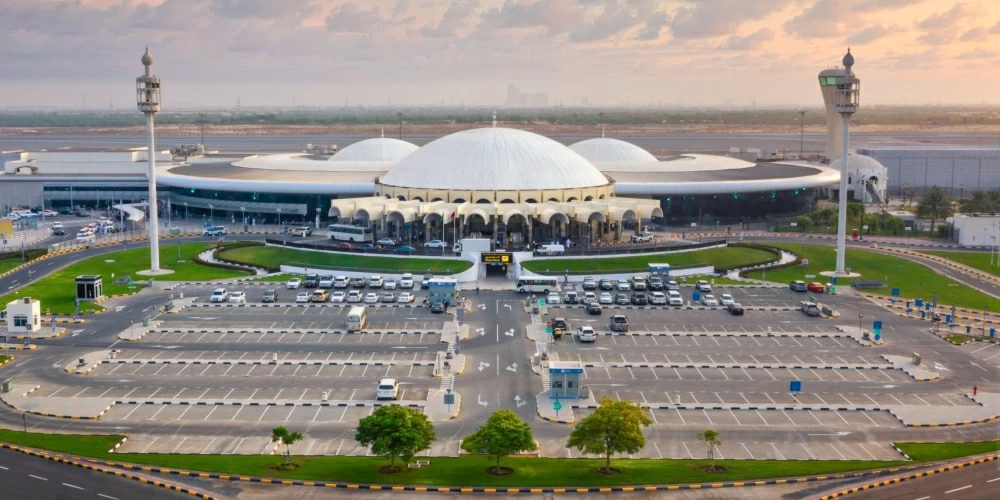
SHARJAH: His Highness Sheikh Sultan bin Mohammed bin Sultan Al Qasimi, Crown Prince and Deputy Ruler of Sharjah, and Chairman of the Sharjah Executive Council (SEC), chaired the Council’s weekly meeting on Tuesday morning at the Ruler’s Office, in the presence of H.H. Sheikh Abdullah bin Salem bin Sultan Al Qasimi, Deputy Ruler of Sharjah and Vice Chairman of the Sharjah Executive Council. The Council discussed a number of government work-related topics and reviewed the public policies of government departments and authorities to enhance the level of services provided to citizens and residents of the Emirate. The Council commended the directives of His Highness Sheikh Dr. Sultan bin Mohammed Al Qasimi, Supreme Council Member and Ruler of Sharjah, approving all 6,700 housing support requests submitted by citizens to the Sharjah Department of Housing (SDH), as well as the housing initiatives that continue His Highness’s directives and distinguished initiatives to support the stability of Emirati families and provide them with a decent standard of living. These efforts strengthen social cohesion and enable families to play an effective role in raising generations in line with authentic values within a stable and supportive environment, contributing to the prosperity and growth of the Emirate through the participation of its families and citizens. In line with the directives of His Highness the Ruler of Sharjah, the Council approved a plan to recruit 150 passport control officers at Sharjah International Airport in three phases, starting next October. The plan aims to keep pace with the airport’s significant growth, the rise in flight and passenger numbers, and its expansion and development projects, while supporting the Emirate’s efforts to provide employment opportunities for Emirati talent and to develop their skills and career progression. The Council approved the "Khatwa" (Step) licence initiative for university and higher education institute students, enabling them to engage in economic activities by developing their ideas and turning them into innovative business ventures. The initiative aims to promote an entrepreneurial culture among students, encourage innovation, provide practical experience in project management, increase the number of small and medium-sized enterprises, strengthen students’ contribution to the Emirate’s economy, and create new job opportunities. The Council reviewed a report by the Department of Statistics and Community Development on the implementation of a comprehensive review of Sharjah’s gross domestic product (GDP). The review aims to develop GDP estimates that provide broader coverage of Sharjah’s economy and more accurately reflect its size, the diversity of its activities, and economic developments. The review involves expanding data sources and enhancing coverage across sectors, thereby contributing to more accurate measurement of Sharjah’s contribution to the UAE’s GDP, providing updated economic indicators to support planning and decision-making, and reflecting the Emirate’s economic weight. The Council directed all relevant entities to coordinate efforts to strengthen the comprehensive review process and to achieve accurate results that reflect the Emirate’s significant economic size and encompass all sectors and their development.

Sep 22, 2026 · byMobile Business
Briefing to the United Nations Security Council by the Secretary-General’s Special Deputy Representative for Afghanistan, Georgette Gagnon, Kabul, 16 September 2026

Briefing to the United Nations Security Council by the Secretary-General’s Special Deputy Representative for Afghanistan, Georgette Gagnon, Kabul, 16 September 2026

Country: Afghanistan Source: UN Assistance Mission in Afghanistan Please refer to the attached file. [As delivered] Mr. President, Last month, the de facto authorities marked the fifth year of their return to power. They projected confidence, highlighting nationwide control, improved security, infrastructure development, and economic stabilization efforts as evidence of their success. They also launched an initiative to improve institutional openness and accountability. These developments are encouraging. They are occurring, however, in a context of no progress on issues that are of profound concern to the Afghan people and the international community: the severe restrictions on women and girls, exclusionary governance, a human rights crisis, and the continued presence of terrorist groups that threaten Afghanistan, the region, and international peace and security. In line with my last briefing to this Council, we assess that the de facto authorities face no significant armed or political threat. However, key risks to the country's stability are accumulating and mainly stem from the de facto authorities' own policies. Recent events in Badakhshan province illustrate these risks. While the armed clashes, as detailed in the Secretary-General's report, did not threaten de facto authority control, they show what can happen when local communities are excluded from decision-making, resource- sharing, and economic opportunity. During my recent visit to Badakhshan, people told me they seek opportunities, basic services, education, and a future for their children, not exclusion. Over the past three months, events in Herat province remained similarly concerning. UNAMA documented arrests of women and girls related to strict enforcement of the de facto authorities' dress code. Subsequent protests were met with the excessive use of force. The de facto authorities continue to carry out arrests of women, including over the past week, for alleged violation of the dress code. Across the country, UNAMA also documented mounting pressure on minority communities, media outlet closures, and arrests and intimidation of journalists. These incidents are part of the broader trend of coercive social regulation that is alienating many communities. UNAMA is engaging with the de facto authorities on these critical concerns in Kabul and through our field offices. Mr. President, This month UNAMA released a report on the experiences of victims of Afghanistan's decades- long conflict. Ninety-five per cent of people we interviewed in Afghanistan reported continued psychological and emotional harm, including depression, anxiety, trauma, and flashbacks. Many are still living with disability, chronic pain and loss of livelihoods. The findings remind us that peace is not only the absence of armed conflict. Sustainable peace requires dignity, inclusion, opportunity, and hope. Many Afghans tell us that the last five years of relative stability have provided a welcome breathing space. Yet they also tell us they are suffering under the rigid social policies of the de facto authorities and from Afghanistan's fragile economic and humanitarian situation. While Afghanistan has maintained a degree of macroeconomic stability, this does not equate to recovery. Economic growth has not kept pace with a rising population or made up for declining aid. Per capita income has dropped by 5.6 per cent, and exports are down. Afghanistan remains heavily dependent on imports, with border disruptions and wider regional instability contributing to weakened household purchasing power. Food insecurity and malnutrition present a serious concern. UNICEF reports that some 3.7 million children are suffering from deficient malnutrition, including some one million children experiencing severe acute malnutrition. The 2026 Humanitarian Needs and Response Plan is only 30 per cent funded. Humanitarian organizations are being forced to make hard choices on where they operate, whom they can reach and which services they can maintain. Health facilities, nutrition centers, women's protection services and other essential programmes have closed or scaled back due to funding cuts. At the same time, Afghanistan continues to experience an extreme demographic and socioeconomic shock. This year alone, nearly 1.2 million Afghans have returned from Pakistan and Iran, with total returns reaching 6.5 million since 2023. Without sustained support for returnees and host communities, competition over scarce resources risks fueling grievances, increasing displacement, and promoting instability. The de facto authorities' ban on opium poppy cultivation has been a positive measure with huge decreases in cultivation but risks bouncing back because of the economic pressures. Greater support for alternative livelihoods is crucial as is sustained and principled humanitarian and development assistance for the Afghan people. Mr. President, No discussion of Afghanistan can ignore the continued exclusion of women and girls. The words of an Afghan woman we met in Kandahar represents their experience, and I quote: "If we follow one rule, another one comes next; women wearing hijab are instructed to wear a mask; those wearing masks are told to wear a burqa; those wearing a burqa are questioned about the absence of a mahram; and those accompanied by a mahram are questioned about their relationship with him." By denying women access to education, professions, and public life, the de facto authorities are not safeguarding Afghanistan's future; they are constraining the talent and productivity needed for post-conflict recovery. This is at odds with their stated vision of a prosperous, self-reliant, and sovereign Afghanistan that can attract international investment. This month marks one year since restrictions preventing Afghan women from accessing UN premises, including national female UN personnel, were enforced. This is a violation of UN principles and a serious operational constraint. Humanitarian actors report difficulty reaching women and girls. Male-only delivery models cannot replace the participation of Afghan women staff, and organizations cannot consult women, assess risks, or verify that assistance reaches those who need it most. Funding cuts are compounding the problem. Nearly three-quarters of Afghan women-led organizations have seen reduced funding over the past year, while more than eighty per cent report increasing needs among women and girls. At a moment when Afghan women face unprecedented restrictions, international support mechanisms for them are decreasing. Across Afghanistan, Afghan women tell us that engagement, assistance and support from the international community represent what they call "points of hope". We urge international partners to prioritize support for Afghan women and girls. Above all, we again call on the de facto authorities to end all restrictions on women and girls. Mr. President, Relations between Afghanistan and Pakistan remain another matter of serious concern. The effects of sporadic hostilities and the almost year-long border closure are taking an increasing toll on civilians, communities and businesses. UNAMA continues to encourage de-escalation and dialogue to resolve differences, including on the presence of terrorist groups in Afghanistan, as reported by the Sanctions Monitoring Team. We welcome ongoing regional mediation efforts. Mr. President, As the High Commissioner for Refugees and the UNDP Administrator cautioned during their joint visit to Afghanistan in July, developments in Afghanistan do not necessarily stay in Afghanistan. Instability, increased displacement and out-migration, radicalization, and growing insecurity have regional and international consequences. Sustained international engagement, including through the Doha Process, remains essential. Currently, the Doha Process is the multilateral framework through which such engagement is occurring aimed at Afghanistan's reintegration into the international community based on compliance with international obligations and commitments. This structured engagement among the de facto authorities, the international community and a wide range of Afghan stakeholders has identified key issues and positions, expanded dialogue and, in some areas, built confidence. The main obstacle to progress is the de facto authorities' preference for bilateral approaches over multilateral engagement, which they view as undermining their claims of sovereignty. They continue, however, to participate in Working Groups on counternarcotics and the private sector and engage on some key political issues. What is now needed is a clear indication from the de facto authorities' of their willingness to address the wider concerns of the international community. To this end, the de facto authorities can take steps toward inclusive governance and lifting of restrictions on women and girls, and show they are meeting their counterterrorism commitments. Member States can reinforce that Afghanistan's reintegration into the international system is possible through concrete, balanced, cooperative steps that begin to address the key issues preventing reintegration. Mr. President, We remain confident in the value of principled and pragmatic engagement. It sustains dialogue on the key issues and concerns, maintains influence, reduces risks, creates opportunities for progress, and, critically, supports the needs and aspirations of the Afghan people. Thank you. Press contact: spokesperson-UNAMA@un.org

Sep 22, 2026 · byReliefWeb
Infantino says he is open to talks over FIFA reform

Infantino says he is open to talks over FIFA reform

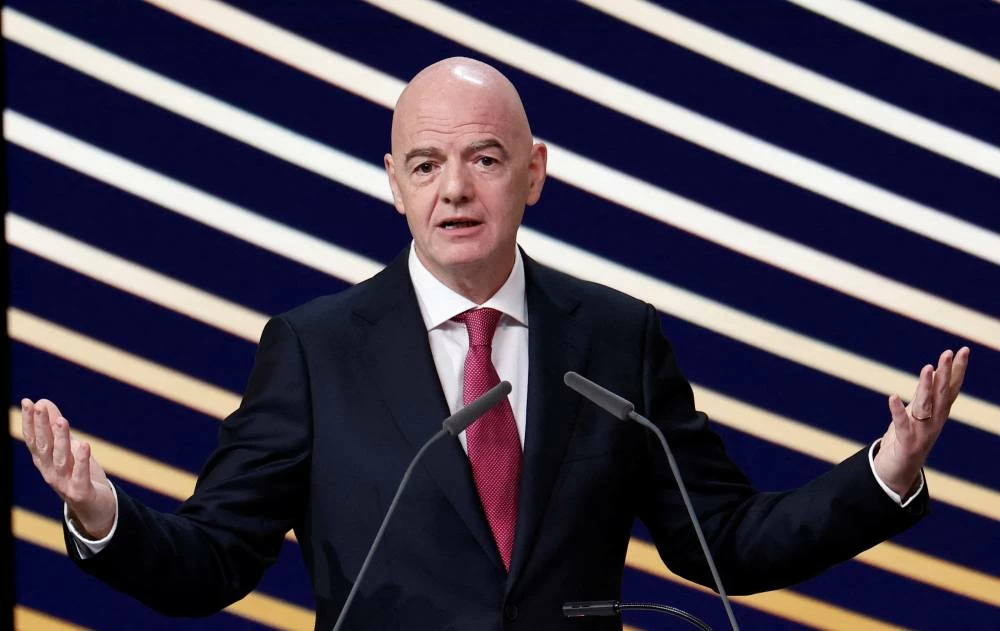
Paris: FIFA President Gianni Infantino has proposed an independent review of the world soccer body's decision-making, in a move that could help him regain support after the withdrawal of a controversial private investment plan. "First, I will ask the Council whether it wishes to commission an independent external review of FIFA’s current governance framework for major strategic initiatives and recommend potential improvements," Infantino wrote to the FIFA ⁠Council and all 211 member association presidents in a letter seen by Reuters. He also said he would propose consultations with confederations, member associations and other stakeholders on strengthening FIFA's decision-making. The proposals would examine who has a say in major initiatives, including the respective roles of the president, Bureau, Council and Congress, and ‌how to improve transparency and accountability. Infantino faced a fierce backlash over his proposal to sell a 20% stake in FIFA's commercial rights, including the World Cup, to private investors. The plan was abandoned in July after opposition and boycott ‌threats, with UEFA, the Asian Football Confederation and CONCACAF subsequently calling for changes to ‌FIFA's leadership. His opponents have been struggling to find a candidate to challenge Infantino, who will be running ‌for re-election in March in Rabat. Sources ‌familiar with the discussions told Reuters this month that he still had enough votes to win, prompting opponents to focus on curbing his powers. Infantino said ​the abandoned plan had explored ‌whether selling a minority stake in ​a FIFA-controlled commercial company could raise more money ⁠for football development. It would not have involved giving up control over sporting decisions, he said. But the proposal became public before it could be presented in full to the Council and member associations, according to Infantino. "I recognise that, ​without the full context, ⁠this caused concern and created ⁠the impression that decisions had already been taken. They had not," he wrote in the letter sent on Monday. "It remained a proposal, not a decision, and was always subject to the necessary approvals of the Council and the ⁠Member Associations. It has now been withdrawn and will not proceed." Infantino said he had heard differing ideas about who should decide major strategic questions. Some favoured requiring unanimous agreement in the Bureau, while others wanted such matters put directly to Congress and the member associations. "My role is not to pre-judge that discussion. Those who support a particular model should have the opportunity to set out their case clearly," he ‌wrote. Suggestions received by the October 15 Council meeting could be discussed there, with later submissions also considered within a deadline yet to be ​specified. Any changes to FIFA's statutes would need Congress approval. Infantino also said member associations' positions on proposals or governance matters would not affect their treatment by FIFA, whose development and solidarity programmes would continue under existing rules. "No association’s treatment will depend on its position on any proposal or institutional matter," he wrote. "I remain fully committed to ​leading FIFA and confident in what we ‌can achieve together."

Gianni Infantinoneutral
Sep 21, 2026 · byMobile Business
Deputy Special Representative for Afghanistan's remarks to the Security Council [as delivered]

Deputy Special Representative for Afghanistan's remarks to the Security Council [as delivered]

Country: Afghanistan Source: UN Department of Political and Peacebuilding Affairs Kabul, Afghanistan Georgette Gagnon, Deputy Special Representative of the Secretary-General for Afghanistan Mr. President, Last month, the de facto authorities marked the fifth year of their return to power. They projected confidence, highlighting nationwide control, improved security, infrastructure development, and economic stabilization efforts as evidence of their success. They also launched an initiative to improve institutional openness and accountability. These developments are encouraging. They are occurring, however, in a context of no progress on issues that are of profound concern to the Afghan people and the international community: the severe restrictions on women and girls, exclusionary governance, a human rights crisis, and the continued presence of terrorist groups that threaten Afghanistan, the region, and international peace and security. In line with my last briefing to this Council, we assess that the de facto authorities face no significant armed or political threat. However, key risks to the country’s stability are accumulating and mainly stem from the de facto authorities’ own policies. Recent events in Badakhshan province illustrate these risks. While the armed clashes, as detailed in the Secretary-General’s report, did not threaten de facto authority control, they show what can happen when local communities are excluded from decision-making, resource-sharing, and economic opportunity. During my recent visit to Badakhshan, people told me they seek opportunities, basic services, education, and a future for their children, not exclusion. Over the past three months, events in Herat province remained similarly concerning. UNAMA documented arrests of women and girls related to strict enforcement of the de facto authorities’ dress code. Subsequent protests were met with the excessive use of force. The de facto authorities continue to carry out arrests of women, including over the past week, for alleged violation of the dress code. Across the country, UNAMA also documented mounting pressure on minority communities, media outlet closures, and arrests and intimidation of journalists. These incidents are part of the broader trend of coercive social regulation that is alienating many communities. UNAMA is engaging with the de facto authorities on these critical concerns in Kabul and through our field offices. Mr. President, This month UNAMA released a report on the experiences of victims of Afghanistan's decades-long conflict. Ninety-five per cent of people we interviewed in Afghanistan reported continued psychological and emotional harm, including depression, anxiety, trauma, and flashbacks. Many are still living with disability, chronic pain and loss of livelihoods. The findings remind us that peace is not only the absence of armed conflict. Sustainable peace requires dignity, inclusion, opportunity, and hope. Many Afghans tell us that the last five years of relative stability have provided a welcome breathing space. Yet they also tell us they are suffering under the rigid social policies of the de facto authorities and from Afghanistan's fragile economic and humanitarian situation. While Afghanistan has maintained a degree of macroeconomic stability, this does not equate to recovery. Economic growth has not kept pace with a rising population or made up for declining aid. Per capita income has dropped by 5.6 per cent, and exports are down. Afghanistan remains heavily dependent on imports, with border disruptions and wider regional instability contributing to weakened household purchasing power. Food insecurity and malnutrition present a serious concern. UNICEF reports that some 3.7 million children are suffering from deficient malnutrition, including some one million children experiencing severe acute malnutrition. The 2026 Humanitarian Needs and Response Plan is only 30 per cent funded. Humanitarian organizations are being forced to make hard choices on where they operate, whom they can reach and which services they can maintain. Health facilities, nutrition centers, women’s protection services and other essential programmes have closed or scaled back due to funding cuts. At the same time, Afghanistan continues to experience an extreme demographic and socioeconomic shock. This year alone, nearly 1.2 million Afghans have returned from Pakistan and Iran, with total returns reaching 6.5 million since 2023. Without sustained support for returnees and host communities, competition over scarce resources risks fueling grievances, increasing displacement, and promoting instability. The de facto authorities’ ban on opium poppy cultivation has been a positive measure with huge decreases in cultivation but risks bouncing back because of the economic pressures. Greater support for alternative livelihoods is crucial as is sustained and principled humanitarian and development assistance for the Afghan people. Mr. President, No discussion of Afghanistan can ignore the continued exclusion of women and girls. The words of an Afghan woman we met in Kandahar represents their experience, and I quote: "If we follow one rule, another one comes next; women wearing hijab are instructed to wear a mask; those wearing masks are told to wear a burqa; those wearing a burqa are questioned about the absence of a mahram; and those accompanied by a mahram are questioned about their relationship with him." By denying women access to education, professions, and public life, the de facto authorities are not safeguarding Afghanistan’s future; they are constraining the talent and productivity needed for post-conflict recovery. This is at odds with their stated vision of a prosperous, self-reliant, and sovereign Afghanistan that can attract international investment. This month marks one year since restrictions preventing Afghan women from accessing UN premises, including national female UN personnel, were enforced. This is a violation of UN principles and a serious operational constraint. Humanitarian actors report difficulty reaching women and girls. Male-only delivery models cannot replace the participation of Afghan women staff, and organizations cannot consult women, assess risks, or verify that assistance reaches those who need it most. Funding cuts are compounding the problem. Nearly three-quarters of Afghan women-led organizations have seen reduced funding over the past year, while more than eighty per cent report increasing needs among women and girls. At a moment when Afghan women face unprecedented restrictions, international support mechanisms for them are decreasing. Across Afghanistan, Afghan women tell us that engagement, assistance and support from the international community represent what they call “points of hope”. We urge international partners to prioritize support for Afghan women and girls. Above all, we again call on the de facto authorities to end all restrictions on women and girls. Mr. President, Relations between Afghanistan and Pakistan remain another matter of serious concern. The effects of sporadic hostilities and the almost year-long border closure are taking an increasing toll on civilians, communities and businesses. UNAMA continues to encourage de-escalation and dialogue to resolve differences, including on the presence of terrorist groups in Afghanistan, as reported by the Sanctions Monitoring Team. We welcome ongoing regional mediation efforts. Mr. President, As the High Commissioner for Refugees and the UNDP Administrator cautioned during their joint visit to Afghanistan in July, developments in Afghanistan do not necessarily stay in Afghanistan. Instability, increased displacement and out-migration, radicalization, and growing insecurity have regional and international consequences. Sustained international engagement, including through the Doha Process, remains essential. Currently, the Doha Process is the multilateral framework through which such engagement is occurring aimed at Afghanistan’s reintegration into the international community based on compliance with international obligations and commitments. This structured engagement among the de facto authorities, the international community and a wide range of Afghan stakeholders has identified key issues and positions, expanded dialogue and, in some areas, built confidence. The main obstacle to progress is the de facto authorities’ preference for bilateral approaches over multilateral engagement, which they view as undermining their claims of sovereignty. They continue, however, to participate in Working Groups on counternarcotics and the private sector and engage on some key political issues. What is now needed is a clear indication from the de facto authorities’ of their willingness to address the wider concerns of the international community. To this end, the de facto authorities can take steps toward inclusive governance and lifting of restrictions on women and girls, and show they are meeting their counterterrorism commitments. Member States can reinforce that Afghanistan’s reintegration into the international system is possible through concrete, balanced, cooperative steps that begin to address the key issues preventing reintegration. Mr. President, We remain confident in the value of principled and pragmatic engagement. It sustains dialogue on the key issues and concerns, maintains influence, reduces risks, creates opportunities for progress, and, critically, supports the needs and aspirations of the Afghan people. Thank you.

Sep 16, 2026 · byReliefWeb
📰

ASG Khiari's remarks to the Security Council on developments in Yemen [as delivered]

Countries: Yemen, Djibouti Source: UN Department of Political and Peacebuilding Affairs New York, UN Khaled Khiari, Assistant Secretary-General for the Middle East, Europe, the Americas, Asia and the Pacific Mr. President, The situation in and around the Bab al Mandab Strait has become increasingly volatile in recent days. Further to the briefing of Special Envoy Grundberg to this Council on 10 September, fighting has intensified along Yemen’s west coast, as the Houthis continued their advance towards the Bab al Mandab Strait, reportedly capturing several islands in the southern Red Sea. According to maritime tracking sites, commercial shipping flows through the Red Sea appear to remain unaffected for the time being. Nevertheless, the Houthi advance has added to market concerns, amid continuing disruptions in the Strait of Hormuz. In parallel, the Government of Yemen reportedly launched a counteroffensive following the Houthi advances over the past week, with localized clashes reported across several frontlines in Marib, Lahj, Al-Jawf, Hajjah, Al-Bayda and Sa’ada. The counteroffensive, reportedly including extensive airstrikes, also extends to Taiz. Unconfirmed estimates indicate hundreds of combatant casualties in recent days. Mr. President, The impact of these hostilities also extends to the civilian population, forcing people to flee their homes, causing civilian casualties and putting already stretched humanitarian operations under growing pressure. Our colleagues from the Office for the Coordination of Humanitarian Affairs (OCHA) warn that at least 125,000 people have now been displaced across Yemen since the start of the month. Over this same period, the UN Human Rights Office has reported 40 civilian casualties – eight people killed and 32 others injured. Women and children account for half of those killed and more than half of those injured. Meanwhile, across the Red Sea in Djibouti, UN teams are working closely with the Government of Djibouti in response to the arrival of people fleeing the latest escalation of conflict in Yemen. As of 14 September, approximately 2,300 people had arrived in the Obock region in northern Djibouti. Registration is continuing, and further arrivals are expected. We call on all parties to protect civilians, respect international humanitarian law, and facilitate safe and unimpeded humanitarian access so that urgently needed assistance can reach communities in need. Mr. President, The ongoing escalation is not limited to the Bab al Mandab Strait and Yemen. On 14 September, the spokesperson for the Saudi coalition forces said 13 individuals were injured, and seven residences were damaged in Houthi missile and drone strikes on Abha, Khamis Mushait, and Taif in Saudi Arabia. On 12 September, the Kingdom of Saudi Arabia condemned the targeting of the East-West Pipeline in the Riyadh and Madinah regions by several drones reportedly launched from an area inside Iraq. The attacks reportedly resulted in injuries and material damage. The strikes caused the pipeline to shut down for repairs, interrupting the crucial artery Saudi Arabia had been using as an alternative to the Strait of Hormuz. In a statement, the Saudi Ministry of Foreign Affairs indicated it had decided to avoid escalatory countermeasures following a request from Iraq’s Prime Minister. On 12 September, the Office of the Iraqi Prime Minister released a statement expressing appreciation for “the Kingdom’s response to the efforts made by Iraq to contain the situation.” The statement also noted that Prime Minister al-Zaidi had ordered an urgent investigation into the attacks and the parties behind them. Iraq also reaffirmed that “its territory and airspace will not be a launching pad for aggression against any State”. Mr. President, On 14 September, the Houthis claimed to have targeted the King Khaled Airbase in Khamis Mushait in southern Saudi Arabia with several ballistic missiles and drones in response to “300 Saudi airstrikes over the past five days”. This follows an earlier attack on 8 September on civilian and economic targets across Abha, Khamis Mushait, Jizan and Najran in southern Saudi Arabia, reportedly injuring 73 civilians, including women and children. We reiterate our firm condemnation of Houthi cross-border attacks on civilian and energy infrastructure in Saudi Arabia. Navigational rights and freedoms in and around the Red Sea and the Bab al Mandab Strait must be fully restored and respected by all, in accordance with international law and consistent with relevant resolutions of this Council, including resolution 2722. We remain concerned by the continued intensification of military clashes across multiple frontlines in Yemen, and call upon all parties to exercise restraint, prevent further escalation, and engage constructively with UN-led political efforts. Mr. President, We remain deeply concerned by the continued instability affecting another critical maritime waterway in the region – the Strait of Hormuz. Navigational rights and freedoms in and around international maritime corridors must be fully restored and respected in accordance with international law. The longer the Strait remains choked, the higher the cost globally. Further escalation risks grave consequences for international peace and security, global energy markets, food security, and the economies of countries far beyond the region, particularly the most vulnerable. All parties must take every feasible precaution to protect civilian vessels, crews and infrastructure. Mr. President, Developments around the Bab al-Mandab underline the urgent need to prevent Yemen’s conflict from further threatening the security of the Red Sea and this vital international maritime route. What is needed now is sustained engagement that reduces tensions, prevents further escalation and safeguards freedom of navigation. The parties in Yemen should prioritize dialogue and engage constructively with UN-led efforts toward a negotiated political solution. Thank you.

Sep 15, 2026 · byReliefWeb