← News
Topic · Place

Kabul

23 articles

See also
📰

Latest Kabul articles

Strengthening Humanitarian Procurement Capacity Through Shared Learning and Collaboration in Afghanistan

Strengthening Humanitarian Procurement Capacity Through Shared Learning and Collaboration in Afghanistan

Country: Afghanistan Sources: Logistics Cluster, World Food Programme Please refer to the attached file. Background Strengthening knowledge and promoting best practices among humanitarian organizations is a key objective of the Logistics Working Group (LWG). On 16 September 2026, as part of the LWG 2026 Workplan, humanitarian partners gathered both in person and online at the WFP Warehouse in Kabul to participate in a Humanitarian Procurement Training. The training was facilitated by procurement and supply chain experts from the Afghan Social Marketing Organization (ASMO) and WREC and was organized in collaboration with the Logistics Working Group. The event reflected a shared commitment to enhancing procurement and supply chain capacities through partnership, knowledge sharing, and peer learning across the humanitarian community. Against a backdrop of increasing operational demands and constrained resources, the training provided a valuable forum for procurement, logistics, and supply chain professionals to exchange experiences, discuss common challenges in humanitarian procurement, and explore practical approaches to strengthening ethical procurement practices, transparency, accountability, and value for money. Participants also reviewed key procurement principles, processes, and risk mitigation measures that support effective and compliant humanitarian operations. The event reinforced the importance of collaboration, capacity strengthening, and continuous professional development in improving procurement performance and ensuring the efficient delivery of assistance to people in need. By bringing together representatives from UN agencies, NGOs, and humanitarian partners, the training contributed to fostering a common understanding of procurement standards and promoting more coordinated and effective supply chain management across humanitarian operations in Afghanistan.

Oct 5, 2026 · byReliefWeb
Afghans Await Justice 25 Years After War Began

Afghans Await Justice 25 Years After War Began

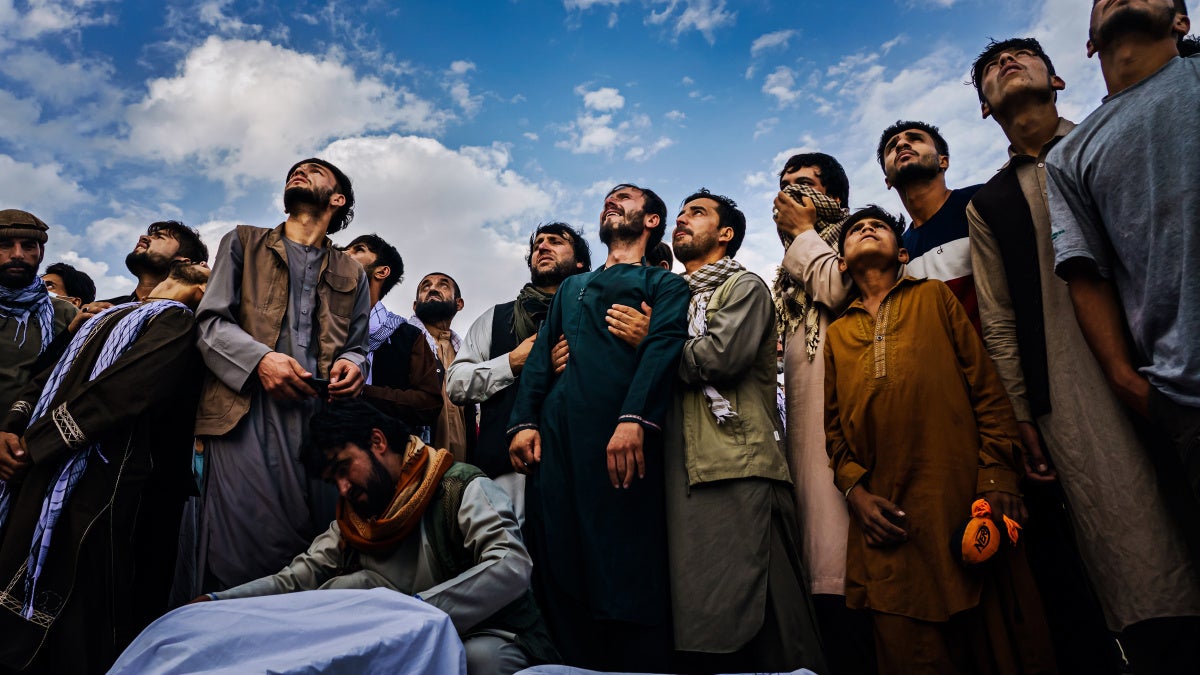
Click to expand Image Mourners at a mass funeral for victims of a US drone strike, including seven children, look up as fighter jets circle a cemetery in Kabul, Afghanistan, on August 30, 2021. © 2021 Marcus Yam/The Los Angeles Times via Getty Images (Washington, DC) – The United States and coalition countries have yet to provide genuine justice or redress for war crimes and other grave abuses in Afghanistan in the 25 years since the war began on October 7, 2001, Human Rights Watch said today, issuing a timeline of its reporting of the conflict. After Al-Qaeda’s September 11 attacks on the United States, the US government authorized the use of interrogation methods of suspected militants amounting to torture. Human Rights Watch and others also documented torture and other ill-treatment by US forces in Afghanistan, including beatings, humiliation, waterboarding, prolonged sleep deprivation, and mock executions. Many civilian detainees were released only after months or years without ever being charged with a crime. The US government has never provided full accountability or compensation for these abuses. Afghanistan: 25 Years Since the US-Led Invasion This feature compiles Human Rights Watch reporting on international human rights and humanitarian law issues by all parties during the conflict and the continuing need for accountability. Read more here “Twenty-five years on, Afghans tortured in US custody and families of those wrongfully killed still have no clear path for filing a claim or receiving redress from the US government,” said Patricia Gossman, senior associate Asia director at Human Rights Watch. “Successive US administrations have swept grave abuses under the rug, leaving those most affected with neither compensation nor justice.” The 20-year US conflict in Afghanistan, which ended with the Taliban’s recapture of Kabul in August 2021, was governed by the Geneva Conventions of 1949and customary international humanitarian law, which prohibits summary executions, torture and other ill-treatment, and deliberate or indiscriminate attacks on civilians, as well as international human rights law, including the United Nations Convention Against Torture. A farmer told Human Rights Watch that US forces detained him in Ghazni in 2019 while he was recovering from an eye operation. He said that he permanently lost his eyesight after US soldiers beat him during questioning and did not provide him with medical care. “Whenever one didn’t like my answers, the other American would hit me with his rifle butt,” he said. “They told me I was lying and beat me with fists, kicks, and rifle butts.” He was never charged but only released in August 2021. The United States prosecuted some US soldiers for unlawful killings. Sgt. Robert Bales was convicted in 2012 for killing 16 Afghan civilians in Kandahar. In the so-called “Kill Team” murders of 15 Afghan civilians in Kandahar in 2010, Staff Sgt. Calvin Gibbs was convicted of murder and sentenced to life in prison, Specialist Jeremy Morlock received 24 years, and 2 other unit members were sentenced—one to 3 years and the other to 7—for failing to prevent the killings. Many other prominent cases were never prosecuted, including the massacre of at least 18 civilians in the Nerkh district of Wardak province in 2014. US President Donald Trump pardoned several US soldiers convicted of unlawful killings: Lt. Clint Lorance was convicted of murder on the basis of testimony by fellow soldiers but was pardoned after serving 6 years of a 19-year sentence. The US army dropped charges against Maj. Mathew Golsteyn, who admitted to killing an Afghan man and then covering it up, after Trump pardoned him in 2019. Other coalition forces have also done little to meaningfully address serious abuses by their military personnel. While both Australia and the United Kingdom have investigations underway into alleged summary killings and mistreatment of civilians by their forces, progress has been slow. Almost six years after the release in Australia of the Independent Afghanistan Inquiry (the Brereton Report), which detailed alleged war crimes by Australian special forces in Afghanistan from 2005 to 2016, there have only been two arrests, the trials have not begun, and no victims or their families are known to have received compensation. After media in the UK exposed evidence of summary executions and other war crimes by British special forces in Afghanistan, successive UK governments tried to prevent any prosecutions by covering up crimes and shutting down criminal inquiries. An independent inquiry into the Afghanistan allegations was eventually established in December 2022, but its scope was limited to three years, 2010-2013. US-backed strongmen in the then-Afghan government were responsible for serious abuses, including attacks on civilians, the torture and rape of detainees, and enforced disappearances. Local militias funded and trained by US forces and CIA-run Afghan “strike forces” carried out summary executions and disappearances. The Taliban and other insurgents targeted civilians and caused thousands of civilian deaths and injuries during the conflict. Taliban forces assassinated women officials and journalists and attacked embassies, hotels, polling places, and aid organizations. The Taliban’s use of indiscriminate improvised explosive devices on public roads and in populated areas was a leading cause of civilian deaths and injuries. The Taliban did not hold their personnel to account for abuses. Other armed groups, including an Islamic State affiliate, carried out suicide attacks targeting the Hazara and other minority communities. The International Criminal Court (ICC) initially undertook an investigation into possible war crimes and crimes against humanity in Afghanistan since May 1, 2003, by all warring parties, including the Taliban, the Islamic State, Afghan government forces, and the US military and CIA. The Trump administration denounced any attempt to investigate alleged crimes by US personnel and sanctioned the court’s judges and prosecutors. In 2021, then-ICC Prosecutor Karim Khan prioritized only those crimes allegedly committed by the Taliban and Islamic State. Investigations into crimes by other parties have not publicly progressed. In October 2025, the UN Human Rights Council crucially decided to establish an independent investigative mechanism for Afghanistan to collect, consolidate, preserve, and analyze evidence of past and ongoing international crimes by all parties, and to prepare files to facilitate future prosecutions. UN leadership should ensure the mechanism receives adequate resources and begins its investigations without delay. Judicial authorities abroad should engage with the mechanism to ensure that its work includes consultations with Afghan survivors of abuses, including women and girls, and supports prosecutions of those implicated in serious international crimes. “The United States and other countries that took part in the war in Afghanistan should properly investigate and prosecute alleged war crimes by their forces and provide appropriate redress to the victims of abuses and their families,” Gossman said. “The indifference of governments and the passage of time should not deny people the justice, compensation, and recognition they are due.”

Oct 5, 2026 · byHuman Rights Watch
UNAMA confirms Civilian Casualties in Afghanistan | United Nations Peace Operations

UNAMA confirms Civilian Casualties in Afghanistan | United Nations Peace Operations

Country: Afghanistan Source: UN Assistance Mission in Afghanistan KABUL - UNAMA has confirmed that at least 10 civilians were killed, most of them children, and nine people injured in airstrikes carried out in Afghanistan’s Kunar and Helmand provinces earlier today. Civilians continue to be affected by cross-border hostilities. Just a week ago, on September 21, UNAMA confirmed the killing of at least three civilians with four others injured in another airstrike in Kunar province. So far in 2026, UNAMA has documented over 1,100 civilian deaths and injuries in Afghanistan from cross-border armed violence. UNAMA reiterates its call for de-escalation, dialogue, respect for international law and prevention of further civilian harm. Read more on civilian casualties and other human rights updates and reports

Oct 1, 2026 · byReliefWeb
Data for Afghanistan: Latest Poverty Lines by Afghanistan Provinces, August 2026

Data for Afghanistan: Latest Poverty Lines by Afghanistan Provinces, August 2026

Country: Afghanistan Source: Data for Afghanistan Please refer to the attached file. Summary: Data for Afghanistan estimates that as of June 2026, the average monthly poverty line per person is 2,800 Afghanis . This comprises 1,669 Afghanis for food items and 1,131 Afghanis for non-food items. See the attached full report for provincial poverty lines. Poverty lines increased in August 2026 because of a month-on-month increase in overall prices. Methodology: Baseline poverty lines: Poverty lines are drawn from Afghanistan's Income, Expenditure and Labour Force Survey 2020 (IE&LFS; 2020), conducted by the National Statistics and Information Authority (NSIA) and the World Bank. Poverty lines are estimated per person per month. The food poverty line is set at the cost of obtaining 2,100 kcal per person per day from a reference basket reflecting actual Afghan food consumption, priced at Central Urban (Kabul) prices in Q1 2019 (October–December 2019). Its value was AFN 1,330 per person per month. Non-food poverty lines are area-specific (14 areas covering 8 regions × urban/rural residence) and priced in Q1 2019 (October–December 2019) prices at the time of the survey (IE&LFS; 2020). South and West Central regions are classified as rural-only and have no urban poverty line. As NSIA publishes CPI data only for 20 provinces, we fill missing provinces' CPI with average provincial CPI by region. Please see the attached PDF report for more details on methodology.

Sep 29, 2026 · byReliefWeb
Data for Afghanistan: Needs & Monitoring — Provincial Urgency Index, August 2026

Data for Afghanistan: Needs & Monitoring — Provincial Urgency Index, August 2026

Country: Afghanistan Source: Data for Afghanistan Please refer to the attached file. Summary: Per the latest Provincial Urgency Index for August 2026, the top 5 provinces in terms of urgency of needs and monitoring include Hilmand, Kandahar, Kabul, Nangarhar, and Herat. The bottom 5 provinces include Badghis, Paktya, Daykundi, Laghman, and Parwan, which could probably mean low reach. The number of help calls (12,356) decreased by about 7% from July 2026. Most helpline callers in Afghanistan sought information about Cash & Voucher Assistance (3,684), followed by Food Security & Agriculture (1,555). The majority of the help calls were from males (10,243).

Sep 29, 2026 · byReliefWeb
The Fall of the West by Owen Jones review – a bracing history of the changing world order

The Fall of the West by Owen Jones review – a bracing history of the changing world order

A journalist charts a quarter century of geopolitical hubris and economic overreach Like many Britons born in the 1980s, the journalist and Guardian columnist Owen Jones came of age with Tony Blair’s platitudes ringing in his ears. Politics at the turn of the millennium was a story of temporary dispensations mistaken for eternal truths: the definitive triumph of free market ideology; US military supremacy; a rules-based global order. As Jones recounts in his new book, these certainties would come crashing down over the next quarter of a century amid a succession of economic failures, foreign policy disasters and political crises. Indeed, “the west” itself – as a shorthand for the US plus the wealthier western European nations – feels almost quaint today, given the increasing unilateralism of the administration in Washington. But in the 2000s it was part of the lexicon, as if the hemisphere were a political actor in its own right. Revisiting the US-led wars in Afghanistan and Iraq, we are reminded not just of their horrific death tolls (totalling half a million, by conservative estimates) but also their total strategic failure; the 2021 evacuation of Kabul airport, Jones writes, was “among the starkest images of American decline yet broadcast to the world”. Continue reading...

Sep 29, 2026 · byThe Guardian
📰

flydubai Outlines Freighter Network in October 2026

Published at 1100PDT / 1800GMT 28SEP26 flydubai from October 2026 plans to launch Freighter operation, on board Boeing 737-800 aircraft. flydubai Cargo’s planned operation from 01OCT26 to include the following. Dubai al Maktoum – Chennai – Hanoi – Delhi – Dubai al Maktoum One flight on 19OCT26 Dubai al Maktoum – Doha eff 01OCT26 2 weekly Dubai al Maktoum – Erbil eff 04OCT26 2 weekly Dubai al Maktoum – Kabul – Delhi – Dubai al Maktoum eff 10OCT26 1 weekly Dubai al Maktoum – Karachi eff 01OCT26 3 weekly Dubai al Maktoum – Kuwait City eff 02OCT26 3 weekly Dubai al Maktoum – Sulaymaniyah eff 01OCT26 2 weekly

Flydubaineutral
Sep 28, 2026 · byAeroRoutes
Briefing to the United Nations Security Council by the Secretary-General’s Special Deputy Representative for Afghanistan, Georgette Gagnon, Kabul, 16 September 2026

Briefing to the United Nations Security Council by the Secretary-General’s Special Deputy Representative for Afghanistan, Georgette Gagnon, Kabul, 16 September 2026

Country: Afghanistan Source: UN Assistance Mission in Afghanistan Please refer to the attached file. [As delivered] Mr. President, Last month, the de facto authorities marked the fifth year of their return to power. They projected confidence, highlighting nationwide control, improved security, infrastructure development, and economic stabilization efforts as evidence of their success. They also launched an initiative to improve institutional openness and accountability. These developments are encouraging. They are occurring, however, in a context of no progress on issues that are of profound concern to the Afghan people and the international community: the severe restrictions on women and girls, exclusionary governance, a human rights crisis, and the continued presence of terrorist groups that threaten Afghanistan, the region, and international peace and security. In line with my last briefing to this Council, we assess that the de facto authorities face no significant armed or political threat. However, key risks to the country's stability are accumulating and mainly stem from the de facto authorities' own policies. Recent events in Badakhshan province illustrate these risks. While the armed clashes, as detailed in the Secretary-General's report, did not threaten de facto authority control, they show what can happen when local communities are excluded from decision-making, resource- sharing, and economic opportunity. During my recent visit to Badakhshan, people told me they seek opportunities, basic services, education, and a future for their children, not exclusion. Over the past three months, events in Herat province remained similarly concerning. UNAMA documented arrests of women and girls related to strict enforcement of the de facto authorities' dress code. Subsequent protests were met with the excessive use of force. The de facto authorities continue to carry out arrests of women, including over the past week, for alleged violation of the dress code. Across the country, UNAMA also documented mounting pressure on minority communities, media outlet closures, and arrests and intimidation of journalists. These incidents are part of the broader trend of coercive social regulation that is alienating many communities. UNAMA is engaging with the de facto authorities on these critical concerns in Kabul and through our field offices. Mr. President, This month UNAMA released a report on the experiences of victims of Afghanistan's decades- long conflict. Ninety-five per cent of people we interviewed in Afghanistan reported continued psychological and emotional harm, including depression, anxiety, trauma, and flashbacks. Many are still living with disability, chronic pain and loss of livelihoods. The findings remind us that peace is not only the absence of armed conflict. Sustainable peace requires dignity, inclusion, opportunity, and hope. Many Afghans tell us that the last five years of relative stability have provided a welcome breathing space. Yet they also tell us they are suffering under the rigid social policies of the de facto authorities and from Afghanistan's fragile economic and humanitarian situation. While Afghanistan has maintained a degree of macroeconomic stability, this does not equate to recovery. Economic growth has not kept pace with a rising population or made up for declining aid. Per capita income has dropped by 5.6 per cent, and exports are down. Afghanistan remains heavily dependent on imports, with border disruptions and wider regional instability contributing to weakened household purchasing power. Food insecurity and malnutrition present a serious concern. UNICEF reports that some 3.7 million children are suffering from deficient malnutrition, including some one million children experiencing severe acute malnutrition. The 2026 Humanitarian Needs and Response Plan is only 30 per cent funded. Humanitarian organizations are being forced to make hard choices on where they operate, whom they can reach and which services they can maintain. Health facilities, nutrition centers, women's protection services and other essential programmes have closed or scaled back due to funding cuts. At the same time, Afghanistan continues to experience an extreme demographic and socioeconomic shock. This year alone, nearly 1.2 million Afghans have returned from Pakistan and Iran, with total returns reaching 6.5 million since 2023. Without sustained support for returnees and host communities, competition over scarce resources risks fueling grievances, increasing displacement, and promoting instability. The de facto authorities' ban on opium poppy cultivation has been a positive measure with huge decreases in cultivation but risks bouncing back because of the economic pressures. Greater support for alternative livelihoods is crucial as is sustained and principled humanitarian and development assistance for the Afghan people. Mr. President, No discussion of Afghanistan can ignore the continued exclusion of women and girls. The words of an Afghan woman we met in Kandahar represents their experience, and I quote: "If we follow one rule, another one comes next; women wearing hijab are instructed to wear a mask; those wearing masks are told to wear a burqa; those wearing a burqa are questioned about the absence of a mahram; and those accompanied by a mahram are questioned about their relationship with him." By denying women access to education, professions, and public life, the de facto authorities are not safeguarding Afghanistan's future; they are constraining the talent and productivity needed for post-conflict recovery. This is at odds with their stated vision of a prosperous, self-reliant, and sovereign Afghanistan that can attract international investment. This month marks one year since restrictions preventing Afghan women from accessing UN premises, including national female UN personnel, were enforced. This is a violation of UN principles and a serious operational constraint. Humanitarian actors report difficulty reaching women and girls. Male-only delivery models cannot replace the participation of Afghan women staff, and organizations cannot consult women, assess risks, or verify that assistance reaches those who need it most. Funding cuts are compounding the problem. Nearly three-quarters of Afghan women-led organizations have seen reduced funding over the past year, while more than eighty per cent report increasing needs among women and girls. At a moment when Afghan women face unprecedented restrictions, international support mechanisms for them are decreasing. Across Afghanistan, Afghan women tell us that engagement, assistance and support from the international community represent what they call "points of hope". We urge international partners to prioritize support for Afghan women and girls. Above all, we again call on the de facto authorities to end all restrictions on women and girls. Mr. President, Relations between Afghanistan and Pakistan remain another matter of serious concern. The effects of sporadic hostilities and the almost year-long border closure are taking an increasing toll on civilians, communities and businesses. UNAMA continues to encourage de-escalation and dialogue to resolve differences, including on the presence of terrorist groups in Afghanistan, as reported by the Sanctions Monitoring Team. We welcome ongoing regional mediation efforts. Mr. President, As the High Commissioner for Refugees and the UNDP Administrator cautioned during their joint visit to Afghanistan in July, developments in Afghanistan do not necessarily stay in Afghanistan. Instability, increased displacement and out-migration, radicalization, and growing insecurity have regional and international consequences. Sustained international engagement, including through the Doha Process, remains essential. Currently, the Doha Process is the multilateral framework through which such engagement is occurring aimed at Afghanistan's reintegration into the international community based on compliance with international obligations and commitments. This structured engagement among the de facto authorities, the international community and a wide range of Afghan stakeholders has identified key issues and positions, expanded dialogue and, in some areas, built confidence. The main obstacle to progress is the de facto authorities' preference for bilateral approaches over multilateral engagement, which they view as undermining their claims of sovereignty. They continue, however, to participate in Working Groups on counternarcotics and the private sector and engage on some key political issues. What is now needed is a clear indication from the de facto authorities' of their willingness to address the wider concerns of the international community. To this end, the de facto authorities can take steps toward inclusive governance and lifting of restrictions on women and girls, and show they are meeting their counterterrorism commitments. Member States can reinforce that Afghanistan's reintegration into the international system is possible through concrete, balanced, cooperative steps that begin to address the key issues preventing reintegration. Mr. President, We remain confident in the value of principled and pragmatic engagement. It sustains dialogue on the key issues and concerns, maintains influence, reduces risks, creates opportunities for progress, and, critically, supports the needs and aspirations of the Afghan people. Thank you. Press contact: spokesperson-UNAMA@un.org

Sep 22, 2026 · byReliefWeb
📰

Afghanistan: From displacement to return: the humanitarian realities facing Afghan returnees

Countries: Afghanistan, Pakistan Source: ODI - Humanitarian Practice Network Mehrullah Rahmani In the outskirts of Afghanistan, hundreds of thousands of Afghan refugees have been forcibly returned from Pakistan . At the same time, growing numbers of Afghans have also been returned from Iran, adding to the scale and complexity of the humanitarian crisis. Many have been deported, while others have returned with few or no resources, leaving them to settle in remote mountainous areas far from major roads and essential services. They live in makeshift shelters, often just tents under the scorching sun or on bare stones, with no access to clean water, food, or even basic shelter. Healthcare is out of reach, and many lack even the simplest identification documents, leaving them vulnerable and invisible in the margins of society. Before fleeing to Pakistan, I was a high school student in Kabul, dreaming of becoming a doctor. My family led a relatively stable life: we had clean water to drink, food to eat, a roof over our heads, and the freedom to seek opportunities. But after August 2021, when the Taliban seized power, my father lost his job, and that fragile economic stability we once knew evaporated. We were forced to leave, seeking refuge in Pakistan, not knowing if we would ever return to a secure life. This experience is just one of many. Across Pakistan, families are being uprooted and returned to this limbo. Following renewed border clashes between Pakistan and Afghanistan, Pakistani authorities have intensified the forced return and deportation of Afghan refugees . Many returnees face significant humanitarian needs including lack of shelter, food, clean water and legal recognition, leaving them vulnerable during the reintegration process. These returnees need urgent support from shelter to food, from healthcare to legal recognition so that they are no longer invisible, but given the basic dignity they deserve. Read the full article on ODI-HPN

Sep 21, 2026 · byReliefWeb
IS member sentenced to 20 years in prison for role in 2021 Kabul airport bombing

IS member sentenced to 20 years in prison for role in 2021 Kabul airport bombing

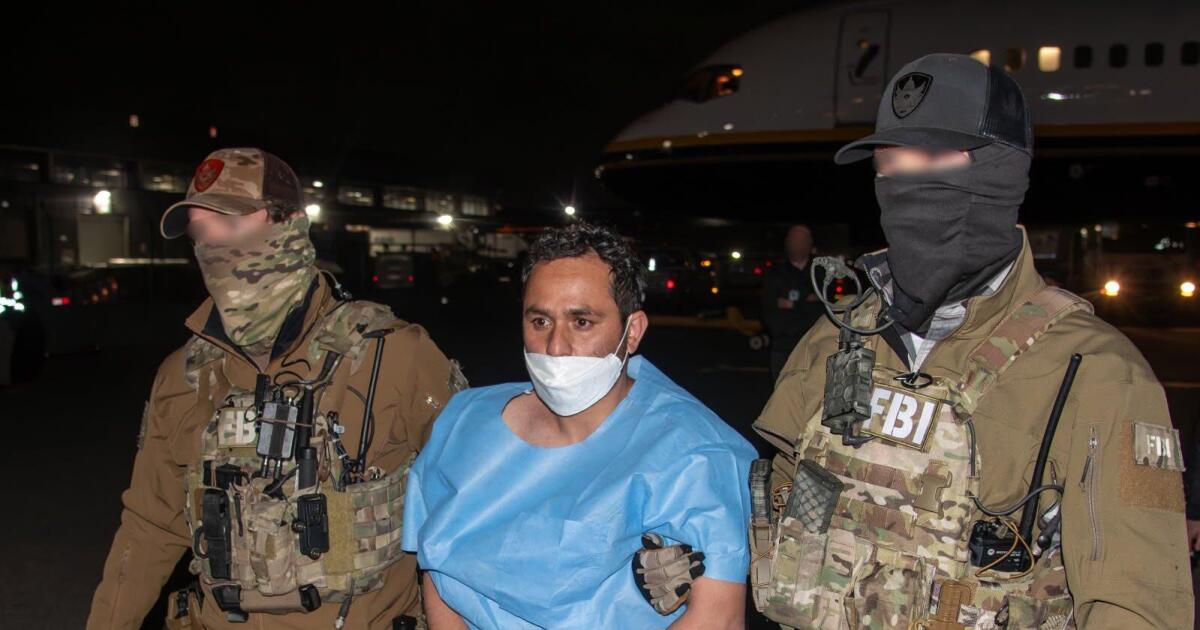
Mohammad Sharifullah, 28, was convicted of aiding the terrorist group that took credit for the suicide bombing An Islamic State group member was sentenced Wednesday to 20 years in prison for aiding the terrorist organization that took credit for a suicide bombing that killed 13 US service members and about 160 Afghans at the Kabul airport five years ago during the US military’s chaotic withdrawal from the country. A federal jury in Virginia had convicted Mohammad Sharifullah in April of providing material support to the IS affiliate known as Islamic State Khorasan Province (ISKP). But jurors could not agree whether he bore some responsibility for the airport bombing on 26 August 2021. Continue reading...

Sep 17, 2026 · byThe Guardian
Deputy Special Representative for Afghanistan's remarks to the Security Council [as delivered]

Deputy Special Representative for Afghanistan's remarks to the Security Council [as delivered]

Country: Afghanistan Source: UN Department of Political and Peacebuilding Affairs Kabul, Afghanistan Georgette Gagnon, Deputy Special Representative of the Secretary-General for Afghanistan Mr. President, Last month, the de facto authorities marked the fifth year of their return to power. They projected confidence, highlighting nationwide control, improved security, infrastructure development, and economic stabilization efforts as evidence of their success. They also launched an initiative to improve institutional openness and accountability. These developments are encouraging. They are occurring, however, in a context of no progress on issues that are of profound concern to the Afghan people and the international community: the severe restrictions on women and girls, exclusionary governance, a human rights crisis, and the continued presence of terrorist groups that threaten Afghanistan, the region, and international peace and security. In line with my last briefing to this Council, we assess that the de facto authorities face no significant armed or political threat. However, key risks to the country’s stability are accumulating and mainly stem from the de facto authorities’ own policies. Recent events in Badakhshan province illustrate these risks. While the armed clashes, as detailed in the Secretary-General’s report, did not threaten de facto authority control, they show what can happen when local communities are excluded from decision-making, resource-sharing, and economic opportunity. During my recent visit to Badakhshan, people told me they seek opportunities, basic services, education, and a future for their children, not exclusion. Over the past three months, events in Herat province remained similarly concerning. UNAMA documented arrests of women and girls related to strict enforcement of the de facto authorities’ dress code. Subsequent protests were met with the excessive use of force. The de facto authorities continue to carry out arrests of women, including over the past week, for alleged violation of the dress code. Across the country, UNAMA also documented mounting pressure on minority communities, media outlet closures, and arrests and intimidation of journalists. These incidents are part of the broader trend of coercive social regulation that is alienating many communities. UNAMA is engaging with the de facto authorities on these critical concerns in Kabul and through our field offices. Mr. President, This month UNAMA released a report on the experiences of victims of Afghanistan's decades-long conflict. Ninety-five per cent of people we interviewed in Afghanistan reported continued psychological and emotional harm, including depression, anxiety, trauma, and flashbacks. Many are still living with disability, chronic pain and loss of livelihoods. The findings remind us that peace is not only the absence of armed conflict. Sustainable peace requires dignity, inclusion, opportunity, and hope. Many Afghans tell us that the last five years of relative stability have provided a welcome breathing space. Yet they also tell us they are suffering under the rigid social policies of the de facto authorities and from Afghanistan's fragile economic and humanitarian situation. While Afghanistan has maintained a degree of macroeconomic stability, this does not equate to recovery. Economic growth has not kept pace with a rising population or made up for declining aid. Per capita income has dropped by 5.6 per cent, and exports are down. Afghanistan remains heavily dependent on imports, with border disruptions and wider regional instability contributing to weakened household purchasing power. Food insecurity and malnutrition present a serious concern. UNICEF reports that some 3.7 million children are suffering from deficient malnutrition, including some one million children experiencing severe acute malnutrition. The 2026 Humanitarian Needs and Response Plan is only 30 per cent funded. Humanitarian organizations are being forced to make hard choices on where they operate, whom they can reach and which services they can maintain. Health facilities, nutrition centers, women’s protection services and other essential programmes have closed or scaled back due to funding cuts. At the same time, Afghanistan continues to experience an extreme demographic and socioeconomic shock. This year alone, nearly 1.2 million Afghans have returned from Pakistan and Iran, with total returns reaching 6.5 million since 2023. Without sustained support for returnees and host communities, competition over scarce resources risks fueling grievances, increasing displacement, and promoting instability. The de facto authorities’ ban on opium poppy cultivation has been a positive measure with huge decreases in cultivation but risks bouncing back because of the economic pressures. Greater support for alternative livelihoods is crucial as is sustained and principled humanitarian and development assistance for the Afghan people. Mr. President, No discussion of Afghanistan can ignore the continued exclusion of women and girls. The words of an Afghan woman we met in Kandahar represents their experience, and I quote: "If we follow one rule, another one comes next; women wearing hijab are instructed to wear a mask; those wearing masks are told to wear a burqa; those wearing a burqa are questioned about the absence of a mahram; and those accompanied by a mahram are questioned about their relationship with him." By denying women access to education, professions, and public life, the de facto authorities are not safeguarding Afghanistan’s future; they are constraining the talent and productivity needed for post-conflict recovery. This is at odds with their stated vision of a prosperous, self-reliant, and sovereign Afghanistan that can attract international investment. This month marks one year since restrictions preventing Afghan women from accessing UN premises, including national female UN personnel, were enforced. This is a violation of UN principles and a serious operational constraint. Humanitarian actors report difficulty reaching women and girls. Male-only delivery models cannot replace the participation of Afghan women staff, and organizations cannot consult women, assess risks, or verify that assistance reaches those who need it most. Funding cuts are compounding the problem. Nearly three-quarters of Afghan women-led organizations have seen reduced funding over the past year, while more than eighty per cent report increasing needs among women and girls. At a moment when Afghan women face unprecedented restrictions, international support mechanisms for them are decreasing. Across Afghanistan, Afghan women tell us that engagement, assistance and support from the international community represent what they call “points of hope”. We urge international partners to prioritize support for Afghan women and girls. Above all, we again call on the de facto authorities to end all restrictions on women and girls. Mr. President, Relations between Afghanistan and Pakistan remain another matter of serious concern. The effects of sporadic hostilities and the almost year-long border closure are taking an increasing toll on civilians, communities and businesses. UNAMA continues to encourage de-escalation and dialogue to resolve differences, including on the presence of terrorist groups in Afghanistan, as reported by the Sanctions Monitoring Team. We welcome ongoing regional mediation efforts. Mr. President, As the High Commissioner for Refugees and the UNDP Administrator cautioned during their joint visit to Afghanistan in July, developments in Afghanistan do not necessarily stay in Afghanistan. Instability, increased displacement and out-migration, radicalization, and growing insecurity have regional and international consequences. Sustained international engagement, including through the Doha Process, remains essential. Currently, the Doha Process is the multilateral framework through which such engagement is occurring aimed at Afghanistan’s reintegration into the international community based on compliance with international obligations and commitments. This structured engagement among the de facto authorities, the international community and a wide range of Afghan stakeholders has identified key issues and positions, expanded dialogue and, in some areas, built confidence. The main obstacle to progress is the de facto authorities’ preference for bilateral approaches over multilateral engagement, which they view as undermining their claims of sovereignty. They continue, however, to participate in Working Groups on counternarcotics and the private sector and engage on some key political issues. What is now needed is a clear indication from the de facto authorities’ of their willingness to address the wider concerns of the international community. To this end, the de facto authorities can take steps toward inclusive governance and lifting of restrictions on women and girls, and show they are meeting their counterterrorism commitments. Member States can reinforce that Afghanistan’s reintegration into the international system is possible through concrete, balanced, cooperative steps that begin to address the key issues preventing reintegration. Mr. President, We remain confident in the value of principled and pragmatic engagement. It sustains dialogue on the key issues and concerns, maintains influence, reduces risks, creates opportunities for progress, and, critically, supports the needs and aspirations of the Afghan people. Thank you.

Sep 16, 2026 · byReliefWeb
European Union and FAO join forces to boost climate resilience of agrifood systems in Afghanistan

European Union and FAO join forces to boost climate resilience of agrifood systems in Afghanistan

Country: Afghanistan Source: Food and Agriculture Organization of the United Nations 14/09/2026 Joint EU-FAO News Release Kabul, Afghanistan – The European Union (EU) and the Food and Agriculture Organization of the United Nations (FAO) launched a €5 million initiative to help Afghan farmers and agribusinesses reach markets, generate more reliable incomes and better withstand climate and economic shocks. The project will support vulnerable households, including returnees, internally displaced people and host communities, in districts affected by food and nutrition insecurity, climate risks and limited economic opportunities, particularly women and youth. The initiative will establish four one-stop service hubs connecting farmers and rural entrepreneurs with agricultural advice, specialized services, agribusinesses and markets. The hubs will promote improved practices and technologies while providing access to FAO’s climate analysis and early-warning information to support farmers make timely production and marketing decisions as conditions change. It will restore 2 000 hectares of degraded forests and rangelands and support 250 women- and community-led nurseries, protecting natural resources while creating new livelihood opportunities. FAO will also award matching grants and provide tailored technical and business advice to established agrifood and environmentally sustainable enterprises with the potential to expand and develop. Participating businesses will contribute their own resources alongside project funding, enabling them to expand processing and other services, source from more local producers and create rural jobs. “The European Union’s contribution to FAO demonstrates our continued commitment to food security and economic empowerment of the Afghan people,” said Nicola Bellomo, the new EU Chargé d’Affaires for Afghanistan. “Afghanistan’s agricultural potential remains undervalued and constrained by the country’s extreme climate vulnerability. With our partner FAO, we will boost agricultural extension services, enhance growth potential for agribusinesses, foster innovative nature-based solutions, and improve evidence-based knowledge and analysis.” “As we pivot away from largely humanitarian programmes towards more sustainable approaches, Afghanistan’s agrifood businesses have demonstrated real potential to grow, create jobs and connect farmers to markets, even in a highly challenging environment,” said Richard Trenchard, FAO Representative in Afghanistan. “Together with the European Union, we will connect farmers with the knowledge, services and markets they need, while helping agribusinesses invest and expand. When farmers can produce with confidence, businesses can grow and products can reach markets, agriculture becomes a powerful engine for recovery and resilience.” Contact Giulia Ramadan El Sayed Communications Specialist, FAO Representation in Afghanistan giulia.ramadanelsayed@fao.org

Sep 14, 2026 · byReliefWeb

The War’s Last Generation Is Still Holding America’s Moral Debt

The War’s Last Generation Is Still Holding America’s Moral Debt

On the first night of the evacuation of Kabul, Aug. 15, 2021, a young mother found me in the crowd at Hamid Karzai International Airport. She had marked me, correctly, as someone who spoke her language. By the end of the night, she was pressing the body of her dead child into my chest and telling me, “You did this.” I have spent five years with that sentence.In a way, she was wrong about me. I had done nothing to her son. But the decisions that delivered her to that night were made an ocean away, and their consequences needed The post The War’s Last Generation Is Still Holding America’s Moral Debt appeared first on War on the Rocks .

Sep 11, 2026 · byWar on the Rocks
Former US ambassador Khalilzad visits Kabul, attends Taliban oil deal signing

Former US ambassador Khalilzad visits Kabul, attends Taliban oil deal signing

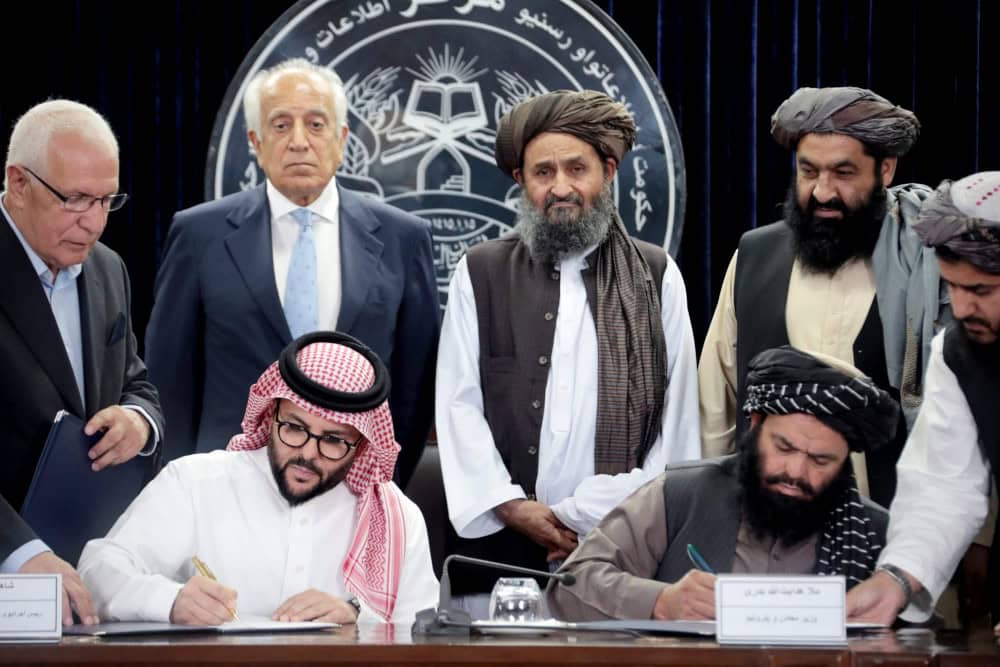
Former US Ambassador to Afghanistan Zalmay Khalilzad met with senior Taliban officials and attended the signing of a major oil and gas agreement with a Saudi company, despite the US State Department insisting that he was acting solely “in a personal capacity.” Whatever his intentions, Khalilzad gave the Taliban something it has sought since returning to power: an appearance of American validation. The post Former US ambassador Khalilzad visits Kabul, attends Taliban oil deal signing appeared first on FDD's Long War Journal .

Sep 9, 2026 · byLong War Journal
‘One day the Taliban will need women to be educated’: three sisters on being forced back to Afghanistan

‘One day the Taliban will need women to be educated’: three sisters on being forced back to Afghanistan

Shallah, Fatimah and Maahi are among hundreds of thousands of Afghan women and girls deported from Iran and Pakistan in the past year to a life of severe restrictions It was a warm summer afternoon on 15 August 2021 when the Taliban entered Kabul and changed the lives of millions. Shallah*, then 16, watched the news at home on the Afghan TV channel Tolo news. She ran crying to the garden, to tell her mother that Afghanistan had fallen. Her younger sister, Fatimah*, then 11, was at her cousin’s house, where her aunt told her the news. At the time, she says, she did not understand what a takeover meant, or who the Taliban were. Her elder sister, Maahi*, then 22, was well aware of the consequences and remembers her hands shaking at work as she read the news on her phone, on Facebook pages of Afghan news. Continue reading...

Sep 9, 2026 · byThe Guardian
Resistance to Taliban rule persists in Afghanistan

Resistance to Taliban rule persists in Afghanistan

Five years after the fall of Kabul, Afghanistan’s armed resistance continues to expand despite lacking territorial sanctuary, overt state sponsorship, and meaningful international assistance. Although it remains far from an existential threat to Taliban rule, its persistence challenges the appearance of uncontested control. The post Resistance to Taliban rule persists in Afghanistan appeared first on FDD's Long War Journal .

Aug 20, 2026 · byLong War Journal