Fiji
44 articles · 2+ stories
Stories about Fiji



Latest Fiji articles



‘Significant corruption’: US sanctions Chinese businessman over ‘bribes’ in Fiji
The US State Department moved against Zhao Fugang two years after an investigation by this masthead revealed allegations that he was operating as an organised crime boss in the Pacific nation.
 Oct 7, 2026 · byThe Sydney Morning Herald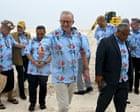
Overseas, Albanese sees ‘the very definition of climate injustice’ – but at home, he still wants coal
It isn’t hard to see a contradiction between the PM’s message in Fiji and his opposition to legal action to stop a NSW coalmine Get our new political email , free app or daily news podcast There are unlikely to be many bigger moments in Australian action on the climate crisis this year than a judgment by the high court on Wednesday. In what is likely to prove a historic victory, the court sided with community members in the Hunter Valley to strike down a state regulator’s approval of a massive coalmine expansion that could have kept it operating until 2048. Sign up for Guardian Australia’s Politics, really newsletter here Continue reading...
 Oct 7, 2026 · byThe Guardian
World: One missed vaccine can reveal a much bigger gap: WHO calls for renewed investment in immunization across the Western Pacific
Country: World Source: World Health Organization Immunization is a main agenda item for countries gathering at the annual WHO Western Pacific Regional Committee in Manila. Manila, 7 October 2026 – When nurse supervisor Melaia Tuiwara travels by boat to deliver vaccines to remote communities in Fiji’s Yasawa Islands, she packs extra clothes in case rough seas force her to stay overnight. Her daughter asks why she has to keep going. “I always tell her, it’s my calling, it’s my work, I have to go,” Melaia says. Thousands of kilometres away in Merauke, Indonesia, school principal Sister Monica Simarmata faces a different challenge. When parents have questions about vaccination, she brings them together with health workers to ask directly, while local Papuan teachers also help families navigate information using shared language, culture and experience. One helps vaccines cross the sea. The other helps information and trust travel through a community. Both share the same purpose: making sure protection reaches people wherever they live. Across the Western Pacific, decades of work like theirs have produced extraordinary results. The Region has maintained its polio-free status for more than 25 years, 29 countries and areas have achieved measles and rubella elimination, and 35 have introduced HPV vaccination programmes, extending protection against cervical cancer. But those hard-won gains cannot be taken for granted. In 2025, nearly 1.7 million babies – about one in every 11 born in the Region – did not receive even a first routine vaccine dose. Coverage with three doses of vaccine against diphtheria, tetanus and pertussis (DTP3), an important measure of how well routine immunization systems are functioning, fell from 94% in 2019 to 89% in 2025. Measles is also resurging in parts of the Region. Behind those numbers are children and communities still being missed. People like Melaia and Sister Monica are working towards the same goal: that where someone lives should not determine whether they are protected from diseases we know how to prevent. Measles finds the gaps Few diseases expose weaknesses in immunization systems as quickly as measles, one of the most highly contagious diseases. In an interconnected Region, an immunity gap in one place can become a risk elsewhere. All 29 countries and areas previously verified as having eliminated measles and rubella are currently maintaining that status, while nine countries are working towards measles elimination by 2030. But elimination cannot be sustained through catch-up campaigns alone. It depends on health workers reaching communities, reliable vaccine supplies, strong surveillance and laboratories, good data and community trust. “Behind every outbreak is a gap: a missed child, delayed action, weakened trust, or communities not reached through regular vaccination programmes,” said Dr Saia Ma’u Piukala, WHO Regional Director for the Western Pacific. Strong immunization programmes are also an investment in primary health care and health security. The workforce, surveillance, laboratories, supply chains, data systems and community relationships needed to deliver vaccines also help countries detect and respond to other health threats. Protection should not stop in childhood Immunization needs are changing. Vaccination can protect people at many stages of life, from HPV vaccination for adolescents to vaccines recommended for pregnant women, adults and older people. As populations age and new vaccines become available, countries have an opportunity to extend protection throughout life. But doing so requires investment at a time when governments face competing priorities and the global health financing landscape is becoming less predictable. Countries increasingly know who is being missed, where the bottlenecks are and what needs to be done. The challenge now is turning that knowledge into adequately financed, timely and accountable implementation. The next chapter From 19 to 22 October, representatives of Ministries of Health from across the Region will meet in Manila for the seventy-seventh session of the WHO Regional Committee for the Western Pacific, with accelerating immunization progress among the main agenda items for discussion. A proposed Regional Plan focuses action through 2030 around three connected priorities: reducing zero-dose and under-immunized populations; achieving and sustaining measles elimination; and advancing immunization across the life course. It also emphasizes sustainable national financing and ownership, investment in the systems needed to deliver vaccines reliably, and greater cooperation between countries. The investment case is substantial. Since 1974, vaccination has prevented an estimated 154 million deaths globally. Measles vaccination alone accounts for around 94 million lives saved, including an estimated 12 million in the Western Pacific. For the Western Pacific, the next chapter of immunization is not about starting from scratch. It is about protecting what countries have already achieved, reaching those still being missed and making sure the benefits of vaccination reach every generation. Note to editors: Immunization is one of four main agenda items at the 77th WHO Western Pacific Regional Committee (19-22 October 2026) at the WHO Regional Office for the Western campus in Manila. The other three are artificial intelligence and health, hypertension control and tobacco control. Join #RC77 online. Details: https://www.who.int/westernpacific/about/governance/regional-committee/session-77 For more information including media interview requests, email wprocom@who.int.
 Oct 7, 2026 · byReliefWeb
World: Epidemic and emerging disease alerts in the Pacific as of 06 October 2026
Countries: World, Australia, Fiji, Guam, Marshall Islands, Micronesia (Federated States of), New Caledonia (France), New Zealand, Niue (New Zealand), Palau, Papua New Guinea, Samoa, Tonga, Tuvalu, Vanuatu, Wallis and Futuna (France) Source: Pacific Community Please refer to the attached Map. Highlights/updates since the last map was sent on PacNet on 29 September 2026: Dengue • Marshall Islands: The 10th Outbreak Situation Report on dengue in Majuro and Ebeye, dated 28 September 2026 and covering 15 August to 25 September, records 297 specimens tested (Majuro 263, Ebeye 34) and 112 confirmed positive (Majuro 97, Ebeye 15), with no deaths and seven cumulative hospitalisations. Four cases had onset in the past seven days (Majuro 3, Ebeye 1). The confirmed-case attack rate is 4.2 per 1,000 in Majuro and 1.5 per 1,000 in Ebeye, and the Majuro positivity rate is 36.8 percent. Only DENV-1 has been detected. The red alert for dengue (DENV-1) remains in effect. – Source: Republic of the Marshall Islands Ministry of Health and Human Services, Outbreak of Dengue Fever Cases in Majuro & Ebeye, 10th Outbreak Situation Report shared with the PPHSN Coordinating Body Focal point on 01 October 2026. • Samoa: The Dengue Fever Outbreak Situation Report Issue No. 76 for EpiWeek 39 (21 to 27 September 2026) reports 35 new cases, a 169 percent increase on the previous week, including five laboratory-confirmed cases, against one the week before. Two new admissions and no deaths were reported. Since 1 January 2025, 20,308 clinically diagnosed cases, 5,546 laboratory-confirmed cases and nine dengue-related deaths have been recorded. DENV-1 accounts for 52 percent and DENV-2 for 48 percent of serotyped cases, and children under 15 years for 73 percent of cases. The outbreak will be declared over after 28 days without a new laboratory-confirmed case. The blue alert for dengue (DENV-1 & DENV-2) remains in effect. – Source: Ministry of Health Samoa, Dengue Fever Outbreak Situation Report Issue No. 76, shared with the PPHSN Coordinating Body Focal point on 06 October 2026. • Vanuatu: Situation Report #14 on the dengue outbreak on Efate and Santo, dated 28 September 2026, reports 17 new laboratory-confirmed cases in EpiWeeks 38 and 39 (14 to 27 September), 10 from Efate and 7 from Santo, bringing the cumulative total to 169 confirmed cases. Weekly numbers remain above the outbreak threshold of four confirmed cases per week, although they have declined since the peak of EpiWeeks 33 to 35. In Santo, cases are now reported in Luganville, East Santo and Canal-Fanafo Area Councils. Sixteen dengue-associated hospitalisations have been reported, all discharged, with no severe dengue and no deaths. DENV-1 remains the only serotype detected. Tafea Provincial Health has also declared a dengue outbreak in Tafea Province, and its response team is investigating cases, tracing contacts and raising community awareness in the West Tanna Area Council. The red alert for dengue (DENV-1) remains in effect for Vanuatu. – Sources: Vanuatu Ministry of Health, Dengue Outbreak on Efate and Santo Island, Situation Report #14, shared with the PPHSN Coordinating Body Focal point on 1st October 2026, Official dengue press released for Tanna - Tafea Health Promotion official Facebook page and Tafea Provincial Health, Dengue response West Tanna accessed on 06 October 2026. • Wallis and Futuna: The Health Agency reported on 1st October 2026 that the dengue epidemic is continuing, with 11 new confirmed cases over weeks 37 to 39, four on Wallis and seven on Futuna, bringing the cumulative total for the territory to 95 confirmed or probable cases. The red alert for dengue remains in effect for Wallis and Futuna. – Source: Agence de Santé de Wallis et Futuna, epidemiological and health watch update for weeks 37 to 39 (1st October 2026) shared with the PPHSN Coordinating Body Focal point on 06 October 2026. Measles • Australia: NSW Health issued a measles alert for the Campbelltown area on 03 October 2026 after a confirmed case in a returned traveller from South-East Asia. While infectious, the person visited several sites in the Campbelltown area and locations in Concord and Rooty Hill. As of 06 October 2026, 119 measles notifications have been reported nationally in Australia in 2026, already exceeding the annual totals for each year from 2020 to 2024 (25, 0, 7, 26 and 57 respectively), following 181 notifications in 2025, the highest annual count since 2019 (285). In 2026, New South Wales has reported the largest number of notifications (n=55), followed by Victoria (n=30), Queensland (n=18), South Australia (n=9), Western Australia (n=5) and the Australian Capital Territory (n=2). No cases have been notified in the Northern Territory or Tasmania. The red alert for measles remains in effect for Australia. – Sources: NSW Health, Measles alert for Campbelltown area and National Notifiable Disease Surveillance Syestem - Australian Centre fo Disease Control accessed on 5 October 2026. • Papua New Guinea: The National Department of Health weekly bulletin for EpiWeek 39 (21 to 27 September 2026) reports 17 laboratory-confirmed measles cases in 2026, up from 13 the previous week: National Capital District 6, East Sepik 4, Western Highlands 2, and one each in the Autonomous Region of Bougainville, Central, Eastern Highlands, Enga and New Ireland. The last onset date is 15 September 2026. Rubella cases rose from 21 to 25, and ten patients are positive for both measles and rubella. Year to date, 361 acute fever and rash cases have been reported and 373 samples submitted. The measles-rubella vaccination campaign targets all children under seven in districts with a detected case. The red alert for measles remains in effect for Papua New Guinea. – Source: Papua New Guinea National Department of Health, Public Health Events Weekly Bulletin, EpiWeek 39 shared with the PPHSN Coordinating Body Focal point on 02 October 2026. Pertussis • Vanuatu: Situation Report 05 on the pertussis outbreak in Penama Province, dated 28 September 2026, reports 21 new cases on Ambae Island in EpiWeeks 38 and 39 (respectively 1 and 20), bringing the cumulative total to 605 cases, of which 4 are laboratory confirmed. The outbreak peaked in EpiWeeks 36 and 37 (266 and 307 clinically diagnosed cases) and case numbers have since declined substantially, but continued detection shows that community transmission has not been interrupted. Two cases have been hospitalised since the start of the outbreak and no death is reported. North Ambae accounts for 54 percent of cases and South Ambae for 43 percent. The red alert for pertussis remains in effect for Vanuatu. – Source: Vanuatu Ministry of Health, Pertussis Outbreak in Penama Province, Situation Report 5 shared with the PPHSN Coordinating Body Focal point on 01 October 2026. Respiratory diseases • New Caledonia: The Directorate of Health and Social Affairs (DASS) announced on 1st October 2026 that New Caledonia has entered an influenza epidemic phase. In week 39 (21 to 27 September), 115 new laboratory-confirmed cases were recorded, bringing the 2026 total to 238, 190 of them since week 33. A/H1N1pdm09 predominates and laboratory positivity reached 56 percent. Acute respiratory infections exceeded 15 percent of sentinel GP consultations in weeks 38 and 39. In week 39, 221 emergency department presentations were for acute respiratory infection (12 percent of all presentations, against 4 percent in week 37) and 54 patients were hospitalised, with a median age of 71 years. Since 27 September, bed occupancy in intensive care and continuous monitoring units has exceeded 75 percent. People aged 65 and over account for 36 percent of confirmed cases. The epidemic comes earlier than in 2024 and 2025. A red alert for influenza A is issued for New Caledonia. – Source: Direction des Affaires Sanitaires et Sociales de Nouvelle-Calédonie, Vigilance DASS bulletin 2026-#08, influenza epidemic, shared with the PPHSN Coordinating Body Focal point on 02 October 2026. • New Zealand: For the week ending 27 September 2026, the all-cause SARI hospitalisation rate in the Auckland region has decreased into the low activity band, and the influenza-positive SARI rate decreased for the fourth week in a row and is now low. Influenza remained the most commonly detected virus among SARI patients, with test positivity stable at 32.9 percent, while positivity among sentinel GP influenza-like illness cases fell from 34.3 to 27.3 percent. A/H1 and A/H3 are detected at similar levels. Twenty-eight influenza-positive SARI patients have been admitted to intensive care in 2026, all since 27 July. Since 1st January, 5,296 influenza-positive specimens have been reported nationally (4,912 influenza A and 384 influenza B), and circulating viruses match the 2026 vaccine. Pacific peoples have had the highest cumulative rates of influenza-, RSV- and SARS-CoV-2-positive SARI hospitalisation in 2026. The red alert for influenza A is changed to a blue alert for New Zealand. – Sources: PHF Science, New Zealand Acute Respiratory Illness dashboard , accessed on 5 October 2026 and PHF Science, Virology Weekly Report, week 39, accessed on 5 October 2026. Rotavirus • Federated States of Micronesia: Situation Reports #18 and #19 on the diarrhoeal outbreak in Yap State, dated 25 September and 1st October 2026, report one new case on 25 September and nine between 28 September and 1st October, two of them from Ifalik Dispensary in the Outer Islands, bringing the cumulative total to 240. There have been 14 admissions since the outbreak began, 12 of them children, and no deaths. Rotavirus remains predominant, mostly as co-infections with E. coli , adenovirus, Salmonella , Giardia and, newly, Clostridioides difficile , and a laboratory-confirmed rotavirus reinfection was detected in a two-year-old. Children aged 0 to 11 years account for 66 percent of cases. Case counts have declined to low single digits since mid-September but remain above the alert threshold. The red alert for rotavirus is changed to a blue alert for the Federated States of Micronesia (Yap State). – Source: Yap State Diarrhoeal Outbreak Situation Reports #18 and #19 shared with the PPHSN Coordinating Body Focal point on 29 September and 02 October 2026. • Vanuatu: Situation Report No. 6 on the rotavirus outbreak in Tafea Province, dated 30 September 2026, reports 123 acute watery diarrhoea cases in EpiWeek 39 (21 to 27 September), bringing the cumulative total to 1,140 cases, three of them laboratory confirmed. Case numbers declined in EpiWeeks 38 and 39 but remain above the alert threshold of 34 cases per week. Cases have been reported on Aneityum Island for the first time, with 12 cases in EpiWeek 39. Children under five account for most cases. A total of 44 patients have been hospitalised since EpiWeek 33 and one death, in a one-year-old child, was reported in EpiWeek 35. Water testing detected E. coli contamination. The Ministry of Health has also declared a rotavirus outbreak in Sanma Province, on Santo, where more than 100 acute watery diarrhoea cases were reported between 24 August and 20 September and four confirmed cases in the latest week met the declaration criteria. The red alert for rotavirus remains in effect for Vanuatu. – Sources: Vanuatu Ministry of Health, Rotavirus Outbreak in Tanna and Aneityum Island, Situation Report No. 6 shared with the PPHSN Coordinating Body Focal point on 01 October 2026 and Vanuatu Daily Post, Water diarrhoea outbreak on Santo , accessed on 03 October 2026. Other Information: One Health - High pathogenicity avian influenza • Australia: The national H5 bird flu dashboard recorded 682 confirmed events in wildlife as of 02 October 2026, against 652 on 25 September: South Australia 325, Victoria 230, New South Wales 68, Tasmania 46, Western Australia 10, Queensland 2 and Jervis Bay Territory 1. H5 has not been reported from any Pacific Island country or territory to date . – Source: Australian Government Department of Agriculture, Fisheries and Forestry, H5 bird flu latest data accessed on 05 October 2026. • Pacific Island countries and areas: The WHO Western Pacific Region Avian Influenza Weekly Update No. 1064 (02 October 2026) presents a rapid joint One Health risk assessment of high pathogenicity avian influenza incursion into Pacific Island countries and areas. Following detections of H5N1 clade 2.3.4.4b in Australia and New Zealand, entry through seabird and wild bird movements in the south-west Pacific is assessed as very high risk from August 2026 to January 2027, and entry through poultry trade and human movement as low. If introduced, establishment would be high risk in resident wild birds and very high risk in domestic poultry, given free-ranging backyard poultry and limited biosecurity. Human exposure is assessed as low under current conditions. No human avian influenza case was reported in the Region. – Source: WHO Western Pacific Region, Avian Influenza Weekly Update No. 1064 accessed on 06 October 2026. Respiratory diseases • Guam: The Communicable Disease Surveillance Dashboard, updated on 05 October 2026, shows the late-season influenza wave reaching its highest level of 2026 in EpiWeek 38 with about 151 influenza and influenza-like illness cases, against about 121 the previous week. In EpiWeek 38, there were 62 laboratory-confirmed influenza A cases. All influenza viruses subtyped in August and September were A(H1N1) with 44 percent of cases are aged 5 to 19 years. – Source: Guam Department of Public Health and Social Services, Communicable Disease Surveillance Dashboard accessed on 06 October 2026. • Nauru: The Naoero Medical Centre has observed an ongoing increase in influenza infections, with more people seeking care for influenza-like symptoms, and health authorities urge the public to remain vigilant and take preventive measures. – Source: Nauru health authorities accessed on 06 October 2026. • Niue: The Public Health Snapshot for 22 to 28 September 2026 reports 17 new confirmed influenza A cases, after 24 the previous week, bringing the total to 104 since 17 August 2026. Thirteen hospital admissions, all for influenza A, have been recorded since 17 August. No COVID-19 or influenza B case was reported. – Source: Niue Public Health Division, Public Health Snapshot, 22-28 September 2026 accessed on 06 October 2026. • Palau: The Ministry of Health and Human Services reported on 02 October 2026 a total of 53 influenza A cases in 2026, with activity increasing in recent weeks. – Source: Palau Ministry of Health and Human Services, Respiratory Disease Situational Update accessed on 06 October 2026. • Tonga: The weekly syndromic surveillance report for EpiWeek 39 (21 to 27 September 2026) records 73 influenza-like illness cases, the fifth consecutive weekly increase and the highest weekly count of 2026, with a sharp rise in positive respiratory samples, mostly influenza A. On 05 October, the Ministry of Health issued an influenza A alert asking the public to watch for symptoms, with particular care for children under five, people aged 65 and over, pregnant women and heavy smokers. – Sources: Tonga Ministry of Health, Weekly Communicable Diseases Syndromic Surveillance, EpiWeek 39 shared with the PPHSN Coordinating Body Focal point on 01 October 2026 and Ministry of Health Tonga accessed on 06 October 2026. • Vanuatu: The Ministry of Health reported on 30 September 2026 that it is closely monitoring increased influenza-like illness activity, particularly in Shefa, Tafea and Penama provinces, where case numbers have remained above provincial alert thresholds in recent weeks. More than 19,000 ILI cases were reported nationally between EpiWeeks 1 and 37 of 2026. No outbreak has been declared. – Source: Vanuatu Ministry of Health, Health Promotion, ILI update accessed on 06 October 2026. • Wallis and Futuna: The Health Agency multi-source surveillance dashboard, updated on 05 October 2026, shows influenza-like illness rising steadily on Wallis since early September, reaching 69 consultations in the week ending of 21 September, the highest weekly level since January but below the alert threshold of 100. The Health Agency's update of 01 October 2026 reports one influenza A case on Wallis in week 39 and two on Futuna in week 40, while rhinovirus (5 cases) and parainfluenza virus 3 (4 cases) have circulated actively on Wallis since week 37, causing mild respiratory infections and bronchiolitis in children. No indicator is above the vigilance thresholds on either island, and increased vigilance for influenza-like illness is advised in the coming weeks. – Sources: Agence de Santé de Wallis et Futuna, multi-source surveillance dashboard accessed on 06 October 2026, and Agence de Santé de Wallis et Futuna, epidemiological and health watch update for weeks 37 to 39 (1st October 2026) shared with the PPHSN Coordinating Body Focal point on 06 October 2026. Rotavirus • Tuvalu: Situational Report #9 on the rotavirus outbreak, covering 28 September to 04 October 2026, reports no new laboratory-confirmed case for the past four weeks. The cumulative total unchanged at 30, 28 on Funafuti and two on Nukufetau, the latest confirmed on 03 September. Genotyping confirmed an equine-like G3P[8] rotavirus. Two patients have been hospitalised and discharged, and 25 of the 30 cases are children under 15 years. A total of 389 suspected diarrhoea cases were reported between 04 August and 04 October, and weekly numbers have returned within the normal threshold. – Source: Tuvalu Ministry of Health, Outbreak of Rotavirus in Tuvalu, Situational Report #9 shared with the PPHSN Coordinating Body Focal point on 06 October 2026. • Wallis and Futuna: The Health Agency reported on 1st October 2026 that diarrhoeal syndromes on Wallis have been increasing since week 36 and have exceeded the vigilance threshold for three consecutive weeks, with four rotavirus cases reported. – Source: Agence de Santé de Wallis et Futuna, epidemiological and health watch update for weeks 37 to 39 (1st October 2026), shared with the PPHSN Coordinating Body Focal point on 06 October 2026.
Oct 6, 2026 · byReliefWeb
Intense heat puts births in jeopardy, UN tells Fiji talks
The South Pacific is among the world’s most vulnerable regions to global warming.

Mixed start for pre-Cop as just two non-Pacific leaders accept Australian invitation to climate summit
Anthony Albanese joins about 4,000 people in Fiji for preparatory meeting for year-ending Cop31 UN climate summit Sign up for climate and environment editor Adam Morton’s free Clear Air newsletter here The Australian prime minister, Anthony Albanese, has declared it is “important that Pacific voices are heard” after landing in Fiji on Monday to attend his first UN climate summit since becoming prime minister more than four years ago. Albanese joined about 4,000 people in Nadi for a preparatory meeting for the year-ending Cop31 UN climate summit in Turkey while facing criticism from his political opponents at home. Pre-Cop meetings are usually small and bureaucratic affairs, but this meeting has a double purpose: it is being held in the Pacific after Australia and regional leaders argued it would help bring global attention to the plight of countries most at risk from the climate crisis. Sign up to get climate and environment editor Adam Morton’s Clear Air column as a free newsletter Continue reading...
Oct 5, 2026 · byThe GuardianWorld: WHO joins Pre-COP31 to advance climate action that delivers for people’s health
Country: World Source: World Health Organization With health impacts of climate change increasingly felt in the region, WHO joins Pacific leaders and partners in Fiji to advance health priorities ahead of COP31. The World Health Organization (WHO) is joining Pacific leaders, governments and partners at Pre-COP31 in Fiji from 5 to 8 October to advance health priorities in climate action and strengthen the Pacific voice ahead of the 31st Conference of the Parties (COP31) to the United Nations Framework Convention on Climate Change (UNFCCC). COP31, to be held next month in Antalya, Türkiye, marks an important step for global climate and health action. Health is one of the 10 priority themes of the COP31 Action Agenda, “Dynamic and Resilient Health Systems”, and a dedicated Health Day will take place on 9 November, the first day of COP31. The inclusion of health reflects growing global recognition that climate action and health are closely connected. The climate crisis is affecting population health globally. Across the WHO Western Pacific Region, which includes Pacific island countries and areas, the consequences of climate change include extreme heat, cyclones, floods, rising sea levels, food and water insecurity, infectious diseases and disruptions to essential health services. The Pacific in particular faces additional challenges. A recent review of 76 hospitals in 14 Pacific island countries found that 62% of health facilities are located within 500 metres of the sea or a river, leaving them particularly exposed to flooding, storm surges and sea-level rise. Bringing Pacific priorities to the global climate agenda The Pacific Pre-COP31 provides an important opportunity for Pacific countries and partners to consolidate regional priorities and bring the experiences and leadership of Pacific communities into global climate discussions. Pacific countries have been advancing practical approaches to protect health in a changing climate, including strengthening climate-resilient health systems, improving preparedness for extreme weather events, building resilient health infrastructure and mobilizing climate finance for health. “This Pre-COP is an important moment for the Pacific, bringing global climate discussions to a region that has long been at the forefront of the climate crisis. It provides an opportunity for Pacific countries and areas to set their priorities, experiences and leadership on the global stage, and to ensure that the realities of Pacific communities are genuinely reflected in the decisions made on climate action,” said Dr Saia Ma’u Piukala, WHO Regional Director for the Western Pacific. Throughout this week, WHO will co-convene and participate in high-level discussions and events focused on climate and health, climate resilience, adaptation, financing and implementation. “Climate finance is essential for resilient and healthy Pacific communities,” emphasized Dr Mark Jacobs, WHO Representative to the South Pacific and Director of Pacific Technical Support. “We must ensure that financing reaches the people, communities and essential services most exposed to climate risks, supporting locally defined priorities and investments.” WHO will work with partners to strengthen the integration of health considerations across climate policies and investments, including national climate plans and resilience initiatives. Health as a driver of climate action Amid the risks to health and pressures on health systems, well-strategized and implemented climate action can deliver significant health benefits. Investments in clean energy, sustainable transport, resilient infrastructure, food systems and nature-based solutions have proven to reduce health risks while contributing to climate mitigation and adaptation. “Climate action is truly an investment in health. Cleaner energy, healthier food systems and climate-resilient health services can protect lives while building stronger communities. We now need to turn these opportunities into action and make health a core part of climate investments,” said Dr Sandro Demaio, Director and Head of Office, WHO Asia-Pacific Centre for Environment and Health in the Western Pacific Region. “These benefits demonstrate that climate action is not only about reducing future risks. It is also an opportunity to improve lives today while building healthier, safer and more resilient societies.” At COP31 next month, WHO will also support the Health Pavilion, which will bring together the global health community and partners to advance health and equity within climate negotiations. With COP31 poised to move health higher on the global climate agenda, WHO will continue working with countries and partners across the Western Pacific Region and globally to strengthen climate-resilient and low-carbon health systems, and ensure that climate action protects and improves people’s health. ____________________ Media contacts Elizabeth Bennett, WHO Asia-Pacific Centre for Environment and Health in the Western Pacific Region, elizabeth.bennett@who.int Julia Dongwhan Shin, WHO Asia-Pacific Centre for Environment and Health in the Western Pacific Region, dong.shin@who.int WHO Western Pacific Communications, wprocom@who.int
Oct 5, 2026 · byReliefWeb
Pacific leaders urge climate action as UN pre-COP talks open in Fiji
Pacific leaders urged action on climate change as UN pre-COP talks opened in Fiji's Nadi on Monday, ahead of next month's COP31 summit in Turkey. Discussions in Fiji and Tuvalu will focus on limiting warming to 1.5C, improving access to climate finance and protecting oceans as rising seas threaten communities.

World: Alertes de maladies épidémiques et émergentes en Océanie le 29 septembre 2026
Countries: World, Australia, Fiji, Marshall Islands, Micronesia (Federated States of), New Caledonia (France), New Zealand, Palau, Papua New Guinea, Samoa, Vanuatu Source: Pacific Community Please refer to the attached Map.
Oct 2, 2026 · byReliefWeb
Fiji: PACIFIC | UPDATE 1- REGIONAL EL NINO MONITORING
Countries: Fiji, Cook Islands, Kiribati, Marshall Islands, Micronesia (Federated States of), Niue (New Zealand), Palau, Papua New Guinea, Republic of Naoero, Samoa, Solomon Islands, Tokelau, Tonga, Tuvalu, Vanuatu Source: UN Office for the Coordination of Humanitarian Affairs Please refer to the attached Infographic. A total of 15 Pacific Island Countries including PNG Meteorological offices have declared El Niño status with widespread El Niño conditions continuing to drive significant climate variations, severe dry spells, and heightened drought risks across monitored island nations. National authorities are actively monitoring climate indicators with majority of the countries in the early “Response Monitoring” phase, issuing public advisories and key messages, while mobilizing emergency coordination mechanisms as risk thresholds are met.
Oct 1, 2026 · byReliefWebFiji: Pacific Region Update 1: El Niño Monitoring - Regional Summary (As of 22 September 2026)
Countries: Fiji, Cook Islands, Kiribati, Marshall Islands, Micronesia (Federated States of), Niue (New Zealand), Palau, Papua New Guinea, Republic of Naoero, Samoa, Solomon Islands, Tokelau, Tonga, Tuvalu, Vanuatu Source: UN Office for the Coordination of Humanitarian Affairs Please refer to the attached Infographic. A total of 15 Pacific Island Countries including PNG Meteorological offices have declared El Niño status with widespread El Niño conditions continuing to drive significant climate variations, severe dry spells, and heightened drought risks across monitored island nations. National authorities are actively monitoring climate indicators with majority of the countries in the early “Response Monitoring” phase, issuing public advisories and key messages, while mobilizing emergency coordination mechanisms as risk thresholds are met.
Oct 1, 2026 · byReliefWeb
England can take vital lessons from worst defeats into Rugby World Cup, says Johnson
Former captain says losses can benefit team next year Johnson refuses to comment on Henry Pollock hype Martin Johnson believes England’s most painful defeats under Steve Borthwick can benefit them at the Rugby World Cup in Australia next year. England endured some disastrous moments during the Six Nations this year, most notably the 42-21 defeat by Ireland at Twickenham , and finished the tournament with a solitary win against Wales. Summer Nations Championship fixtures began with an away defeat by the world champions, South Africa, before victories against Fiji and Argentina. Continue reading...
Sep 29, 2026 · byThe GuardianWorld: Making investment in violence prevention a priority
Countries: World, Bolivia (Plurinational State of), Fiji Source: UN Women State investments in violence prevention are more important than ever Only one quarter of countries have systems to track budget allocations for gender equality overall, and data on national budgets to address violence against women and girls are hardly available. According to the latest research, 78 per cent of countries have budgetary commitments to implement legislation addressing violence against women . But it is unclear how countries are integrating prevention across different sectors, including education, health, economic development, and social protection. What we do know is that current global investments in preventing gender-based violence are not enough. Governments must unlock financing from different sectors and adjust national budgets using gender-responsive budgeting to source more investments to prevent violence against women. In Bolivia, for example, local governments must use at least 15 per cent of Citizen Security budgets to tackle violence against women. Fiji has pioneered efforts in violence prevention and become the first Pacific Island country, and second in the world alongside Australia, to launch a five-year national action plan to tackle gender-based violence with a budget of over USD 2.5 million. Boosting funding of women’s rights organizations Women’s rights organizations, which are essential in leading prevention efforts, remain chronically underfunded with just 1 per cent of gender-focused state aid directed to them. Worryingly 89 per cent of women’s rights and civil society organizations working in the realm of peace, and security face a moderate to very high risk of shutting down their operations due to a lack of long-term funding. Women’s rights organizations also struggle with the types of funding streams they can tap into. Core funding is critical for sustained long-term and impactful interventions, but accessing it is complex and only 7 per cent of women’s rights organizations working in gender-based violence prevention manage to secure core funding . Grassroots organizations have an added challenge to access funding due to donor requirements they often cannot meet due to their size and capabilities. In our work to support women’s rights organization, UN Women leads on behalf of the UN System, the UN Trust Fund to End Violence against Women and Girls . Since its creation in 1996, the Fund has invested USD 215 million in 646 initiatives led by women’s rights organizations in 140 countries and territories. In 2022 alone, the Fund partnered with 186 civil society organizations across five regions, providing them with USD 87.8 million in grants to prevent and address violence against women and girls. Most of these grants, 62 per cent, went to women's rights organizations. Pushing for investment and transparency As part of its core mandate, in 2021, UN Women convened Generation Equality , the world’s leading initiative to boost investment and implementation of gender equality. The Action Coalition on Gender-Based Violence is one of six thematic Action Coalitions, established in 2021, unlocking political will and fostering gender-responsive investments to deliver transformative changes in the lives of women and girls. It is calling for flexible funding streams to women’s rights organizations working to end violence against women and girls, and has set the following targets to reach by 2026 : Doubling international funding to women’s rights organizations, activists and movements working to address gender-based violence. Increase funding to women’s rights organizations by USD 500million. Ensure that 30 per cent of humanitarian funding to address gender-based violence reaches women’s rights organizations. Ensure that 50 per cent of countries track national and international gender-based violence funding to women’s rights organizations through a dedicated budget line for that purpose. As the world navigates diverse challenges in the quest for gender equality, UN Women continues to lead the charge, pushing for investments and transparency to prevent violence against women and girls everywhere. Learn more 3 swipe left swipe right 3 Explainer How funding women’s organizations prevents violence against women How funding women’s organizations prevents violence against women Explainer What is gender-responsive budgeting What is gender-responsive budgeting Explainer Ten ways to prevent violence against women Ten ways to prevent violence against women
Sep 29, 2026 · byReliefWeb
World: Epidemic and emerging disease alerts in the Pacific as of 29 September 2026
Countries: World, Australia, Fiji, Marshall Islands, Micronesia (Federated States of), New Caledonia (France), New Zealand, Papua New Guinea, Samoa, Vanuatu Source: Pacific Community Please refer to the attached Map. Highlights/updates since the last map was sent on PacNet on 22 September 2026: Dengue • Marshall Islands: The 9th Outbreak Situation Report on dengue in Majuro and Ebeye, dated 19 September 2026 (15 August to 19 September), records 268 specimens tested (Majuro 250, Ebeye 18) and 103 confirmed positive (Majuro 92, Ebeye 11), with no deaths and six cumulative hospitalisations. For the first time, Ebeye reported more cases with onset in the past seven days than Majuro (7 against 6). The confirmed-case attack rate is 4.0 per 1,000 in Majuro and 1.1 per 1,000 in Ebeye. Only DENV-1 has been detected. Vector control continues around confirmed-case households, with spraying under way in 30 of 51 churches and 18 of 22 schools, community fogging and clean-up campaigns. The red alert for dengue (DENV-1) remains in effect. – Source: Republic of the Marshall Islands Ministry of Health and Human Services, Outbreak of Dengue Fever Cases in Majuro & Ebeye, 9th Outbreak Situation Report accessed on 29 September 2026. • Samoa: The Dengue Fever Outbreak Situation Report Issue No. 74 for EpiWeek 37 (07 to 13 September 2026) reports 28 new cases, a 65 percent increase on the previous week, including two laboratory-confirmed cases after none the week before. No new admissions and no deaths were reported. Since 1 January 2025, 20,260 clinically diagnosed cases, 5,540 laboratory-confirmed cases and nine dengue-related deaths have been recorded. DENV-1 accounts for 52 percent and DENV-2 for 48 percent of serotyped cases. The blue alert for dengue (DENV-1 & DENV-2) remains in effect. – Source: Ministry of Health Samoa, Dengue Fever Outbreak Situation Report Issue No. 74 accessed on 29 September 2026. Measles • Australia: SA Health reported a fifth case linked to the measles cluster declared on 24 September 2026 at Brighton Secondary School in Adelaide. The outbreak started with a student who returned from overseas on 14 September 2026 and then infected several classmates. South Australia now has nine measles cases in 2026, against seven in the whole of 2025. The exposure list now covers 28 locations across Adelaide between 17 and 24 September 2026. People who are not fully immunised are advised to watch for symptoms for 7 to 18 days after exposure. Free vaccination is offered to anyone who has not had two doses. The red alert for measles remains in effect for Australia. – Source: Measles case 14 September 2026 | SA Health , Measles outbreak 24 September 2026 | SA Health , Measles cases extend in Adelaide | SA Health accessed on 28 September 2026. • Papua New Guinea: The National Department of Health weekly bulletin for EpiWeek 38 (14 to 20 September 2026) reports 13 laboratory-confirmed measles cases in 2026, up from nine the previous week, with new detections in the National Capital District, which now accounts for six of the 13. The last onset date is 7 September 2026. Rubella cases rose from 18 to 21, and seven patients are positive for both measles and rubella. Year to date, 347 acute fever and rash cases have been reported and 320 samples submitted. The measles-rubella vaccination campaign targets all children under seven in districts with a detected case. The red alert for measles remains in effect for Papua New Guinea. – Source: Papua New Guinea National Department of Health, Public Health Events Weekly Bulletin, EpiWeek 38, shared with the PPHSN Coordinating Body Focal point on 24 September 2026. Respiratory diseases • New Zealand: For the week ending 20 September 2026, the influenza-positive SARI hospitalisation rate in the Auckland region decreased for the fourth week in a row and is now in the medium activity band, while the all-cause SARI rate remained stable in the medium band, still higher than at this time in previous years. Influenza remained the most commonly detected virus among SARI patients, but test positivity fell from 50.9 to 33.3 percent. A/H1 and A/H3 are detected at similar levels in SARI, with A/H3 predominant in general practice. ILI-related Healthline calls decreased for the third week in a row, and four respiratory outbreaks were reported, down from six. Pacific peoples have had the highest cumulative rates of influenza-, RSV- and SARS-CoV-2-positive SARI hospitalisation in 2026. The red alert for influenza A remains in effect for New Zealand. – Source: PHF Science, New Zealand Acute Respiratory Illness dashboard accessed on 28 September 2026. Rotavirus • Federated States of Micronesia: Situation Report #17 on the diarrhoeal outbreak in Yap State, dated 23 September 2026, reports three new paediatric cases, bringing the cumulative total to 228 cases. There have been 12 admissions since the outbreak began, ten of them children, and no deaths. Adenovirus was newly identified in a one-year-old co-infected with enteropathogenic E. coli. Rotavirus remains predominant, with sapovirus, E. coli, Giardia and Salmonella also identified, mostly as co-infections. In EpiWeek 38, rotavirus A was detected in five of the six diarrhoeal cases tested by gastrointestinal panel, each co-infected with E. coli pathotypes. The red alert for rotavirus remains in effect for the Federated States of Micronesia (Yap State). – Source: Yap State Diarrhoeal Outbreak Situation Report #17 and Yap State Communicable Disease Report, EpiWeek 38, shared with the PPHSN Coordinating Body Focal point on 23-24 September 2026. Other Information: One Health - High pathogenicity avian influenza • Australia: The national H5 bird flu dashboard recorded 652 confirmed events in wildlife as of 25 September 2026, against 583 on 18 September: South Australia 319, Victoria 208, New South Wales 67, Tasmania 45, Western Australia 10, Queensland 2 and Jervis Bay 1. Recent New South Wales detections span the South Coast, Greater Sydney, Central Coast and Hunter regions, including crested terns at Dolls Point and Anna Bay. Tasmania recorded seven new events between 15 and 23 September across the island, from Strahan to Flinders Island, with no mass mortality and no detection in poultry. Authorities warn that the return of migratory short-tailed shearwaters may bring coastal mortality events that are harder to distinguish from H5 deaths. H5 has not been reported from any Pacific Island country or territory to date. – Sources: Australian Government Department of Agriculture, Fisheries and Forestry, H5 bird flu latest data , NSW Health and H5 Bird Flu | Department of Natural Resources and Environment Tasmania accessed on 29 September 2026. Respiratory diseases • Cook Islands: According to Te Marae Ora (TMO) Ministry of Health reported 36 influenza-like illness cases between 31 August and 6 September 2026, 34 in Rarotonga and two in the Pa Enua. In July, 120 cases were reported with three hospital admissions, all children under five. The Ministry of Education reports no unusual absenteeism linked to influenza. – Source: Cook Islands News , accessed on 29 September 2026. • Federated States of Micronesia: The Kosrae State Department of Health and Social Services issued a health advisory on 22 September 2026 informing the public of an increase in seasonal influenza cases in Kosrae communities and recommending vaccination, staying home when sick, hand hygiene and masks in crowded settings. – Source : Kosrae State Department of Health and Social Services, Health Advisory of 23 September 2026 accessed on 29 September 2026. • Guam: The weekly influenza report for the week ending 19 September 2026 notes a steady rise in influenza A cases over the past seven weeks, after minimal activity since November 2025, which the Office of Epidemiology and Research considers within the expected range. Influenza A is dominant, with a shift back to A/H1N1 in August subtyping. Most cases are school-age children and adults aged 20 to 54, and new hospital admissions remain low. – Source: Guam Department of Public Health and Social Services, Weekly Influenza Epidemiology Report, week ending 19 September 2026, shared with the PPHSN Coordinating Body Focal point on 24 September 2026 and Guam Communicable Disease Surveillance accessed on 29 September 2026. • Niue: The Public Health Snapshot for 15 to 21 September 2026 reports 24 new confirmed influenza A cases, after 32 the previous week, bringing the total to 87 since 17 August 2026. Thirteen hospital admissions, all for influenza A, have been recorded since 17 August. No COVID-19 or influenza B case was reported. – Source: Niue Public Health Division, Public Health Snapshot, 15-21 September 2026 accessed on 29 September 2026. • Samoa: The syndromic surveillance report for EpiWeek 37 (7 to 13 September 2026) records 12 laboratory-confirmed influenza A cases, against eight the previous week: eight of 42 samples from influenza-like illness cases and four of 12 SARI cases tested. No influenza B was detected. – Source: Ministry of Health Samoa, Syndromic Surveillance Report, EpiWeek 37 accessed on 28 September 2026. • Solomon Islands: The Ministry of Health and Medical Services announced on 23 September 2026 that routine surveillance has recorded a significant and sustained rise in influenza-like illness cases between 24 August and 13 September 2026 and urged the public to remain vigilant and practise basic hygiene measures. – Source: Solomon Islands Ministry of Health and Medical Services , accessed on 28 September 2026. • Vanuatu: Shefa Provincial Health Promotion issued an influenza-like illness alert for Shefa Province, reporting 270 ILI cases in EpiWeek 37 (7 to 13 September 2026). The public is advised to wash hands, cover coughs and sneezes, stay home when sick and seek care promptly in case of fever, cough or sore throat. – Source: Shefa Provincial Health Promotion, ILI alert , accessed on 28 September 2026. Rotavirus • Tuvalu: Situation Report #7 on the rotavirus outbreak, covering 14 to 20 September 2026, records 30 laboratory-confirmed cases since the first detection on 4 August, with no new confirmed case for the past two weeks. Twenty-eight cases are in Funafuti and two, confirmed on 3 September, in Nukufetau. Suspected cases are reported on Nui. Twenty-five confirmed cases are children under 15. Two patients have been hospitalised and no death is reported. Weekly diarrhoea cases fell from 55 in EpiWeek 37 to 12 in EpiWeek 38. Genotyping by the WHO Regional Reference Laboratory in Australia identified an equine-like G3P [8] rotavirus, an emerging strain reported in Australia, New Zealand, Timor-Leste and South-East Asia, unrelated to the earlier outbreak in Kiribati. – Source: Tuvalu Ministry of Health, Outbreak of Rotavirus in Tuvalu, Situational Report #7, shared with the PPHSN Coordinating Body Focal point on 28 September 2026.
Sep 29, 2026 · byReliefWeb![World: Pacific Syndromic Surveillance System Weekly Bulletin / Système de Surveillance Syndromic dans le Pacifique - Bulletin Hebdomadaire: W38 2026 (Sep 14-Sep 20) [EN/FR]](https://reliefweb.int/sites/default/files/styles/thumbnail/public/previews/cd/19/cd198eed-2f7a-46e4-9474-60eae9d9dfd9.png)
World: Pacific Syndromic Surveillance System Weekly Bulletin / Système de Surveillance Syndromic dans le Pacifique - Bulletin Hebdomadaire: W38 2026 (Sep 14-Sep 20) [EN/FR]
Countries: World, American Samoa, Cook Islands, Fiji, French Polynesia (France), Guam, Kiribati, Marshall Islands, Micronesia (Federated States of), New Caledonia (France), New Zealand, Niue (New Zealand), Northern Mariana Islands (The United States of America), Palau, Papua New Guinea, Pitcairn Islands, Republic of Naoero, Samoa, Solomon Islands, Tokelau, Tonga, Tuvalu, Vanuatu, Wallis and Futuna (France) Source: World Health Organization Please refer to the attached file.
Sep 29, 2026 · byReliefWeb
Meth is a key driver in Fiji's fast-growing HIV epidemic: 1 in 60 adults are affected
In mid-September, Fiji's government declared a national emergency because of a startling rise in HIV infections. The country's crystal meth epidemic is a strong contributing factor.
 Sep 26, 2026 · byNPR
World: Alertes de maladies épidémiques et émergentes en Océanie le 22 septembre 2026
Countries: World, Australia, Fiji, Marshall Islands, Micronesia (Federated States of), New Caledonia (France), New Zealand, Palau, Papua New Guinea, Samoa, Vanuatu Source: Pacific Community Please refer to the attached Map. Éléments nouveaux/faits marquants intervenus depuis la diffusion de la carte précédente sur PacNet, le 15 septembre 2026 : Dengue • Îles Marshall : Le huitième rapport de situation sur l’épidémie de dengue à Majuro et Ebeye, daté du 18 septembre 2026 et couvrant la période du 15 août au 17 septembre, fait état de 256 prélèvements testés (241 à Majuro et 15 à Ebeye), dont 98 positifs confirmés (89 à Majuro et 9 à Ebeye). Aucun décès n’a été enregistré et six hospitalisations ont été signalées au total ; tous les patients se sont rétablis et sont désormais sortis de l’hôpital. Le taux d’attaque pour les cas confirmés s’élève à 3,8 pour 1 000 à Majuro (23 158 habitants) et à 0,9 pour 1 000 à Ebeye (9 739 habitants). L’épidémie s’est étendue à un deuxième atoll : Ebeye, sur l’atoll de Kwajalein, a enregistré son premier cas le 7 septembre. Le nombre de cas y est en augmentation (un cas confirmé le 11 septembre, 5 cas confirmés le 15 septembre et 9 cas confirmés le 17 septembre) et, sur les 16 cas dont les symptômes sont apparus au cours des sept derniers jours, 7 cas ont été enregistrés à Ebeye, contre 9 à Majuro. Le sérotype DENV-1 est le seul confirmé. Le statut d’intervention reste classé dans la catégorie « ACTION » : des mesures de lutte antivectorielle ont été mises en place autour des domiciles des cas confirmés, des opérations de pulvérisation ont été menées dans 16 écoles et 16 églises, des opérations de nébulisation sont menées dans les zones à haut risque et les municipalités conduisent des campagnes d’information dans les sept zones concernées. L’alerte rouge pour la dengue (sérotype DENV-1) est maintenue. – Source : Ministère de la Santé et des Services sociaux des Îles Marshall, Rapport de situation sur l’épidémie de dengue no 6 , Rapport de situation sur l’épidémie de dengue no 7 et Rapport de situation sur l’épidémie de dengue no 8 , pages consultées le 22 septembre 2026 . • Samoa : Le rapport de situation sur l’épidémie de dengue au Samoa no 73 pour la semaine épidémiologique 36 (du 31 août au 6 septembre 2026) fait état de 17 nouveaux cas, soit une réduction de 23 % par rapport à la semaine précédente. Aucune nouvelle hospitalisation, aucune admission en soins intensifs, ni aucun décès n’ont été enregistrés. Aucun cas n’a été confirmé biologiquement cette semaine, soit une diminution de 100 % par rapport à la semaine précédente. Depuis le 1er janvier 2025, 20 232 cas diagnostiqués cliniquement et 5 538 cas confirmés biologiquement ont été signalés au Samoa, de même que neuf décès liés à la dengue. Les sérotypes DENV-1 (52 %) et DENV-2 (48 %) sont en circulation ; les enfants de moins de 15 ans représentent 73 % des cas, et 92 % des cas ont été enregistrés à Upolu. L’alerte bleue pour la dengue (sérotypes DENV-1 et DENV-2) est maintenue. – Source : Rapport de situation sur l’épidémie de dengue no 73 du ministère de la Santé du Samoa , page consultée le 22 septembre 2026. • Vanuatu : Le rapport de situation no 13, daté du 14 septembre 2026, fait état de 11 nouveaux cas de dengue confirmés biologiquement au cours de la semaine épidémiologique 37, ce qui porte à 150 le total cumulé de cas confirmés. Huit cas ont été enregistrés à Efate et trois à Santo. Les trois cas enregistrés à Santo sont les premiers recensés hors d’Efate depuis le début de l’épidémie, qui gagne donc une deuxième île. Les cas confirmés ont été signalés dans les zones administratives de Luganville et de l’Est de Santo. À Efate, les cas ont été signalés dans sept zones administratives différentes, notamment à Erakor, qui représente 35 % des cas. Quatorze hospitalisations liées à la dengue ont été signalées. Tous les patients se sont rétablis et sont sortis de l’hôpital, et aucun cas grave ni aucun décès n’ont été rapportés. Le sérotype DENV-1 reste le seul présent. Des échantillons prélevés à Santo et à Port-Vila ont été envoyés en laboratoire pour sérotypage ; les résultats ne sont pas encore disponibles. L’alerte rouge pour la dengue (sérotype DENV-1) est maintenue. – Source : Unité de surveillance nationale de Vanuatu, Rapport de situation no 13 sur l’épidémie de dengue à Efate et sur l’île de Santo, communiqué au point de contact du Groupe de coordination du ROSSP le 21 septembre 2026. Rougeole et rubéole • Papouasie‑Nouvelle‑Guinée : Le bulletin hebdomadaire du Département national de la santé pour la semaine épidémiologique 37, publié le 15 septembre 2026, fait état de neuf cas de rougeole confirmés biologiquement depuis le 1er janvier, contre huit dans le bilan précédent ; un nouveau cas a été détecté dans le district de la Capitale nationale et la date de début des symptômes la plus récente remonte au 29 août 2026. Le nombre de cas de rubéole confirmés biologiquement depuis le début de l’année est passé de 16 à 18, la date de début des symptômes la plus récente s’établissant au 29 août 2026. Cinq patients ont été testés positifs à la rougeole et à la rubéole. La surveillance syndromique fait état de 45 cas de fièvre éruptive aiguë au niveau national au cours de la semaine épidémiologique 37, soit un niveau supérieur au seuil d’alerte. Parmi ces cas, 31 ont été enregistrés dans le district de la Capitale nationale. Depuis le 1er janvier 2026, 333 cas de fièvre éruptive aiguë ont été signalés et 265 échantillons ont été envoyés en laboratoire. L’alerte rouge pour la rougeole est maintenue. – Source : Département national de la santé de Papouasie‑Nouvelle‑Guinée, Bulletin hebdomadaire sur les événements de santé publique, semaine épidémiologique 37, communiqué au point de contact du Groupe de coordination du ROSSP le 21 septembre 2026. Coqueluche • Vanuatu : Le rapport de situation no 4 du 14 septembre 2026 sur l’épidémie de coqueluche dans la province de Penama fait état de 307 nouveaux cas diagnostiqués cliniquement au cours de la semaine épidémiologique 37, ce qui porte le nombre total de cas signalés sur l’île d’Ambae à 584, dont 580 cas diagnostiqués cliniquement et 4 cas confirmés biologiquement. Le taux d’incidence a donc plus que doublé en une semaine. Deux personnes ont dû être hospitalisées et sont depuis sorties de l’hôpital. Aucun décès n’a été recensé. Les personnes âgées de 15 ans et plus représentent 53 % des cas, les enfants âgés de 5 à 9 ans arrivant en deuxième position, tandis que les enfants de moins de 2 ans comptent pour 5 % des cas. Le statut vaccinal de 88 % des cas est inconnu. Un cas confirmé biologiquement dans le nord d’Ambae concerne une personne qui avait récemment voyagé sur l’île de Santo et fait toujours l’objet d’une enquête. L’alerte rouge pour la coqueluche est maintenue. – Source : Unité de surveillance nationale de Vanuatu, Rapport de situation no 4 sur l’épidémie de coqueluche dans la province de Penama, communiqué au point de contact du Groupe de coordination du ROSSP le 21 septembre 2026. Maladies respiratoires • Nouvelle-Zélande : Pendant la semaine qui s’est achevée le 13 septembre 2026, le taux hebdomadaire d’hospitalisation pour infection respiratoire aiguë sévère (IRAS), toutes causes confondues, a baissé dans la région d’Auckland pour la deuxième semaine consécutive et se trouve désormais à un niveau moyen, après avoir atteint un niveau très élevé. Il demeure toutefois supérieur aux niveaux enregistrés à cette période au cours des dernières années. Le taux d’hospitalisation pour des cas d’IRAS positifs à la grippe a également diminué et se trouve à présent à un niveau élevé. Le virus de la grippe reste le virus le plus couramment détecté : parmi les patients atteints d’une IRAS, le taux de positivité à la grippe était de 51,9 %, tandis que le taux de positivité à la grippe pour les prélèvements effectués après consultation de généralistes du réseau de surveillance sentinelle a chuté de 38,5 % à 14,0 %. Les sous-types H1 et H3 de la grippe A sont tous deux en circulation, le sous-type H3 étant prédominant. Par rapport aux autres groupes ethniques, les personnes originaires du Pacifique continuent de présenter les taux cumulés les plus élevés d’hospitalisation pour une IRAS due à la grippe, au virus respiratoire syncytial (VRS) et au coronavirus 2 du syndrome respiratoire aigu sévère (SARS-CoV-2), de même que les taux les plus élevés d’admission en soins intensifs en raison d’une infection par le virus de la grippe et par le VRS. L’alerte rouge pour la grippe A est maintenue. – Source : Tableau de bord des infections respiratoires aiguës sévères en Nouvelle-Zélande (semaine achevée le 13 septembre 2026), PHF Science , page consultée le 21 septembre 2026. Rotavirus • États fédérés de Micronésie : Le rapport de situation no 14 sur l’épidémie de maladies diarrhéiques dans l’État de Yap, daté du 20 septembre 2026, fait état de cinq nouveaux cas entre le 18 et le 20 septembre, ce qui porte à 220 le total cumulé de cas diagnostiqués cliniquement depuis la détection de l’épidémie, le 31 août, contre 200 le 16 septembre. Parmi ces cas supplémentaires, on compte 14 cas pédiatriques enregistrés précédemment à Santawal, qui ont été ajoutés au rapport de situation no 13 (17 septembre) après la publication tardive des données concernées. Un enfant a été hospitalisé au cours de la période considérée ; il s’agit de la seule personne actuellement hospitalisée. Depuis le début de l’épidémie, 11 personnes ont été hospitalisées ; 9 étaient des enfants et 10 sont sorties de l’hôpital. Aucun décès n’a été déclaré. Les deux nouveaux cas testés étaient positifs au rotavirus et présentaient une co-infection par Escherichia coli ; les tests de détection menés en laboratoire depuis le mois d’août font maintenant état d’un total de 26 cas de rotavirus, de 44 cas d’infection à E. coli, de 9 cas d’infection à Giardia lamblia et de 1 cas d’infection à Salmonella , se présentant souvent sous forme de co-infections. Le rapport sur les maladies transmissibles de l’État de Yap portant sur la semaine épidémiologique 37 révèle 34 cas de maladies diarrhéiques, après un pic de 90 cas enregistrés au cours de la semaine 35 ; ce nombre se situe, pour la quatrième semaine consécutive, au-dessus du seuil d’alerte, fixé à 7 ; 82 % des cas sont des enfants. Sur les 15 cas testés à l’aide d’un panel gastro-intestinal pendant la semaine considérée, dix se sont révélés positifs, principalement au rotavirus A. Les autorités sanitaires exhortent les parents à vérifier que leurs enfants sont à jour de leurs vaccins contre le rotavirus et ont indiqué que les sources d’approvisionnement en eau seraient testées plus fréquemment. D’autres cas signalés à Elato sont toujours en cours de vérification. L’alerte grise pour la diarrhée est passée au rouge pour le rotavirus pour les États fédérés de Micronésie (État de Yap). – Source : Rapports de situation nos 13 et 14 sur l’épidémie de maladies diarrhéiques dans l’État de Yap, communiqués au point de contact du Groupe de coordination du ROSSP le 22 septembre 2026, et Rapport sur les maladies transmissibles dans l’État de Yap, semaine épidémiologique 37, communiqué le 18 septembre 2026. • Vanuatu : Le rapport de situation no 4 sur l’épidémie de rotavirus en cours sur l’île de Tanna (province de Tafea), daté du 16 septembre 2026, fait état de 320 cas de diarrhée aqueuse aiguë entre le 7 et le 13 septembre (semaine épidémiologique 37), signalés dans 11 établissements de santé différents, ce qui porte le total cumulé de cas à 819, dont 3 confirmés biologiquement et 816 diagnostiqués cliniquement. Le seuil d’alerte, fixé à 34 cas hebdomadaires, est dépassé depuis la semaine 33 et le nombre de cas augmente depuis de semaine en semaine, la semaine 37 enregistrant la plus forte incidence à ce jour. Les enfants de moins de cinq ans représentent la majorité des cas ; 86 % des cas ont moins de 2 ans. Trente-neuf personnes ont été admises à l’hôpital depuis la semaine 33, dont 36 ont pu rentrer chez elles, alors que deux restent hospitalisées. Un décès a été recensé au cours de la semaine 35 : un enfant d’un an sévèrement déshydraté qui souffrait déjà de malnutrition. Parmi les cas dont le statut vaccinal était connu, 20 % avaient reçu une dose de vaccin antirotavirus et 10 % présentaient un schéma vaccinal complet, le statut vaccinal de 64 % des cas restant inconnu. Les contrôles de la qualité de l’eau ont permis de détecter la présence d’ Escherichia coli , ce qui indique une possible contamination des sources d’eau par des matières fécales. L’alerte rouge pour le rotavirus est maintenue. – Source : Rapport de situation no 4 sur l’épidémie de maladie à rotavirus sur l’île de Tanna (province de Tafea), communiqué au point de contact du Groupe de coordination du ROSSP le 17 septembre 2026. Autres informations : « Une seule santé » et influenza aviaire hautement pathogène • Australie : Au 18 septembre 2026, le tableau de bord national de surveillance de l’influenza aviaire H5 recensait 583 épisodes confirmés parmi la faune sauvage, contre 521 le 11 septembre : 303 en Australie-Méridionale, 184 dans le Victoria, 43 en Tasmanie, 40 en Nouvelles-Galles du Sud, 10 en Australie-Occidentale, 2 dans le Queensland et 1 dans les autres territoires. Le 21 septembre, en Nouvelles-Galles du Sud, trois nouveaux épisodes ont été signalés chez des sternes à Long Jetty et à Nowra, ainsi que chez une mouette argentée à Merimbula, ce qui porte à 55 le nombre total d’épisodes recensés dans l’État. On notera que les chiffres des États et les chiffres nationaux peuvent varier en fonction des dates de signalement. Depuis le 12 août, le signalement se fait sur la base d’épisodes et non de détections individuelles ; les autorités ne testent plus toutes les espèces dans les zones où la transmission est avérée, si bien que le nombre d’épisodes signalés reflète de moins en moins l’ampleur réelle de la propagation du virus. Aucun cas n’a été détecté dans des élevages de volailles commerciales ni chez des oiseaux captifs, et aucun cas humain n’a été signalé en Australie. À ce jour, aucun cas d’influenza H5 n’a été déclaré dans les États et Territoires insulaires océaniens. – Source : Bird flu (avian influenza) – ministère australien de l’Agriculture, de la Pêche et de la Foresterie et communiqué de presse du Département des Industries primaires et du Développement régional de Nouvelle-Galles du Sud daté du 21 septembre 2026 , pages consultées le 22 septembre 2026. VIH • Fidji : Les Fidji ont officiellement déclaré l’état d’urgence nationale face au VIH le 15 septembre 2026, sur décision de l’exécutif et après mise en place d’un sous-comité ministériel. En 2025, 2 016 nouveaux cas d’infection à VIH ont été diagnostiqués aux Fidji, soit 16 fois le nombre de cas enregistrés en 2019. Selon les estimations, un adulte sur 60 vit aujourd’hui avec le VIH, contre un adulte sur 167 il y a cinq ans, et deux femmes enceintes sur 100 vivent avec le VIH. En 2025, 59 bébés sont nés avec le VIH et 18 sont décédés avant leur premier anniversaire. Parmi les personnes vivant avec le VIH, seulement 39 % connaissent leur statut sérologique et 22 % suivent un traitement. Les facteurs mis en évidence sont le faible taux d’utilisation du préservatif et l’injection intraveineuse de méthamphétamine. L’Organisation mondiale de la Santé (OMS) s’est engagée à élargir l’accès à la prophylaxie préexposition (PrEP), aux programmes de distribution d’aiguilles et au traitement gratuit, et a appelé de ses vœux une coopération régionale renforcée. – Source : Gouvernement des Fidji , communiqué de presse de l’ONUSIDA intitulé « UNAIDS to support Fiji as it declares HIV a national crisis and puts in new measures to strengthen the response » et communiqué de l’OMS concernant la déclaration du VIH comme urgence nationale , pages consultées le 22 septembre 2026 . Maladies respiratoires • Fidji : Le ministère fidjien de la Santé et des Services médicaux a publié des conseils à la population ( Public Advisory no 39) le 18 septembre 2026, faisant état de 1 780 nouveaux cas de syndrome grippal au cours de la première semaine de septembre, soit une augmentation de 75 % par rapport à la semaine précédente. Les enfants de moins de cinq ans représentent 30 % des cas de syndrome grippal au niveau national, la souche en circulation étant le virus grippal A/H1N1pdm09. Parmi les conseils publiés en ligne, il est fait mention du système de suivi FluTracking Fiji, qui révèle une augmentation du nombre de personnes présentant de la toux et de la fièvre : la proportion des personnes concernées est passée de 10,2 % à 16,4 % en une semaine. Aucun chiffre n’est donné concernant les décès et les hospitalisations. – Source : Public Advisory no 39 du ministère fidjien de la Santé et des Services médicaux , page consultée le 22 septembre 2022 . • Nouvelle‑Calédonie : La direction des Affaires sanitaires et sociales de la Nouvelle‑Calédonie a publié un avis de vigilance grippe le 17 septembre 2026. Après plusieurs mois caractérisés par une faible circulation de la grippe, une reprise est observée depuis la semaine épidémiologique 33, avec huit nouveaux cas confirmés biologiquement au cours de la semaine 37, ce qui porte le nombre total de cas recensés en 2026 à 62, dont 14 depuis la semaine 33. Le sous-typage des cas récents a révélé sept cas de grippe A/H1N1, deux cas de grippe B/Victoria et cinq cas de grippe A toujours en cours de sous-typage, le virus A/H1N1pdm09 étant prédominant. Le taux de positivité en laboratoire a atteint 32 % au cours de la semaine 37. La reprise de la circulation de la grippe est intervenue plus tôt qu’en 2024 et 2025, où la circulation ne s’était intensifiée qu’à partir de la semaine 45 et de la semaine 50 respectivement. Le pourcentage de patients vus en consultation pour un syndrome d’infection respiratoire aiguë au sein du réseau sentinelle a atteint 8,5 % au cours de la semaine 36 et s’est maintenu autour de 7 % au cours de la semaine 37. Le nombre de consultations aux urgences est passé de 1 433 en semaine 36 à 1 621 en semaine 37, dont 69 présentations pour une infection respiratoire aiguë et 24 présentations ayant nécessité une hospitalisation. – Source : direction des Affaires sanitaires et sociales (DASS) de la Nouvelle‑Calédonie, Vigilance grippe, bulletin communiqué au point de contact du Groupe de coordination du ROSSP le 18 septembre 2026. Nous vous remercions chaleureusement de vos nombreuses contributions. Veuillez noter que les alertes figurant sur la carte ont été établies à partir des informations dont nous avions connaissance à la date de rédaction du présent rapport.
Sep 25, 2026 · byReliefWeb
Fiji: South Pacific Climate Mobility Action Plan 2026-2028 (September 2026 Update)
Country: Fiji Source: International Organization for Migration Please refer to the attached file. This plan outlines IOM's efforts to save lives, drive solutions to displacement, and facilitate pathways for regular migration. In 2026, IOM requires $19,100,000 to support 16,000 individuals, including internally displaced persons, local populations / communities, internal and international migrants, and stakeholders. For more information: https://crisisresponse.iom.int/response/south-pacific-climate-mobility-action-plan-2026-2028
Sep 24, 2026 · byReliefWeb
RFK Jr.'s ethics disclosure reveals free travel and hefty book advances
Health Secretary Robert F. Kennedy Jr.'s latest financial disclosure reveals he accepted free flights to Fiji and Greece and lucrative book advances.
Sep 22, 2026 · byNPR
Follow the fish: How marine life is helping reveal hidden shipwrecks
In September 2026, 20 Australian university students departed Brisbane for Fiji aboard the CSIRO research vessel (RV) Investigator on a CAPSTAN sea training voyage. While in coastal waters off Queensland, the students were involved in several shipwreck surveys that led to an intriguing observation: A shipwreck surrounded by mysterious holes on the seafloor. For some aboard, this wasn't the first time they'd seen such a thing.

World: Epidemic and emerging disease alerts in the Pacific as of 22 September 2026
Countries: World, Australia, Fiji, Marshall Islands, Micronesia (Federated States of), New Caledonia (France), New Zealand, Papua New Guinea, Samoa, Vanuatu Source: Pacific Community Please refer to the attached Map. Highlights/updates since the last map was sent on PacNet on 15 September 2026: Dengue • Marshall Islands: The 8th Outbreak Situation Report on dengue in Majuro and Ebeye, dated 18 September 2026 and covering 15 August to 17 September, records 256 specimens tested (Majuro 241, Ebeye 15) and 98 confirmed positive (Majuro 89, Ebeye 9), with no deaths and six cumulative hospitalisations, all recovered and discharged. The confirmed-case attack rate is 3.8 per 1,000 in Majuro (population 23,158) and 0.9 per 1,000 in Ebeye (population 9,739). The outbreak has extended to a second atoll: Ebeye, on Kwajalein Atoll, recorded its first case on 7 September, case count rose from one confirmed case on 11 September to five on 15 September and nine on 17 September, and accounted for seven of the 16 cases with onset in the past seven days, against nine in Majuro. Serotyping confirms DENV-1 only. Response status remains ACTION, with vector control at confirmed-case households, 16 schools and 16 churches sprayed, community fogging in high-risk areas and town-hall outreach across the seven zones. The red alert for dengue (DENV-1) remains in effect. – Sources: RMI Ministry of Health and Human Services, Outbreak Situation Reports #6 , Outbreak Situation Reports #7 and Outbreak Situation Reports #8 accessed on 22 September 2026. • Samoa: The Dengue Fever Outbreak Situation Report Issue No. 73 for EpiWeek 36 (31 August to 06 September 2026) reports 17 new cases, down 23 percent on the previous week, with no new admissions, no intensive care admissions and no deaths. No case was laboratory confirmed this week, down 100 percent on the previous week. Since 1 January 2025 Samoa has recorded 20,232 clinically diagnosed cases, 5,538 laboratory-confirmed cases and nine dengue-related deaths. Both DENV-1 (52 percent) and DENV-2 (48 percent) circulate, children under 15 years account for 73 percent of cases, and 92 percent of cases are from Upolu. The blue alert for dengue (DENV-1 & DENV-2) remains in effect. – Source: Ministry of Health Samoa, Dengue Fever Outbreak Situation Report Issue No. 73 accessed on 22 September 2026. • Vanuatu: Situation Report #13, dated 14 September 2026, reports 11 new laboratory-confirmed dengue cases during EpiWeek 37, bringing the cumulative total to 150 confirmed cases. Eight cases are from Efate and three from Santo. The three Santo cases are the first identified outside Efate during this outbreak, indicating extension to a second island. The confirmed cases were reported from the Luganville and East Santo area councils. On Efate, cases have been reported across seven area councils, Erakor accounting for 35 percent. Fourteen dengue-associated hospitalisations have been reported, all recovered and discharged, with no severe dengue and no deaths. DENV-1 remains the only serotype detected. Specimens from Santo and additional samples from Port Vila have been submitted for serotyping and results are pending. The red alert for dengue (DENV-1) remains in effect . – Source: Vanuatu National Surveillance Unit, Dengue Outbreak on Efate and Santo Island, Situation Report #13 shared with the PPHSN Coordinating Body Focal point on 21 September 2026 . Measles and rubella • Papua New Guinea: The National Department of Health weekly bulletin for EpiWeek 37, published 15 September 2026, reported nine laboratory-confirmed measles cases year to date, up from eight, with a new detection in the National Capital District and the most recent onset on 29 August 2026. Laboratory-confirmed rubella cases rose from 16 to 18 year to date, with the latest onset also on 29 August. Five patients were positive for both measles and rubella. Syndromic surveillance recorded 45 acute fever and rash cases nationally in EpiWeek 37, above the alert threshold, of which 31 were in the National Capital District. Year to date, 333 acute fever and rash cases have been reported and 265 samples submitted. The red alert for measles remains in effect for Papua New Guinea . – Source: Papua New Guinea National Department of Health, Public Health Events Weekly Bulletin, EpiWeek 37, shared with the PPHSN Coordinating Body Focal point on 21 September 2026. Pertussis • Vanuatu: Situation Report 4 on the pertussis outbreak in Penama Province, dated 14 September 2026, reported 307 new clinically diagnosed cases during EpiWeek 37, bringing the cumulative total on Ambae Island to 584 cases, of which 580 are clinically diagnosed and four laboratory confirmed. The outbreak more than doubled in one week. Two cases required hospitalisation and both have been discharged. No deaths have been reported. Individuals aged 15 years and over account for 53 percent of cases, followed by children aged 5 to 9 years, while infants under two years account for 5 percent. Vaccination status is unknown for 88 percent of cases. One laboratory-confirmed case from North Ambae had recent travel history to Santo Island and remains under investigation. The red alert for pertussis remains in effect for Vanuatu. – Source: Vanuatu National Surveillance Unit, Pertussis Outbreak in Penama Province, Situation Report 4, shared with the PPHSN Coordinating Body Focal point on 21 September 2026. Respiratory diseases • New Zealand: For the week ending 13 September 2026, the weekly all-cause hospitalisation rate for severe acute respiratory infection in the Auckland region decreased for a second consecutive week and is now in the medium activity band, down from very high, although it remains higher than at this time in previous years. The influenza-positive severe acute respiratory infection rate also decreased and is now in the high band. Influenza remained the most commonly detected virus, with test positivity among SARI patients at 51.9 percent, while positivity among sentinel general practice samples fell sharply from 38.5 to 14.0 percent. Both A/H1 and A/H3 are circulating, with A/H3 predominant. Pacific peoples continue to experience the highest cumulative rates of influenza-, RSV- and SARS-CoV-2-positive hospitalisation and the highest rates of influenza- and RSV-positive intensive care admission of any ethnic group. The red alert for influenza A remains in effect for New Zealand . – Source: New Zealand acute respiratory illness dashboard, week ending 13 September 2026, PHF Science accessed on 21 September 2026. Rotavirus • Federated States of Micronesia: Situation Report #14 on the diarrhoeal outbreak in Yap State, dated 20 September 2026, reported five new cases between 18 and 20 September and a cumulative total of 220 clinically diagnosed cases since the outbreak was detected on 31 August, up from 200 on 16 September. The increase includes 14 earlier paediatric cases from Satawal, added in Situation Report #13 (17 September) after delayed data became available. One child was admitted during the period and is the only patient currently hospitalised; there have been 11 admissions since the outbreak began, nine of them children, and ten discharges. No death has been reported. The two new cases tested were both positive for rotavirus with Escherichia coli co-infection, and laboratory detections since August now total 26 rotavirus, 44 E. coli , 9 Giardia lamblia and 1 Salmonella , often as co-infections. The Yap State Communicable Disease Report for EpiWeek 37 showed 34 diarrhoeal cases against a peak of 90 in EpiWeek 35, still above the alert threshold of seven for a fourth consecutive week, with 82 percent of cases paediatric. Of 15 cases tested by gastrointestinal panel that week, ten were positive, most frequently for rotavirus A. Health authorities urge parents to keep rotavirus vaccination on schedule and have advised more frequent testing of water supplies. Additional cases from Elato remain under verification. The grey alert for diarrhoea is changed to a red alert for Rotavirus for the Federated States of Micronesia (Yap State). – Sources: Yap State Diarrhoeal Outbreak Situation Reports #13 and #14, shared with the PPHSN Coordinating Body Focal point on 22 September 2026, and Yap State Communicable Disease Report, EpiWeek 37, shared on 18 September 2026. • Vanuatu: Situation Report No. 4 on the rotavirus outbreak in Tanna Island, Tafea Province, report dated 16 September 2026, recorded 320 acute watery diarrhoea cases between 7 and 13 September (EpiWeek 37) from 11 health facilities, bringing the cumulative total to 819 cases, of which three are laboratory confirmed and 816 clinically diagnosed. The outbreak alert threshold of 34 cases per week was exceeded in EpiWeek 33 and case numbers have risen every week since, EpiWeek 37 being the highest so far. Children under five account for most cases and 86 percent are under two years of age. Thirty-nine cases have been hospitalised since EpiWeek 33, 36 have been discharged and two remain in hospital. One death was reported in EpiWeek 35, in a one-year-old child with severe dehydration and underlying malnutrition. Among cases with known vaccination status, 20 percent had received one dose of rotavirus vaccine and 10 percent had completed the schedule, while status was unknown for 64 percent. Water quality testing detected Escherichia coli contamination, indicating possible faecal contamination of water sources. The red alert for rotavirus remains in effect for Vanuatu. – Source: Rotavirus Outbreak in Tanna Island, Tafea Province, Situation Report No. 4, shared with the PPHSN Coordinating Body Focal point on 17 September 2026. Other Information: One Health - High pathogenicity avian influenza • Australia: The national H5 bird flu dashboard recorded 583 confirmed positive events in wildlife as at 18 September 2026, against 521 on 11 September: South Australia 303, Victoria 184, Tasmania 43, New South Wales 40, Western Australia 10, Queensland 2 and Other Territories 1. New South Wales reported three further events on 21 September in terns at Long Jetty and Nowra, and a silver gull at Merimbula, bringing the state count to 55, state and national figures can differ with reporting timing. Since 12 August reporting is based on events rather than individual detections, and authorities no longer test every species in known transmission areas, so event counts increasingly understate spread. There has been no detection in commercial poultry or captive birds and no human case in Australia. H5 has not been reported from any Pacific Island country or territory to date. – Sources: Bird flu (avian influenza) - DAFF and New South Wales Department of Primary Industries and Regional Development media release of 21 September 2026 , accessed on 22 September 2026. HIV • Fiji: Fiji formally declared HIV a national emergency on 15 September 2026, following Cabinet endorsement and the establishment of a Cabinet subcommittee. In 2025 Fiji recorded 2,016 new HIV diagnoses, sixteen times the number recorded in 2019. An estimated one in every 60 adults is now living with HIV, against one in 167 five years ago, and two in every 100 pregnant women are living with HIV. Fifty-nine babies were born with HIV in 2025 and 18 died before their first birthday. Only 39 percent of people living with HIV know their status and 22 percent are on treatment. The drivers identified are low condom use and intravenous methamphetamine use. WHO has committed to expanding access to pre-exposure prophylaxis, needle exchange programmes and free treatment, and has called for stronger regional cooperation. – Sources: Government of Fiji UNAIDS to support Fiji as it declares HIV a national crisis and puts in new measures to strengthen the response | UNAIDS and World Health Organization statements on the declaration of a national HIV emergency accessed on 22 September 2026. Respiratory diseases • Fiji: The Ministry of Health and Medical Services issued Public Advisory #39 on 18 September 2026 reporting 1,780 new influenza-like illness cases in the first week of September, a 75 percent increase on the previous week. Children under five account for 30 percent of all flu-like cases nationwide and the circulating strain is influenza A(H1pdm09). The advisory cites FluTracking Fiji, where reports of cough and fever rose from 10.2 to 16.4 percent in a week. No deaths or hospitalisation figures are given. – Source: Fiji Ministry of Health and Medical Services Public Advisory #39 accessed on 22 September 2026. • New Caledonia: The Directorate of Health and Social Affairs issued an influenza vigilance bulletin on 17 September 2026. After several months of low circulation, influenza has been resurging since EpiWeek 33, with eight new laboratory-confirmed cases in EpiWeek 37 bringing the 2026 total to 62 cases, 14 of them since EpiWeek 33. Subtyping of the recent cases evidenced seven A/H1N1, two B/Victoria and five influenza A still being subtyped, with A/H1N1pdm09 predominant, and laboratory positivity reached 32 percent in EpiWeek 37. The resurgence is earlier than in 2024 and 2025, when circulation intensified only from EpiWeeks 45 to 50. The share of consultations for acute respiratory infection in the sentinel network reached 8.5 percent in EpiWeek 36 and stood around 7 percent in EpiWeek 37. Emergency department activity rose from 1,433 presentations in EpiWeek 36 to 1,621 in EpiWeek 37, of which 69 were for acute respiratory infection and 24 required admission. – Source: New Caledonia Directorate of Health and Social Affairs, VIGILANCE DASS bulletin on influenza, shared with the PPHSN Coordinating Body Focal point on 18 September 2026.
Sep 22, 2026 · byReliefWeb![World: Pacific Syndromic Surveillance System Weekly Bulletin / Système de Surveillance Syndromic dans le Pacifique - Bulletin Hebdomadaire: W37 2026 (Sep 07-Sep 13) [EN/FR]](https://reliefweb.int/sites/default/files/styles/thumbnail/public/previews/14/ec/14ec6239-9e9a-4248-abf6-3f580ab52882.png)
World: Pacific Syndromic Surveillance System Weekly Bulletin / Système de Surveillance Syndromic dans le Pacifique - Bulletin Hebdomadaire: W37 2026 (Sep 07-Sep 13) [EN/FR]
Countries: World, American Samoa, Cook Islands, Fiji, French Polynesia (France), Guam, Kiribati, Marshall Islands, Micronesia (Federated States of), New Caledonia (France), New Zealand, Niue (New Zealand), Northern Mariana Islands (The United States of America), Palau, Papua New Guinea, Pitcairn Islands, Republic of Naoero, Samoa, Solomon Islands, Tokelau, Tonga, Tuvalu, Vanuatu, Wallis and Futuna (France) Source: World Health Organization Please refer to the attached file.
Sep 22, 2026 · byReliefWeb
WHO continues to support Fiji as it declares HIV a national emergency
Country: Fiji Source: World Health Organization SUVA, 18 September - Fiji has formally declared HIV as a national emergency, amid one of the sharpest increases in new HIV infections globally. The declaration on 15 September builds on a response that has already been underway for the past two years. In 2024, Fiji endorsed its HIV Surge Strategy 2024–2027 and subsequently launched a national HIV Outbreak Response Plan, with UNAIDS, the World Health Organization (WHO) and other partners supporting implementation. The emergency declaration provides an opportunity to further intensify this work. UNAIDS estimates that in 2025, an estimated 9100 people were living with HIV – 12 times more than the number recorded in 2010. Yet only 39% knew their status and 22% were accessing treatment. WHO continues to provide support to the Government of Fiji and welcomes the new measures announced to expand access to free HIV testing and prevention services. These include pre-exposure prophylaxis (PrEP) – prevention medicine for people at substantial risk of getting HIV, harm reduction measures for people who inject drugs, and free treatment for people diagnosed with HIV. "Although the HIV situation in Fiji is very concerning, there are grounds for hope. Global examples show that with significant and sustained action it is possible to bring this emergency under control, and modern treatments mean people living with HIV can live normal healthy lives and not pass the infection on,” said Dr Mark Jacobs, WHO Representative to the South Pacific and Director of Pacific Support, based in Suva. “We know what works – testing, early diagnosis, access to treatment and appropriate care, needle syringe programs, empowered communities, and addressing stigma and discrimination. WHO will continue to work closely with the Ministry of Health and Medical Services, along with other partners, as we have done from the very beginning.” Earlier this year, the Government announced it plans to introduce a needle and syringe programme. The Government also reassured that free treatment is available to ensure that people living with HIV can live long and healthy lives, and that treatment also prevents them from spreading HIV to their loved ones. Staying informed and addressing misinformation is key because fear, uncertainty, and rumours can increase stigma and discourage people from taking preventive action or accessing the care, support and treatment they need in a timely manner. The Ministry of Health and Medical Services continues to demonstrate strong leadership in Fiji and beyond by putting in place both immediate and long-term strategies, additional resources, as well as Talanoa conversation opportunities to exchange learnings across the Pacific. A regional dialogue on HIV was held at the Pacific Heads of Health Meeting recently in Rarotonga, Cook Islands. There, Pacific island countries recognized that no nation is safe unless they are all working together given the region is so closely connected. Pacific countries agreed that urgent preparedness and tailored action are needed in their respective countries because engaging now saves on higher cost and negative impact by acting early. "Everyone has a role to play,” emphasized Dr Jacobs. “WHO calls for continued whole-of-government and whole-of-society collaboration and engagement to collectively get on top of the situation.” ### For more information, contact WHO South Pacific: nwong@who.int and WHO Western Pacific: wprocom@who.int
Sep 21, 2026 · byReliefWeb