Papua New Guinea
32 articles
Latest Papua New Guinea articles

Explanatory Note Papua New Guinea El Nino Household-Level Monitoring Survey
Country: Papua New Guinea Source: UN Country Team in Papua New Guinea Please refer to the attached file.
 Sep 23, 2026 · byReliefWeb
IFPRI 2026 El Nino Climate Shock in Papua New Guinea
Country: Papua New Guinea Source: UN Country Team in Papua New Guinea Please refer to the attached file.
Sep 22, 2026 · byReliefWeb
Living Child El Niño Findings Angoram East Sepik PNG July 2026
Country: Papua New Guinea Source: UN Country Team in Papua New Guinea Please refer to the attached file.
Sep 22, 2026 · byReliefWeb
World: Epidemic and emerging disease alerts in the Pacific as of 22 September 2026
Countries: World, Australia, Fiji, Marshall Islands, Micronesia (Federated States of), New Caledonia (France), New Zealand, Papua New Guinea, Samoa, Vanuatu Source: Pacific Community Please refer to the attached Map. Highlights/updates since the last map was sent on PacNet on 15 September 2026: Dengue • Marshall Islands: The 8th Outbreak Situation Report on dengue in Majuro and Ebeye, dated 18 September 2026 and covering 15 August to 17 September, records 256 specimens tested (Majuro 241, Ebeye 15) and 98 confirmed positive (Majuro 89, Ebeye 9), with no deaths and six cumulative hospitalisations, all recovered and discharged. The confirmed-case attack rate is 3.8 per 1,000 in Majuro (population 23,158) and 0.9 per 1,000 in Ebeye (population 9,739). The outbreak has extended to a second atoll: Ebeye, on Kwajalein Atoll, recorded its first case on 7 September, case count rose from one confirmed case on 11 September to five on 15 September and nine on 17 September, and accounted for seven of the 16 cases with onset in the past seven days, against nine in Majuro. Serotyping confirms DENV-1 only. Response status remains ACTION, with vector control at confirmed-case households, 16 schools and 16 churches sprayed, community fogging in high-risk areas and town-hall outreach across the seven zones. The red alert for dengue (DENV-1) remains in effect. – Sources: RMI Ministry of Health and Human Services, Outbreak Situation Reports #6 , Outbreak Situation Reports #7 and Outbreak Situation Reports #8 accessed on 22 September 2026. • Samoa: The Dengue Fever Outbreak Situation Report Issue No. 73 for EpiWeek 36 (31 August to 06 September 2026) reports 17 new cases, down 23 percent on the previous week, with no new admissions, no intensive care admissions and no deaths. No case was laboratory confirmed this week, down 100 percent on the previous week. Since 1 January 2025 Samoa has recorded 20,232 clinically diagnosed cases, 5,538 laboratory-confirmed cases and nine dengue-related deaths. Both DENV-1 (52 percent) and DENV-2 (48 percent) circulate, children under 15 years account for 73 percent of cases, and 92 percent of cases are from Upolu. The blue alert for dengue (DENV-1 & DENV-2) remains in effect. – Source: Ministry of Health Samoa, Dengue Fever Outbreak Situation Report Issue No. 73 accessed on 22 September 2026. • Vanuatu: Situation Report #13, dated 14 September 2026, reports 11 new laboratory-confirmed dengue cases during EpiWeek 37, bringing the cumulative total to 150 confirmed cases. Eight cases are from Efate and three from Santo. The three Santo cases are the first identified outside Efate during this outbreak, indicating extension to a second island. The confirmed cases were reported from the Luganville and East Santo area councils. On Efate, cases have been reported across seven area councils, Erakor accounting for 35 percent. Fourteen dengue-associated hospitalisations have been reported, all recovered and discharged, with no severe dengue and no deaths. DENV-1 remains the only serotype detected. Specimens from Santo and additional samples from Port Vila have been submitted for serotyping and results are pending. The red alert for dengue (DENV-1) remains in effect . – Source: Vanuatu National Surveillance Unit, Dengue Outbreak on Efate and Santo Island, Situation Report #13 shared with the PPHSN Coordinating Body Focal point on 21 September 2026 . Measles and rubella • Papua New Guinea: The National Department of Health weekly bulletin for EpiWeek 37, published 15 September 2026, reported nine laboratory-confirmed measles cases year to date, up from eight, with a new detection in the National Capital District and the most recent onset on 29 August 2026. Laboratory-confirmed rubella cases rose from 16 to 18 year to date, with the latest onset also on 29 August. Five patients were positive for both measles and rubella. Syndromic surveillance recorded 45 acute fever and rash cases nationally in EpiWeek 37, above the alert threshold, of which 31 were in the National Capital District. Year to date, 333 acute fever and rash cases have been reported and 265 samples submitted. The red alert for measles remains in effect for Papua New Guinea . – Source: Papua New Guinea National Department of Health, Public Health Events Weekly Bulletin, EpiWeek 37, shared with the PPHSN Coordinating Body Focal point on 21 September 2026. Pertussis • Vanuatu: Situation Report 4 on the pertussis outbreak in Penama Province, dated 14 September 2026, reported 307 new clinically diagnosed cases during EpiWeek 37, bringing the cumulative total on Ambae Island to 584 cases, of which 580 are clinically diagnosed and four laboratory confirmed. The outbreak more than doubled in one week. Two cases required hospitalisation and both have been discharged. No deaths have been reported. Individuals aged 15 years and over account for 53 percent of cases, followed by children aged 5 to 9 years, while infants under two years account for 5 percent. Vaccination status is unknown for 88 percent of cases. One laboratory-confirmed case from North Ambae had recent travel history to Santo Island and remains under investigation. The red alert for pertussis remains in effect for Vanuatu. – Source: Vanuatu National Surveillance Unit, Pertussis Outbreak in Penama Province, Situation Report 4, shared with the PPHSN Coordinating Body Focal point on 21 September 2026. Respiratory diseases • New Zealand: For the week ending 13 September 2026, the weekly all-cause hospitalisation rate for severe acute respiratory infection in the Auckland region decreased for a second consecutive week and is now in the medium activity band, down from very high, although it remains higher than at this time in previous years. The influenza-positive severe acute respiratory infection rate also decreased and is now in the high band. Influenza remained the most commonly detected virus, with test positivity among SARI patients at 51.9 percent, while positivity among sentinel general practice samples fell sharply from 38.5 to 14.0 percent. Both A/H1 and A/H3 are circulating, with A/H3 predominant. Pacific peoples continue to experience the highest cumulative rates of influenza-, RSV- and SARS-CoV-2-positive hospitalisation and the highest rates of influenza- and RSV-positive intensive care admission of any ethnic group. The red alert for influenza A remains in effect for New Zealand . – Source: New Zealand acute respiratory illness dashboard, week ending 13 September 2026, PHF Science accessed on 21 September 2026. Rotavirus • Federated States of Micronesia: Situation Report #14 on the diarrhoeal outbreak in Yap State, dated 20 September 2026, reported five new cases between 18 and 20 September and a cumulative total of 220 clinically diagnosed cases since the outbreak was detected on 31 August, up from 200 on 16 September. The increase includes 14 earlier paediatric cases from Satawal, added in Situation Report #13 (17 September) after delayed data became available. One child was admitted during the period and is the only patient currently hospitalised; there have been 11 admissions since the outbreak began, nine of them children, and ten discharges. No death has been reported. The two new cases tested were both positive for rotavirus with Escherichia coli co-infection, and laboratory detections since August now total 26 rotavirus, 44 E. coli , 9 Giardia lamblia and 1 Salmonella , often as co-infections. The Yap State Communicable Disease Report for EpiWeek 37 showed 34 diarrhoeal cases against a peak of 90 in EpiWeek 35, still above the alert threshold of seven for a fourth consecutive week, with 82 percent of cases paediatric. Of 15 cases tested by gastrointestinal panel that week, ten were positive, most frequently for rotavirus A. Health authorities urge parents to keep rotavirus vaccination on schedule and have advised more frequent testing of water supplies. Additional cases from Elato remain under verification. The grey alert for diarrhoea is changed to a red alert for Rotavirus for the Federated States of Micronesia (Yap State). – Sources: Yap State Diarrhoeal Outbreak Situation Reports #13 and #14, shared with the PPHSN Coordinating Body Focal point on 22 September 2026, and Yap State Communicable Disease Report, EpiWeek 37, shared on 18 September 2026. • Vanuatu: Situation Report No. 4 on the rotavirus outbreak in Tanna Island, Tafea Province, report dated 16 September 2026, recorded 320 acute watery diarrhoea cases between 7 and 13 September (EpiWeek 37) from 11 health facilities, bringing the cumulative total to 819 cases, of which three are laboratory confirmed and 816 clinically diagnosed. The outbreak alert threshold of 34 cases per week was exceeded in EpiWeek 33 and case numbers have risen every week since, EpiWeek 37 being the highest so far. Children under five account for most cases and 86 percent are under two years of age. Thirty-nine cases have been hospitalised since EpiWeek 33, 36 have been discharged and two remain in hospital. One death was reported in EpiWeek 35, in a one-year-old child with severe dehydration and underlying malnutrition. Among cases with known vaccination status, 20 percent had received one dose of rotavirus vaccine and 10 percent had completed the schedule, while status was unknown for 64 percent. Water quality testing detected Escherichia coli contamination, indicating possible faecal contamination of water sources. The red alert for rotavirus remains in effect for Vanuatu. – Source: Rotavirus Outbreak in Tanna Island, Tafea Province, Situation Report No. 4, shared with the PPHSN Coordinating Body Focal point on 17 September 2026. Other Information: One Health - High pathogenicity avian influenza • Australia: The national H5 bird flu dashboard recorded 583 confirmed positive events in wildlife as at 18 September 2026, against 521 on 11 September: South Australia 303, Victoria 184, Tasmania 43, New South Wales 40, Western Australia 10, Queensland 2 and Other Territories 1. New South Wales reported three further events on 21 September in terns at Long Jetty and Nowra, and a silver gull at Merimbula, bringing the state count to 55, state and national figures can differ with reporting timing. Since 12 August reporting is based on events rather than individual detections, and authorities no longer test every species in known transmission areas, so event counts increasingly understate spread. There has been no detection in commercial poultry or captive birds and no human case in Australia. H5 has not been reported from any Pacific Island country or territory to date. – Sources: Bird flu (avian influenza) - DAFF and New South Wales Department of Primary Industries and Regional Development media release of 21 September 2026 , accessed on 22 September 2026. HIV • Fiji: Fiji formally declared HIV a national emergency on 15 September 2026, following Cabinet endorsement and the establishment of a Cabinet subcommittee. In 2025 Fiji recorded 2,016 new HIV diagnoses, sixteen times the number recorded in 2019. An estimated one in every 60 adults is now living with HIV, against one in 167 five years ago, and two in every 100 pregnant women are living with HIV. Fifty-nine babies were born with HIV in 2025 and 18 died before their first birthday. Only 39 percent of people living with HIV know their status and 22 percent are on treatment. The drivers identified are low condom use and intravenous methamphetamine use. WHO has committed to expanding access to pre-exposure prophylaxis, needle exchange programmes and free treatment, and has called for stronger regional cooperation. – Sources: Government of Fiji UNAIDS to support Fiji as it declares HIV a national crisis and puts in new measures to strengthen the response | UNAIDS and World Health Organization statements on the declaration of a national HIV emergency accessed on 22 September 2026. Respiratory diseases • Fiji: The Ministry of Health and Medical Services issued Public Advisory #39 on 18 September 2026 reporting 1,780 new influenza-like illness cases in the first week of September, a 75 percent increase on the previous week. Children under five account for 30 percent of all flu-like cases nationwide and the circulating strain is influenza A(H1pdm09). The advisory cites FluTracking Fiji, where reports of cough and fever rose from 10.2 to 16.4 percent in a week. No deaths or hospitalisation figures are given. – Source: Fiji Ministry of Health and Medical Services Public Advisory #39 accessed on 22 September 2026. • New Caledonia: The Directorate of Health and Social Affairs issued an influenza vigilance bulletin on 17 September 2026. After several months of low circulation, influenza has been resurging since EpiWeek 33, with eight new laboratory-confirmed cases in EpiWeek 37 bringing the 2026 total to 62 cases, 14 of them since EpiWeek 33. Subtyping of the recent cases evidenced seven A/H1N1, two B/Victoria and five influenza A still being subtyped, with A/H1N1pdm09 predominant, and laboratory positivity reached 32 percent in EpiWeek 37. The resurgence is earlier than in 2024 and 2025, when circulation intensified only from EpiWeeks 45 to 50. The share of consultations for acute respiratory infection in the sentinel network reached 8.5 percent in EpiWeek 36 and stood around 7 percent in EpiWeek 37. Emergency department activity rose from 1,433 presentations in EpiWeek 36 to 1,621 in EpiWeek 37, of which 69 were for acute respiratory infection and 24 required admission. – Source: New Caledonia Directorate of Health and Social Affairs, VIGILANCE DASS bulletin on influenza, shared with the PPHSN Coordinating Body Focal point on 18 September 2026.
Sep 22, 2026 · byReliefWebGreen forest fire notification in Papua New Guinea
On 17/09/2026, a forest fire started in Papua New Guinea, until 22/09/2026.

PNG: As CARE’s landmark peacebuilding project concludes successfully in Enga Province, sustaining momentum will require continued leadership and coordination.
Country: Papua New Guinea Source: CARE Please refer to the attached file. September 2026 – This month marks the completion of CARE International in Papua New Guinea’s groundbreaking peacebuilding and agriculture support project, or Wanbel Wantaim (“Peace Together”), in one of the country’s most conflict-ravaged regions, Enga Province. Despite the project's form conclusion on 30 September, CARE will continue to use the lessons from Enga to advocate for continued support to peacebuilding and livelihood recovery – to sustain and scale up what the project has started and already accomplished. CARE’s Country Director Havini Vira emphasised that the work in Enga has been an important pilot for learning how communities, government and partners can work together to address conflict, rebuild trust and create the conditions for development, noting that “when peace comes to the community, livelihoods can also return.” On 9 September 2026, a roundtable discussion was convened by CARE International in Papua New Guinea. Hosted in Mount Hagen, Western Highlands Province, the event was attended by community participants, local law enforcement, partners, private sector actors, and key government representatives, including the acting Provincial Police Commander, and provincial directors of commerce and culture, community development and the Department of Agriculture and Livestock (DAL). Together, they shared their first-hand experience of the project’s impact, and their shared commitment to peace and sustainable livelihoods in Enga Province. CARE’s Wanbel Wantaim project was delivered in partnership with the Minderoo Foundation to eight Enga communities directly impacted by tribal conflict, displacement, substance abuse, the proliferation of illegal firearms, and frequent occurrences of gender-based violence and sorcery-accusation related violence (SARV). El Niño further compounds these pressures, devastating crops and community livelihoods. Since the Wanbel Wantaim project commenced in December 2024, CARE has helped establish eight Community Peace Committees and implement by-laws; provide equipment and training in climate-smart agriculture and peacekeeping support; rebuild the Kaipale community primary school; renovate three health facilities; and support 25 small-grant livelihood projects, reaching more than 4,700 people. Change is not only about income, but about reallocating time, attention and identity away from conflict and towards farming, family and the future. Independent evaluation of the project has shown that participating community members are increasingly choosing dialogue and nonviolent solutions, surrendering firearms, reducing the public carrying of weapons, uprooting marijuana plants, moving away from homebrew, gambling and other illegal or harmful activities. CARE’s Minderoo-supported Wanbel Wantaim project is recognised by the Enga government and community as a practical and replicable community-led model. The project has created positive momentum in the province, but sustaining lasting peace in Enga will require continued leadership and practical coordination between government, communities, churches, law and justice actors, civil society, development partners and the private sector. Participants of the roundtable emphasised that peace is everybody’s business. Peacebuilding with livelihood recovery and wider scale-up across Enga will depend on bringing the right people together, sharing information quickly, strengthening local peace mechanisms, supporting accountability, and linking community efforts with government systems. Acting Director of Community Development Services, Enga Provincial Administration, Dorothy Kisau-Kukum says: “Collaboration was visible right from the start and throughout the implementation phase until the end of the project.” “In the roundtable discussion, I am very pleased to see the communities themselves are demonstrating leadership, in terms of taking ownership with law-and-order issues. That demonstrates their seriousness in ensuring sustainability.” Ms Kisau-Kukum adds that she was glad to see the participation of women leaders in the roundtable meeting, “It goes to show that the men in the community have come to realise that women are equal partners in changing the community (…) They are recognising the role of women in community engagement, in leadership, especially for dialogues, and also their responsibilities.” Sirunki Lutheran High School principal Peam Yakali says: “The school was affected for a long time by tribal fights. Our graduations were affected. Our exams were affected.” Ms Yakali was among the teachers and students in the school community that took part in CARE’s peace awareness activities. CARE used a bottom-up approach. They went to the roots, and worked with the communities, and they discovered their problems, and came up with solutions. Now we are seeing the changes (…) The approach they have taken, that can be replicated to other communities.” Manu Peter, Peacebuilding Program Manager at CARE International in PNG, says: “Through the project, we built relationships at provincial level down to community level. CARE will continue to advocate for continued support of peace and livelihoods in the eight communities, and Enga Province more broadly.” Manu says, “Our concern now is the continuation of the impacts.” Lyamala Community Peacebuilding Committee (CPC) women’s representative Ms Matilda Nathaniel says*: “CARE provided practical mindset-change and peacebuilding trainings that helped us reflect on our attitudes, improve communication within our families, and understand how we could work together to reduce conflict. Their presence encouraged people to open up, rebuild trust, and take responsibility for restoring peace and order in Lyamala.” “Words are not enough to thank CARE for bringing mindset-change training directly to our doorsteps. Before this support, our community was affected by repeated communal conflicts and uncertainty. CARE helped bring light into our hearts, our minds, and our community, giving us hope for a more peaceful and stable future.” Kun Women Association representative Merlyn Billy says*: “CARE encouraged us to reflect on our attitudes, behaviours, and responsibilities to one another. The sessions helped us begin changing our mindsets, strengthening cooperation among women, youths, and community members, and giving us new confidence to work together for peace, development, and positive change in our community.” “Real peace can only continue when communities are willing to stand together, respect the bylaws, and support justice fairly.” *translated from Enga language by Manu Peter [ENDS] For media enquiries, contact pngcommunications@careint.org About CARE International in Papua New Guinea: Founded in 1945, CARE is a leading humanitarian organization fighting global poverty. CARE has more than six decades of experience helping people prepare for disasters, providing lifesaving assistance when a crisis hits, and helping communities recover after the emergency has passed. CARE places special focus on women and children, who are often disproportionately affected by disasters. CARE began working in Papua New Guinea in 1989 to provide relief assistance after Hurricane Hazel. Today CARE's work in Papua New Guinea includes humanitarian action, support in governance and health, and women’s economic justice. To learn more, visit care.org
Sep 22, 2026 · byReliefWeb![World: Pacific Syndromic Surveillance System Weekly Bulletin / Système de Surveillance Syndromic dans le Pacifique - Bulletin Hebdomadaire: W37 2026 (Sep 07-Sep 13) [EN/FR]](https://reliefweb.int/sites/default/files/styles/thumbnail/public/previews/14/ec/14ec6239-9e9a-4248-abf6-3f580ab52882.png)
World: Pacific Syndromic Surveillance System Weekly Bulletin / Système de Surveillance Syndromic dans le Pacifique - Bulletin Hebdomadaire: W37 2026 (Sep 07-Sep 13) [EN/FR]
Countries: World, American Samoa, Cook Islands, Fiji, French Polynesia (France), Guam, Kiribati, Marshall Islands, Micronesia (Federated States of), New Caledonia (France), New Zealand, Niue (New Zealand), Northern Mariana Islands (The United States of America), Palau, Papua New Guinea, Pitcairn Islands, Republic of Naoero, Samoa, Solomon Islands, Tokelau, Tonga, Tuvalu, Vanuatu, Wallis and Futuna (France) Source: World Health Organization Please refer to the attached file.
Sep 22, 2026 · byReliefWebGreen forest fire notification in Papua New Guinea
On 08/09/2026, a forest fire started in Papua New Guinea, until 20/09/2026.
M 6.4 - 49 km NNE of Kainantu, Papua New Guinea
PAGER - GREEN ShakeMap - V DYFI? - VI Time 2026-09-20 09:17:35 UTC 2026-09-20 09:17:35 UTC at epicenter Location 5.902°S 146.092°E Depth 104.33 km (64.83 mi)
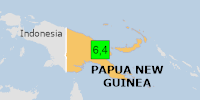
Green earthquake (Magnitude 6.4M, Depth:104.329km) in Papua New Guinea 20/09/2026 09:17 UTC, 50 thousand in MMI V.
On 9/20/2026 9:17:35 AM, an earthquake occurred in Papua New Guinea potentially affecting 50 thousand in MMI V. The earthquake had Magnitude 6.4M, Depth:104.329km.
Green forest fire notification in Papua New Guinea
On 10/09/2026, a forest fire started in Papua New Guinea, until 20/09/2026.

World: Alertes de maladies épidémiques et émergentes en Océanie le 15 septembre 2026
Countries: World, Australia, Guam, Marshall Islands, New Caledonia (France), New Zealand, Palau, Papua New Guinea, Samoa, Tuvalu, Vanuatu Source: Pacific Community Please refer to the attached Map. Éléments nouveaux/faits marquants intervenus depuis la diffusion de la carte précédente sur PacNet, le 08 septembre 2026 : Diarrhée aqueuse aiguë • États fédérés de Micronésie : Le rapport de situation no 9 sur l’épidémie de maladies diarrhéiques dans l’État de Yap, qui présente les données au 13 septembre 2026, ne signale aucun nouveau cas, après 5 nouveaux cas quotidiens enregistrés les 11 et 12 septembre, ce qui porte le total cumulé à 169 cas diagnostiqués cliniquement. Les enfants représentent 77 % des cas. À ce jour, 10 patients dont 8 enfants ont été hospitalisés, et tous ont désormais regagné leur domicile. Aucun décès n’a été recensé. D’autres cas signalés à Elato et à Satawal sont encore en cours de vérification et ne sont pas inclus dans le total. Les résultats des analyses effectuées en laboratoire entre le 3 août et le 6 septembre, présentés dans le Rapport sur les maladies transmissibles de l’État de Yap portant sur la semaine épidémiologique 36 (31 août–6 septembre 2026), établissent la présence d’ Escherichia coli , de rotarivus, de Giardia lamblia , de sapovirus et de Salmonella , avec souvent des co-infections par plusieurs de ces virus et bactéries. Le rotavirus A a été détecté dans 18 des 22 échantillons de selles analysés au cours de la semaine 36. L’étiologie expliquant l’augmentation globale des cas n’est pas encore établie. L’alerte grise pour la diarrhée reste en vigueur pour les États Fédérés de Micronésie (État de Yap) dans l’attente de la confirmation de l’étiologie. – Sources : Rapports de situation nos 6 à 9 sur l’épidémie de maladies diarrhéiques dans l’État de Yap (dont le dernier présente les données au 13 septembre 2026), communiqués au point de contact du Groupe de coordination du ROSSP les 11 et 15 septembre 2026, et Rapport sur les maladies transmissibles dans l’État de Yap, semaine épidémiologique 36, communiqué au point de contact du Groupe de coordination du ROSSP le 10 septembre 2026. Dengue • Îles Marshall : Le rapport de situation sur l’épidémie de dengue à Majuro, daté du 5 septembre 2026 et couvrant la période du 15 août au 5 septembre, fait état de 153 prélèvements testés au laboratoire de l’hôpital de Majuro, dont 66 positifs confirmés par test de détection rapide de l’antigène NS1 et 87 négatifs. Aucun décès n’a été enregistré. On recense donc 20 cas confirmés de plus que les 46 établis quatre jours plus tôt, le 1er septembre. Le taux d’attaque pour l’atoll de Majuro (23 158 habitants) a grimpé à 6,6 pour 1 000 pour les cas suspects et à 2,9 pour 1 000 pour les cas confirmés (les chiffres du rapport précédent s’établissaient à 4,7 et à 2,0, respectivement). Le sérotype DENV-1 reste le seul détecté. Les cas confirmés touchent davantage les jeunes âgés de 10 à 19 ans (21 cas) et de 0 à 9 ans (17). Les symptômes les plus courants sont la fièvre (79 %), les céphalées (65 %) et les douleurs musculaires (55 %). Les opérations de pulvérisation à effet rémanent se poursuivent lorsqu’un cas est confirmé, et d’autres opérations de nébulisation thermique, approuvées le 29 août, sont désormais en cours. L’alerte rouge pour la dengue (sérotype DENV-1) est maintenue. – Source : Ministère de la Santé et des Services sociaux des Îles Marshall, Rapport de situation sur l’épidémie de dengue à Majuro, 5 septembre 2026 , page consultée le 15 septembre 2026. Rougeole et rubéole • Papouasie-Nouvelle-Guinée : Le bulletin hebdomadaire du Département national de la santé pour la semaine épidémiologique 36 fait état de huit cas de rougeole confirmés en laboratoire depuis le 1er janvier, contre cinq dans le bilan précédent, le cas le plus récent ayant été enregistré le 28 août 2026. Les cas confirmés ont été détectés dans les provinces du Sepik-Est, des Hautes-Terres occidentales et de la Nouvelle-Irlande, ainsi que dans le district de la Capitale nationale et dans la Région autonome de Bougainville. Les cas de rubéole confirmés en laboratoire depuis le début de l’année sont passés de 15 à 16, le dernier ayant été enregistré le 29 août 2026. La campagne de vaccination contre la rougeole et la rubéole visant les enfants de moins de sept ans dans les districts touchés se poursuit dans le cadre d’activités de vaccination menées à l’occasion des contacts habituels avec les services de santé. L’alerte rouge pour la rougeole est maintenue en Papouasie-Nouvelle-Guinée. – Source : Département national de la santé de Papouasie-Nouvelle-Guinée, Bulletin hebdomadaire sur les événements de santé publique, semaine épidémiologique 36, communiqué au point de contact du Groupe de coordination du ROSSP le 10 septembre 2026. Maladies respiratoires • Nouvelle-Zélande : Pendant la semaine qui s’est achevée le 6 septembre 2026, le taux hebdomadaire d’hospitalisation pour infection respiratoire aiguë sévère (IRAS), toutes causes confondues, a baissé dans la région d’Auckland, mais il demeure pour la quatrième semaine consécutive à un niveau très élevé, supérieur aux niveaux enregistrés à cette période au cours des dernières années. Les hospitalisations pour des cas d’IRAS positifs à la grippe affichent également un taux très élevé pour la quatrième semaine. Le virus de la grippe est le plus courant de tous les virus détectés : parmi les patients atteints d’une IRAS, le taux de positivité pour la grippe était de 52,1 % (contre 57,8 % précédemment). Les sous-types H1 et H3 de la grippe A sont tous deux en circulation, le sous-type H3 étant prédominant et, d’après le sérotypage fondé sur les propriétés antigéniques, les virus en circulation présentent une bonne concordance avec le vaccin antigrippal de l’hémisphère Sud en 2026. Au niveau communautaire, le taux de positivité à la grippe pour les prélèvements effectués après consultation de généralistes du réseau de surveillance sentinelle est passé de 35,6 % à 40,4 % (soit 19 des 47 échantillons). Les flambées épidémiques de maladies respiratoires signalées étaient au nombre de 18, contre 14 précédemment : 12 ont été recensées dans des résidences pour personnes âgées, 4 dans des lieux d’accueil de la petite enfance et 2 dans des écoles, dans 9 districts au total. En 2026, par rapport aux autres groupes ethniques, les personnes originaires du Pacifique présentent les taux cumulés les plus élevés d’hospitalisation pour une IRAS due à la grippe, au VRS et au SARS-CoV-2, de même que les taux les plus élevés d’admission en soins intensifs en raison d’une infection par le virus de la grippe et par le VRS. Les enfants âgés de 0 à 4 ans affichent le taux d’hospitalisation pour une IRAS le plus élevé ; ce taux a augmenté cette semaine alors qu’il est en baisse pour toutes les autres tranches d’âge. L’alerte rouge pour la grippe A est maintenue. – Source : Tableau de bord des infections respiratoires aiguës sévères en Nouvelle-Zélande (semaine achevée le 6 septembre 2026), PHF Science, page consultée le 15 septembre 2026. Autres informations : Dengue • Nouvelle-Zélande : D’après PHF Science, quatre cas confirmés de dengue ont été signalés en Nouvelle-Zélande au cours de la semaine épidémiologique 36 (du 5 au 11 septembre 2026), la maladie ayant systématiquement été contractée à l’étranger : les patients avaient séjourné au Bangladesh, en Indonésie, aux Maldives et au Viet Nam pendant la période d’incubation. Depuis le début de l’année, 361 cas confirmés de dengue, 26 cas probables et 1 cas en cours d’investigation ont été notifiés. De nombreux arbovirus circulent actuellement dans des îles du Pacifique et, du fait de la réactivité sérologique croisée, certains des cas attribués au virus de la dengue pourraient être reclassés en infections à d’autres flavivirus. Les données sont donc susceptibles d’évoluer au fur et à mesure des investigations. – Source : Rapport NZ Arbovirus Notifications by Country, semaine épidémiologique 26, New Zealand Institute for Public Health and Forensic Science (PHF Science), communiqué au point de contact du Groupe de coordination du ROSSP le 14 septembre 2026. Influenza aviaire hautement pathogène • Australie : Au 11 septembre 2026, le tableau de bord national de surveillance de l’influenza aviaire H5 recensait 521 épisodes confirmés parmi la faune sauvage, contre 484 le 4 septembre : 286 en Australie-Méridionale, 162 dans le Victoria, 36 en Tasmanie, 25 en Nouvelle-Galles du Sud, 10 en Australie-Occidentale et 2 dans le Queensland. Aucun épisode n’a été signalé dans le Territoire de la Capitale australienne ou dans le Territoire du Nord. Les autorités ne testent plus toutes les espèces dans les zones où la transmission est avérée, le nombre d’épisodes signalés reflétera donc de moins en moins l’ampleur réelle de la propagation du virus. Le 12 septembre, 2 nouveaux épisodes ont été signalés chez des sternes huppées à Woy Woy et à Bulli (Nouvelle-Galles du Sud), ce qui porte le total à 32. Les délais de signalement peuvent entraîner des différences entre les chiffres des États et les chiffres nationaux. Le virus H5N1 a été détecté chez un renard roux dans l’agglomération d’Adélaïde ; il s’agissait de la première détection du virus H5 chez un mammifère terrestre en Australie, qui a été suivie d’un second décès de renard à Torquay (Victoria). Le 13 septembre, les autorités de l’Australie-Méridionale ont confirmé une première détection chez un lion de mer d’Australie, une espèce menacée d’extinction, sur le site de Seal Bay à Kangaroo Island. Aucun cas n’a été détecté dans des élevages de volailles commerciales ni chez des oiseaux en captivité, et aucun cas humain n’a été signalé en Australie. À ce jour, l’influenza H5 n’a été détectée dans aucun État ou Territoire insulaire océanien. – Sources : Tableau de bord du Gouvernement australien sur les épisodes d’influenza aviaire H5 chez la faune sauvage , communiqué de presse du Département des industries primaires et du développement régional de Nouvelle-Galles du Sud daté du 12 septembre 2026 , rapport BEACON du 8 septembre 2026 et article du 13 septembre 2026 sur PerthNow (AAP) , pages consultées le 14 septembre 2026. Variole simienne (mpox) • Australie : Le 14 septembre 2026, le Département de la santé du Victoria a publié une note d’information sanitaire indiquant une hausse des cas de variole simienne sur son territoire, 52 cas ayant été signalés au 1er août 2026, dans un contexte de circulation de plusieurs souches du virus dans de nombreuses régions du monde. En Australie, les populations les plus à risque sont les hommes ayant des relations sexuelles avec des hommes et leurs partenaires sexuels, en particulier les personnes qui ont des rapports avec de nombreux partenaires ou avec des partenaires occasionnels, tandis que les personnes dont le système immunitaire est affaibli, les enfants et les femmes enceintes sont les plus susceptibles de développer des formes graves de la maladie. – Source : Département de la santé du Victoria, note d’information sanitaire « Mpox continues to spread in the community », 14 septembre 2026 , page consultée le 15 septembre 2026. Maladies respiratoires • Australie : Le rapport australien de surveillance des infections respiratoires couvrant la période du 24 août au 6 septembre 2026 fait état de 31 650 cas de grippe signalés au cours de cette quinzaine, ce qui représente une hausse de 27,2 % par rapport aux 24 883 cas du bilan précédent ; la progression a toutefois ralenti et il se peut que le pic national n’ait pas encore été atteint. La période considérée coïncide avec les saisons prépandémiques, lorsque les pics intervenaient entre fin août et début septembre. Jusqu’à présent, 130 355 cas ont été enregistrés en 2026, ce qui représente une baisse de 62,6 % par rapport à la même période de l’année précédente. Parmi les cas détectés au cours de ces deux semaines, 30 074 étaient attribuables à la grippe A et 1 443 à la grippe B. En ce qui concerne les cas de grippe A pour lesquels un sous-typage a été réalisé, on recensait 491 cas de grippe A(H3N2) et 226 cas de grippe A(H1N1). Le plus grand nombre de cas de la quinzaine a été enregistré en Nouvelle-Galles du Sud (14 256 cas), puis dans le Victoria (7 039 cas) et dans le Queensland (6 625 cas). Les admissions liées à la grippe dans les hôpitaux sentinelles ont augmenté de 35 % (passant de 183 à 247) dans les deux semaines précédant le 23 août et, en 2026, 2 enfants et 12 adultes hospitalisés pour cause de grippe sont décédés. D’après les estimations provisoires, l’efficacité des vaccins contre le risque d’hospitalisation est de 35,0 %, et la couverture vaccinale s’établit à 30,2 %. – Source : Rapport sur la surveillance des infections respiratoires en Australie, Centre australien de lutte contre les maladies, semaines du 24 août au 6 septembre 2026 , page consultée le 15 septembre 2026. • Îles Salomon : Le ministère de la Santé et des Services médicaux indique que, d’après la surveillance systématique menée au cours de la semaine du 24 au 30 août 2026, le nombre de cas de syndrome grippal a augmenté sur les sites de surveillance de Honiara et de la Province occidentale. En outre, les tests systématiques en laboratoire ont permis de détecter la grippe A dans la majorité des échantillons analysés pendant le mois d’août. Des échantillons supplémentaires prélevés la semaine suivante doivent encore être testés. Le ministère préconise d’observer les règles d’hygiène des mains, de se couvrir la bouche en cas de toux ou d’éternuement, de rester chez soi en cas de maladie et de consulter un médecin en cas d’aggravation des symptômes, en particulier pour les jeunes enfants, les personnes âgées, les femmes enceintes et les personnes souffrant d’une pathologie sous-jacente. – Source : Déclaration du ministère de la Santé et des Services médicaux des Îles Salomon sur les syndromes grippaux , page consultée le 15 septembre 2026.
Sep 18, 2026 · byReliefWeb
World: Global Update | September 2026: An Inter-Agency Report of the Global ENSO Analysis Cell - El Niño Status & Humanitarian Outlook
Countries: World, Afghanistan, Angola, Bangladesh, Burkina Faso, Cameroon, Central African Republic, Chad, Colombia, Cuba, Djibouti, Ecuador, El Salvador, Ethiopia, Fiji, Guatemala, Haiti, Honduras, Indonesia, Kenya, Kiribati, Madagascar, Malawi, Mali, Mozambique, Myanmar, Nepal, Nicaragua, Niger, Nigeria, Papua New Guinea, Peru, Solomon Islands, Somalia, South Sudan, Sudan, Timor-Leste, Tuvalu, Uganda, Vanuatu, Venezuela (Bolivarian Republic of), Zambia, Zimbabwe Sources: International Federation of Red Cross and Red Crescent Societies, Save the Children, UN Office for the Coordination of Humanitarian Affairs, World Food Programme Please refer to the attached file. OVERVIEW El Niño is firmly established and is forecast to reach very strong intensity. WMO forecasts indicate a nearly 100 per cent likelihood that it will persist through February 2027, with the event expected to strengthen further and peak towards the end of 2026. Its effects may lag and persist beyond the peak. A very strong El Niño is likely to bring major shifts in rainfall and temperature patterns, increasing the risk of drought, flooding, extreme heat and other weather and climate hazards. These effects will not be felt everywhere at the same time or in the same way. Their severity will depend on where the climate signal coincides with agricultural and livelihood calendars, existing humanitarian needs and people's ability to cope. WMO cautions that the strength of the global event does not translate directly into the scale of impacts in any individual country or region. El Niño is also occurring against the backdrop of long-term climate warming. The emerging risks must be understood alongside conflict, displacement, high food insecurity and high food prices, malnutrition, disease outbreaks, economic pressures and overstretched essential services. These conditions have not improved since the June update. In many places, repeated shocks have depleted household assets, increased debt and weakened the coping mechanisms that people would ordinarily rely on when drought, floods or high prices affect their livelihoods. WFP estimates suggest that up to 50 million people globally could be affected over the next six to nine months, indicating the potential scale of the humanitarian consequences.
Sep 17, 2026 · byReliefWeb
Can an Island Nation’s Rugby Dreams Change Its Fortunes?
In Papua New Guinea, love for rugby league football borders on religion. The country’s leaders and its neighbor, Australia, want to harness the game for geopolitics, and to improve lives.
 Sep 16, 2026 · byThe New York Times
World: Epidemic and emerging disease alerts in the Pacific as of 15 September 2026
Countries: World, Australia, Marshall Islands, Micronesia (Federated States of), New Zealand, Papua New Guinea, Solomon Islands Source: Pacific Community Please refer to the attached Map. Highlights/updates since the last map was sent on PacNet on 08 September 2026: Acute watery diarrhoea • Federated States of Micronesia: Situation Report #9 on the diarrhoeal outbreak in Yap State, with data as at 13 September 2026, reports no new cases, after five new cases on each of 11 and 12 September, and a cumulative total of 169 clinically diagnosed cases. Children account for 77% of cases. Ten patients have been admitted to date, eight of them children, and all have now been discharged. No deaths have been reported. Additional cases from Elato and Satawal are still being verified and are not yet included in the total. The Yap State Communicable Disease Report for EpiWeek 36 (31 August–6 September 2026) laboratory results for 3 August to 6 September show Escherichia coli specimens, rotavirus, Giardia lamblia, Sapovirus and Salmonella, often as co-infections. Rotavirus A was detected in 18 of 22 stools tested in EpiWeek 36. The aetiology of the overall increase is not yet established. The grey alert for diarrhoea remains in effect for the Federated States of Micronesia (Yap State), awaiting confirmation of aetiology. – Sources: Yap State Diarrhoeal Outbreak Situation Reports #6 to #9, the latest with data as at 13 September 2026, shared with the PPHSN Coordinating Body Focal point on 11 and 15 September 2026, and Yap State Communicable Disease Report, EpiWeek 36, shared with the PPHSN Coordinating Body Focal point on 10 September 2026. Dengue • Marshall Islands: The Outbreak Situation Report on dengue in Majuro dated 5 September 2026, covering 15 August to 5 September, records 153 specimens tested at Majuro Hospital Laboratory, 66 confirmed positive by NS1 antigen rapid test, 87 negative and no deaths. That is 20 more confirmed cases than the 46 reported on 1st September, four days earlier. The attack rate for Majuro Atoll (population 23,158) has risen to 6.6 per 1,000 for suspected cases and 2.9 per 1,000 for confirmed cases, from 4.7 and 2.0 in the previous report. Serotyping still identifies DENV-1 only. Confirmed cases are most frequent among people aged 10–19 years (21 cases) and 0–9 years (17). The commonest symptoms were fever (79%), headache (65%) and muscle ache (55%). Residual spraying continues around all confirmed cases, and thermal fogging, approved on 29 August, is now under way. The red alert for dengue (DENV-1) remains in effect. – Source: RMI Ministry of Health and Human Services, Outbreak Situation Report on Dengue Fever in Majuro, 5 September 2026 accessed on 15 September 2026. Measles and rubella • Papua New Guinea: The National Department of Health weekly bulletin for EpiWeek 36 reports eight laboratory-confirmed measles cases year to date, up from five, with the most recent onset on 28 August 2026. Confirmed cases are in East Sepik, the National Capital District, Western Highlands, New Ireland and the Autonomous Region of Bougainville. Laboratory-confirmed rubella cases rose from 15 to 16 year to date, with the latest onset on 29 August 2026. The measles-rubella vaccination campaign for children under seven years in affected districts continues through opportunistic routine immunisation. The red alert for measles remains in effect for Papua New Guinea. – Source: Papua New Guinea National Department of Health, Public Health Events Weekly Bulletin, EpiWeek 36, shared with the PPHSN Coordinating Body Focal point on 10 September 2026. Respiratory diseases • New Zealand: For the week ending 6 September 2026, the weekly all-cause hospitalisation rate for severe acute respiratory infection (SARI) in the Auckland region decreased but remains in the very high activity band for a fourth consecutive week, higher than at this time in recent years, and the influenza-positive SARI rate is also in the very high band for a fourth week. Influenza was the most commonly detected virus, with test positivity among SARI patients at 52.1%, down from 57.8%. Both A/H1 and A/H3 are circulating, A/H3 predominating, and antigenic typing shows the circulating viruses match the 2026 Southern Hemisphere vaccine. In the community, influenza positivity among sentinel general practice samples rose from 35.6% to 40.4% (19 of 47 samples). Eighteen respiratory illness outbreaks were reported, up from 14: twelve in aged residential care facilities, four in early childhood education centres and two in schools, across nine districts. Pacific peoples have experienced the highest cumulative rates of influenza-, RSV- and SARS-CoV-2-positive SARI hospitalisation and the highest rates of influenza- and RSV-positive intensive care admission of any ethnic group in 2026. Children aged 0–4 years have the highest SARI hospitalisation rate, which increased this week while it decreased in every other age group. The red alert for influenza A remains in effect for New Zealand. – Source: New Zealand acute respiratory illness dashboard , week ending 6 September 2026, PHF Science, accessed on 15 September 2026. Other Information: Dengue • New Zealand: PHF Science reports four confirmed dengue cases notified in New Zealand during surveillance week 36 (5–11 September 2026), all acquired overseas: the cases had been to Bangladesh, Indonesia, the Maldives and Vietnam during the incubation period. Year to date, 361 confirmed, 26 probable and one under-investigation dengue cases have been notified. Multiple arboviruses circulate in the Pacific Island region, serological cross-reactivity means some cases reported as dengue may be due to other flaviviruses, and that data may change as cases are investigated. – Source: NZ Arbovirus Notifications by Country, surveillance week 36, New Zealand Institute for Public Health and Forensic Science (PHF Science) shared with the PPHSN Coordinating Body Focal point on 14 September 2026. Highly pathogenic avian influenza • Australia: The national H5 bird flu dashboard records 521 confirmed positive events in wildlife as at 11 September 2026, against 484 on 4 September: South Australia 286, Victoria 162, Tasmania 36, New South Wales 25, Western Australia 10 and Queensland 2, with none in the Australian Capital Territory or the Northern Territory. Authorities no longer test every species in known transmission areas, so event counts increasingly understate spread. New South Wales reported two further events in greater crested terns at Woy Woy and Bulli on 12 September, bringing the state count to 32; state and national figures can differ with reporting timing. H5N1 has been detected in a red fox in metropolitan Adelaide, the first detection of H5 in a land mammal in Australia, followed by a second fox death in Torquay, Victoria. On 13 September South Australian authorities confirmed the first detection in an Australian sea lion, an endangered species, at Seal Bay on Kangaroo Island. There has been no detection in commercial poultry or captive birds and no human case in Australia. H5 has not been detected in any Pacific Island country or territory to date. – Sources: Australian Government H5 bird flu events in wildlife dashboard , New South Wales Department of Primary Industries and Regional Development media release of 12 September 2026 , BEACON report of 8 September 2026 and PerthNow (AAP) of 13 September 2026 , accessed on 14 September 2026. Mpox • Australia: Victoria's Department of Health issued a health advisory on 14 September 2026 stating that mpox cases are rising in the state, with 52 cases reported since 1 August 2026, and that several strains of the virus are circulating in many parts of the world. In Australia, men who have sex with men and their sexual partners are most at risk, particularly people with multiple or casual partners, while people with a weakened immune system, children and pregnant women are at greater risk of severe illness. – Source: Victorian Department of Health, health advisory “Mpox continues to spread in the community”, 14 September 2026 , accessed on 15 September 2026. Respiratory diseases • Australia: The Australian Respiratory Surveillance Report for 24 August to 6 September 2026 records 31,650 notified influenza cases in the fortnight, up 27.2% from 24,883, although growth has slowed and the national peak may not yet have been reached. The timing matches pre-pandemic seasons, which peaked in late August to early September. There have been 130,355 cases so far in 2026, 62.6% fewer than at the same point of 2025. Influenza A accounted for 30,074 cases in the fortnight and influenza B for 1,443. Among subtyped influenza A, 491 were A(H3N2) and 226 A(H1N1). The largest fortnightly counts were in New South Wales (14,256), Victoria (7,039) and Queensland (6,625). Influenza admissions to sentinel hospitals rose by 35% (183 to 247) in the fortnight to 23 August, and two children and 12 adults admitted with influenza to sentinel hospitals have died this year. Interim vaccine effectiveness against hospitalisation is 35.0%, with vaccine coverage at 30.2%. – Source: Australian Respiratory Surveillance Report, Australian Centre for Disease Control, 24 August to 6 September 2026 accessed on 15 September 2026. • Solomon Islands: The Ministry of Health and Medical Services reports that routine surveillance for the reporting week of 24–30 August 2026 shows an increase in influenza-like illness cases from surveillance sites in Honiara and Western Province, and that routine laboratory testing detected influenza A in the majority of samples tested in August. Additional samples collected the following week are pending testing. The Ministry advises hand hygiene, covering coughs and sneezes, staying home when unwell and seeking medical attention if symptoms become severe, particularly for young children, older people, pregnant women and people with underlying health conditions. – Source: Solomon Islands Ministry of Health and Medical Services statement on flu-like illness accessed on 15 September 2026. Many thanks again for your continuous contributions. Please note that the alerts displayed on the map are based on information available to us as of the date of this report. As usual, please do not hesitate to contact us for corrections, additions, or comments. With our best regards, Thibaut Demaneuf Surveillance and Research Officer, SPC on behalf of The Focal Point of the PPHSN Coordinating Body Team Email: FocalPointPPHSN-CB@spc.int
Sep 15, 2026 · byReliefWeb![World: Pacific Syndromic Surveillance System Weekly Bulletin / Système de Surveillance Syndromic dans le Pacifique - Bulletin Hebdomadaire: W36 2026 (Aug 31-Sep 06) [EN/FR]](https://reliefweb.int/sites/default/files/styles/thumbnail/public/previews/ae/67/ae67cd6e-0283-49da-a568-8f4c64356b62.png)
World: Pacific Syndromic Surveillance System Weekly Bulletin / Système de Surveillance Syndromic dans le Pacifique - Bulletin Hebdomadaire: W36 2026 (Aug 31-Sep 06) [EN/FR]
Countries: World, American Samoa, Cook Islands, Fiji, French Polynesia (France), Guam, Kiribati, Marshall Islands, Micronesia (Federated States of), New Caledonia (France), New Zealand, Niue (New Zealand), Northern Mariana Islands (The United States of America), Palau, Papua New Guinea, Pitcairn Islands, Republic of Naoero, Samoa, Solomon Islands, Tokelau, Tonga, Tuvalu, Vanuatu, Wallis and Futuna (France) Source: World Health Organization Please refer to the attached file.
Sep 15, 2026 · byReliefWeb
Institutional Capacity Assessment: Provincial Disaster Centres (Papua New Guinea) - Synthesis Report (July 2026)
Country: Papua New Guinea Sources: Government of Papua New Guinea, International Organization for Migration Please refer to the attached file. Developed by the National Disaster Centre (NDC) in collaboration with the International Organization for Migration (IOM), with technical support from humanitarian partners. This report provides a national overview of the institutional, operational, and infrastructure capacities of Provincial Disaster Centres across Papua New Guinea The assessment identifies key strengths, gaps, and priority investment areas to support the strengthening of disaster risk management systems at the provincial level. We hope the findings will inform ongoing planning, programming, capacity development, and coordination efforts across government and partner agencies.
Sep 15, 2026 · byReliefWebProvincial Disaster Centre Institutional Capacity Assessment (PNG) - Synthesis Report
Country: Papua New Guinea Source: International Organization for Migration Please refer to the attached file. Developed by the National Disaster Centre (NDC) in collaboration with the International Organization for Migration (IOM), with technical support from humanitarian partners. This report provides a national overview of the institutional, operational, and infrastructure capacities of Provincial Disaster Centres across Papua New Guinea The assessment identifies key strengths, gaps, and priority investment areas to support the strengthening of disaster risk management systems at the provincial level. We hope the findings will inform ongoing planning, programming, capacity development, and coordination efforts across government and partner agencies.
Sep 15, 2026 · byReliefWeb
‘Now we seem to be the villains’: How PNG Chiefs are building a squad that is the envy of other NRL clubs
The expansion club’s recruiting spree has been aided by generous tax breaks with the goal to assemble a competitive roster from day one As Brian To’o ran away to score a try and seal victory for the Panthers in Sunday’s qualification final against the Roosters, rugby league fans in Papua New Guinea had almost as much reason to celebrate as those from Penrith. The 28-year-old winger showed he was back to his best in a high-pressure clash between teams many predict will contest next month’s grand final. Within two years, however, expansion club PNG Chiefs – boasting To’o and an all-star backline – hope to be in the same position after a recruiting spree that has drawn envy from other clubs. Continue reading...
 Sep 14, 2026 · byThe Guardian
Green forest fire notification in Papua New Guinea
On 08/09/2026, a forest fire started in Papua New Guinea, until 14/09/2026.

World: Global Climate Risk Index 2026: Qui souffre le plus des évènements météorologiques extrêmes? (Résumé)
Countries: World, Chad, Grenada, Malawi, Myanmar, Nepal, Niger, Papua New Guinea, Philippines, Saint Vincent and the Grenadines, Viet Nam Source: Germanwatch Please refer to the attached file.
Sep 14, 2026 · byReliefWeb![World: Global Climate Risk Index 2026 [EN/AR/DE]](https://reliefweb.int/sites/default/files/styles/thumbnail/public/previews/24/08/2408ddd9-3ea1-40f5-98ee-073398e7a221.png)
World: Global Climate Risk Index 2026 [EN/AR/DE]
Countries: World, Chad, Grenada, Malawi, Myanmar, Nepal, Niger, Papua New Guinea, Philippines, Saint Vincent and the Grenadines, Viet Nam Source: Germanwatch Please refer to the attached files. The Climate Risk Index (CRI) ranks countries by the human and economic toll of extreme weather. The latest edition highlights increasing losses and the urgent need for stronger climate resilience and action. The Climate Risk Index (CRI), published since 2006, is one of the longest running annual climate impact-related indices. The CRI analyses climate-related extreme weather events’ degree of effect on countries. In doing so, it measures the consequences of realised risks on countries. This retrospective index ranks countries by their economic and human impacts (fatalities, as well as total affected), with the most affected country ranked highest. The CRI visualises such events’ degree of effect at one year before the index’s publication and over the preceding 30 years. The index contextualises international climate policy debates and processes with a view to the climate risk countries are facing. It simplifies the aggregation and understanding of climate-related extreme weather events’ impacts across different regions and time periods. The most strongly affected countries rank highest and should view the CRI results as a warning sign that they are at risk of frequent events or rare and unusual extreme events. CRI 2026 ranking and results: highlights Scorching heat, heavy rainfalls, raging wildfires, deadly floods, and devastating storms: The manifestations of extreme weather events have become too common in a new reality worldwide. The CRI 2026 sheds light on inaction’s growing cost. It reveals the mounting human and economic toll. From 1995 to 2024, more than 832,000 lives were lost and direct economic losses of nearly USD 4.5 trillion (inflation-adjusted) were recorded, driven by more than 9,700 extreme weather events . The frequency and intensity of climate-related disasters continue to rise, and these figures underscore the urgent need for climate action. Methodology The CRI methodology involves analysing extreme weather events’ impacts via three hazard categories: hydrological, meteorological, and climatological. The index visualises these events’ impact on countries both one year prior to publication and over the preceding 30-year period. It draws on data from the EM-DAT international disaster database, World Bank, and International Monetary Fund (IMF). The index considers absolute and relative impacts, using six key indicators: economic loss, fatalities, and affected people – each in absolute and relative terms. CRI 2026 key messages The Climate Risk Index (CRI) ranking indicates that, in 1995–2024, Dominica , Myanmar, and Honduras were the countries most affected by extreme weather events’ impacts. St. Vincent and the Grenadines , Grenada, and Chad were the most affected by extreme weather events’ impacts in 2024. From 1995 to 2024, more than 832,000 people died worldwide and direct economic losses of over USD 4.5 trillion (inflation-adjusted) directly resulted from more than 9,700 extreme weather events. Floods, storms, heat waves, and drought were the most prominent impacts short- and long-term. From 1995 to 2024, heat waves (33%) and storms (33%) caused the most fatalities. Floods accounted for almost half of those affected (48%). Storms caused, by far, the greatest economic losses (58% or USD 2.64 trillion inflation-adjusted). The most affected countries in the long-term index, for 1995–2024, can be divided into those: (1) most affected by highly unusual extreme events ( e.g. Dominica, Myanmar, Honduras, and Libya )and (2) affected by recurring extreme events ( e.g. Haiti, the Philippines, Nicaragua, and India ). Climate science clearly shows that climate change raises the risk for both categories and strongly indicates that it contributes to transforming unusually extreme events into ongoing threats, creating a new normal. The CRI indicates that all countries are affected, but those in the Global South are particularly impacted. In both the short- and long-term indices, extreme weather events’ impacts particularly affected poorer Global South countries. In 2024, eight of the 10 most affected were in the low-income and lower-middle-income group. [1] Between 1995 and 2024, six of the 10 most affected were lower-middle-income, including one Small Island Developing State and three Least Developed Countries. These countries’ coping capacities are substantially lower than others’. None of the 10 most affected over the previous 30 years were in the high-income group, and only one for 2024. The CRI ranking is based on the best publicly available historical dataset (at the time of publication) on extreme weather events’ impacts. These events and their impacts are often underreported, especially those in Global South countries, because of data quality and coverage challenges, and data gaps. This can lead to the ranking less accurately capturing all experienced impacts for all countries. Human-induced climate change affects the frequency and intensity of extreme weather events and leads to widespread adverse climate impacts. El Niño influenced many extreme events at the beginning of 2024. However, attribution science found that climate change helped fuel these events even more than El Niño. [2] Climate science also found that, in 2024, human-caused climate change added 41 days of dangerous heat for billions of people worldwide, greatly impacting vulnerable populations and driving other extreme weather events, such as intensified hurricanes and wildfires. The summer of 2024 was the hottest on record, with two billion people experiencing 30+ risky heat days. [3] COP 30 should find effective ways to close the global ambition gaps, as the CRI 2026 results illustrate: Global emissions must be reduced immediately, adaptation efforts must be accelerated, effective solutions to address loss and damage must be implemented, and adequate climate finance must be provided . Courts this past year have confirmed this urgency. An International Court of Justice advisory opinion clarified that states have binding legal duties to prevent and address the harmful effects of climate change – including stronger mitigation, adaptation, and loss and damage actions – by providing climate finance. [1] For a definition of income groups, see World Bank (2024). World Bank Country and Lending Groups, 2024 . [2] World Weather Attribution (2024). When Risks Become Reality: Extreme Weather In 2024 . [3] Climate Central (2024). People Exposed to Climate Change: June-August 2024 .
Sep 14, 2026 · byReliefWeb
PNG: CARE International Emergency Situation Report # 1 - Pacific & Timor-Leste El Niño Drought 2026
Countries: Papua New Guinea, Fiji, Samoa, Solomon Islands, Timor-Leste, Tonga, Vanuatu Source: CARE Please refer to the attached file. 1. Executive Summary As the 2026-27 El Niño event intensifies, drier and drought conditions have impacted much of the Pacific region. More than 6-million people across the Pacific and Timor-Leste are now affected by drought. CARE is currently developing response strategies across the region to target growing needs in areas of WASH, Protection, and Food Security, Nutrition and Livelihoods. The current regional funding target is USD2.44million for an initial 9-month response targeting 62,000 people. 2. Situation Overview Across the Pacific and Timor-Leste more than 6 million people have been affected by El Niño-induced drought conditions. Worsening food insecurity, water insecurity, and protection risks are leading to a deepening of poverty, increased health and hygiene risks, and heightened gender-based violence (GBV) exposure. The 2026-27 El Niño event is projected to be the strongest ever recorded. The latest relative Niño3.4 index value for the week ending 30 August 2026 is +2.45 °C, well above the El Niño threshold (+0.80 °C) and warmed by around 0.5 °C over the prior fortnight. The strength of this El Niño, in addition to the typical life cycle of an El Niño, suggests this El Niño may persist into the southern hemisphere autumn 2027. The Australian Bureau of Meteorology (BoM) notes the rate of ocean warming observed in the six months to September 2026 is unprecedented in the historical record, with peak SST anomalies potentially exceeding +3.0°C.1 The European Commission's Joint Research Centre (JRC) has characterised the 2026 event as "potentially historic" and has emphasised that El Niño's high predictability creates a clear obligation for timely anticipatory action. The Indian Ocean Dipole (IOD) is currently neutral. As of 30 August 2026, the weekly IOD index is +0.22 °C. After three-weeks above the positive IOD threshold (+0.4 °C), the index has returned to neutral. Risks of a positive IOD to develop during the southern hemisphere spring.
Sep 14, 2026 · byReliefWeb