




← News
Topic · Organization

WhatsApp

49 articles · 4+ stories

🔥

Stories about WhatsApp

See also
📰

Latest WhatsApp articles

UAE ruling: Filming a violation is legal, but posting it on WhatsApp or social media could land you in court

UAE ruling: Filming a violation is legal, but posting it on WhatsApp or social media could land you in court

Fujairah: Consumers resort to protecting their rights by filming a violation, with the intention of documenting it. However, the way the video is used after filming may move its owner from the position of a reporter to the position of one accused of defamation, if it turns out that the goal of the recording is to offend. Legal experts stressed the consumer's right to document violations and not to treat the phone as an open permit to publish or share clips with others, stressing that the legal rule is simple in appearance and decisive in its effect, and stipulates that "the violation should not be made a subject of public condemnation before the competent authorities have their say," noting that the line between legitimate documentation and defamation is very fine, determined by the way the clip is used and the entity to which it is sent. They explained that filming an incident that a person believes constitutes a violation and sending it to a competent authority is legally different from publishing it through social media platforms or circulating it among family or professional WhatsApp groups, especially if it is accompanied by accusations or phrases that harm the reputation of a person or establishment, such as ‘Do not buy this product’. They stressed that the right to report does not mean having an absolute right to publish or issue judgments before the competent authorities verify the incident. Consumer case Recently, there were reports about a consumer case in which, insects were found inside a product displayed in a supermarket, and an individual photographed it with his phone, and sent the video to the relevant authorities, fulfilling his duty to protect consumers. However, the supermarket management sued him, turning him from a complainant into someone accused of defamation before the courts. The Court of First Instance acquitted him, while the Court of Appeal convicted him and fined him Dh3,000, and ordered the confiscation of the phone used in the filming, before the case reached the Federal Supreme Court, which confirmed that merely taking the clip is not enough to establish the crime, and that the matter requires proof of bad faith and intent to offend or harm the reputation of others, noting that the consumer filmed the product because he believed there was a violation that required reporting to the competent authorities, and it was not proven that his goal was to defame the store or harm its reputation. Legal advisor and lawyer Mohammed Ali Al Hammadi said that the importance of the ruling does not stop at the acquittal of the accused in the incident in question. Picture credit: Supplied Legal advisor and lawyer Mohammed Ali Al Hammadi said that the importance of the ruling does not stop at the acquittal of the accused in the incident in question, but extends to the principle established by the Federal Supreme Court, which relates to the consumer’s right to document the violations he sees and report them to the competent authorities, as long as this is done in good faith and within the limits required by the reporting process. He added that the ruling drew a clear distinction between documentation for the purpose of reporting and filming for the purpose of defamation or abuse, explaining that “merely carrying a phone and filming a violation does not automatically turn the act into a crime, but rather the intention behind the filming, the purpose of using the clip, and the party to whom it was sent are considered.” He added that a consumer who sees a product that he believes is unfit for consumption, or a violation that affects health, safety, or consumer rights, can document the incident to the extent necessary and refer it to the competent authorities to verify it, stressing that this is completely different from posting the clip on social media or circulating it among others with the intention of offending or defaming. He said that in such cases, the phone may be a means of proving the violation and protecting the right, or it may turn into a tool of crime, and the difference between the two cases is determined by the purpose of the filming, and the method of using the filmed material afterwards. He stated that the principle issued by the Federal Supreme Court carries an important message to consumers about the need to be aware of their right to report violations, while at the same time adhering to the legal limits of this right. What the law says Al-Hammadi continued: “If a consumer witnesses a violation, he has the right to document it to the extent necessary and send it directly to the competent authority. However, this right does not mean publishing the clip widely or turning the report into a means of defaming the establishment or individuals.” He pointed out that legislation differentiates between handing over evidence or a picture to a competent authority for the purpose of verifying a violation, and using the picture or clip with the intention of offending a person or establishment or harming its reputation, because violating privacy or publishing materials with the intention of harming may entail legal responsibility for the perpetrator. He explained that the legal principle presents consumers with three essential elements to consider when filming any violation: the purpose of the filming, how the footage will be used, and the entity to which it will be sent. He emphasised that "the rule consumers should understand is: if you witness a violation, document it only when necessary, and send it only to the competent authority; do not turn the report into a means of defamation." Lawyer and legal consultant Abdullah bin Hatem said that a person may be faced with a real incident that deserves to be reported, but that does not necessarily give him the right to turn it into a campaign against an establishment or person. Picture credit: Supplied For his part, lawyer and legal consultant Abdullah bin Hatem said that describing an act as defamation is not related to the mere existence of a picture or video clip, but rather it looks at the way the image material is used and the accompanying phrases, the extent of its publication, and the purpose of its circulation. He explained that the matter is different when a person goes beyond submitting a report to publishing the clip in front of the public, especially if the publication is accompanied by accusations or descriptions that affect the reputation, or is based on personal opinions and conclusions or information and facts narrated by the owner of the clip without verifying their accuracy or proving them with the competent authorities. He added that a person may be faced with a real incident that deserves to be reported, but that does not necessarily give him the right to turn it into a campaign against an establishment or person, or to issue a prejudgment against them before the official authorities have investigated the incident and taken the necessary measures. Bin Hatem pointed out that social media platforms increase the sensitivity of these incidents, because the clip may spread within hours to thousands of people, which may result in damage that cannot be easily remedied, even if it is later proven that some of the published information was not accurate. He stressed that the main difference is that “the informant presents his evidence to the competent authority, while the one who publishes in front of the public bears the responsibility for what he publishes and the statements and accusations he accompanies it with.” He explained that technological development and the spread of smartphones have made photography a part of daily life, but the ease of recording any incident does not mean that its subsequent use is free from responsibility. Bin Hatem pointed out that good faith is not measured simply by a person saying they intended to report something, but rather by the circumstances of the incident, the method of filming, what they did with the material afterward, and the recipient. He emphasised that consumers should not refrain from documenting violations for fear of repercussions, but at the same time, they should not treat their phones as an open license to publish or defame. He explained that “the rule established by the ruling appears simple on the surface, but it is decisive in its effect: Do not make the violation a subject for public condemnation before the competent authorities have their say.” Limits of photography or videography Lawyer and legal consultant Sarah Al-Baqishi said that documentation remains within the framework of legitimate use when it is linked to a real need to prove an event or situation, and is done only to the extent necessary. Picture credit: Supplied For her part, lawyer and legal consultant Sarah Al-Baqishi said that documentation remains within the framework of legitimate use when it is linked to a real need to prove an event or situation, and is done only to the extent necessary, provided that the image or photographed material is submitted to the competent authority to verify it, and not published publicly or circulated among people, including through family groups or other private communication channels. She added that examples include photographing a product that shows signs of damage or spoilage, a violation related to health and safety, or a situation that the consumer needs to prove exists within a formal complaint. She explained that the consumer should limit the photography to the location of the violation as much as possible, and avoid photographing people or private data that is not related to the report, especially if there is no need to show it to the competent authority. She pointed out that having a picture or video does not give its owner absolute freedom to publish it, as there is a difference between using it as evidence in an official complaint and using it as public content on social media. Al-Baqishi stressed that the best way to protect the person who filed the report is to keep the material, document the time and place of the incident, send it directly to the concerned authority, and leave the task of verifying the violation and taking legal action to the competent authorities.


Oct 8, 2026 · byMobile Business
Country diary: A TB scare is still hanging over the farm | Andrea Meanwell

Country diary: A TB scare is still hanging over the farm | Andrea Meanwell

Tebay, Cumbria: I’ve had a stroke of luck with applying for government funding, but some bad vet results are overshadowing things once more Last week was an important one as the government’s sustainable farming incentive opened for this year. Thankfully, I was working on my laptop when the email came through, so I submitted an application for us to become an organic farm. Others were not so lucky – the funding ran out after a few hours, and WhatsApp became a catalogue of despair among farmers who missed out and now don’t know how their farm businesses will survive. It’s clear that the government needs to provide more money to support sustainable farming. Meanwhile, it’s been a difficult period since June as we’ve been “shut down” with TB. We’ve been waiting to test again so we can hopefully sell our bullocks, bull and breeding heifers. The wait has been extended because of my son’s wedding, and we had to find a new vet after our previous vet stopped taking farm animals as it was uneconomical for them. I’ve been unable to sleep. Another shutdown would again impact us financially. Continue reading...

Oct 2, 2026 · byThe Guardian
Apple CoreGraphics PoC Emerges as WhatsApp PDF Checks Hint at Possible Delivery Path

Apple CoreGraphics PoC Emerges as WhatsApp PDF Checks Hint at Possible Delivery Path

Security researchers have published the first public proof-of-concept for CVE-2026-86950, an Apple CoreGraphics flaw Apple says may have been used in attacks against specific targeted individuals. The trigger is a malicious PDF with a crafted embedded font that crashes unpatched iPhones and Macs. The code causes a crash, not an execution error. Turning the memory corruption into a working

WhatsAppneutral
Oct 1, 2026 · byThe Hacker News
UAE private schools ban parents from taking photos on campus, and from sharing old ones on WhatsApp

UAE private schools ban parents from taking photos on campus, and from sharing old ones on WhatsApp

Dubai: Private school administrations have banned parents from taking ‘random’ family photos or recording videos on campus throughout the school day, whether of their children or other students. They have issued mandatory circulars regulating the use of cameras and prohibiting the sharing of any content showing students on WhatsApp groups or social media platforms without parental consent, in a move aimed at protecting children's privacy and putting an end to what they described as ‘random filming’ inside schools. School principals confirmed that the family photograph loses its innocence as soon as it includes other children in its background without their parents’ permission, as it turns from a personal memory into an infringement on the privacy of students whose parents did not choose to photograph them or publish their pictures, especially when the picture leaves its owner’s phone to digital groups and platforms where it is difficult to control the extent of its spread or recirculation. They stressed that the presence of a father or mother inside the school premises does not give them the right to include other children in the frame of the picture, even in passing, considering that protecting the privacy of students begins before pressing the camera button, not after publishing, and that a snapshot that does not take seconds may reveal the faces of children, their presence and their school environment to an unlimited circle of recipients. In detail, circulars were issued by private school administrations to parents, following the detection of cases of filming inside the school premises, in which the children of the photographers and other students appeared, before the photos and videos were circulated via WhatsApp groups and social media platforms. The schools stressed that the ban on photography is not limited to classrooms, but extends to all times and facilities of the school day, including student drop-off and pick-up times, school gatherings, corridors, playgrounds, and all other school facilities, stressing that the measure is to protect the privacy and safety of students and staff and to preserve their rights. Through its circulars, the schools expanded the scope of the procedures to previously filmed content, asking parents not to republish or circulate any pictures or videos taken inside the school premises that show the faces of other students, and to delete the post from social media platforms and parents’ groups, in order to cut off the circulation and prevent the filmed content from getting out of control after it is published. Background trouble Psychological and educational consultant, Dr. Ahmed Eid, said that random photography may shake a child’s sense of security inside the school. Picture credit: Supplied Samer Sarhan, the director of a private school, said that the problem does not always start with deliberately filming another student, but rather with a shot in which the parent focuses on his son, while the background includes a number of students or teachers, or details that reveal the name of the school, its location, and entry and exit times. He added that the phone may record, in addition to the image, side conversations, behavioural situations, or personal moments of other students, and then the material is transferred to dozens of phones once it is published within a group for parents, so that the school and the family lose the ability to know who saved it or forwarded it. He stressed that the ban on photography is not aimed at restricting families or confiscating their right to preserve their children's memories, but rather at regulating this right within an environment that includes hundreds of students, each of whom, along with their family, has a different stance regarding being photographed or having their pictures published. He explained that the school bears the responsibility of protecting students during the school day and controlling movement within its facilities, and therefore photography cannot be left to individual interpretations, especially in classrooms, corridors, playgrounds, and areas for dropping off and picking up children. Photography in school events Salma Eid, the principal of a private school, said that the photography regulations exclude official school events where specific invitations are extended to parents to attend and participate. However, this exception does not give families the freedom to take unrestricted photos, as photography remains limited to their children, while avoiding taking or publishing any photos or videos in which other students appear without their parents' consent. She emphasised that opening the school doors for a party or event does not turn the school grounds into a public space open to cameras, and that inviting parents to attend does not mean there is collective consent to photographing children or publishing their pictures, stressing the need to clearly distinguish between the “right to attend the event” and the “right to photograph the participants in it”. She added that schools can document their events through accredited photographers, according to the approvals registered with them, in addition to allocating specific points or angles for photography that limit the appearance of other students in the background, while notifying families in advance of the controls, in order to ensure that the occasion is documented without turning it into an open space for photography or infringing on the privacy of any child. Digital map of students Amani Hajir, a digital security and safety specialist at a private school, warned that blurring faces is insufficient if details remain that could reveal the student's identity or school. Picture credit: Supplied Amani Hajir, a digital security and safety specialist at a private school, confirmed that the danger of the school photo goes beyond the child’s face, as it may reveal the school logo, his name, his grade, and his classmates, as well as indicators of his arrival and departure times, thus drawing a ‘digital map’ of his identity and movements. She warned that blurring faces is insufficient if details remain that could reveal the student's identity or school. The risk is compounded after posting, as the image can leave a limited group within seconds through forwarding or screenshots. She emphasised that "protection begins before you press the shutter button." Hajir called for transforming photography guidelines into a written school policy that includes a rapid reporting and deletion mechanism, while also educating families that class WhatsApp groups are not entirely private spaces. Psychological and educational consultant, Dr. Ahmed Eid, said that random photography may shake a child’s sense of security inside the school, especially if an embarrassing shot or a moment of emotion turns into a subject of ridicule and bullying, which may push him to avoid activities or monitor his behaviour for fear of the camera. He stressed that protecting students psychologically requires schools to move from simply banning photography to early prevention, by controlling its locations and occasions, limiting the documentation of events to accredited photographers, with a quick channel for reporting and deletion, and immediate educational and psychological intervention in case of misuse of any image. Eid stressed that a psychologically safe school is one that prevents harm before it occurs, not one that reacts after the image has spread, emphasising that respecting the child’s privacy is an integral part of protecting him within the school environment. What the law says Legal advisor Maha Al Jasmi said the responsibility does not necessarily stop with the person who took the picture. Picture credit: Supplied Legal advisor Maha Al Jasmi said that a parent taking a picture of their child does not automatically give them the right to photograph another child or publish their picture without the consent of their parents. She stressed that using technical means to photograph others or circulate their pictures in a way that affects their privacy may entail legal responsibility, according to the circumstances of each incident, the nature of the content, the purpose of the photography, and how it is used. She explained that Article 44 of Federal Decree-Law No. 34 of 2021 on Combating Rumours and Cybercrimes criminalises forms of privacy violations using an information network, electronic information system, or any means of information technology, including taking pictures of others in a public or private place, or preparing, transferring, disclosing, copying, or retaining electronic images. Al-Jasmi stressed that the responsibility does not necessarily stop with the person who took the picture, as resending or publishing expands the circle of content circulation and may multiply its impact, which necessitates not treating pictures received through social media groups as permissible to republish simply because the recipient did not take them himself. Parents were urged, upon discovering a published image of their children without their consent, to request its removal and to contact the publisher and the school administration, while keeping proof of the publication in case official action is needed. She stressed that the appearance of a child in a fleeting image does not automatically imply legal responsibility in every case, as each incident has its own circumstances. However, the safest rule is not to publish pictures of other children without the consent of their parents, to respond immediately to any request for deletion, and not to use the pictures in a way that infringes on their privacy or exposes them to harm. Parents’ opinions Parents had differing opinions on schools tightening the ban on photography. While some saw documenting the first day and events as a family right as long as it did not infringe on the privacy of others, others supported the ban within school facilities, stressing that a single picture reaching a group of dozens of people could quickly get out of control. Parent Hala Maher said the problem is not the image that remains on the family's phone, but the speed with which it is shared without checking what appears in its background or taking into account the privacy of other students, noting that resending makes containing its spread later extremely difficult. Parent Ehab Ziada said that tightening controls should be accompanied by organized alternatives, such as allocating points for taking pictures during events or making official photos available to families, in a way that preserves their right to document their children's memories without the privacy of other children being part of the picture. Six rules for safe photography Private school administrations have set six rules to control photography and protect students’ privacy: Prohibiting photography during the school day Limiting it to activities permitted for students Checking the background of the image before saving or publishing it Not circulating any content in which other students appear Concealing identifying data when necessary Responding immediately to any request to delete the content

WhatsAppneutral
Oct 1, 2026 · byMobile Business
UAE mental health helplines 2026: Numbers to call in Dubai, Abu Dhabi and across the Emirates

UAE mental health helplines 2026: Numbers to call in Dubai, Abu Dhabi and across the Emirates

Dubai: If you’re struggling with anxiety, depression, or any other mental health issue, and you don’t know whom to turn to, the UAE offers hope. As part of the country’s National Strategy for Wellbeing 2031 – a comprehensive long-term plan featuring multiple pillars, objectives, and dozens of projects spanning health, education, the environment, and community engagement – residents have full access to resourceful helplines across the emirates. Backed by trained psychologists and counsellors, dialling a helpline can lead you to immediate counselling and assistance, and even referrals to specialists for further support. Here are a few numbers to save, and call, when you need mental health assistance: UAE (all emirates) National Hope helpline: 800-HOPE (800 4673) As part of the UAE National Programme for Happiness and Wellbeing, access the National Hope mental health hotline at 800 4673 (you can call or WhatsApp this number) to receive immediate psychological counselling and support. The service is available in Arabic and English. Dubai Itma’en: 800 506 Dubai Health, in collaboration with the Community Development Authority, and the Dubai Health Authority, offers the Itma’en service (which means ‘rest assured’ in Arabic), making mental health support freely accessible to all. The helpline operates daily from 9am to midnight, and connects you with specialised counsellors. Contact the Itma’en helpline at 800 506. Al Amal Psychiatric Hospital: 800 8877 The ‘Speak, We’re Listening’ helpline by Al Amal Psychiatric Hospital aims to promote better mental health, facilitate access to related resources, and provide early detection and intervention for issues such as anxiety, mood disorders, panic, post-traumatic stress disorder, depression, and burnout. The helpline, which is also accompanied by a WhatsApp channel (04 519 2519) provides consultation and support from trained psychologists, and operates from Monday to Friday, 9am to 9pm. Contact the helpline by dialling 800 8877, then dialling 2 for Emirates Health Services (EHS), and 2 again for the Speak, We’re Listening initiative. American Hospital: 04 3774686 American Hospital Dubai offers a free mental health hotline to support people dealing with emotional distress, anxiety or overwhelming thoughts. Contact them at 04 3774686. Medico Arabia: 056 9005443 or 050 1590070 Dubai-based healthcare consultancy Medico Arabia offers a 24/7 mental health distress helpline for anyone experiencing emotional distress, anxiety, trauma or overwhelming thoughts. Contact them at 056 9005443 or 050 1590070. Abu Dhabi The Department of Health – Abu Dhabi: 800-SAKINA (800 725462) Residents in the capital can call the Department of Health – Abu Dhabi hotline, 800-SAKINA (800 725462), which offers 24/7 psychological assistance, as well as direct access to qualified and compassionate mental health professionals. The hotline supports both Arabic and English. Istijaba: 800-1717 The Istijaba helpline was developed by the Department of Community Development in Abu Dhabi (DCD), in collaboration with the Department of Health, Abu Dhabi Public Health Center (ADPHC), and Abu Dhabi Health Services Company (SEHA). The helpline connects callers with mental health specialists trained in treating anxiety, tension, depression, and other types of issues related to mental health. The team is trained to deal with all age groups. The 24/7 hotline is available in several languages, including Arabic, English, Hindi, French, Malayalam, and Tamil. Contact Istijaba at 800-1717.

Emiratesneutral
Sep 30, 2026 · byMobile Business
101 Malicious npm Packages Add Developers' WhatsApp Accounts to Groups Without Consent

101 Malicious npm Packages Add Developers' WhatsApp Accounts to Groups Without Consent

Cybersecurity researchers have identified a cluster of 101 npm packages that are used to trap developers into a WhatsApp group subscriber campaign dubbed PhantomSub. "The malicious packages abuse the 'Baileys' WhatsApp open source project to add the victims to groups without their consent," OX Security researchers Nir Zadok, Moshe Siman Tov Bustan, and Vitalii Chepurko said in a technical

Sep 29, 2026 · byThe Hacker News
Abu Dhabi court awards woman Dh20,000 compensation in blackmail and privacy violation case

Abu Dhabi court awards woman Dh20,000 compensation in blackmail and privacy violation case

Abu Dhabi: The Abu Dhabi Family, Civil and Administrative Court has ordered two young men to jointly pay a woman Dh20,000 in compensation for moral and psychological damages after they were criminally convicted of filming private material belonging to her and using it to threaten and blackmail her. The woman filed a lawsuit seeking Dh150,000 in compensation for material, moral and psychological damages resulting from the defendants' actions. According to court documents, the woman said the first defendant, in agreement with and incited by the second defendant, violated her privacy by secretly filming her and obtaining visual materials without her knowledge or consent. She said the defendants later used the material to pressure and threaten her. The claimant stated that the first defendant used WhatsApp and electronic accounts to send messages containing threats, psychological pressure and hints about revealing matters related to her private life. She said the messages included references to disclosing private information, videos and personal matters to others. She also told the court that the first defendant used her private videos to threaten and blackmail her by warning that they would be published or shared with members of her family and acquaintances. The woman said the defendant had sent video clips to her former husband from a phone number registered in his name. She pointed out that the two defendants had already been convicted in a criminal case and sentenced to six months' imprisonment, suspended for three years. The court also ordered their deportation, confiscated their mobile phones and ordered them to pay criminal case expenses. In its ruling, the court stated that the mistake established in the final criminal judgment was the same conduct on which the civil claim was based, meaning the elements of civil liability had been established. The court found that the defendants' actions caused the woman psychological pain and emotional distress, resulting in moral and psychological damages that justified compensation. However, the court rejected her claim for material damages, stating that she had failed to provide evidence demonstrating actual financial losses. The court ultimately ordered the defendants to jointly pay the claimant Dh20,000 in compensation, in addition to court fees and expenses, while rejecting all other claims.

Sep 28, 2026 · byMobile Business
‘Police were banging on the door’: villagers near RAF Fairford describe evacuation

‘Police were banging on the door’: villagers near RAF Fairford describe evacuation

Local people say members of WhatsApp group noticed suspicious activity around vans in Whelford overnight Those living near RAF Fairford have been used to disturbance from protesters and a heavy police presence after the decision to allow the US air force to use it as a base for attacks on Iran. But in recent weeks, people have noticed dramatically increased security measures, with the gates of the base newly barricaded. Continue reading...

RAF Fairfordneutral
Sep 27, 2026 · byThe Guardian
Green shoots? Burnham cultivates rural links in attempt to ‘build back trust’ with farmers

Green shoots? Burnham cultivates rural links in attempt to ‘build back trust’ with farmers

Ministers have been speaking to farming activists to try to build bridges after relations were soured by the tax changes introduced under Keir Stamer As an arable farmer, Olly Harrison’s WhatsApp messages are normally concerned with the more mundane matters of working the land: logistics, supplies and the occasional chat about the weather. So when a recent message came through from Andy Burnham, it was more than a little unexpected. Continue reading...

Andy Burnhamneutral
Sep 26, 2026 · byThe Guardian
Amazon’s Ring wants to replace local WhatsApp groups. It’s a recipe for curtain-twitching disaster | Imogen West-Knights

Amazon’s Ring wants to replace local WhatsApp groups. It’s a recipe for curtain-twitching disaster | Imogen West-Knights

Do we really want a slick digital message board overseen by Amazon? It’s the neighbourhood nonsense we treasure Ring, the Amazon subsidiary of camera-enabled doorbells fame, wants to be an even bigger part of your neighbourhood. Next month in the UK, it will be launching Neighbours , a community app that seeks to replace the now traditional neighbourhood Facebook or WhatsApp group. It will be available inside the Ring app, free to everybody, including people without Ring products, and will include a community requests feature wherein the police can ask for footage from residents living near reported crimes, who can then choose whether or not to share it. My first thought was that this is curtain-twitching culture gone mad. If you must have a Ring doorbell (and my instinctive feeling as someone without one, a feeling I will no doubt have until I get one and decide it’s great, is that it’s narc-coded behaviour) then: OK. But does Amazon need to be in charge of a digital village messageboard too? Imogen West-Knights is a writer and journalist Continue reading...

Amazoncritical
Sep 26, 2026 · byThe Guardian
Fake Instagram investment ad: Man ordered to return $20,000 to woman with AED 10,000 compensation

Fake Instagram investment ad: Man ordered to return $20,000 to woman with AED 10,000 compensation

The Abu Dhabi Court for Family, Civil and Administrative Claims has ruled that a man must return $20,000, or its equivalent in UAE dirhams, to a woman after it was proven that he had taken her money by convincing her, through a fake advertisement on Instagram, to invest in electronic trading. The court also ordered him to pay AED 10,000 in compensation for the material and moral damages she suffered. In the case, a woman filed a lawsuit against a man, demanding that he return $20,000, or its equivalent in UAE dirhams. She also sought AED 20,000 in compensation for the material, moral and psychological damages she suffered as a result of his unlawful actions, in addition to legal fees and court costs. The woman stated that while browsing Instagram, she came across an investment advertisement promising high profits through electronic trading. She contacted the advertiser via WhatsApp and was persuaded to transfer money for investment purposes and financial returns. The plaintiff subsequently transferred the claimed amount in instalments from her bank account to the defendant's account. When she later requested the return of her money and the promised profits, he continued to delay payment. The defendant was later convicted in a criminal case and fined AED 20,000. In its ruling, the court said it is legally established that no one may take another person's property without a legitimate reason. If someone does so, they must return it and account for any benefits or gains derived from it. The court noted that a criminal judgment carries authority in a related civil case whenever it has conclusively determined the occurrence of the act that forms the common basis of both cases, as well as its legal description and attribution to the perpetrator. The court found that the plaintiff was entitled to seek the return of her money and ruled that the defendant must repay the amount. Regarding compensation, the court noted that the defendant had been found guilty of unlawfully appropriating the plaintiff's money. As a result, the element of fault had been established and conclusively proven against him. The court found that this conduct caused both material and moral harm to the plaintiff. The material damage stemmed from her inability to use the seized funds, while the moral damage arose from the psychological distress she suffered. The court therefore ruled that the defendant must pay the plaintiff $20,000, or its equivalent in UAE dirhams, as well as AED 10,000 in compensation for all material and moral damages. It also ordered him to pay the lawsuit's fees and expenses, while rejecting all other claims.

Instagramneutral
Sep 25, 2026 · byMobile Business
These journalists share vital reporting with thousands of US immigrants – all by text and WhatsApp

These journalists share vital reporting with thousands of US immigrants – all by text and WhatsApp

Independent outlets are leaning on social media, chat and other nontraditional methods to fight disinformation When Allan Marrero, an asylum-seeker from the Cayman Islands , was released after five months in immigration detention, there was only one journalist he invited to his celebration: Eileen Grench, a reporter with the independent, non-profit news outlet Documented. Grench had previously reported on Marrero , who was detained after interviewing with federal officials for a marriage-based green card. But beyond covering his detention struggles, she humanized him, emphasizing his and his husband’s love story. Continue reading...

Sep 22, 2026 · byThe Guardian
Meta launches legal challenge against UK media regulator over Online Safety Act

Meta launches legal challenge against UK media regulator over Online Safety Act

Action against Ofcom comes as social media companies are being accused of using courts to slow down implementation Meta has launched a fresh legal challenge against Britain’s media regulator in the latest of a slew of actions by social media companies who are accused of using the courts to slow down implementation of the Online Safety Act. Lawyers for the parent company of Facebook served notice during the week in an appeal against placing WhatsApp and Instagram, which are also owned by Meta, in a category that subjects them to additional duties. Continue reading...

Metaneutral
Sep 20, 2026 · byThe Guardian
Sending your child's sick note on WhatsApp will no longer work in UAE - here's what parents must do instead

Sending your child's sick note on WhatsApp will no longer work in UAE - here's what parents must do instead

Dubai: Government and private school administrations that implement the Ministry of Education curriculum have announced that they will not accept medical excuses for students submitted via social media applications. They have informed parents that the electronic form is the only way to submit and upload sick leave certificates for students, and they have stopped receiving sick leave certificates via communication applications such as WhatsApp and Telegram or any other communication channels, in order to organise the documentation of absences, expedite the processing of sick leave excuses, and link them directly to the student's data. The schools explained, in circulars, that the parent must access the approved electronic form via the designated link or scan the QR code provided by the school, then log in using the student’s Ministry email, input the required data and attach a copy of the sick leave certificate before sending the request electronically. The schools have identified five steps to complete the process of uploading sick leave, starting with opening the link or scanning the QR code, then logging in with the student’s Ministry email, entering the student’s number and full name and selecting the grade level, followed by attaching a picture of the sick leave certificate, and finally sending the request via the electronic form. The circulars stressed that the link and QR code represent the only approved channel for receiving sick leave certificates, and that any certificate sent via Telegram or other means will not be accepted, calling on parents to adhere to the specified electronic path to ensure that the document reaches the competent authority and is processed according to the approved procedures. Parents were also asked to keep the original sick leave certificate after uploading it electronically, to present it to the school upon request, ensuring that the original document can be accessed and verified when needed. The procedure reorganises the relationship between school absence and sick leave through a unified channel, instead of distributing documents among different messaging applications and communication methods, which helps reduce the loss of requests or delays in following up on them, and provides the school with a more regular electronic record of leave requests associated with each student. The departments stressed the importance of families adhering to the correct data when filling out the form, especially the student number, full name, grade level, and a copy of the sickness certificate, to ensure that the excuse is assigned to the correct student file and the application procedures are completed without delay.

Sep 18, 2026 · byMobile Business
MacRumors Giveaway: Win an iPhone Duo From iMazing

MacRumors Giveaway: Win an iPhone Duo From iMazing

For this week's giveaway we've teamed up with iMazing to offer MacRumors readers a chance to win an iPhone Duo and a copy of the iMazing software to go along with it. If you're unfamiliar with iMazing, it's Mac and PC software that offers a speedy, simple way to manage all of the data on your iPhone. You can make backups, add and delete photos, videos, and music, save content like messages, and much more. While Apple has the built-in Finder on Mac for managing an iPhone, iMazing has a ton of features Apple doesn't offer. You can set up automatic backups with snapshots that make it easy to find what you're looking for and selective restore for bringing back just what you need. A useful search tool lets you find files on your devices and in your backups. There's a Device Overview with detailed information about your iPhone in one spot, and dedicated tools for browsing, exporting, and archiving content. You can transfer photos, music, books, movies, and other media files from your computer to your iPhone and vice versa. You can even create an entire archive of your messages from the Messages app or WhatsApp. iMazing can be used for screen recording on macOS, and there are diagnostic and device-info export tools. A Spyware Analyzer lets you know if any of your devices have been compromised. The software isn't limited to the iPhone. It works with the iPad and Vision Pro, along with older devices like the iPod. If you have an old iPod with music on it, you can use iMazing to get it off. It also supports song transfers from non-iOS music players. iMazing was entirely overhauled in 2024, and since then, the software has continued to get regular updates to add new features. The user interface has been updated with a collapsible sidebar and customizable device and backup list views, and data export has been improved. You can export all of your data with advanced filters, and use the same filters on the Unified Logs browser. Business features have improved too, with streamlined MDM enrollment, a Command Line Interface for advanced interaction with iOS devices and backups, and the iMazing Profile Editor 2 for configuring macOS app, notification, and login permissions. You'll never have to worry about a device being unsupported with iMazing. It's updated with ongoing support for new models as they come out. In the near future, iMazing plans to add Android support, which will make it even more useful. iMazing can be downloaded from the iMazing website at prices starting at $30. iMazing has personal subscriptions, family subscriptions, and enterprise subscriptions, with free trials available. Some functions are free without a purchase. We have a 256GB ‌iPhone Duo‌ and a copy of iMazing to give away to one MacRumors reader. 10 other readers will win a copy of iMazing. Since the ‌iPhone Duo‌ has not been released yet, this is a prize that will be delivered after the device launches on October 23. To enter to win, use the widget below and enter an email address. Email addresses will be used solely for contact purposes to reach the winner(s) and send the prize(s). You can earn additional entries by subscribing to our weekly newsletter , subscribing to our YouTube channel , following us on Twitter , following us on Instagram , following us on Threads , or visiting the MacRumors Facebook page . Due to the complexities of international laws regarding giveaways, only U.S. residents who are 18 years or older, UK residents who are 18 years or older, and Canadian residents who have reached the age of majority in their province or territory are eligible to enter . All federal, state, provincial, and/or local taxes, fees, and surcharges are the sole responsibility of the prize winner. To offer feedback or get more information on the giveaway restrictions, please refer to our Site Feedback section , as that is where discussion of the rules will be redirected. iMazing Giveaway The contest will run from today (September 18) at 9:00 a.m. Pacific Time through 9:00 a.m. Pacific Time on September 25. The winners will be chosen randomly on or shortly after September 25 and will be contacted by email. The winners will have 48 hours to respond and provide a shipping address before a new winner is chosen. Related Roundup: iPhone Duo Tag: Giveaway Buyer's Guide: iPhone Duo (Coming Soon) Related Forum: iPhone This article, " MacRumors Giveaway: Win an iPhone Duo From iMazing " first appeared on MacRumors.com Discuss this article in our forums

Sep 18, 2026 · byMacRumors
Revealed: How Russia use mobile ‘super-app’ Max to spy on its citizens

Revealed: How Russia use mobile ‘super-app’ Max to spy on its citizens

Research shows tens of millions of people are being forced to use platform that amounts to ‘backdoor’ on their device Over the past 18 months, tens of millions of Russians have been forced to install a new app on their phones – a violet-blue button designed for messaging and payments, called Max. Authorities have touted it as a patriotic alternative to Telegram and WhatsApp; Russian glitterati have promoted it in rap videos and comic routines. This summer, it became the country’s most-used messaging app. Continue reading...

Sep 18, 2026 · byThe Guardian
Is our overuse of memes making us less socially intelligent?

Is our overuse of memes making us less socially intelligent?

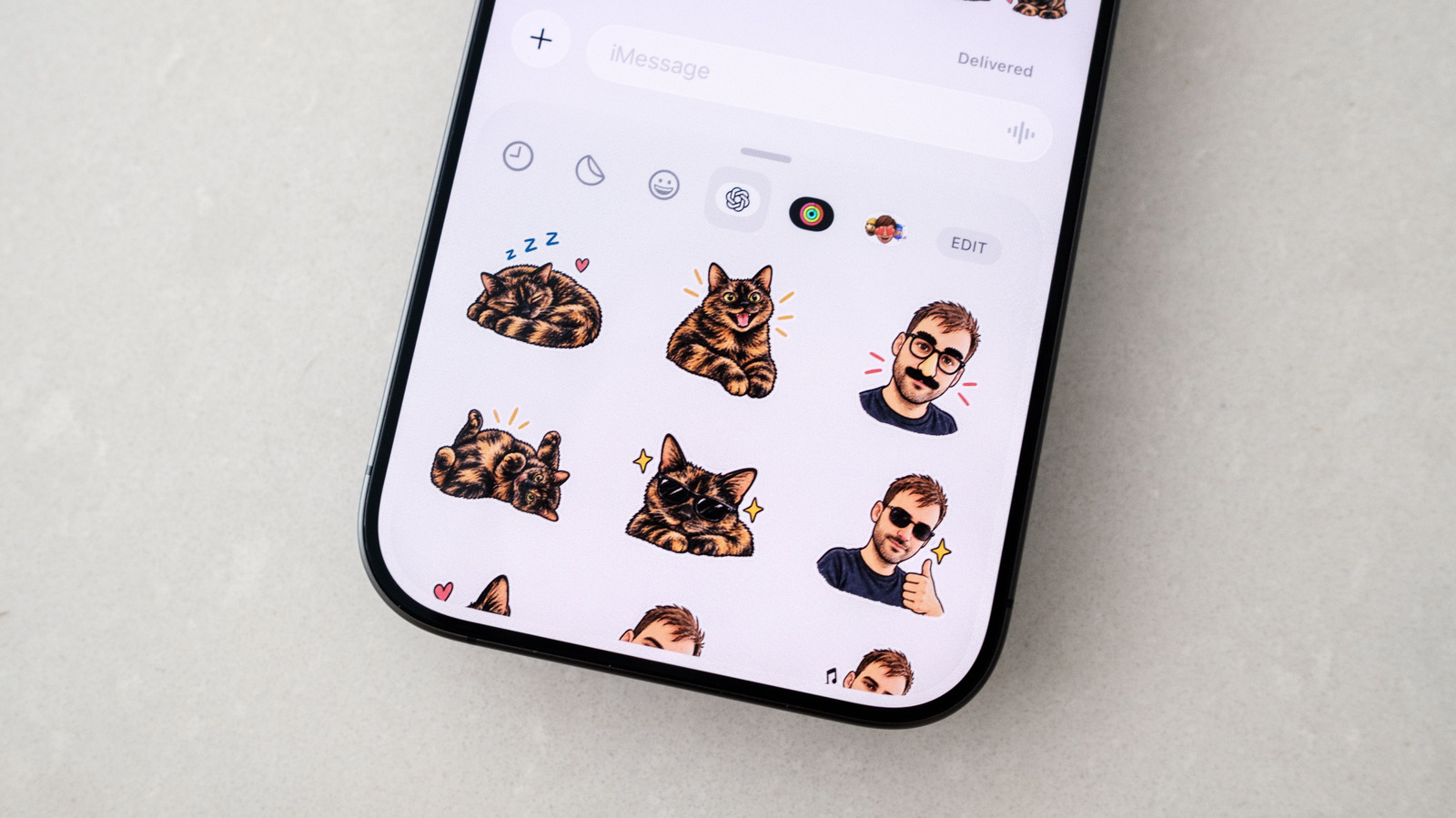
📱 In recent years, something has changed about the way we talk to each other — or rather, the way we don’t. Hahas have turned into tears, “that sounds good” has turned into WhatsApp stickers of humanoid cats with distorted faces holding a thumbs-up, and good mornings have become a competition of who could send the […] The post Is our overuse of memes making us less socially intelligent? appeared first on EnterpriseAM Egypt .

Sep 18, 2026 · byEnterpriseAM Egypt