Cambodia
35 articles · 1+ stories
Latest Cambodia articles


Nobel Peace Prize 2026: Who could win and how is the winner chosen?
OSLO: The Nobel Peace Prize will be announced on Friday. Here is a look at how the award works: Who is nominated? Some 287 candidates have been nominated, including 208 individuals and 79 organisations. We don't know who because the list is kept secret for 50 years, inside a vault in the basement of the Norwegian Nobel Institute in Oslo. Still, nominators, of whom there are thousands worldwide, can choose to reveal their choices. Is US President Donald Trump nominated and can he win? The leaders of Cambodia, Israel and Pakistan have said they nominated Trump, though there is no way of verifying that. If Trump is nominated, his chances to win are very low, according to experts. Who are the favourites this year? Pope Leo, the International Criminal Court, the International Court of Justice or Francesca Albanese, the UN special rapporteur on the Occupied Palestinian Territories. Also possible are Emergency Response Rooms, a Sudanese network of community groups providing aid during the civil war, or non-governmental organisation Save the Children, for helping children in the conflict. Outsiders include the International Space Station, as an example of what countries can achieve even when they are at odds with each other. The US, Russia and Europe work together on the ISS. Who decides? The Norwegian Nobel Committee consists of five individuals appointed by the Norwegian parliament. Members are often, but not always, retired politicians. The current committee is led by the head of the Norwegian branch of PEN International, a group defending freedom of expression. Another member is an academic. They are all put forward by Norwegian political parties and their appointments reflect the balance of power in Norway's parliament. Who can win? The short answer is: whoever fits the description set out in the 1895 will of Swedish industrialist Alfred Nobel. It says the prize should go to the person "who has done the most or best to advance fellowship among nations, the abolition or reduction of standing armies, and the establishment and promotion of peace congresses". The more complicated answer is that the prize "needs to be placed in the current context", according to Kristian Berg Harpviken, the award committee's secretary, who prepares the work for the award body. He participates in the deliberations but does not vote. "They will look at the world, see what is happening, what are the global trends, what are the main concerns, what are the most promising processes that we see," he told Reuters last year. "And processes here can mean anything from a specific peace process to a new type of international agreement that is under development or that has recently been adopted." Who can nominate? Thousands of people worldwide can propose names: members of governments and parliaments; current heads of state; university rectors, professors of history, social sciences, law and philosophy; and former Nobel Peace Prize laureates, among others. Nominations closed on January 31. Members of the committee can make their own nominations too, no later than at their first meeting in February. How does the committee decide? The committee discusses all the nominations, then establishes a shortlist. Each nominee is then assessed and examined by a group of permanent advisers and other experts. The committee meets roughly once a month to discuss the nominations. The decision tends to be taken in August or September, said Harpviken. The committee seeks to reach a consensus on its selection. If it cannot, the decision is made by majority vote. The last time a member quit in protest was in 1994, when Palestinian leader Yasser Arafat shared the prize with Israel's Shimon Peres and Yitzhak Rabin. What does the laureate get? A gold medal, a diploma, 12 million Swedish crowns ($1.2 million) and immediate global attention. When are the announcement and the ceremony? The announcement will take place on October 9 at the Norwegian Nobel Institute in Oslo and is made by the committee's chair. The ceremony takes place at the Oslo City Hall on December 10, the anniversary of Alfred Nobel's death.

Air Cambodia Expands Delhi–Cambodia Connectivity with Third Weekly Frequency
Air Cambodia is strengthening its connectivity between India and Cambodia with the introduction of a third weekly direct flight from Delhi to Phnom Penh, effective 17 December 2026. The additional Thursday frequency will complement the existing Tuesday and Saturday services, offering travellers greater flexibility and more opportunities to explore Cambodia.

Cambodia: World Vision Situation Report #1: Humanitarian Response to Flooding (03 October 2026)
Country: Cambodia Source: World Vision Please refer to the attached file. Cambodia is experiencing significant flooding, with the National Committee for Disaster Management (NCDM) reporting impacts across 10 provinces, 53 districts/cities and 255 communes/sangkats, affecting 73,922 households as of 29 September 2026. In World Vision Cambodia’s operational areas, 2,535 households, including 3,066 children among 7,919 affected people , have been directly impacted, with flooding also disrupting livelihoods, education and access to safe water and sanitation. World Vision is mobilising resources to provide urgent assistance in water, sanitation and hygiene, food, shelter, child protection, education and other essential needs . Working alongside local authorities and partners, we aim to protect the most vulnerable children and families and support their recovery with dignity and hope.
 Oct 5, 2026 · byReliefWeb
Antino Backdoor Uses Outlook and OneDrive for C2 in China-Nexus Espionage Campaign
Government and policy organizations across Asia have become the target of a new campaign orchestrated by a China-nexus threat actor. The activity, which has targeted government and policy organizations in Taiwan, India, the Philippines, Cambodia, Pakistan, Thailand, and Myanmar, involves the deployment of a previously undocumented backdoor codenamed Antino. Cisco Talos is tracking the cluster

World: Crop Monitor for Early Warning | No. 120 – October 2026
Country: World Source: GEOGLAM Crop Monitor Please refer to the attached file. Overview In East Africa , prolonged rainfall deficits since around April and high temperatures resulted in below average yields in many areas, including main producing regions in Ethiopia and western Kenya. In West Africa , agro-climatic conditions remain mostly favourable for ongoing cropping activities with some localized areas of dry conditions rainfall deficits along parts of the Sahel. In the Middle East & North Africa , rice prospects remain favourable in Egypt, Iraq, and Iran, and land preparation is beginning for the upcoming 2026/27 wheat season. In Southern Africa , winter wheat prospects have degraded in the main producing region of South Africa due to recent dry impacts. Elsewhere, in Zimbabwe and Zambia wheat prospects remain favourable. In Central & South Asia , the 2025/26 spring wheat harvest is underway with generally favourable conditions with some areas of dryness. In Southeast Asia , conditions are generally favourable for dry-season rice and maize in the south, while drought is negatively impacting wet-season crops in Thailand and Cambodia, and heavy rains are negatively impacting parts of the Philippines, Vietnam and Myanmar. In Central America & the Caribbean , harvesting of Primera season crops is complete, and below average yields resulted across the region due to prolonged dry spells and high temperatures since the start of the season.
Oct 2, 2026 · byReliefWeb
Humanitarian Response Forum (HRF) - Situation Report No. 1 – Floods in Cambodia (2026)
Country: Cambodia Sources: DanChurchAid, World Food Programme Please refer to the attached file. Over the past three weeks, Cambodia has experienced moderate to heavy rainfall, resulting in localized flash floods across 10 provinces. As of 30 September 2026, an estimated 73,922 families have been affected , including 6,344 families evacuated , with the most significant impacts reported in Battambang and Siem Reap Provinces. Flooding has also damaged 62,801 houses, 184 schools, 29 health facilities, more than 1.19 million meters of roads, and 160,427 hectares of agricultural land. The Royal Government of Cambodia, through the National Committee for Disaster Management (NCDM) and Provincial Committees for Disaster Management (PCDM), is leading response efforts, while humanitarian partners continue to provide support to affected communities. Relief activities include the distribution of food, non-food items, shelter kits, and WASH supplies, with more than 3,500 households targeted for immediate assistance in Banteay Meanchey Province . Current forecasts indicate generally stable river levels and low to moderate rainfall over the coming days, with no active flood warnings currently in place . Nonetheless, authorities and humanitarian organizations remain on standby and continue to monitor the situation closely. The Humanitarian Response Forum (HRF) continues to coordinate information sharing and response planning among humanitarian partners in close collaboration with the Government to ensure timely assistance reaches communities most affected by the floods.
Sep 30, 2026 · byReliefWeb
Saving the Siamese crocodile: Cambodia moves to protect one of the world’s last wild populations
Indigenous communities play crucial role, as ‘genetic bank’ area of wetland offers hope for critically endangered reptile In the 1990s, conservationists in Cambodia feared the Siamese crocodile had disappeared for good. Fishing and hunting had devastated the species throughout the 20th century, leaving populations across its native south-east Asia on the brink of extinction. But in villages dotted among the wetlands of the remote Cardamom mountains, Indigenous Chorng communities still reported seeing them. Passing this knowledge to researchers surveying the area in 2000 led to an official recording of the species – and bolstered the mission to revive the population. Continue reading...
 Sep 29, 2026 · byThe Guardian
Australian activist ‘abducted’ in Cambodia by Vietnamese government, rights group claims
Democracy campaigner Tran Hiep was due to meet his wife in Thailand after travelling to Phnom Penh, but did not board his flight and has not been heard from since.
 Sep 29, 2026 · byThe Sydney Morning Herald
Melbourne human rights activist disappears in Cambodia as wife urges Albanese government help
Tran Hiep, a 50-year-old Australian Vietnamese anti-human trafficking campaigner, not heard from since 18 September The wife of an Australian activist missing in Cambodia has implored the federal government to find him and bring him home. Tran Hiep, a 50-year-old Australian Vietnamese democracy campaigner, was due to return to Bangkok, Thailand, to reunite with his wife Chloe Dang after a short trip to Phnom Penh, Cambodia, to meet with human rights defenders. Continue reading...
Sep 28, 2026 · byThe Guardian
Indonesia: ASEAN Weekly Disaster Update Week 39 | 21 – 27 September 2026
Countries: Indonesia, Cambodia, Malaysia, Philippines, Thailand, Viet Nam Source: ASEAN Coordinating Centre for Humanitarian Assistance Please refer to the attached Infographic. REGIONAL SUMMARY: During the thirty-ninth week of 2026, a total of 23 disasters were reported across ASEAN, including droughts, floods, landslides, storms, and wind-related disasters in Cambodia, Indonesia, Malaysia, the Philippines, Thailand, and Viet Nam. In Cambodia, National Committee for Disaster Management ( NCDM ) reported flooding in Battambang. In Indonesia, Badan Nasional Penanggulangan Bencana ( BNPB ) reported droughts, floods, landslides, storms, and wind-related disasters across Aceh, East Java, West Kalimantan, South Kalimantan, Riau Islands, Lampung, East Nusa Tenggara, Central Sulawesi, Southeast Sulawesi, West Sumatra, and North Sumatra. In Malaysia, Agensi Pengurusan Bencana Negara ( NADMA ) reported floods and landslides in Pahang, Kelantan, and Selangor. In Thailand, flooding that began during Week 37 continued to be reported by Department of Disaster Prevention and Mitigation ( DDPM ), with impacts now recorded across 41 provinces and Bangkok. Lastly, Viet Nam Disaster and Dyke Management Authority ( VDDMA ) reported disasters in Lam Dong, Vinh Long, Dong Nai, Ca Mau, Nghe An, and Gia Lai. HIGHLIGHT: In Thailand, widespread flooding has affected 41 provinces and Bangkok since 16 Seo. According to DDPM , a total of 582.5K households (1.81 million people) were affected, with 8 fatalities reported in Sa Kaeo (5), Chanthaburi (2), and Saraburi (1). As of 28 Sep at 0600H UTC+7, flooding remains ongoing in 27 provinces and Bangkok, affecting approximately 576.4K households (1.79 million people) across 151 districts, 792 subdistricts, and 4,087 villages. Central and Eastern regions recorded the largest impacts, with 364.9K and 151.3K affected households, respectively. Flooding was primarily associated with heavy rainfall and overflowing rivers, with increased water levels reported in several areas.Relevant authorities, including DDPM, local authorities, military personnel, police, volunteers, and local organisations, have been conducting response operations, including evacuations, raising household belongings to higher ground, drainage operations, traffic management, and establishment of temporary shelters. The AHA Centre is closely monitoring the developments of widespread flooding in Thailand, in close coordination with DDPM , and stands ready to support should the need arise. HYDRO-METEO-CLIMATOLOGICAL: During the past week, data from the ASEAN Specialised Meteorological Centre ( ASMC ) indicated medium to high seven-day average rainfall across Brunei Darussalam, Cambodia, Indonesia (Sumatra and northern Kalimantan), southern Lao PDR, Malaysia, southern Myanmar, the Philippines, Thailand, and Viet Nam. As of this report, two tropical disturbances, Tropical Cyclone SURIGAE over the western Pacific Ocean and INVEST 92W over Myanmar, are being monitored for their potential impact on ASEAN Member States ( DMRS , JTWC ). GEOPHYSICAL: Three (3) significant earthquakes (M>5.0) were recorded by Indonesia’s Badan Meteorologi, Klimatologi, dan Geofisika ( BMKG ). Mount Ibu (alert level II), Semeru (alert level III), and Marapi (alert level II) in Indonesia, and Taal (alert level 1), Mayon (alert level 2), Bulusan (alert level 1), and Kanlaon (alert level 2) volcanoes in the Philippines reported recent volcanic activity according to Pusat Vulkanologi dan Mitigasi Bencana Geologi ( PVMBG ) and the Philippines Institute of Volcanology and Seismology ( PHIVOLCS ). OUTLOOK: According to the ASEAN Specialised Meteorological Centre ( ASMC ), for the coming week, drier than usual conditions are predicted over most of the southern ASEAN region, while drier than usual conditions are also predicted for parts of the northeastern Maritime Continent and southern Mainland Southeast Asia. Additionally, warmer than usual conditions are predicted over most of the ASEAN region. For regional assessment of extreme, there is a small increase in chance of very heavy rainfall conditions to occurs over parts of northern Mainland Southeast Asia. Meanwhile, a moderate increase in chance of extreme hot conditions is predicted over parts of southern and central Mainland Southeast Asia, including Cambodia and southern Viet Nam, as well as over the eastern parts of Borneo. A small increase in the chance of extreme hot conditions is also predicted over much of the western Maritime Continent and the northern half of the Philippines. The El Niño – Southern Oscillation (ENSO) monitoring system state is “El Niño Conditions”. Strong El Niño conditions are predicted until at least the end of 2026. El Niño at this time of the year, typically brings drier conditions for much of the Maritime Continent, and to a lesser extent, some parts of Mainland Southeast Asia.
Sep 28, 2026 · byReliefWeb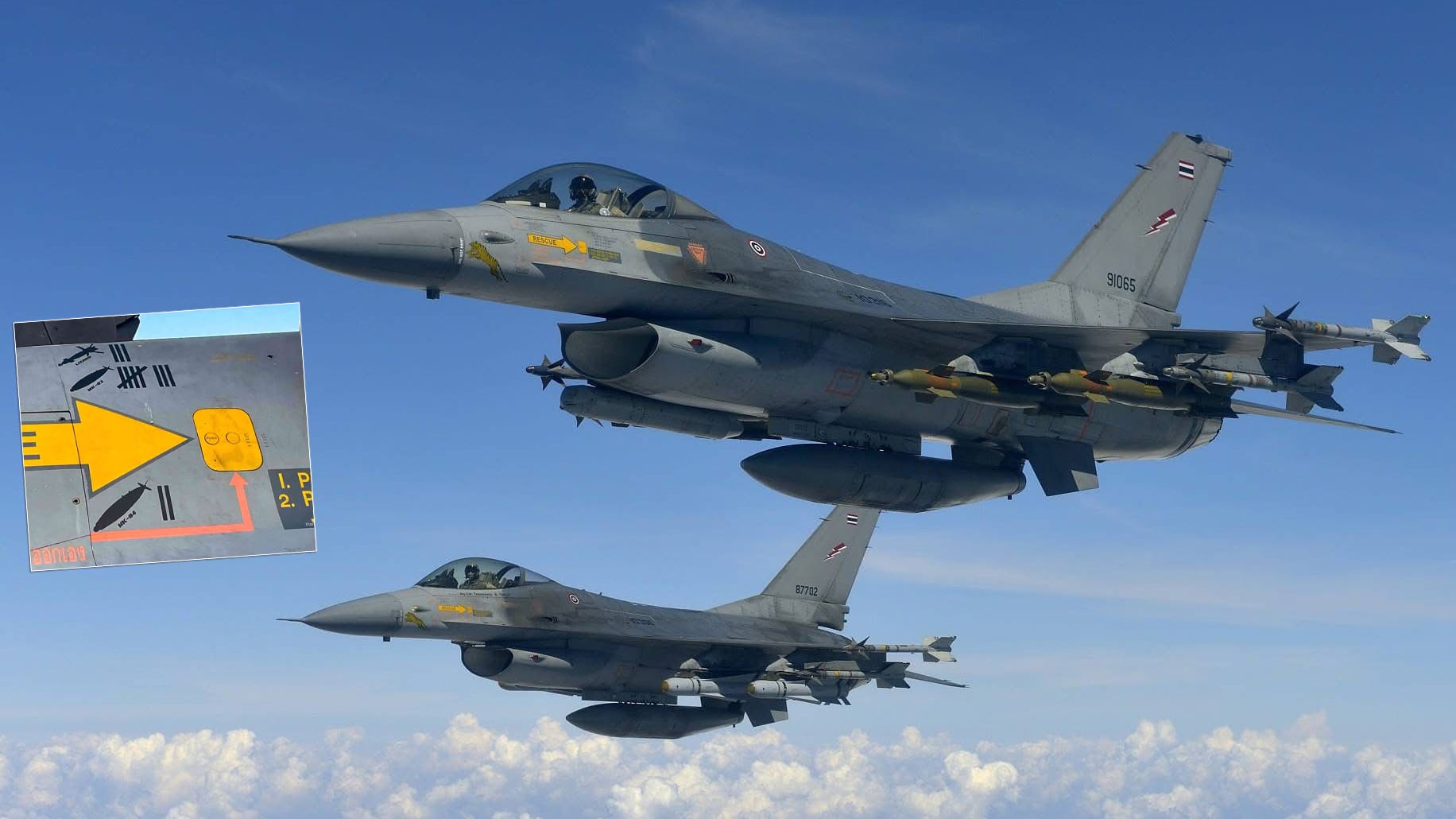
Bomb Markings On Thai F-16s Shed New Light On Cambodia Combat Operations
Mission markings appearing on Royal Thai Air Force F-16s offer new clues about the weapons and aircraft employed during the 2025 fighting with Cambodia, which also saw the Gripen’s combat debut and strikes involving T-50THs. In the summer of 2025, a border incident broke out between the two Southeast Asian countries of Thailand and Cambodia. […]
 Sep 25, 2026 · byThe Aviationist
World: Measles is making a comeback. Will we end it for good?
Countries: World, Cambodia, China, Indonesia, Lao People's Democratic Republic (the), Malaysia, Mongolia, Papua New Guinea, Philippines, Viet Nam Source: World Health Organization By Dr Saia Ma'u Piukala, WHO Regional Director for the Western Pacific For many years, measles felt like a disease of the past across the Western Pacific region. This did not happen by chance. It was the result of decades of political commitment, investment, and public health work that steadily pushed measles closer to elimination. Health workers carried vaccines across mountains, rivers, crowded cities, and remote islands. Surveillance systems worked to detect outbreaks early. Countries collaborated to close gaps in vaccine coverage. Globally, since 1974, vaccination has prevented an estimated 154 million deaths from a range of diseases. Measles vaccination alone accounts for around 94 million lives saved, including 12 million in the Western Pacific Region. It is the single most impactful vaccine intervention of the past 50 years. But in recent years, amid vaccination challenges during the COVID-19 pandemic coupled with mounting antivaccine misinformation, measles outbreaks have been resurging, bringing back a disease we have long known how to prevent. Behind every outbreak is a gap: a missed child, delayed action, weakened trust, or communities not reached through regular vaccination programmes. In the Western Pacific —home to 2.2 billion people, more than a quarter of the world’s population—an immunity gap in one country quickly becomes a regional risk. This should concern all of us because measles is not only about one disease. It is one of the clearest signals of whether health systems are strong, consistent, and serving everyone. Experts across the region agree that achieving measles elimination by 2030 is possible. Indeed, just last year WHO certified that both measles and rubella had been eliminated as a public health threat in all 21 Pacific island countries and areas. We know what works: strong routine immunization; watching closely for outbreaks and responding quickly when they happen; trusted health workers; and ongoing work with communities. What is needed now is a renewal of political commitment, health policies grounded in science, and sustained resources – both financial and human. Governments, international and national donors, and other partners must continue investing in immunization as a key pillar of public health, even when outbreaks are not dominating headlines. This is becoming more urgent in a fast-changing world. Funding shortfalls lower vaccine supply, while hesitancy fuelled by false information reduces demand. Disasters, conflicts, rising energy costs and other uncertainties threaten vaccine supply chains. And rapid demographic shifts—from ageing to mobile populations—are changing immunization requirements. Governments are left to meet rising needs with limited resources. But immunization is not just a cost. It's a life-saving investment. Immunization does more than prevent diseases. It strengthens health systems, protects economies from costly outbreaks, and supports healthier societies. Every US dollar invested in immunization generates up to $54 in social and economic returns. But these benefits are not reaching everyone equally. In 2025, there were over 1.6 million zero-dose children in the Western Pacific - children who have not received even a first routine vaccine. They face the greatest risks. Immunization is also becoming increasingly important throughout people’s lives, not just in childhood. As populations age, health needs change. The Region has the tools, expertise and experience needed to succeed. Recently, the nine countries yet to achieve measles elimination in the Western Pacific came together with WHO and experts to discuss how to achieve this by 2030. The message from Cambodia, China, Indonesia, the Lao People’s Democratic Republic, Malaysia, Mongolia, Papua New Guinea, Philippines, and Viet Nam is clear. Measles elimination is possible, but no country can achieve or sustain it alone. Countries cannot rely only on emergency campaigns during outbreaks. There must be strong routine immunization and surveillance systems that consistently reach every child and community, year after year. In 2024 and 2025, nearly 20 million children were born in the Region each of those years. All of them need protection through routine vaccination. We cannot become complacent. The Western Pacific has already shown what collective action can achieve. For more than 25 years, the Region has sustained its polio-free status through political commitment, regional solidarity, strong surveillance, and sustained investment in immunization. Countries now have an opportunity to build on that success and achieve another historic public health milestone: measles elimination under WHO’s Immunization Agenda 2030. But this will only happen if we act now. Governments must treat immunization not as a short-term programme, but as a long-term investment in health security, stability, and future generations. The goal of achieving measles elimination regionwide by 2030 is ambitious. But ambition has always defined public health progress in the Western Pacific. Measles moves fast. Our Region must move faster. ### For more information, contact WHO Western Pacific at wprocom@who.int. A note to editors: The 77th session of the WHO Western Pacific Regional Committee meeting will run from Monday, 19 October 2026 to Thursday, 23 October 2026, in Manila, Philippines. Immunization is one of four key agenda items. The #RCM77 overall agenda, timetable, and official documents, along with videos on the issues discussed, are available online . Working with 194 Member States across six regions, WHO is the United Nations specialized agency responsible for public health. Each WHO region has a regional committee – a governing body composed of ministers of health and senior officials from Member States. Each regional committee meets annually to agree on health actions and to chart priorities for WHO’s work.
Sep 24, 2026 · byReliefWeb
Cambodia claims it has ‘completely dismantled all large-scale scam compounds in the kingdom’ without presenting evidence that it did
Experts say many compounds have closed, but the criminal networks behind them have largely escaped investigation and punishment.

Cambodia: Agrometeorological 10 days Bulletin for 21 - 30 September 2026 across the Northern Tonle Sap Basin of the PEARL project
Country: Cambodia Source: Food and Agriculture Organization of the United Nations Please refer to the attached file. This 10-day agrometeorological bulletin provides early warning and agricultural advisories for 21-30 September 2026. Very heavy rainfall and associated flood risk are forecast in parts of Cambodia, including areas of Preah Vihear, Oddar Meanchey, Siem Reap and Kampong Thom provinces. The bulletin provides location- and crop-specific guidance to help farmers protect crops and livelihoods from anticipated flooding and other weather-related risks.
Sep 22, 2026 · byReliefWebCambodia: Flood Risk and Very Heavy Rain Forecast, 21–30 September 2026
Country: Cambodia Source: Food and Agriculture Organization of the United Nations Please refer to the attached file. This 10-day agrometeorological bulletin provides early warning and agricultural advisories for 21-30 September 2026. Very heavy rainfall and associated flood risk are forecast in parts of Cambodia, including areas of Preah Vihear, Oddar Meanchey, Siem Reap and Kampong Thom provinces. The bulletin provides location- and crop-specific guidance to help farmers protect crops and livelihoods from anticipated flooding and other weather-related risks.
Sep 22, 2026 · byReliefWeb
Green flood alert in Cambodia
On 17/09/2026, a flood started in Cambodia, lasting until 19/09/2026 (last update). The flood caused 0 deaths and 0 displaced .

Cambodia, Thailand bring sea dispute and decades of baggage to talks
Cambodia seeks a maritime boundary or shared offshore resources, while Thailand disputes its claims. U.N.-backed international conciliators can help broker a deal but can't impose one.

Philippines: ASEAN Weekly Disaster Update Week 37 | 7 – 13 September 2026
Countries: Philippines, Cambodia, Indonesia, Thailand, Viet Nam Source: ASEAN Coordinating Centre for Humanitarian Assistance Please refer to the attached Infographic. REGIONAL SUMMARY: During the thirty-seventh week of 2026, a total of thirteen disaster events were reported across ASEAN, including droughts, floods, landslides, and storms in Indonesia, as reported by Badan Nasional Penanggulangan Bencana ( BNPB ); Thailand, as reported by Department of Disaster Prevention and Mitigation ( DDPM ); and Viet Nam, as reported by the Viet Nam Disaster and Dyke Management Authority ( VDDMA ). In addition to these events, disaster situations continued to be reported across the region. These included ongoing Anak Krakatau volcanic activity, which affected conditions in Lampung and western parts of Java island, including Banten, Jakarta, and West Java. Disaster situations also continued to develop due to the combined effects of Southwest Monsoon and Tropical Cyclones GAENARI and KUJIRA. HIGHLIGHT: In Indonesia, according to BNPB , Mount Anak Krakatau, located in Sunda Strait between Lampung and Banten, has remained at Level III (Siaga) since 2 July. A continuous eruption began on 4 Sep at 2307H UTC+7. As of 12 Sep at 1045H UTC+7, BNPB reported that several areas across Lampung Province (Lampung Selatan, Tanggamus, Pringsewu, Pesisir Barat, and Pesawaran), Banten Province (Serang, Pandeglang, Cilegon, Lebak, and Serang City), Jakarta, and parts of West Java had been affected, with approximately 161K families affected. Due to the dispersion of volcanic ash, all flights from Jakarta’s Soekarno-Hatta International Airport and Halim Perdanakusuma Airport were reportedly temporarily suspended from 6 September 2026 and resumed operations on 8 September at 0000H UTC+7. Meanwhile, in the Philippines, combined effects of Enhanced Southwest Monsoon and tropical cyclones GAENARI and KUJIRA continued to affect Regions I, II, III, IVA, IVB, V, VI, IX, CAR, and NCR. According NDRRMC report as of 14 Sep at 0700H UTC+7, approximately 9.6M people (2.8M families) had been affected, with 44 fatalities, 18 injuries, and 5 people reported missing. Around 157K people remained displaced, including 76K people temporarily sheltering in 748 evacuation centres. Authorities continued to intensify monitoring, coordinate response efforts, and mobilise resources to provide assistance and support to affected communities. HYDRO-METEO-CLIMATOLOGICAL: During the past week, data from the ASEAN Specialised Meteorological Centre ( ASMC ) indicated medium to high seven-day average rainfall across areas north of Equator including Brunei Darussalam, Cambodia, Indonesia (northern parts of Sumatra, Kalimantan, and Papua), Lao PDR, Malaysia, Myanmar, Philippines, Thailand, and Viet Nam. As of this report, INVEST 90W, located approximately 3,000 km east of the Philippines, is being monitored for potential development into a significant tropical cyclone ( DMRS , JTWC ). GEOPHYSICAL: Five (5) significant earthquakes (M>5.0) were recorded by Indonesia’s Badan Meteorologi, Klimatologi, dan Geofisika ( BMKG ). Mount Ibu (alert level II), Ili Lewotolok (alert level II), Semeru (alert level III), and Anak Krakatau (alert level III) in Indonesia, and Taal (alert level 1), Mayon (alert level 2), Bulusan (alert level 1), and Kanlaon (alert level 2) volcanoes in the Philippines reported recent volcanic activity according to Pusat Vulkanologi dan Mitigasi Bencana Geologi ( PVMBG ) and the Philippines Institute of Volcanology and Seismology ( PHIVOLCS ). OUTLOOK: According to the ASEAN Specialised Meteorological Centre ( ASMC ), for the coming week, drier-than-usual conditions are expected over most of the southern ASEAN region, while wetter-than-usual conditions are forecast over parts of southern Mainland Southeast Asia and the northwestern Maritime Continent. In addition, warmer-than-usual conditions are expected across most of the ASEAN region. For regional assessment of extreme, there is a small increase in chance of very heavy rainfall conditions to occurs over parts of central and eastern Mainland Southeast Asia. Meanwhile, extremely hot conditions are very likely across much of the equatorial band between 5°N and 5°S, with moderate chances also expected over central and northern Myanmar and the southern Philippines. The El Niño – Southern Oscillation (ENSO) monitoring system state is “El Niño Conditions”. Strong El Niño conditions are predicted until at least the end of 2026. El Niño at this time of the year, typically brings drier conditions for much of the Maritime Continent, and to a lesser extent, some parts of Mainland Southeast Asia. Sources: ASEAN Disaster Monitoring & Response System (DMRS); ASEAN Disaster Information Network (ADINet); ASEAN Specialised Meteorological Centre (ASMC); ASEAN Earthquake Information Centre (AEIC); Joint Typhoon Warning Centre (JTWC); Indonesia: BNPB, BMKG, PVMBG; Philippines: NDRRMC, PAGASA, PHIVOLCS; Thailand: DDPM; Viet Nam: VDDMA; Various news agencies.
Sep 14, 2026 · byReliefWeb
An IVF Company Bought 146,432 XRP Last Year, Then Sold It All
Newgenivf Group’s latest Nasdaq registration statement shows the fertility provider bought 146,432 XRP during 2025, disposed of all of it before Dec. 31, and cleared $10,849 on the round trip. What The SEC Filings Actually Say Buried in an amended registration statement from a fertility clinic operator with units in Cambodia and Kyrgyzstan is one […]
 Sep 12, 2026 · byBitcoin.com News
Fenced off: Thailand builds border wall after Cambodia clashes
Thailand and Cambodia have been at odds for decades over the demarcation of their border. Deadly clashes broke out in July and again in December last year.
“Urgent Action” Needed to Protect a World Heritage-Listed Temple in Cambodia
The Temple of Preah Vihear suffered extensive damage from “direct hits” following the 2025 border war between Thailand and Cambodia, a UNESCO-led study found.
 Sep 10, 2026 · byARTnews
Cambodia: Legal Revisions Reinforce One-Party Rule
Click to expand Image Cambodian Senate building, the Solidarity Palace, Phnom Penh, Cambodia, August 21, 2026. © 2026 AP Photo/Heng Sinith (Bangkok, September 4, 2026) – The Cambodian government should withdraw proposed legal amendments that would drastically reduce opposition party representation in top positions on local councils, Human Rights Watch said today. On August 20, 2026, the Cambodian National Assembly, which is dominated by the Cambodian People’s Party (CPP), unanimously passed amendments to the Law on the Administration and Management of Commune/Sangkat. The changes to four articles in the law determine the apportionment of elected local council positions across Cambodia’s more than 1,600 communes. The Senate approved the amendments on September 4, which will be in effect for the next commune elections, slated for June 2027. “The new amendments to Cambodia’s commune law, combined with the ruling party’s other repressive measures, appear aimed at eliminating opposition influence and cementing one-party rule at the local level,” said Bryony Lau, deputy Asia director at Human Rights Watch. “The Cambodian People’s Party is forever seeking to minimize if not eliminate the role of opposition politicians in the country’s rule.” Elected commune councilors have broad authority, including issuing identity documents, maintaining local security, and managing local budgets. The amended law targets the allocation of the three key positions within each commune council: the commune chief; the first deputy, who assists on financial and economic matters; and the second deputy, who assists on administration, social affairs, and public services. Existing law apportions these positions to ensure power-sharing and multiparty representation on local councils. Currently, if two parties earn enough votes for at least one council seat in a commune, the winner gets the commune chief and first deputy positions, and the runner-up gets the second deputy position. If three or more parties earn a seat in a single commune, the top three parties each get one of the key positions. The new amendments change this formula, granting all three of the positions to any party that earns two-thirds of the vote in a commune, or granting the top two positions to any party that earns a simple majority of votes. This would heavily favor the CPP, which has consolidated power in recent years in part through banning opposition parties to splinter the opposition into multiple, smaller parties. The expected effects of the amendments can be seen by applying them to past election results. In 2022 in the last local commune elections, the opposition Candlelight Party won 87 second-deputy positions across Phnom Penh’s 105 communes. If those elections were held under the new amendments, the party would have won only three positions. In Siem Reap province, the Candlelight Party won one first-deputy and 90 second-deputy positions across the province’s 100 communes. Under the new amendments, Candlelight would have won just 28 second-deputy positions. Since Cambodia’s Supreme Court in November 2017 dissolved the main opposition party, the Cambodia National Rescue Party, and the ensuing July 2018 national election, Cambodia has been a de facto one-party state. The CPP controls all national governmental institutions, including the National Assembly, Senate, and National Election Committee. Results from the 2022 commune elections analyzed by Human Rights Watch show numerous and significant irregularities suggesting possible fraud and vote tampering to favor the ruling party. These new amendments reflect a broader campaign of political repression to consolidate CPP power. After competing in the 2022 commune elections, the Candlelight Party was banned from participating ahead of the 2023 national election on concocted administrative grounds. The party could be disqualified on similar grounds from next year’s commune elections. The authorities have engaged in judicial harassment and arbitrarily arrested members of several opposition parties that emerged to contest in Candlelight’s absence. More than 40 opposition activists are currently detained or imprisoned, including Candlelight’s vice president, Thach Setha. Several current and former opposition leaders have been prosecuted on baseless charges and barred from politics by the courts, such as the former Nation Power Party adviser, Rong Chhun. “Cambodia’s elections won’t be taken seriously so long as the government adopts laws and takes other actions that prevent opposition parties and politicians from exercising their basic rights,” Lau said. “Concerned governments should press the Cambodian authorities to reverse the trend of arbitrary restrictions and arrests of opposition politicians.”
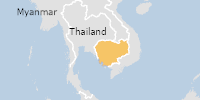
Green flood alert in Cambodia
On 28/08/2026, a flood started in Cambodia, lasting until 03/09/2026 (last update). The flood caused 0 deaths and 45 displaced .