← News
Topic · Place

Gambia

11 articles

See also
📰

Latest Gambia articles

Countries Demonstrate Record Support for UN Sudan Probe Renewal

Countries Demonstrate Record Support for UN Sudan Probe Renewal

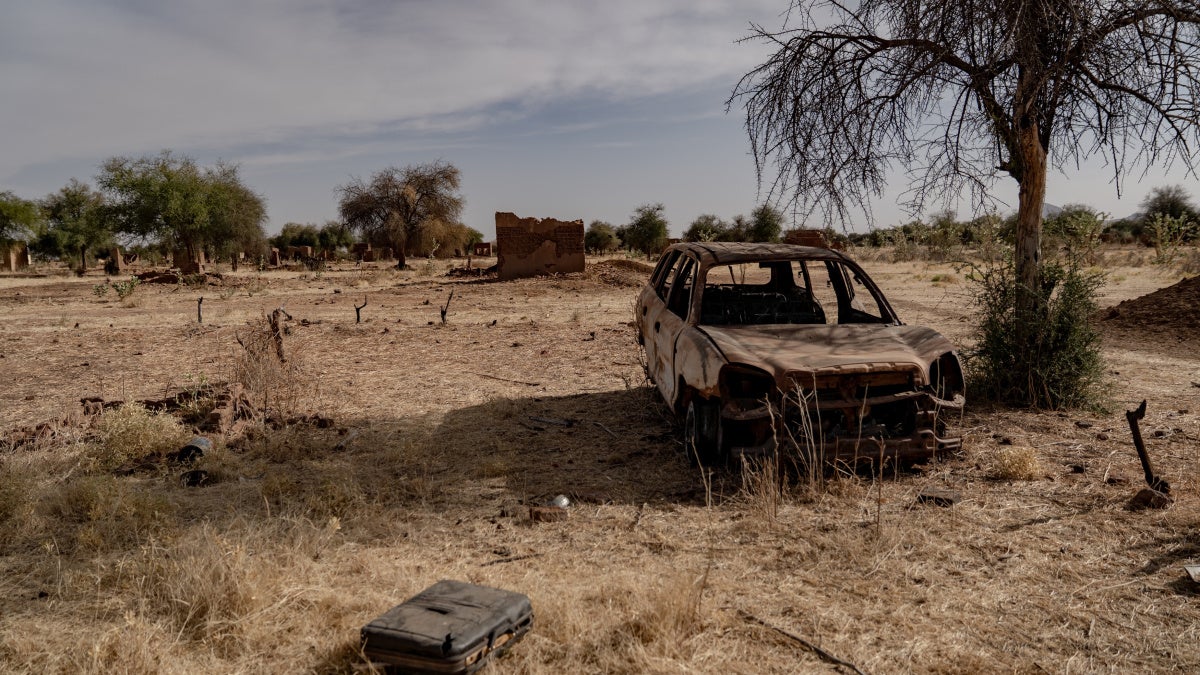
Click to expand Image The remains of fighting in the abandoned village of Bakri, about 35 kilometers (22 miles) from El Fasher, Sudan, where homes and fields were left deserted after residents fled escalating violence across the region, February 24, 2026. © 2026 Giles Clarke/Avaaz via Getty Images A record number of countries at the United Nations Human Rights Council this week voted to support a resolution renewing the mandate of the UN Fact-Finding Mission for the Sudan. For the first time, the Gambia, Mauritius, and Malawi joined South Africa and countries from other regions voting in favor of the resolution. The fact-finding mission is mandated to investigate human rights violations and abuses committed by Sudan’s warring parties and advance accountability, including by collecting and preserving evidence to identify those responsible and to use in future prosecutions. Over the past year, the mission has presented various reports, including a special inquiry on the Rapid Support Forces (RSF) assault on El Fasher, which it concluded bore the hallmarks of genocide, as well as a recent exposé on the role of external actors in fueling the conflict. It has worked with the joint Fact-Finding Mission of the African Commission on Human and Peoples’ Rights (ACHPR) to ensure their work is complementary. The Human Rights Council resolution also highlighted the mission’s identification of a “transnational network” of support for the RSF, including the provision of weapons, logistics, training, and foreign personnel. It underlined the need for heightened scrutiny and accountability of external support that sustains operations involving serious violations and international crimes, “across the full chain of responsibility.” The resolution’s increased support this year signals growing recognition of the need to combat atrocities in Sudan, and the impunity fueling them, underscoring that justice is central to resolving the crisis. In a powerful statement, the Gambia recalled their own national legacy to insist that “truth, justice, and accountability are the foundation on which sustainable peace and reconciliation must be constructed.” However, while the resolution acknowledges the importance of collection and preservation of evidence to support accountability, states did not act to strengthen the mission’s capacity to do so, a key recommendation by civil society. States that led and supported this resolution should further consider how to ensure evidence is preserved and prepared in real time to support prosecutions against all those responsible for serious international crimes amid Sudan’s conflict. African states that supported the initiative and others should also work to ensure the African Union Peace and Security Council considers the ACHPR mission’s own report.

Oct 7, 2026 · byHuman Rights Watch
Algeria: Desert Locust Bulletin 576 (6 October 2026)

Algeria: Desert Locust Bulletin 576 (6 October 2026)

Countries: Algeria, Afghanistan, Benin, Burkina Faso, Cabo Verde, Cameroon, Chad, Côte d'Ivoire, Djibouti, Egypt, Eritrea, Ethiopia, Gambia, Ghana, Guinea, Guinea-Bissau, India, Iran (Islamic Republic of), Liberia, Libya, Mali, Mauritania, Morocco, Niger, Nigeria, Oman, Pakistan, Saudi Arabia, Senegal, Sierra Leone, Somalia, Spain, Sudan, Togo, Tunisia, Yemen Source: Food and Agriculture Organization of the United Nations Please refer to the attached file. ISOLATED ADULTS IN THE WESTERN REGION In September, the general locust situation appeared calm across the three desert locust breeding Regions. In the Western Region, solitarious adult populations continued to be present in Mauritania and Chad, but no locusts were seen in Algeria and Tunisia. No surveys were conducted in Mali and Niger. In the Central Region, isolated adults were seen in Egypt, and no locusts were seen in Sudan, Ethiopia, Saudi Arabia, Yemen and Oman. In the Eastern Region, no locusts were seen in Iran, Pakistan and India. During the forecast period, summer breeding in Mauritania, southern Algeria, northern Mali and Niger, and Chad could result in increasing locust populations in the Western Region, where hopper and adult groups may form by the end of the forecast period. Surveys should continue in the summer breeding areas of these countries as the ecological conditions are favorable for breeding, and preventive control may be required. In the Central Region, small-scale breeding may occur in the summer areas of Sudan, the western lowlands of Eritrea and the interior areas of Yemen. Small-scale winter breeding may begin on the Red Sea and Gulf of Aden coastal plains, but no significant developments are expected. In the Eastern Region, summer breeding may occur along the Indo-Pakistan border; however, no significant developments are expected.

Oct 7, 2026 · byReliefWeb
DR Congo: Afrique de l’Ouest et centrale : Derniers événements en bref (du 22 au 28 septembre 2026)

DR Congo: Afrique de l’Ouest et centrale : Derniers événements en bref (du 22 au 28 septembre 2026)

Countries: Democratic Republic of the Congo, Benin, Burkina Faso, Cabo Verde, Côte d'Ivoire, Gambia, Ghana, Guinea, Guinea-Bissau, Liberia, Mali, Mauritania, Niger, Nigeria, Senegal, Sierra Leone, Togo Source: UN Office for the Coordination of Humanitarian Affairs Please refer to the attached Infographic. République démocratique du Congo La violence entraîne des déplacements de population et aggrave les difficultés humanitaires et sanitaires Les combats dans le Sud-Kivu et le Nord-Kivu continuent de provoquer des déplacements de civils. Depuis juillet, plus de 40 000 personnes ont été nouvellement déplacées dans le territoire de Fizi, tandis que le Sud-Kivu accueille près de 1,2 million de personnes déplacées à l’intérieur du pays. En Ituri, l’insécurité sur le site de déplacés de Kigonze, à Bunia, qui accueille près de 19 000 personnes, a accru les préoccupations en matière de protection et fortement restreint l’accès humanitaire depuis le 20 septembre. Par ailleurs, la riposte à Ebola se heurte à des difficultés croissantes d’acceptation par les communautés. Au 26 septembre, les autorités faisaient état de 8 116 cas confirmés et de près de 4 000 décès. De récentes attaques liées aux activités de prévention d’Ebola dans le Nord-Kivu ont encore compliqué les efforts de riposte, dans un contexte marqué par l’insécurité, les contraintes d’accès et la poursuite des mouvements de population. Libéria La malnutrition infantile s'aggrave alors que l'aide diminue La malnutrition infantile et l’insécurité alimentaire s’aggravent dans un contexte de réduction de l’accès aux services de nutrition et de santé, à la suite de coupes dans l’aide internationale. Selon les estimations récentes, seuls 2,4 % des enfants âgés de 6 à 23 mois bénéficient d’une alimentation minimale acceptable, tandis que la malnutrition aiguë chez les enfants de moins de cinq ans a atteint 8,5 %. Les organisations humanitaires alertent sur les importantes lacunes dans les services essentiels engendrées par l’arrêt de programmes auparavant financés, qui accroissent les risques pour les enfants et les familles vulnérables. Mauritanie Des inondations mettent en évidence une vulnérabilité croissante face aux chocs climatiques Les fortes pluies tombées depuis le 24 septembre ont provoqué des inondations généralisées à Nouakchott, perturbant les transports et les activités quotidiennes et ravivant les inquiétudes concernant les infrastructures de drainage. Ces inondations surviennent dans un contexte de risques climatiques croissants à travers le pays, en particulier dans les régions du sud et du sud-est exposées aux sécheresses, aux inondations et aux tempêtes de sable. Une récente étude de l’OIM a révélé que 75 % des personnes interrogées se considèrent vulnérables aux chocs climatiques, tandis que beaucoup ne disposent pas des ressources suffisantes pour s’y adapter. L’OIM a appelé à un renforcement des investissements en faveur de la résilience, de la sécurité alimentaire et de l’adaptation au changement climatique. Afrique de l'Ouest Les risques climatiques soulignent les besoins de financement de la région, estimés à 294 milliards de dollars d'ici 2030 Depuis le 24 septembre, de fortes pluies ont provoqué d’importantes inondations à Nouakchott, perturbant les transports et les activités quotidiennes et suscitant de nouvelles préoccupations concernant les infrastructures de drainage. Ces inondations surviennent dans un contexte de risques climatiques croissants à travers le pays, notamment dans les régions du sud et du sud-est, exposées aux sécheresses, aux inondations et aux tempêtes de sable. Selon une récente étude de l’OIM, 75 % des personnes interrogées se considèrent vulnérables aux chocs climatiques, tandis que beaucoup ne disposent pas de ressources suffisantes pour s’y adapter. L’OIM a appelé à davantage d’investissements dans la résilience, la sécurité alimentaire et l’adaptation au changement climatique.

Sep 29, 2026 · byReliefWeb
DR Congo: West and Central Africa: Latest Events at a glance (22–28 September 2026)

DR Congo: West and Central Africa: Latest Events at a glance (22–28 September 2026)

Countries: Democratic Republic of the Congo, Benin, Burkina Faso, Cabo Verde, Côte d'Ivoire, Gambia, Ghana, Guinea, Guinea-Bissau, Liberia, Mali, Niger, Nigeria, Senegal, Sierra Leone, Togo Source: UN Office for the Coordination of Humanitarian Affairs Please refer to the attached Infographic. Democratic Republic of the Congo Violence drives displacement and compounds humanitarian and health challenges Fighting across South Kivu and North Kivu continues to displace civilians, with more than 40,000 people newly displaced in Fizi territory since July and nearly 1.2 million internally displaced people hosted across South Kivu. In Ituri, insecurity at the Kigonze displacement site in Bunia, hosting nearly 19,000 people, has heightened protection concerns and severely restricted humanitarian access since 20 September. Meanwhile, the Ebola response faces growing community acceptance challenges. As of 26 September, authorities reported 8,116 confirmed cases and nearly 4,000 deaths. Recent attacks linked to Ebola prevention activities in North Kivu have further complicated response efforts, alongside insecurity, access constraints and continued population movements. Liberia Child malnutrition worsens amid reduced assistance Child malnutrition and food insecurity are worsening amid reduced access to nutrition and health services following cuts in international assistance. Recent estimates indicate that only 2.4 per cent of children aged 6–23 months receive a minimum acceptable diet, while acute malnutrition among children under five has risen to 8.5 per cent. Humanitarian organizations warn that the closure of previously funded programmes has created significant gaps in essential services, increasing risks for vulnerable children and families. Mauritania Flooding highlights growing vulnerability to climate shocks Heavy rains since 24 September have caused widespread flooding in Nouakchott, disrupting transport and daily activities and renewing concerns over drainage infrastructure. The flooding comes amid growing climate risks across the country, particularly in southern and southeastern regions exposed to droughts, floods and sandstorms. A recent IOM study found that 75 per cent of respondents consider themselves vulnerable to climate shocks, while many lack adequate resources to adapt. IOM called for increased investment in resilience, food security and climate adaptation. West Africa Climate risks underscore region’s $294 billion financing needs by 2030 ECOWAS estimates that approximately $294 billion will be required by 2030 to implement Member States’ climate commitments and strengthen resilience, as climate-related risks intensify across the region. A new study warns that the current El Niño phenomenon could contribute to more than 450,000 additional heat-related deaths globally by early 2027, with the Sahel among the most affected regions. Researchers estimate nearly 67,000 additional deaths in the Sahel, including more than 31,000 in Nigeria, amid extreme heat, food insecurity and limited access to healthcare. At a regional parliamentary seminar in Accra, ECOWAS officials called for stronger climate governance and increased investment in adaptation and resilience, including through innovative financing mechanisms such as carbon markets.

Sep 29, 2026 · byReliefWeb
Cameroon: UNHCR RBWCA - Forcibly Displaced and Stateless Persons Presence - August 2026

Cameroon: UNHCR RBWCA - Forcibly Displaced and Stateless Persons Presence - August 2026

Countries: Cameroon, Benin, Burkina Faso, Cabo Verde, Central African Republic, Chad, Congo, Côte d'Ivoire, Democratic Republic of the Congo, Equatorial Guinea, Gabon, Gambia, Ghana, Guinea, Guinea-Bissau, Liberia, Mali, Nigeria, Sao Tome and Principe, Senegal, Sierra Leone, Togo Source: UN High Commissioner for Refugees Please refer to the attached Map.

UNHCRneutral
Sep 23, 2026 · byReliefWeb
Congo: UNICEF West and Central Africa Region Humanitarian Situation Report No. 1, 30 June 2026

Congo: UNICEF West and Central Africa Region Humanitarian Situation Report No. 1, 30 June 2026

Countries: Congo, Benin, Burkina Faso, Cameroon, Central African Republic, Chad, Côte d'Ivoire, Democratic Republic of the Congo, Equatorial Guinea, Gabon, Gambia, Ghana, Guinea, Guinea-Bissau, Liberia, Mali, Mauritania, Niger, Sao Tome and Principe, Senegal, Sierra Leone, Togo Source: UN Children's Fund Please refer to the attached file. Highlights The first half of 2026 was marked by multiple public health emergencies across West and Central Africa (WCA), including mpox, cholera, measles, polio, yellow fever and Lassa fever. Cholera resurged in the Republic of Congo, mpox spread across several countries, and the Ebola outbreak in the Democratic Republic of the Congo triggered heightened preparedness, surveillance and cross-border coordination. Persistent insecurity in Burkina Faso, Mali and Niger continued to drive large-scale displacement, with nearly 575,000 refugees, asylum seekers and internally displaced persons hosted in neighboring and coastal countries by mid-2026. UNICEF humanitarian interventions admitted 15,000 children aged 6–59 months with severe wasting, provided supplemental measles vaccination to 187,192 children, safe water to 115,800 people, and enabled 131,100 children to access education. UNICEF's 2026 Humanitarian Action for Children (HAC) appeal for WCA remains only 31 per cent funded, with US$28.2 million available against requirements of US$92.6 million, limiting life-saving assistance across the region.

Sep 17, 2026 · byReliefWeb
UNHCR Portugal Fact Sheet, February 2026

UNHCR Portugal Fact Sheet, February 2026

Countries: Portugal, Afghanistan, Colombia, Gambia, Nigeria, Syrian Arab Republic, Ukraine, World Source: UN High Commissioner for Refugees Please refer to the attached file. Portugal has recently undergone migration and asylum reform, leading to changes in the institutional set up and procedures as well as the restructuring of the border control and reception schemes. Throughout 2024 - 2025, the border procedure, asylum and reception systems were consolidated. Other changes regarding border control, returns and decentralized reception are still being implemented. UNHCR advocates for upholding protection standards in reception and asylum procedures, while strengthening early identification and referral of asylum-seekers with specific needs.

Sep 15, 2026 · byReliefWeb
World: Reporting Sexual Violence and Abuse in Conflict - August 2026

World: Reporting Sexual Violence and Abuse in Conflict - August 2026

Countries: World, Democratic Republic of the Congo, Gambia, Haiti, India, Sudan Source: Insecurity Insight Please refer to the attached file. This News Brief bears testimony to the brave survivors who speak about sexual violence by state bodies or conflict actors. Most events of violence are never reported. This compilation is neither complete nor representative of the extent or nature of sexual violence in general. It brings together dispersed accounts about survivors from around the world who broke the silence. Since the start of Insecurity Insight’s Reporting Sexual Violence monitoring in January 2020 and July 2026, at least 2,398 publicly reported incidents of conflict-related sexual violence have been recorded. So far in 2026, incidents have increased in Cameroon, from 14 cases in 2025 to 16 between January and April 2026, with high numbers recorded in the South West region. This reflects the continued volatility in the region, where ongoing armed conflict between government forces and Ambazonian separatist groups has contributed to repeated exposure of civilians to insecurity, including reported attacks, abductions, and sexual violence, alongside persistent gaps in civilian protection and limited accountability in contested areas. Download the data (updated every Monday). Contact us for data enquiries. Developments in August 2026 Democratic Republic of the Congo: During August 2026, reports documented sexual violence against women and girls across North Kivu and Kwilu provinces, including rape allegedly committed by FARDC personnel and suspected Wazalendo members. In North Kivu, a 15-year-old girl was repeatedly raped by a FARDC soldier, while a 10-year-old girl was raped by two suspected Wazalendo members. Reports also documented rape during land-related violence in Kwilu, while RDF and AFC/M23 forces were accused of sexual violence and other serious human rights violations in areas under their control. See DRC section below for more details. Data collected by Insecurity Insight shows that since the escalation in conflict in eastern DRC in January 2025 and 31 July 2026, at least 18 publicly reported incidents of conflict-related sexual violence were recorded. Named perpetrators included state and non-state armed groups, including the Convention for the Popular Revolution, FARDC, M23, Rwanda Defence Forces, Union of Patriots for the Liberation of Congo and Wazalendo. More than two-thirds of incidents involved multiple perpetrators and survivors who were women and children. More than two-thirds of incidents involved multiple perpetrators, with women and children among those subjected to sexual violence.

Sep 14, 2026 · byReliefWeb
Beyond the Numbers: How Gavi's Support Is Helping The Gambia Move Towards Reaching Every Child with Life-Saving Vaccines

Beyond the Numbers: How Gavi's Support Is Helping The Gambia Move Towards Reaching Every Child with Life-Saving Vaccines

Country: Gambia Source: World Health Organization Haruna Darboe stood beside the weighing scale, watching closely as a health worker recorded his three-month-old daughter's weight before administering her routine vaccinations at Serekunda Health Centre. As a first-time father, the moment carried more meaning than a routine clinic visit. It was reassurance that he was doing everything he could to protect his child. “As a first-time father, I want to do everything possible to protect my child,” he said. “Seeing my baby receive vaccines gives me confidence that she is growing up with the protection she needs.” Haruna’s experience reflects a broader effort underway across The Gambia to ensure children receive the life-saving vaccines they need to survive and thrive. During a recent Gavi mission to the country, members of the delegation visited Serekunda Health Centre alongside officials from the Ministry of Health, WHO, UNICEF and other partners. They met families, spoke with frontline health workers and observed how immunization services are helping protect communities against vaccine-preventable diseases. The impact of vaccination begins even before a child is born. During a routine antenatal care visit, expectant mother Oumou Trawally received vaccines designed to protect both her and her unborn baby. “Getting vaccinated during pregnancy gives me confidence that I am protecting myself and my baby,” she said. “It is one of the first things I can do to ensure my child has a healthy start in life.” From pregnancy through childhood and adolescence, vaccination provides a continuum of protection, helping families safeguard their health at every stage of life. Yet like many countries, The Gambia experienced disruptions to routine immunization during and after the COVID-19 pandemic, leaving some children with missed doses. In response, the Ministry of Health, through the Expanded Programme on Immunization (EPI), with support from Gavi and partners, intensified efforts to identify and vaccinate those children. Between January 2025 and March 2026, six nationwide rounds of Periodic Intensified Routine Immunization reached thousands of children, delivering more than 103,000 pentavalent, 76,000 measles-rubella and 108,000 oral polio vaccine doses to children across the country. “The numbers tell an important story, but they do not tell the whole story,” said Dr Oumie Jagne, WHO’s Global Polio Eradication and Immunization Officer in The Gambia. “Behind every child vaccinated is a family protected from the devastating consequences of vaccine-preventable diseases.” At Serekunda Health Centre, health worker Ebrima Jawara sees the difference in how health workers engage families. “We are seeing improvements in how we identify children who miss appointments and how we engage communities,” he said. “Parents are becoming more aware of the importance of vaccination, and health workers have received support to improve planning, monitoring and follow-up.” For Sain Sillah, those improvements have made it easier to keep her six-month-old baby on schedule with routine vaccinations. Holding her child during a clinic visit, she described the reassurance that comes from knowing what vaccines her baby needs and when to return. “Knowing when to come back and what vaccines my baby needs gives me peace of mind that I am doing the right thing for my child’s health,” she said. But protecting children also means knowing who may have been missed. WHO’s nationwide monitoring visited 4,311 households and assessed 3,913 children, helping health teams better understand where gaps remain. The benefits of immunization extend beyond childhood. In 2026, the same commitment extended to adolescent girls, with 47,208 HPV vaccine doses delivered nationwide, achieving 108.7% coverage and helping protect them from cervical cancer later in life. The country has also conducted a comprehensive review of its Expanded Programme on Immunization, assessed its Maternal and Neonatal Tetanus Elimination status, updated its National Immunization Policy and implemented the Big Catch Up to strengthen efforts to reach zero-dose and chronically missed children. These achievements demonstrate what sustained investment in immunization can mean for families: children protected from preventable diseases, parents empowered to make informed decisions, and health workers better equipped to reach those who need vaccination. Sustaining this progress will require continued investment in community engagement, follow-up systems, health-worker capacity and data quality as The Gambia and its partners prepare for the next phase of Gavi 6.0 (2026–2030) support. For families like Haruna’s, Oumou’s and Sain’s, immunization is about more than doses delivered. It is the confidence of a first-time father protecting his baby, an expectant mother taking an early step towards a healthy start, and a mother knowing when to return to keep her baby protected. Through its partnership with The Gambia, Gavi is helping strengthen the health workers, systems and services that make this protection possible — one child, one family and one vaccination at a time. Media contacts Halle Abdullahi Mohamed External Relations & Communications Officer WHO Gambia New Kotu Layout, Kotu, The Gambia Phone: +220 4462283 Mobile: +220 7200265 Email: halmohamed@who.int

Sep 11, 2026 · byReliefWeb
