Witnesses spot Eritrean troops inside northern Ethiopia as tensions flare
 Oct 7, 2026 · byAl Jazeera
45 articles

Eritrea dismisses allegation as Ethiopia's pretext for more war.
Oct 7, 2026 · byAl Jazeera
Countries: Algeria, Afghanistan, Benin, Burkina Faso, Cabo Verde, Cameroon, Chad, Côte d'Ivoire, Djibouti, Egypt, Eritrea, Ethiopia, Gambia, Ghana, Guinea, Guinea-Bissau, India, Iran (Islamic Republic of), Liberia, Libya, Mali, Mauritania, Morocco, Niger, Nigeria, Oman, Pakistan, Saudi Arabia, Senegal, Sierra Leone, Somalia, Spain, Sudan, Togo, Tunisia, Yemen Source: Food and Agriculture Organization of the United Nations Please refer to the attached file. ISOLATED ADULTS IN THE WESTERN REGION In September, the general locust situation appeared calm across the three desert locust breeding Regions. In the Western Region, solitarious adult populations continued to be present in Mauritania and Chad, but no locusts were seen in Algeria and Tunisia. No surveys were conducted in Mali and Niger. In the Central Region, isolated adults were seen in Egypt, and no locusts were seen in Sudan, Ethiopia, Saudi Arabia, Yemen and Oman. In the Eastern Region, no locusts were seen in Iran, Pakistan and India. During the forecast period, summer breeding in Mauritania, southern Algeria, northern Mali and Niger, and Chad could result in increasing locust populations in the Western Region, where hopper and adult groups may form by the end of the forecast period. Surveys should continue in the summer breeding areas of these countries as the ecological conditions are favorable for breeding, and preventive control may be required. In the Central Region, small-scale breeding may occur in the summer areas of Sudan, the western lowlands of Eritrea and the interior areas of Yemen. Small-scale winter breeding may begin on the Red Sea and Gulf of Aden coastal plains, but no significant developments are expected. In the Eastern Region, summer breeding may occur along the Indo-Pakistan border; however, no significant developments are expected.
 Oct 7, 2026 · byReliefWeb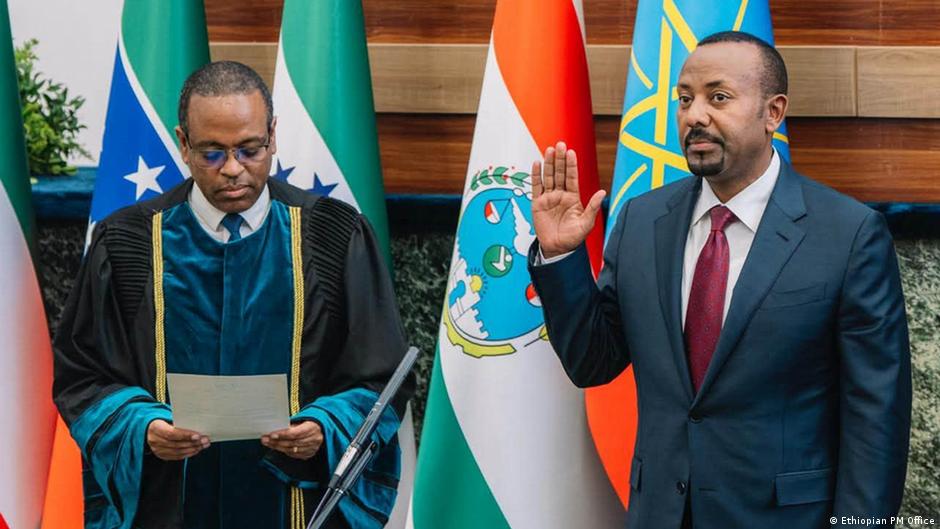
Ethiopia's Prime Minister Abiy Ahmed is consolidating power after being sworn in for a second term. He must, however, contend with a regional alliance that opposes him and the conflict in Tigray that risks spreading.
 Oct 6, 2026 · byDeutsche Welle
Countries: Yemen, Djibouti, Eritrea, Somalia Source: UN High Commissioner for Refugees Please refer to the attached Map.
Oct 6, 2026 · byReliefWeb
The conflict is raising fears of a regional war in the Horn of Africa, drawing in foreign powers including Eritrea, Egypt the United Arab Emirates and Saudi Arabia.
 Oct 2, 2026 · byThe New York Times
First, Ethiopia and Eritrea have severed ties and now with tensions spreading across the region, the African Union is urging all sides to show restraint. Meanwhile, Ethiopia's army is advancing toward the Tigrayan capital as fighting intensifies and new explosions rock Addis Ababa. Then, from boardrooms to cocoa fields, a growing number of urban Ivorians are turning to agriculture. On weekends, civil servants, entrepreneurs and traders leave Abidjan behind to tend farms in the countryside, seeking extra income. But running a plantation from afar comes with challenges. And, Senegal is counting down to a historic moment. In a few weeks, Dakar will host the 2026 Youth Olympic Games: the first Olympic event ever staged in Africa. But the stakes go far beyond sport. We speak to Senegal’s Minister of Sports, Djirèye Clotilde Coly.

Addis Ababa accuses Egypt, Eritrea and Sudan of backing armed groups.
Oct 2, 2026 · byAl Jazeera
Analysts warn unrest is likely to spill into neighbouring states and could further destabilise war-torn Sudan.
Oct 2, 2026 · byAl Jazeera
Ethiopia ordered the closure of its embassy in Eritrea and declared 10 Eritrean diplomats persona non grata on Thursday, prompting Asmara to sever all diplomatic ties with its neighbour after overnight blasts heard in Addis Ababa sparked fears about renewed conflict in northern Ethiopia spreading. France 24's Tom Canetti has more.

Countries: World, Djibouti, Eritrea, Ethiopia, Kenya, Somalia, Sudan Source: Intergovernmental Authority on Development Please refer to the attached file. Key message: The Greater Horn of Africa moved from an exceptional regional Desert Locust upsurge during 2019-2021 to a generally recessionary but episodic pattern of localized outbreaks from 2022 onward. The decline reflects effective surveillance and control, intervening dry periods, and stronger regional preparedness. Through IFRAH and the Inter-Regional Platform, IGAD has reinforced cross-border coordination, information sharing, knowledge exchange and early warning, helping Member States and partners detect and address localized risks before they escalate to regional crisis scale.
Oct 2, 2026 · byReliefWeb
The diplomatic fallout comes as Ethiopian forces battle rebel fighters across northern region.
 Oct 2, 2026 · byBBC
Eritrea has severed diplomatic ties with Ethiopia after Addis Ababa closed its embassy in Asmara
Oct 2, 2026 · byAl Jazeera
In tonight's edition, Ethiopia and Eritrea break diplomatic ties, accusing each other of stoking internal conflicts. Also, Nigeria rolls out a digital postcode system for every building. And I speak to one of the co-founders of the he Rural Women’s Assembly as it is recognised for its work challenging power systems.

Ethiopia says it will shut its embassy in Asmara, declares 10 Eritrean diplomats persona non grata.
Oct 1, 2026 · byAl Jazeera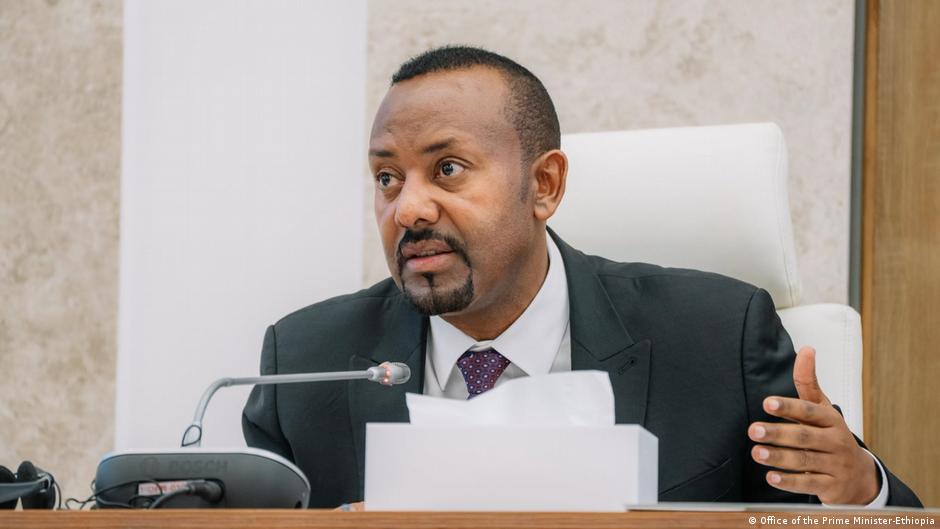
Ten Eritrean diplomats have also been delared persona non grata as relations between the neighbors nose-dive. Ethiopia's foreign ministry said it was in response to Eritrea's "direct and indirect acts of hostility."
Oct 1, 2026 · byDeutsche Welle
Countries: Sudan, Chad, Egypt, Eritrea, Ethiopia, Libya Source: International Organization for Migration Please refer to the attached Infographic.
Oct 1, 2026 · byReliefWeb
Country: Eritrea Source: Food and Agriculture Organization of the United Nations Please refer to the attached file. FOOD SECURITY SNAPSHOT Concerns for 2026 main season crops due to dry weather conditions Concerns for 2026 main season crops due to dry weather conditions Planting of the 2026 main season crops (wheat, barley, sorghum, maize, teff and pulses), for harvest from November 2026, was completed last July in central and western Anseba, Debub, Maekel and Gash Barka regions. The 2026 Kiremti rainy season, which normally extends from late June to September, has been characterized by a poor performance, associated with the ongoing El Ni ñ o event. In Anseba, Debub, Maekel and Gash Barka regions, cumulative rainfall amounts between June and September 2026 were 20 to 40 percent below average. As indicated by remote sensing imagery, the rainfall deficits significantly affected vegetation conditions in several cropping areas, including Gash Barka Region, the main crop producing area of the country (VHI map), and significant crop production shortfalls are, therefore, expected. Disclaimer: The designations employed and the presentation of material in this information product do not imply the expression of any opinion whatsoever on the part of FAO concerning the legal status of any country, territory, city or area or of its authorities, or concerning the delimitation of its frontiers or boundaries. This brief was prepared using the following data/tools: FAO/GIEWS Country Cereal Balance Sheet (CCBS) https://www.fao.org/giews/data-tools/en/ . FAO/GIEWS Food Price Monitoring and Analysis (FPMA) Tool https://fpma.fao.org/ . FAO/GIEWS Earth Observation for Crop Monitoring https://www.fao.org/giews/earthobservation/ . Integrated Food Security Phase Classification (IPC) https://www.ipcinfo.org/ .
Oct 1, 2026 · byReliefWeb
Countries: Ethiopia, Eritrea, Somalia, South Sudan, Sudan, World Source: UN High Commissioner for Refugees Please refer to the attached Infographic. Context & Highlight Ethiopia is the third largest refugee hosting country in Africa, home to over 1M refugees and asylum seekers—mainly from South Sudan, Somalia and Eritrea. Following the outbreak of armed conflict in Sudan (April 2023) , Ethiopia is receiving thousands of forcibly displaced people at several points of entry. On 6 March 2024, the Ethiopian government’s Refugees and Returnees Service (RRS) in collaboration with the National ID Program (NIDP) and UNHCR launched the issuance of digital identity documents to foster inclusion of refugees in the national system.
Sep 30, 2026 · byReliefWeb
Countries: Ethiopia, Eritrea, Somalia, South Sudan, Sudan Source: UN High Commissioner for Refugees Please refer to the attached Infographic.
Sep 30, 2026 · byReliefWebCountries: Uganda, Democratic Republic of the Congo Source: CARE By Norah Namono and Hillol Sobhan Refugees in Uganda whose food rations have been cut are turning to farming, tailoring, livestock, and soap-making at the Nakivale settlement, building skills to sustain themselves long after assistance ends. Nakivale is one of the oldest refugee settlements in Africa. It was established in 1958 in Isingiro District, in southwestern Uganda near the Tanzania border, about 124 miles from the capital, Kampala. Now, it shelters more than 280,000 people , part of the nearly 2 million refugees Uganda hosts nationwide — the largest population on the continent . Most, about 77%, are from the Democratic Republic of Congo (DRC); the rest mainly from Burundi, Rwanda, Somalia, Ethiopia, and Eritrea. For refugees in Uganda, food assistance is running out For two years, Natalia, 38, measured hunger by the kilo. She fled renewed fighting in eastern DRC in 2022, crossed into Uganda at Nyakabande and made her home in Nakivale’s Rubondo zone. She received a small piece of land, a few tarpaulins, and some saucepans. Starting over would not be easy. “When they welcomed us, WFP [World Food Programme] could give us 12 kilograms of maize per person, 3 kilograms of beans, and a quarter kilogram of salt,” Natalia says. Later, however, refugees were divided into categories — most at risk, medium, and self-sufficient. Natalia, with eight children, was placed in the middle category. Her family’s share fell to about 40 kilograms of maize, a liter of oil, and a cup of salt — gone in two weeks. “When I saw hunger was too much, I decided to divide a kilogram into a half so that it could last longer,” she says — rationing each kilogram of maize across two days to feed her eight children. Complicating things further, food rations were later replaced with a small monthly mobile money transfer — but the transfer sometimes failed to arrive, leaving the family with nothing. Natalia sent her children to herd cattle, gather firewood, and offer cheap labor in the surrounding host community. She went out to do the same — work she still does today, because the mobile money transfer now goes only to newly arrived refugees. Across the settlement, Natalia’s story is familiar to many families. The support kept people alive. But for families trying to rebuild their lives, survival was only the beginning. They needed a way to turn it into stability. Natalia’s experience reflects a national collapse in support. In early 2025, WFP was supporting 1.6 million refugees in Uganda . Today, it reaches fewer than half that number — even as food insecurity among refugees has more than tripled in a single year. The agency says it needs an additional $47 million to prevent further cuts through 2026. Monthly support for refugees facing the greatest need has fallen as low as $4.90 per person , among the lowest ration levels WFP provides anywhere in East Africa. Building a way forward through self-reliance That is where CARE and its partners stepped in. Emergency Food Assistance and Self Reliance (EFASeR) began by helping newly arrived refugees in Uganda meet an immediate need: food. Led by CARE in Uganda with local partners and funding from The Church of Jesus Christ of Latter-day Saints, the program provided at least 10,000 people in Nakivale and Kiryandongo, another large refugee settlement in central Uganda, with a one-time food voucher worth 440,000 Ugandan shillings (around $116). But participants made it clear that short-term assistance was not enough. They wanted the skills and resources to provide for themselves. That request changed everything. CARE works alongside local partners on EFASeR, while those partners lead implementation. Andre Foods International ( AFI ) and the refugee-led organization Tumaine handled food distribution. The Directorate of Possibility — a Nakivale-based organization working on livelihoods, savings, and entrepreneurship — led the self-reliance work that followed. The settlement is managed by Uganda’s Office of the Prime Minister, in coordination with UNHCR. Working through the Directorate of Possibility, at least 900 households in Nakivale were organized into 36 groups, with around 30 members in each. Every group chose one of four paths: cultivation, livestock, tailoring, or soap-making. Together, these groups set out on the road from assistance toward self-reliance, from July 2025 to August 2026. Natalia chose cultivation, so her home would not run short on food again. Her group members elected her as chairperson. The participants learned to dig irrigation trenches, read the seasonal calendar, and save together. The cabbages standing in the garden are proof of her progress. “These cabbages came from the training,” she says. “We learn, then we practice.” Before EFASeR, she says, managing money was a struggle. “I had never had any plan or budget. If I had money, I would just buy what impressed my eyes.” Financial literacy training provided by the program taught her about saving, budgeting, and debt management — knowledge she has now passed on to her husband and older children. “Even if I leave them with a sack of beans at home,” she adds, “they know how to plan for it.” “Our monthly income as a family still stands at 200,000 shillings ($53),” she says. Even though her income has not changed, Natalia sees a significant difference. “Now, I can manage this amount very well.” The cultivation group did more than grow food; it turned strangers into neighbors. Members arrive each week carrying water for the plots, and when one of them falls behind, the others carry her slowly rather than leave her. The change has reached inside Natalia’s home, too. Her husband, Silverano, remembers when the two of them saved separately and rarely agreed. “During the trainings, we were shown different ways to work together, and now we plan and save together,” he says. “If either of us goes out to work, we report back to each other. Today we also own animals we didn’t have before.” Tailoring, livestock, and soap: New trades take root among refugees in Uganda A short way off, Oliva — also Congolese — made a different bet. She arrived in Nakivale in December 2022 with her children and nothing else. She used to travel to host communities for casual labor just to feed them and cover their school costs. When her group was asked to choose a livelihood for training, she pushed for tailoring. She’d sewn a little back home. And, she reasoned, unlike farming, tailoring doesn’t depend on the rains. “That knowledge stays in your head,” she says. “Even if you move, you take your machine and continue.” She started sewing in January 2026. Her first customer was a neighbor. Now she earns roughly 30,000 shillings ($8) most weeks, and up to 70,000 shillings ($19) in a good month — enough that no child of hers is sent home for unpaid school fees, and her trips to the host community for food have dropped. In the Juru zone, Amani Munyakazi, 40, arrived in Nakivale from the DRC in August 2023. He looked at a goat and saw more than a meal. His group chose livestock and poultry farming because Nakivale has poor soil and long droughts. The poultry provide a steady supply of eggs for his family’s table. Their droppings, along with those from the goats, go into the gardens as fertilizer, with any surplus sold to nearby farms. As the flock grows, Amani expects to sell eggs too. Each member of the livestock group received one female goat. The group shares a single male and 15 additional females. “If you give me one goat, next time you come, find me with ten,” he says. As the group’s chairperson, Amani was trained by the Directorate of Possibility in savings, marketing, nutrition, and group progress tracking — skills he then passed on to his fellow group members. “We used to eat beans from Monday to Sunday and think we were building our bodies,” he says. “Now we eat more balanced meals.” For Shantal, who as a new arrival worked in other people’s fields for food, the soap her group makes has given her a measure of independence. She leads the group’s soap production. She also runs her own business selling phone cases — protective covers for mobile phones — using a loan she applied for through her group. Shantal's group makes 50 bars of soap a week. The income funds their savings. The savings fund loans. The loans fund businesses. It starts here. Photo: CARE “Being engaged as women helps us support ourselves, and not wait on our husbands,” she says. Pascal, the group’s secretary, remembers the December phone call that first offered food. It led to soap, 50 bars a week, savings, and two goats. And it brought him somewhere the hungry years would never have allowed. He is writing religious books he hopes to publish. What makes these livelihoods last is not one skill or one goat, but the way the pieces connect. Manure collected by the livestock groups feeds the gardens grown by the cultivation group; the gardens feed families and provide goods for the market; savings turn into loans that help businesses grow; a trade learned once keeps earning regardless of location. The Directorate of Possibility, CARE, and their partners simply provided the scaffolding. The communities built the groups, the savings, and the market links. And now, the communities are beginning to thrive. Why refugee self-reliance matters in Uganda Nakivale’s story is unfolding against a wider strain. Around the world, humanitarian needs are rising while the funding to meet them shrinks, forcing governments and organizations to make hard choices about who is helped, and for how long. In that squeeze, these families are making an argument of their own: that the most powerful response is not only the one that helps people survive today, but the one that helps them build tomorrow. The WFP has ended general food support in Nakivale; only those facing the greatest need still receive rations. For families like Natalia’s, self-reliance is no longer an aspiration. It is the only road left. The measure of humanitarian action is not only how long people receive support, but whether that support helps open a path toward greater choice, dignity, and self-reliance. The families of Nakivale are not asking to be defined by their displacement. They are asking to be seen for what they are becoming: farmers, tailors, livestock keepers, soap makers, savers, parents, entrepreneurs, and writers. Natalia wants to buy the land she farms outright and eventually start a small retail business of her own. “I want to stop depending on others and stand on my own financially,” she says. Oliva hopes to learn to sew suits and sell to customers as far away as Kampala. Amani’s ambition is smaller, but just as specific: he wants local shopkeepers to come to him for eggs. The food that kept them alive did its work. What they are building now — confidence, skills, and the means to earn — cannot be taken away. About CARE in Uganda : CARE has been working in Uganda since 1969, responding to the most urgent needs of conflict and disaster-affected populations. With a particular focus on women and girls, CARE currently reaches more than 1 million people annually in Uganda, approximately 60% of whom are refugees and members of host districts. Around the world, CARE staff continue serving families through conflict, disasters, and crises. Your help makes that work possible.
Sep 29, 2026 · byReliefWeb
Ethiopia’s army chief accused Eritrea and Sudan on Sunday of backing armed groups fighting federal troops, as clashes with Tigrayan rebels intensified. The Tigray People’s Liberation Front said it was waging a “defensive war” and seized airports. A humanitarian source said rebels captured the Afar town of Erebti on Sunday.
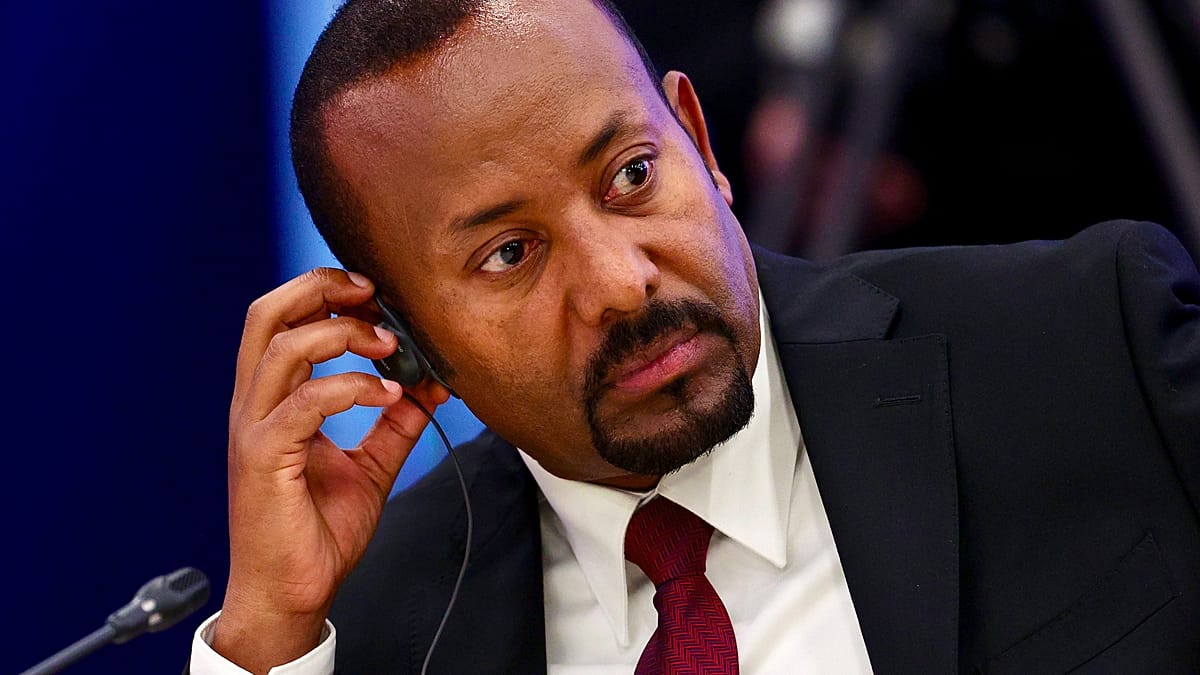
Renewed fighting in northern Ethiopia is drawing in the country’s disputes with Egypt, Sudan and Eritrea, raising fears that its internal conflict could spread across the region.
 Sep 27, 2026 · byEuronews
Army chief accuses Eritrea of funding and supporting armed groups to weaken Ethiopia.
Sep 27, 2026 · byAl Jazeera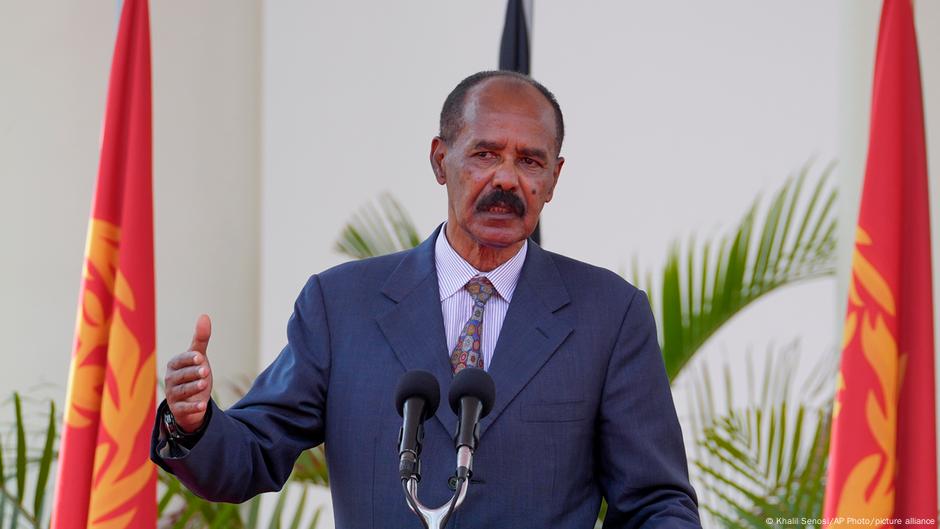
The US has removed key sanctions on Eritrea as Houthi attacks disrupt Red Sea shipping and fighting escalates in Ethiopia's Tigray region. Analysts say Eritrea's strategic value is growing.
Sep 25, 2026 · byDeutsche Welle